7.5 Metres From the Travelled Portion
It’s a frustration many New Brunswick ATV and UTV riders know all too well: you’re enjoying a beautiful day on the trails, maybe transitioning between sections, and suddenly you’re faced with a highway. The rules about riding near roads can feel like a minefield, especially that infamous "7.5 metres from the travelled portion" regulation. This guide will meticulously break down what that rule really means, why it exists, and how to confidently navigate areas near public roads without risking a hefty fine or, worse, an accident.
Unpacking the 7.5-Metre Rule: What It Really Means for Riders
The 7.5-metre rule is a cornerstone of New Brunswick's Off-Road Vehicle Act when it comes to interaction with public highways. It’s not just an arbitrary number; it’s designed with safety and community harmony in mind. For many riders, the exact interpretation of "travelled portion" and how to accurately gauge 7.5 metres in the heat of the moment can be a huge source of confusion and anxiety. Let’s demystify it.
The Core Principle of Separation: Why This Distance Matters
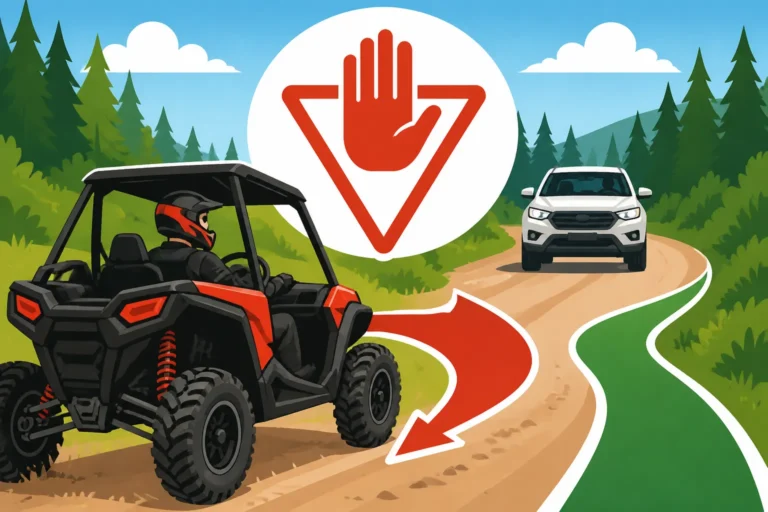
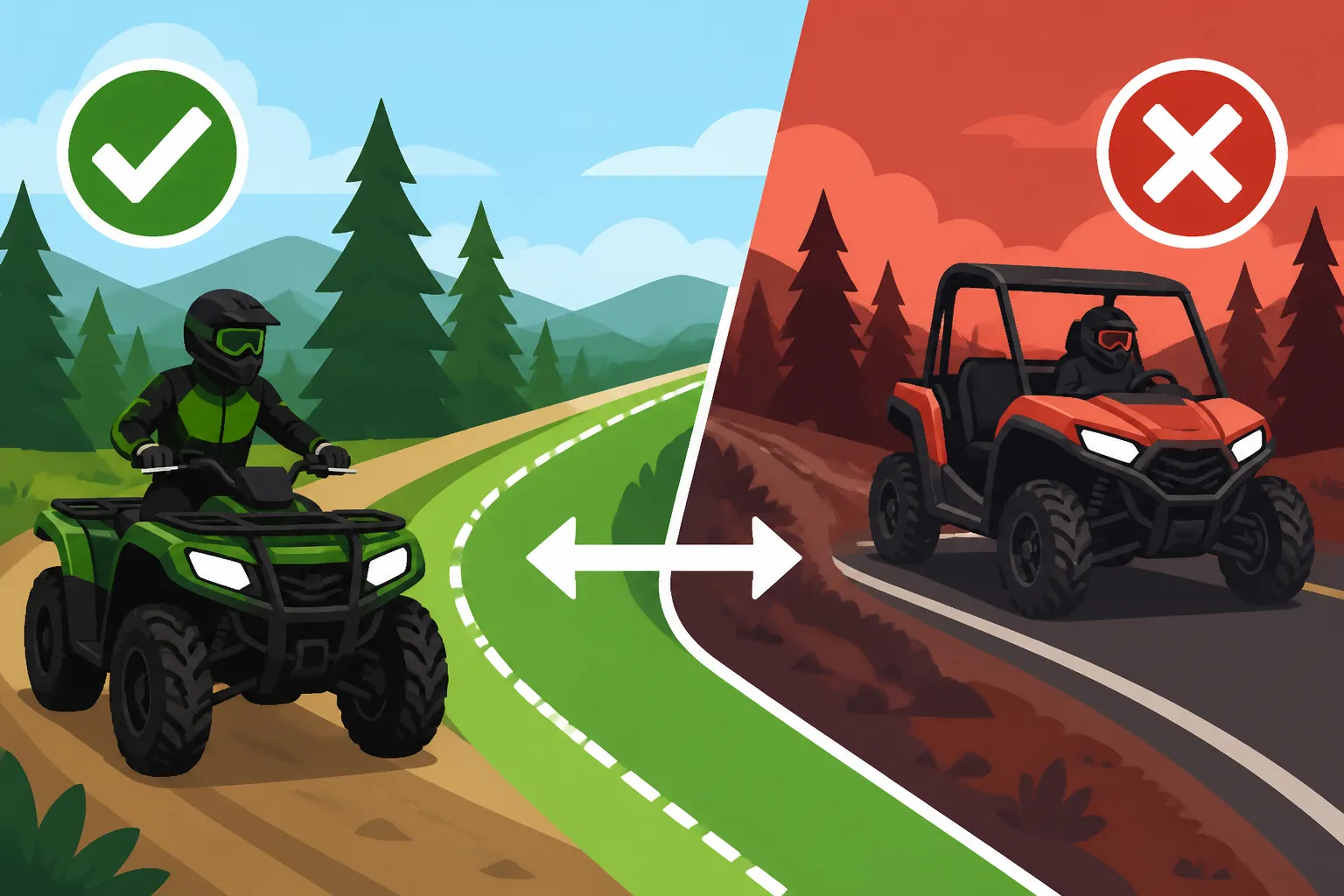
At its heart, the 7.5-metre rule is about creating a clear zone of separation between off-road vehicles and public highway traffic. Imagine a typical stretch of highway with cars and trucks whizzing by at high speeds. These vehicles are designed for the road, and their drivers are expecting other road-going vehicles. An ATV or UTV, while capable, operates differently and often isn't as easily seen or heard, especially at highway speeds. The rule aims to reduce the risk of collisions by minimizing direct interaction.
Beyond safety, there are other considerations. Noise is a big one. While our machines sound like music to our ears, residents living near trails or highways might not appreciate the rumble of engines. Maintaining a respectful distance helps mitigate noise complaints. Dust kicked up from the shoulder or ditch, especially during dry spells, can also be a nuisance or even a hazard for passing motorists. By keeping your distance, you’re not just following the law; you’re being a good neighbour and a responsible ambassador for the riding community. This separation helps maintain a positive perception of our sport, which is crucial for future trail development and access.
Defining the "Travelled Portion": More Complex Than You Think
This is where a lot of the confusion often lies. When the law refers to the "travelled portion" of a highway, it’s not just talking about the asphalt or concrete lanes where cars primarily drive. It encompasses a broader area. Generally, it refers to the part of the highway that is ordinarily used for vehicle traffic, including the paved or gravelled road surface, and often the immediate shoulder that vehicles might use for emergencies or passing. It does not typically include the ditches, culverts, or grassy areas beyond the shoulder, unless those areas are explicitly maintained or regularly used by highway vehicles.
Think of it this way: if a standard car or truck could reasonably drive on it as part of the normal flow of traffic or to pull over, it’s likely part of the "travelled portion." This distinction is critical because many riders mistakenly believe they are compliant if they are just off the pavement. However, if the shoulder is wide and maintained, it could still be considered part of that restricted zone. Understanding this nuance is key to avoiding an [New Brunswick's $292.50 Highway Fine] for being too close. An officer interpreting this rule will look at the practical use of that part of the road, not just the painted lines.
Common Misinterpretations and How to Avoid Them
One of the most frequent misinterpretations is assuming that the moment your tires leave the pavement, you’re in the clear. As discussed, the "travelled portion" can extend to the maintained shoulder. Picture this scenario: you're riding a gravel trail that parallels a highway, and for a short stretch, the trail narrows, bringing you within what feels like a safe distance from the highway. However, if that "safe distance" is less than 7.5 metres from the edge of the maintained shoulder, you're technically in violation.
Another common mistake is misjudging the distance itself. Seven and a half metres is roughly 24.6 feet – that’s a significant distance, about the length of two full-sized pickup trucks bumper to bumper. It's much further than many riders intuitively estimate, especially when riding at speed or focused on the trail ahead. I've seen riders try to eyeball it and come up short, often leading to a ticket they weren't expecting. It’s easy to get caught up in the ride and forget to constantly monitor your proximity to the highway. Always err on the side of caution. If in doubt, increase your distance or find an alternative route that avoids the highway altogether. Awareness and a bit of spatial reasoning can save you a lot of trouble.
Navigating the "Travelled Portion" Safely and Legally
Knowing the rule is one thing, but practically applying it on varied terrain can be challenging. It’s not always a perfectly flat, open field where you can clearly see the road and easily judge the distance. Often, you’re dealing with curves, hills, dense brush, or varying ditch widths. Let’s look at how to master this tricky aspect of New Brunswick riding.
What Exactly Counts as the Travelled Portion of a Highway
Let’s get even more specific about what constitutes the "travelled portion" of a highway for enforcement purposes. It’s not just the traffic lanes marked by paint. It includes any paved or regularly maintained gravel surface intended for the movement of vehicular traffic. This means:
- Driving Lanes: The obvious part, where cars and trucks travel.
- Shoulders: Often, the hard-packed, gravelled, or paved section immediately adjacent to the driving lanes. Even if it's not explicitly a driving lane, if it's maintained for vehicle use (e.g., emergency stops, breakdown lane), it counts. This is a key area of misunderstanding.
- Turn Lanes and Ramps: Any designated area for vehicles entering or exiting the main highway.
What generally does not count, and where you might find yourself legal outside the 7.5m rule, includes:
- Deep Ditches: The sloped, unmaintained areas beyond the shoulder that are clearly not for vehicle travel.
- Natural Terrain: Grassy, treed, or rocky areas that are clearly separate from the road infrastructure.
- Service Roads/Access Roads: If these are distinct from the main highway and are part of a permitted ORV route, they fall under different rules.
The key takeaway is that an officer will assess whether the area you are riding in could reasonably be considered part of the highway's functional footprint for general vehicle traffic. Don't assume. Observe the environment carefully.
The Shoulder, the Ditch, and Beyond: Finding Your Safe Zone
This is where the rubber meets the road, quite literally. When you encounter a highway, your immediate goal is to establish that 7.5-metre buffer.
- The Shoulder: Many highways have a shoulder. If it's wide and well-maintained, consider its outer edge as the starting point for your 7.5-metre measurement. Do not assume you're safe just because you're off the main driving lane. If your machine is equipped with accessories from
SuperATVthat improve visibility, like bright LED lights or a wider mirror, it can certainly help you be seen by highway traffic if you are, for whatever reason, forced to be closer than ideal, though it doesn't excuse a violation. - The Ditch: This is often your first true legal separation from the highway. If you can ride in the ditch bottom, or along the far bank of the ditch, you're likely putting more distance between yourself and the "travelled portion." However, be mindful of safe riding. Ditches can be steep, muddy, or have hidden obstacles. Always prioritize safety over strictly clinging to the ditch line.
- Beyond the Ditch: The safest and most compliant option is to be well beyond the ditch, on a dedicated trail, a utility corridor, or private land, clearly separate from the highway right-of-way. This is the ideal scenario and what most legal trails aim for when paralleling roads. Always check [New Brunswick Rules for Crossing a Road] if you plan to get to the other side.
Riders often find themselves at a disadvantage because they don't have a tape measure handy. The best way to visualize 7.5 metres is to get out of your machine and walk it off. Count large paces, about three feet each. Twenty-five paces is a good approximation. Do this a few times on an open stretch of land next to a road, and you'll quickly develop a better "feel" for the distance.
Visual Cues and Practical Tips for Measuring the Distance
Since you won't be carrying a measuring tape on your quad, developing a reliable visual estimation skill is invaluable. Here are some tips:
- Use Your Machine as a Reference: Most ATVs are about 7-8 feet long. A side-by-side might be 10-12 feet. So, 7.5 metres (24.6 feet) is roughly equivalent to 3-4 ATV lengths or 2-3 side-by-side lengths. If you can line up that many machines end-to-end between your current position and the travelled portion, you're likely in the clear.
- Telephone Poles/Guardrails: If there are telephone poles or fence posts running parallel to the highway, try to estimate the distance between them. In rural areas, pole spacing can be quite consistent. You might learn that two pole lengths or half a dozen guardrail sections equate to roughly 7.5 metres.
- Vegetation Lines: Often, there's a distinct change in vegetation where the maintained shoulder ends and the natural growth begins. While not always perfectly 7.5 metres, this line can serve as a helpful, albeit rough, visual boundary.
- The "Car Length" Rule: A typical car is about 4.5 to 5 metres (15-16 feet) long. So, you need more than one car length, probably closer to one and a half to two car lengths, between your machine and the edge of the travelled portion.
- Always Err on the Side of Caution: If you're unsure, just add more distance. It's better to be 10 metres away and safe than 7 metres and risking a fine or, worse, a close call with highway traffic. When you're driving your machine, especially if it's a powerful one with
SuperATVperformance parts, it's easy to get focused on the trail and forget to constantly check your periphery. Make it a habit to glance over and assess your distance whenever you parallel a road.
Legal Road Interactions: Crossing, Sharing, and Designated Sections
While the general rule is to maintain distance, there are specific instances where ATVs and UTVs are permitted to interact more directly with public roads. These situations are highly regulated and require strict adherence to specific procedures. It's not a free-for-all; it's about controlled, safe, and legal integration.
When a New Brunswick ATV Can Cross a Road
Crossing a public highway is one of the most common and necessary interactions riders have with the road system. It's usually done to connect two sections of a trail or to access fuel and services. However, it's not as simple as just zipping across. New Brunswick has clear [New Brunswick Rules for Crossing a Road] that must be followed to ensure safety and legality.
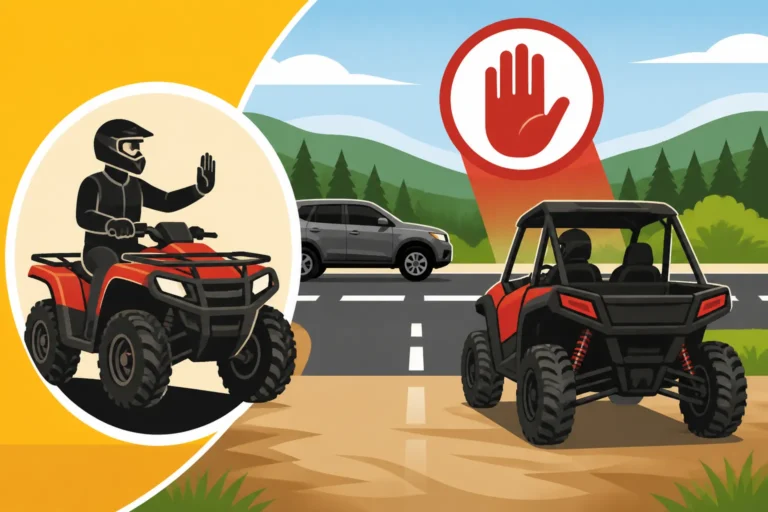
First and foremost, you must come to a complete stop before attempting to cross. This isn't just a suggestion; it's a legal requirement. You need to stop, look carefully in both directions for oncoming traffic, and only proceed when it is safe to do so. Think of it like a pedestrian crossing a busy street – vigilance is paramount. You must yield to all highway traffic. This means if a car is coming, no matter how far away, they have the right of way, and you must wait.
The crossing itself must be done at a right angle (as close to 90 degrees as practically possible) to the highway, and you must proceed directly across the shortest distance. You cannot ride along the highway to find a better crossing point; you must cross at the first safe opportunity. Your machine needs to be properly registered, and you must have your [New Brunswick Documents You Must Carry] with you. Helmets are mandatory, of course. A quick, decisive, and safe crossing is the goal, minimizing your time on the travelled portion.
Designated Road Sections: Understanding Local Bylaws and Permits
This is where things can get a bit more flexible, but also more localized. Some municipalities in New Brunswick have adopted bylaws that designate certain roads or sections of roads as open to off-road vehicle traffic. These are not general highway rules; they are specific to a particular town or county and are often implemented to connect trail systems, allow access to local businesses, or facilitate travel within a community.
It’s crucial to understand that these designations are not universal. A road that's open in one town might be completely off-limits in a neighbouring community. This is why checking [New Brunswick Municipal Bylaws That Open Roads] is essential before you ride in an unfamiliar area. You can often find this information on municipal websites or by contacting the local town office.
In some cases, specific [New Brunswick Highway Usage Permits] might be required for certain designated sections, especially if they involve provincial highways. These permits are usually applied for through local clubs or directly with the provincial government. When riding on these designated sections, you are expected to follow the rules of the road for conventional vehicles to a large extent, including speed limits, yielding, and using appropriate hand signals or actual turn signals. This is where investing in accessories like SuperATV's turn signal kits or mirrors can be incredibly beneficial for safety and compliance, as they help you signal your intentions clearly to other road users. Don’t assume all roads are open; verify before you venture onto asphalt.
Shared Highway Stretches: Specific Rules for Coexistence
While rare, there are indeed some very limited circumstances in New Brunswick where ATVs and UTVs might be permitted to share specific, short sections of highways with conventional traffic. These are almost always clearly marked and are often narrow, low-traffic rural roads, or sections used to connect two extensive trail systems where no other reasonable alternative exists. This is not common, and such sections are typically identified through specific signage or local bylaws.
When operating on these shared sections, the onus is heavily on the ORV operator to be fully aware, visible, and to abide by all highway traffic laws applicable to that specific stretch. This means:
- Maintaining Speed Limits: You cannot go faster than the posted limit, and often, ORVs have lower maximum speed limits even on these shared sections.
- Signalling Intentions: Use appropriate hand signals for turning or stopping, or if your machine is equipped (and it should be for shared road use), use your mechanical turn signals.
SuperATVprovides high-quality LED light bars and signal kits that can significantly enhance your visibility and communication on shared roads. - Staying to the Right: Keep as far to the right of the travelled portion as safely possible.
- Yielding to Faster Traffic: If a car is behind you, pull over safely when possible to let them pass.
These shared sections are not intended for cruising; they are for making a necessary connection. Always remember that cars and trucks are much larger and faster, and they expect to see road-legal vehicles. Your vigilance and adherence to traffic laws are paramount. If you see signs indicating shared use, confirm the rules before proceeding, as they can be very specific. [New Brunswick Shared Highway Sections] details these scenarios further.
Penalties and Enforcement: The Cost of Misjudgment
Ignoring the 7.5-metre rule or other road interaction regulations can lead to more than just a stern talking-to. New Brunswick enforcement officers are vigilant, and the fines for non-compliance are significant. It’s not just about the money; it's about the potential loss of your riding privileges and the safety of everyone on or near the roads.
What an Officer Can Ask to See on a Trail
If you're stopped on a trail or near a highway by a conservation officer, RCMP, or a local police officer, they have the authority to request several documents to ensure you are operating your off-road vehicle legally. Understanding [What an Officer Can Ask to See on a Trail] can help you be prepared and avoid further complications.
Typically, an officer will ask for:
- Proof of ORV Registration: This shows your machine is legally registered in New Brunswick.
- Proof of Insurance: [New Brunswick Requires Insurance on Trails] for most ORVs, so you'll need to show that your machine is insured.
- Your Driver's Licence: Even though you're on an ORV, you still need to be a licensed driver (or hold a Class 9 licence if you're a teen).
- Trail Permit: If you're on a designated trail system, you'll need a valid [New Brunswick Groomed Trail Permit] or [New Brunswick Non-Groomed Trail Permit].
- Safety Training Certificate: For younger riders, or in certain situations, proof of having completed an approved safety course may be requested.
If an officer observes you riding within 7.5 metres of the travelled portion of a highway, or crossing a road improperly, they will likely issue a ticket. Not having the required documents in order can add to your troubles, potentially resulting in additional fines or even having your machine impounded.
Fines for Riding Too Close to a Highway
The penalties for violating the 7.5-metre rule or other highway interaction regulations are substantial. New Brunswick takes these rules seriously because of the inherent safety risks involved. For riding an ATV on or within 7.5 metres of a highway, you could face a fine upwards of $292.50. This isn't a minor slap on the wrist; it's a significant financial hit that could easily spoil your riding season. This specific [New Brunswick's $292.50 Highway Fine] is designed to be a strong deterrent.
In addition to the base fine, there might be additional court costs and victim surcharges, which can push the total amount even higher. These fines are subject to change, so always check the most current regulations. Imagine getting a ticket for something you could have easily avoided by being a bit more aware or planning your route better. It’s a bitter pill to swallow. These fines are often considered "set fines," meaning the officer has little discretion, and the amount is fixed.
Other Consequences: Impoundment and Safety Course Mandates
Beyond the immediate financial penalty, there can be other, more severe consequences for repeated or egregious violations. In some cases, an officer has the discretion to impound your off-road vehicle. If your machine is impounded, you'll be responsible for towing fees, storage fees, and potentially other administrative costs, all before you even get your machine back. This can quickly add up to hundreds, if not thousands, of dollars. Losing access to your machine for an extended period, especially during peak riding season, can be incredibly frustrating and disruptive.
| Violation Type | Potential Fines (Example) | Other Consequences |
|---|---|---|
| Riding within 7.5m of travelled portion | ~$292.50 | Machine impoundment, required safety course |
| Improper road crossing | ~$292.50 | Machine impoundment, required safety course |
| No ORV Registration | ~$172.50 | Machine impoundment, unable to register until paid |
| No ORV Insurance | ~$604.50 | Machine impoundment, insurance premium increases |
| No Helmet | ~$172.50 | Immediate safety risk, potential for more serious injury |
| No Trail Permit | ~$340.50 | Removal from trail, loss of club benefits |
Note: Fines listed are examples and are subject to change by legislative bodies. Always check current regulations.
Furthermore, depending on the severity and frequency of violations, a court might mandate that you complete an approved ORV safety course, even if you are an adult rider. While safety courses are excellent for improving skills and knowledge, being forced to take one due to a violation is far from ideal. It consumes your time and money. These measures underscore the seriousness with which New Brunswick authorities view compliance with the Off-Road Vehicle Act. It's not just about punishing riders; it's about ensuring public safety and preserving the privilege of off-road riding for everyone.
Best Practices for Staying Compliant and Safe
Navigating the intricacies of ORV regulations, especially around public roads, might seem daunting, but with a proactive approach and a commitment to safety, you can enjoy your rides without worry. It all boils down to preparation, awareness, and responsible choices.
Planning Your Route: Using Maps and Local Knowledge
One of the most effective ways to avoid inadvertent violations of the 7.5-metre rule is to plan your route well in advance. Don't just head out blindly. Utilize available resources to understand the terrain and any potential road crossings or parallel sections.
- QuadNB Trail Maps: The QuadNB Federation offers comprehensive trail maps, often accessible via apps like MapGear. These maps are invaluable for identifying designated trails, road crossings, and sections where trails might run close to highways. [New Brunswick ATV Trail Map Downloads] are readily available. Take the time before your ride to trace your intended path and note any areas that require special attention regarding roads.
- Local Clubs: Connect with local ATV clubs in the area you plan to ride. Their members often possess a wealth of local knowledge about specific road rules, safe crossing points, and any recent changes in bylaws or trail reroutes. They can tell you where a particular section might get tricky with the 7.5-metre rule.
- Service New Brunswick: If you're unsure about specific local bylaws or provincial highway permits, don't hesitate to contact Service New Brunswick. They can often provide clarification or direct you to the correct resources.
Proper route planning not only helps you stay legal but also enhances your overall riding experience, preventing unexpected detours or the stress of navigating unfamiliar road interactions. You'll know exactly what to expect, minimizing surprises and maximizing enjoyment.
Essential Gear for Visibility and Communication
While the 7.5-metre rule focuses on distance, visibility plays a critical role in safety when you do have to interact with roads, even legally. Whether you're crossing a road or riding a designated shared section, being seen by other motorists is paramount.
- Mirrors: Investing in good quality side mirrors for your ATV or UTV is a smart move. They allow you to easily check for oncoming traffic when stopped at a road crossing or to monitor vehicles behind you on a shared road section, without having to twist your body or take your eyes off the path ahead. Many
SuperATVproducts, such as their wide-angle mirrors, are designed for durability and provide excellent visibility, making them a worthwhile addition. - Lighting: Ensure your machine's headlights, taillights, and brake lights are fully functional and bright. Consider adding auxiliary LED lights, especially for dusk, dawn, or foggy conditions. Visibility flags, particularly for riding in hilly or dusty terrain, can also make a significant difference. Bright colours for your machine and riding gear also contribute to being seen.
- Turn Signals (for UTVs and some ATVs): If you're riding a UTV or an ATV capable of being equipped with them, a turn signal kit is highly recommended, especially if you anticipate riding on designated shared road sections. Using turn signals is clear communication to other drivers, far more effective than hand signals in busy environments.
SuperATVoffers comprehensive signal kits that integrate seamlessly, making your machine more visible and compliant for road interactions.
These pieces of gear aren't just about avoiding tickets; they're about preventing accidents. The brighter and more clearly you can signal your intentions, the safer you and everyone else on the road will be.
Knowing Your Rights and Responsibilities as a Rider
Beyond specific rules, adopting a mindset of informed responsibility is crucial. As an ORV rider in New Brunswick, you have the privilege of enjoying vast trail networks, but this privilege comes with responsibilities.
- Stay Informed: Laws and regulations can change. Make it a habit to check the QuadNB website, Service New Brunswick, and local municipal sites periodically for updates.
- Be an Ambassador: Every time you're out riding, you're representing the entire ORV community. Ride courteously, respect private property, yield to other trail users, and keep noise to a minimum, especially near residential areas. This positive behaviour helps maintain good relationships with landowners and the general public, which is vital for the future of our sport.
- Education is Key: Consider taking an ORV safety course, even if you're an experienced rider. They often cover legal aspects and responsible riding practices that can reinforce good habits.
- Report Issues: If you notice trail damage, illegal riding, or areas where the 7.5-metre rule is particularly confusing or unsafe, report it to your local club or QuadNB. Your input can help improve the trail system and clarify rules for everyone.
By embracing these best practices, you contribute to a safer, more enjoyable, and sustainable riding environment for all. Responsible riding is about more than just avoiding fines; it's about preserving the freedom to explore New Brunswick's beautiful landscapes on your ATV or UTV.
Special Situations and Exemptions
While the 7.5-metre rule is a general guideline, like most regulations, there are specific contexts and exemptions that riders should be aware of. These aren't blanket permissions to disregard the rule, but rather carve-outs for particular activities or necessities.
Agricultural and Logging Operations
New Brunswick is rich in natural resources, and agriculture and forestry are vital industries. It's not uncommon to see ATVs and UTVs used in these sectors. For operators directly involved in agricultural or logging operations, there can be specific exemptions or modified rules for using ORVs on or near highways, but only when directly related to their work.
For instance, a farmer might need to briefly cross a public road with their quad to access another field or move equipment, or a logging crew might use a UTV to patrol a woodlot that borders a highway. In these cases, the ORV is being used as a tool for a commercial or agricultural purpose, not for recreational riding. These machines are often larger, heavier, and might have specific attachments. [A Farm Quad and New Brunswick Paperwork] details how these machines are typically registered and used.
However, even with these exemptions, safety remains paramount. Operators are still expected to exercise extreme caution, ensure maximum visibility, and minimize their time on the highway. These are not open invitations for recreational riders to mimic these uses; rather, they are specific allowances for legitimate work-related activities. If you're a recreational rider, these exemptions generally do not apply to you.
Private Land Access and Brief Road Usage
Many riders own private land that might be divided by a public road, or they might need to use a very short section of a private driveway that briefly parallels a highway to get to their trail. The rule states that if your land is adjacent to a highway and divided by that highway, you may cross it at the nearest practical point to access another part of your property, provided it's done safely.
Similarly, if you're riding from your own property to a public trail system, and your access involves a very short, private lane that merges briefly with a public road, there might be some allowances. However, this is not an excuse to ride extensively on the highway. The intent is solely for immediate and direct access to or from your private land. [New Brunswick Owner-Only Private Land Exemption] further clarifies these situations.
The key here is "brief," "direct," and "safe." This isn't permission to ride down the road to your neighbour's house; it's about connecting necessary points of access. Always be mindful that even in these situations, highway traffic has the right of way, and you must proceed with extreme caution and visibility.
Emergency Scenarios
In any situation, the law generally recognizes that human safety takes precedence. While no one advocates for breaking the law, genuine emergency scenarios might necessitate temporary deviation from the 7.5-metre rule. For example, if a life-threatening situation occurs on a remote trail and the quickest way to get help or transport an injured person is to briefly use a highway shoulder to reach an ambulance, common sense would suggest this is justifiable.
However, this is an extreme edge case and should never be used as a convenient excuse for non-compliance. An "emergency" means an immediate threat to life, limb, or property, not simply running out of gas or wanting to get home faster. If you find yourself in such a situation, take every possible precaution to ensure your safety and the safety of others, and be prepared to explain the circumstances clearly and honestly to any responding authorities. This exception is for dire circumstances, not for convenience.
Disclaimer
This article is for general informational purposes only and does not constitute professional advice. Laws, prices and regulations vary by location and change over time. Consult a qualified professional for guidance on your specific situation.