Proof of Insurance in a Saddlebag
There’s nothing quite like hitting the trails in New Brunswick, feeling the rumble of your ATV or UTV beneath you, with the forest stretching out on either side. But that peace can quickly turn to a knot in your stomach if you suddenly wonder, "Do I have all my papers with me? What if I get stopped?" This guide is all about giving you peace of mind, specifically focusing on why and how you absolutely must carry proof of your ORV insurance, and where the best place to keep it truly is.
Why Carrying Proof of Insurance is Crucial for New Brunswick Riders
Riding an off-road vehicle (ORV) in New Brunswick is an incredible experience, offering access to thousands of kilometres of breathtaking trails. But with that freedom comes responsibility, and a big part of that is ensuring you're properly insured and can prove it. This isn't just about ticking a box; it's about safeguarding your ride, your finances, and your ability to continue enjoying our beautiful wilderness.
The Legal Requirement for Trail Riding
Let's be blunt: if you're planning to ride on any of New Brunswick's designated trails, whether they're part of the vast QuadNB network or other approved corridors, having valid insurance isn't optional—it's the law. The province has clear regulations stipulating that off-road vehicles operated on managed trails must be insured. It's not a suggestion; it's a non-negotiable part of responsible riding. Many riders find this a bit frustrating; after all, you already bought the machine, registered it, and maybe even got a trail permit. Now you have to worry about insurance proof too? Believe me, I get it. It feels like one more piece of paper in an already growing pile.
However, the intention behind this rule is genuinely good. It’s about more than just government oversight. It's about protecting every rider, every landowner whose property a trail might cross, and the invaluable infrastructure of the trail system itself. Imagine a scenario where you're enjoying a ride, and an unforeseen incident occurs—maybe a minor collision with another machine, or perhaps you accidentally damage a bridge railing on a club trail. Without insurance, the financial burden of such an event could fall entirely on you, which could be incredibly stressful and costly. The legal requirement for carrying proof of insurance on trails helps ensure that there’s a mechanism in place to cover potential damages and injuries, making the trails safer and more sustainable for everyone. It's a key part of what [New Brunswick Requires Insurance on Trails].
Beyond the Law: Practical Protection
Beyond the legal mandate, carrying proof of insurance offers you practical protection that you’ll be incredibly grateful for if you ever need it. Think about the "what if" scenarios. What if you have a mishap that doesn't involve another rider, but still results in damage to your own machine or, worse, an injury to yourself or a passenger? While your proof of insurance primarily focuses on liability—meaning it covers damages or injuries you might cause to others—it's also a gateway to understanding your full coverage.
Having that proof readily available means you can quickly access policy numbers and contact information for your insurer, streamlining the process of reporting an incident. Consider a situation where you're out on a remote trail near Miramichi, and you accidentally hit a fallen tree, causing significant damage to the front end of your side-by-side. You're shaken, maybe a little bruised, and now facing a repair bill. Fumbling for your insurance details when you're already stressed is the last thing you want. With proof in hand, you can immediately provide the necessary information to emergency services or tow operators, and more importantly, begin the claims process with your insurance company without delay. This preparedness can significantly reduce the stress and financial impact of an unexpected event, making the cost of [New Brunswick Insurance Cost for an ATV] well worth it. It’s not just about avoiding a fine; it’s about having a safety net.
What Counts as Valid Proof of Insurance in New Brunswick
So, you understand why you need it. Now, let’s get into what exactly counts as valid proof of insurance and what you should expect to present if an officer or trail warden asks to see it. It’s not as complicated as it sounds, but there are a few key details to keep in mind to ensure you’re always compliant.
Understanding Your Insurance Card
For most riders, the simplest and most common form of proof is the insurance card issued by your provider. This little piece of paper (or sometimes plastic) is your primary credential. It typically contains vital information such as your policy number, the effective dates of your coverage (showing it’s current and active), and a clear description of the vehicle it covers—including the make, model, and vehicle identification number (VIN). When an officer asks for proof of insurance, this card is what they're generally expecting to see.
Now, a common question in this digital age is: "Is a digital copy on my phone acceptable?" The answer is often yes, many authorities will accept a clear, legible digital image of your insurance card. However, relying solely on your phone comes with inherent risks. What if your phone battery dies halfway through a long ride? What if you're in an area with no cell signal and the officer can't verify the document if they had to? These aren't far-fetched scenarios in the deep woods of New Brunswick. While a digital copy offers convenience, it’s always a smart move to have a physical backup. A printed copy tucked away, perhaps even laminated for durability, can be a lifesaver when technology fails. This ensures you always have [New Brunswick Proof of Insurance on the Machine].
Alternatives to the Standard Card
Life happens, and sometimes your shiny new insurance card hasn't arrived in the mail yet, or you've just purchased a machine. Don't panic! There are often acceptable alternatives to the standard insurance card that can serve as valid proof of coverage. Your insurance provider can usually issue a temporary insurance slip or a "binder letter." These documents serve the same purpose as your permanent card, confirming that your machine is currently insured.
The crucial element for any alternative document is that it must clearly and unequivocally state that you have active, valid coverage for that specific off-road vehicle. It needs to show the policy's effective dates and identify your machine by its VIN or other specific details. If you're ever in doubt about what constitutes valid proof, don't hesitate to contact your insurance broker or company directly. They can provide the correct documentation and assure you that you’re good to go before you head out. Never assume—it’s always better to be certain, especially when facing potential fines or liability.
The Importance of Up-to-Date Information
Having proof of insurance isn't a "one and done" deal. Your insurance information needs to be current and accurately reflect your situation. An expired policy, or a card showing coverage for a machine you no longer own, is effectively the same as having no proof at all. Imagine the frustration of being stopped, confidently pulling out your insurance card, only to realize it expired last month, or it’s for your old ATV that you sold last year. That perfect day on the trails can suddenly take a very sour turn.
It's absolutely essential to update your proof of insurance whenever there’s a change in your coverage, vehicle, or insurer. When you sell a machine and buy a new one, ensure your insurance is transferred and you receive new proof for the new vehicle. Similarly, if you switch insurance providers, get the updated card or temporary proof right away. Make it a habit to check the expiration date on your insurance card a couple of times a year, perhaps when you renew your registration or trail permit. While your actual insurance provider gives you the proof, sometimes having a well-organized system for all your important documents – from a bill of sale to a power of attorney for a shared machine – can be a lifesaver. Tools like LawDepot offer templates for various legal documents, helping you keep your paperwork in order, even if it's not directly for the insurance card itself. This preparedness avoids awkward and potentially expensive misunderstandings on the trail.
Where to Securely Keep Your Proof of Insurance
Now that we know why and what to carry, let’s tackle the where. The title of this guide suggests a "saddlebag," and for good reason! Accessibility, protection from the elements, and security are paramount when it comes to carrying important documents on the trail.
The "Saddlebag" Strategy and Its Cousins
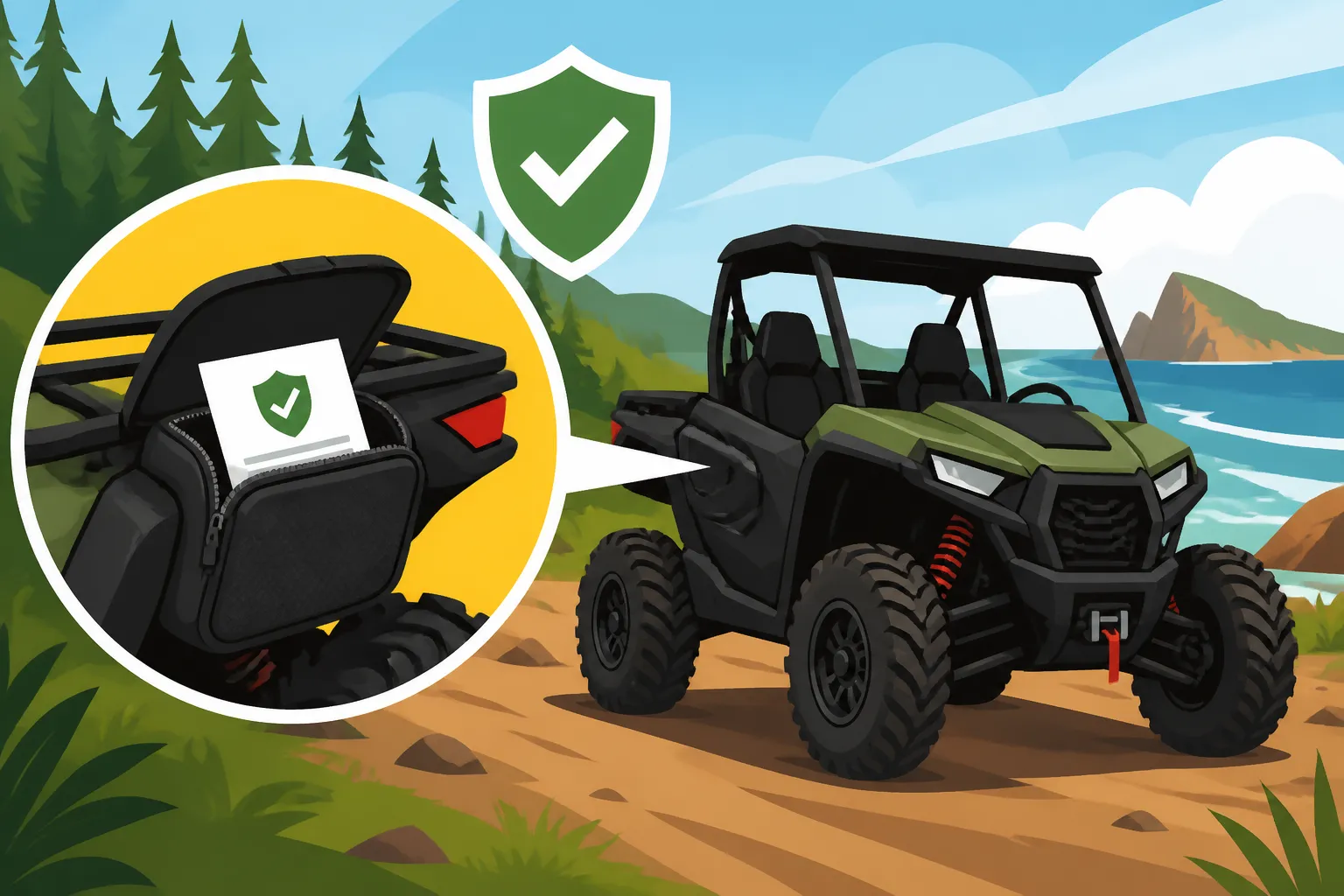
The saddlebag is a classic for a reason. For many ATVs, a sturdy, waterproof saddlebag or fender bag offers the perfect combination of accessibility and protection. It keeps your documents dry, secure, and easily reachable without having to dig through multiple layers of gear or take off your backpack. When an officer asks for your papers, you don't want to be fumbling around, delaying the interaction. Having a dedicated spot for your documents makes the process smooth and respectful of everyone's time.
For side-by-sides, the equivalent might be a glove compartment or a secure, waterproof storage box within the cab. The key is to choose a location that is:
- Waterproof: New Brunswick weather can be unpredictable. Puddles, rain, or even splashes from a brook crossing can quickly turn paper documents into an illegible pulp.
- Secure: You don't want documents flying out on a bumpy section of trail or getting lost if your machine takes a tumble.
- Accessible: You need to be able to retrieve them quickly and easily, even with gloves on or when conditions aren't ideal.
Don't just think about your machine's storage, either. Some riders prefer to keep their documents directly on their person, perhaps in a sealed, waterproof pocket of their riding jacket. This can be a great option if you frequently switch machines or ride rentals, ensuring your documents are always with you. The most important thing is to have a consistent and reliable system, one that you remember every single time you head out. This applies to all your necessary documents, as you'll often be [Carrying Four Documents at Once].
Practical Tips for Document Protection
Let's face it, paper and the great outdoors aren't always the best combination. Even if you're using a saddlebag, a little extra precaution can go a long way in protecting your proof of insurance and other vital papers.
- Waterproof Pouches/Ziploc Bags: This is a cheap and effective first line of defense. Slip your insurance card and any other important documents into a heavy-duty Ziploc bag or a dedicated waterproof document pouch before placing them in your saddlebag or glove compartment.
- Lamination: While you should always keep the original insurance card in a safe place at home, laminating a copy of your insurance card for trail use is an excellent idea. It makes it virtually impervious to water, dirt, and wear and tear. Just ensure the laminated copy is clear and legible.
- Organize Your Papers: Don't just stuff everything in haphazardly. Consider a small, robust document wallet or a binder clip to keep your insurance proof, registration, and trail permit together. This way, when you reach for one, you have them all. Knowing what [New Brunswick Documents You Must Carry] and having them organized will save you a lot of hassle.
Whether you're selling your machine or just updating your personal records, keeping everything meticulous is a smart move. Resources like LawDepot can be helpful for generic document templates if you're trying to set up a comprehensive file system for all your ORV paperwork. Remember, the goal is to make it easy for you to comply with the rules and demonstrate your preparedness if you're ever asked.
Considering Digital vs. Physical
We touched on this earlier, but it bears repeating: the choice between digital and physical proof isn't always an either/or situation. Many experienced New Brunswick riders opt for a hybrid approach.
- Digital Convenience: Having a clear photo of your insurance card stored on your smartphone can be incredibly convenient for quick access. It means one less piece of paper to worry about physically. However, as discussed, the risks of a dead battery or no cell signal on remote trails (and believe me, there are plenty of those in New Brunswick!) are very real.
- Physical Reliability: A physical copy, tucked safely away in a waterproof container, doesn't rely on battery life or network coverage. It's always there, always ready. This is your fail-safe.
The best practice is truly to carry both. Keep a physical, waterproofed copy in your machine's storage or riding gear, and have a digital backup on your phone. This way, you’re covered no matter the circumstances. Imagine your phone dying miles from the nearest town after a long day of riding around the Skedaddle Ridge trails. That physical copy will be your hero when an officer pulls up.
The Consequences of Riding Without Proof of Insurance
Okay, let's talk about the downside. What happens if you get caught without valid proof of insurance on a New Brunswick trail? It’s not just a polite request; there are real, tangible consequences that can quickly overshadow a fantastic day of riding.
Fines and Penalties in New Brunswick
This is where the rubber meets the road, or more accurately, where your wallet meets the law. If you’re stopped by an officer or trail warden on a designated ORV trail in New Brunswick and cannot produce valid proof of insurance for your machine, you’re looking at a significant fine. These aren't just slaps on the wrist; they are substantial set fines designed to encourage compliance. The exact amount can vary, but generally, not having proof of insurance can lead to a fine in the hundreds of dollars. Just one ticket can quickly erase any savings you might have tried to make by skipping insurance or being careless with your documents.
It's a common and understandable frustration: "I have insurance, I just forgot the card!" Unfortunately, in the eyes of the law, not being able to prove you have it is often treated the same as not having it at all. The onus is on you, the operator, to carry and present that proof. A fine for being uninsured or unable to show proof can easily ruin a day out on the Miramichi riding trails and leave a sour taste in your mouth for weeks. For example, the [New Brunswick Uninsured ATV Fine of $604.50] is a clear indicator of how seriously the province takes this. These are some of the highest [New Brunswick Fines for an Uninsured Quad] you can get, so don't underestimate the importance of carrying your documents.
Beyond the Fine: Accidents and Liability
While the fine itself is painful, the financial repercussions can be far more devastating if you're involved in an accident without proper insurance. Your proof of insurance, particularly for liability coverage, is there to protect you from claims made by others if you are at fault in an incident. Without it, you are personally responsible for any damages or injuries you cause.
Consider a scenario: you're riding a borrowed quad with no insurance on a shared trail near Fredericton, and you misjudge a turn, colliding with another rider’s expensive side-by-side. If you have no insurance, you could be on the hook for the full cost of repairs to their machine, their medical bills if they're injured, and any legal fees that arise from the incident. This could amount to tens of thousands of dollars, far more than any fine. This very real risk is why [Riding a Borrowed Quad With No Insurance] can be such a bad idea. Your entire financial future could be at stake. Insurance is not just a piece of paper; it’s a crucial layer of financial protection.
Why Officers Check and What They Look For
Officers, whether they are RCMP, local police, or designated provincial enforcement officers, aren't out on the trails simply to be a nuisance or spoil your fun. Their primary role is to ensure the safety of all trail users and enforce the Off-Road Vehicle Act. When they stop you, they're looking to confirm a few key things: that your machine is registered, that you have a valid trail permit (if required for that trail), that you meet age and licensing requirements, and yes, that you have current proof of insurance.
They are checking for compliance with the rules that make the trails safe and enjoyable for everyone. Be prepared to produce your documents promptly and politely. Trying to argue, or worse, fumbling endlessly for missing papers, will only prolong the stop and increase potential frustration for both you and the officer. They're looking for clear, legible documents that match your machine and your identity. This is why having your insurance card, registration, and safety course certificate readily accessible, perhaps organized in a waterproof pouch, is so critical. Knowing [What an Officer Can Ask to See on a Trail] and being prepared for it is part of responsible riding.
Here’s a quick overview of document storage options:
| Storage Option | Accessibility | Protection from Elements | Security | Pros | Cons |
|---|---|---|---|---|---|
| Saddlebag/Fender Bag | Very Good | Excellent (if waterproof) | Good | Easy access, good protection | Can be forgotten if you switch machines |
| Glove Compartment | Good (Side-by-Sides) | Excellent (if waterproof) | Very Good | Secure, out of sight | Not applicable to all ORVs |
| Riding Jacket Pocket | Excellent | Good (if waterproof) | Good | Always with you, quick access | Can be bulky, susceptible to loss if jacket is misplaced |
| Waterproof Pouch on ORV | Good | Excellent | Fair (visible, can be targeted) | Securely attached to machine | Can be exposed to theft if left unattended |
| Smartphone (Digital) | Excellent | Poor (device limitations) | Fair (device security) | Convenient, always with phone | Battery life, signal, device damage risk |
Ultimately, carrying your proof of insurance isn't a chore; it's an investment in your peace of mind and your continued enjoyment of New Brunswick's incredible off-road opportunities. Take the few moments to organize your documents before each ride, and you'll be able to focus on what truly matters: the joy of the trail. Double-check your pockets, your saddlebag, or your glove compartment—whatever your chosen method—before you hit that ignition.
Disclaimer
This article is for general informational purposes only and does not constitute professional advice. Laws, prices and regulations vary by location and change over time. Consult a qualified professional for guidance on your specific situation.