New Brunswick Registration When the VIN Is Gone
It’s a frustrating scenario many New Brunswick ATV and UTV enthusiasts dread: you’ve found a great deal on a used machine, or perhaps you’ve owned one for years, only to discover the Vehicle Identification Number (VIN) is either missing, corroded beyond recognition, or tampered with. This immediately throws a wrench into your plans for legal registration and hitting the trails. This guide will walk you through the complex steps of what to do when your machine’s VIN is gone, helping you navigate the process with Service New Brunswick and understand your options.
Why a Missing or Damaged VIN is Such a Big Problem
Dealing with a missing or unreadable VIN isn't just an inconvenience; it's a significant hurdle that can completely stall your ability to register and legally operate your off-road vehicle (ORV) in New Brunswick. The VIN is essentially your machine's unique fingerprint, and without it, establishing clear ownership and compliance with provincial regulations becomes incredibly difficult.
The Legal Requirement for a VIN
In New Brunswick, every off-road vehicle must be registered, and a crucial part of that registration process hinges on the VIN. This 17-character code identifies the manufacturer, make, model, year, and a unique serial number for that specific machine. It's how Service New Brunswick tracks ownership, ensures the machine isn't stolen, and links it to provincial databases. Think of it like your own Social Insurance Number – it uniquely identifies you in a system. When that number is gone or unreadable, the system has no way to properly identify the machine, creating a major red flag for both the authorities and Service New Brunswick staff. Without a clear, verifiable VIN, you simply cannot proceed with standard registration, which means no plate and no legal access to trails or public lands. [New Brunswick ORV Registration Explained] clearly outlines these requirements.
Common Scenarios for a Missing or Damaged VIN
There are a few ways a VIN can disappear or become unusable, and each presents its own set of challenges. One of the most common issues, especially with older machines, is rust and corrosion. New Brunswick's climate can be tough on metal, and if a machine has sat outdoors for extended periods or been ridden frequently in wet, muddy conditions without proper cleaning, the stamped VIN on the frame can simply rust away. Accidental damage, such as a severe impact to the frame where the VIN is located, can also render it unreadable.
Unfortunately, sometimes the issue is more sinister: tampering. A VIN might be intentionally ground off or altered if the machine was stolen or if someone is trying to hide its true identity. This is a serious legal issue and something you absolutely want to avoid being involved with. If you suspect tampering, it’s best to involve law enforcement immediately. Other scenarios might include a poorly applied manufacturer's decal that has simply peeled off over time, or even a very old machine where the VIN standard wasn't as comprehensive as it is today, making identification harder. Knowing these possibilities helps you approach the problem with a realistic understanding of the potential causes.
What to Do When Your VIN is Gone: The Investigation Phase
Finding yourself with an ATV or UTV that has an unreadable VIN can feel like hitting a brick wall. But don't despair entirely just yet! Before you head to Service New Brunswick, there are some critical steps you can take to gather information and build a case for your machine's identity. This investigative phase is crucial for increasing your chances of a positive outcome.
Searching for Secondary Identification Numbers
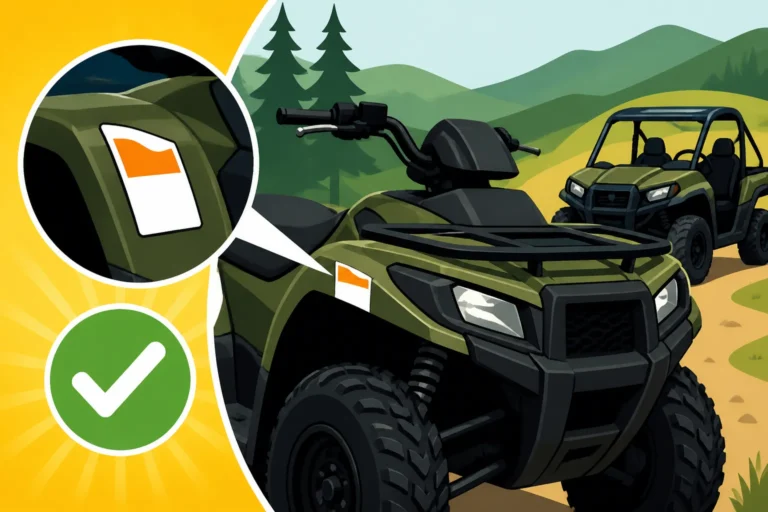
While the main VIN plate or stamp on the frame is the primary identifier, many off-road vehicles have secondary, partial, or hidden identification numbers. You need to become a detective and scour your machine for any other markings. Check the engine block – manufacturers often stamp a serial number there, which might match or be related to the original VIN. Look for stickers or plates in less exposed areas, such as under the seat, on the underside of the frame, or even on major components like the transmission. Sometimes, a partial VIN is stamped in multiple locations.
If you have the owner's manual, it's a treasure trove of information. The manual often lists the VIN and engine serial number. Even if the manual isn't original to your specific machine, if it's the correct make and model, it might give you clues about where to look for other numbers. Take clear, well-lit photographs of any numbers you find, even if they are partial or difficult to read. These photos will be vital evidence when you speak with Service New Brunswick. Remember, [Serial Numbers and Where to Look for Them] can offer more specific guidance on common locations.
Tracing Previous Ownership Records
Documentation of your machine's history is incredibly important, especially when the VIN is compromised. Do you have a bill of sale from when you purchased the machine? Even if it's a simple handwritten note, it's a starting point. Look for any old registration papers, insurance documents, or even repair receipts that might list a VIN or serial number. If you bought the machine from a previous owner, try to contact them. They might have old paperwork or remember where they purchased it from, which could provide a paper trail.
If you don't have a bill of sale, or if it's informal, this situation highlights why it's so important to use proper documentation for private sales. Resources like LawDepot offer readily available templates for bills of sale that capture all necessary information, including VINs, buyer and seller details, and purchase price. Having a formal document, especially one created using a reliable template from a service like LawDepot, would significantly strengthen your position by proving legitimate ownership. Without such documentation, registering a machine in New Brunswick can be exceptionally challenging, as explained in [New Brunswick Registration Without a Bill of Sale].
The Service New Brunswick Process for Missing VINs
Once you've exhausted all your personal investigative avenues and gathered every piece of potential identification and ownership documentation, it's time to approach Service New Brunswick. Be prepared for a more involved process than a standard registration. This isn't a simple in-and-out transaction; it requires patience, thoroughness, and a clear understanding that you're asking for special consideration.
Presenting Your Case to Service New Brunswick
When you visit a Service New Brunswick centre, bring everything you've gathered. This includes:
- Any bill of sale, even if informal, or other proof of purchase. A comprehensive bill of sale, perhaps one you created using a template from LawDepot, will be particularly helpful.
- Photographs of the damaged or missing VIN area.
- Photographs of any secondary identification numbers you found (engine serial, frame stamps, decals).
- Any old registration certificates, insurance slips, or repair records.
- Your own personal identification.
Clearly explain the situation to the staff. They will likely review your documentation and may need to consult with a supervisor or even provincial inspectors. Be prepared to fill out an application for vehicle registration and potentially other forms specific to unusual circumstances. They might ask for details about how the VIN became damaged or what steps you've taken to identify the machine. It's possible they will require a physical inspection of your machine by a provincial vehicle inspector to verify any existing numbers and assess the overall condition. This process is about establishing confidence that your machine is legitimately yours and not stolen, and that it can be uniquely identified. It’s a bit different than the usual [Registering an ATV With Service New Brunswick] process.
Potential Outcomes and Next Steps
The outcome of your case can vary depending on the specific circumstances and the completeness of your documentation.
- New VIN Assignment: In some rare cases, if Service New Brunswick is thoroughly convinced of your legitimate ownership and the machine’s history, and no other suitable identification can be found, they might assign a new provincial VIN to your ORV. This is often a last resort and involves a rigorous verification process.
- Special Registration Status: They might issue a registration under specific conditions, perhaps noting the issue with the VIN on the certificate.
- Denial of Registration: Unfortunately, if you cannot provide sufficient proof of ownership or the machine's identity, or if there's any suspicion of tampering, registration could be denied. This means the machine cannot be legally operated in New Brunswick.
Regardless of the initial outcome, always ask for clear instructions on any next steps. If an inspection is required, ensure you understand where and when it needs to happen. If you're advised to seek further documentation, ask for specific types of records that would be helpful. The staff at Service New Brunswick fields a lot of questions, including complex ones like yours, as detailed in [New Brunswick Registration Questions Staff Hear]. Patience and persistence are key here.
Here's a quick reference table for your investigation:
| Item to Investigate | Where to Look | What to Gather | Importance |
|---|---|---|---|
| Primary VIN | Frame (often on right side near steering) | Photos of damage/corrosion, any visible characters | Essential for standard registration |
| Engine Serial Number | Stamped on engine block (often near cylinder) | Photos of number | Secondary identifier, helps confirm machine identity |
| Other Frame Stamps/Decals | Under seat, on suspension, hidden areas | Photos of any other numbers/stickers | Additional corroborating evidence |
| Owner's Manual | Manual itself | VIN/serial number listed inside | May confirm VIN location or provide backup details |
| Bill of Sale | Your personal records, previous owner | Original or copy, ensure it details buyer/seller/VIN | Crucial proof of ownership for Service New Brunswick |
| Old Registration/Insurance | Your personal records, previous owner | Copies with VIN/serial number | Historical proof of legal identity |
| Service Records | Repair shops, your own logbook | Any receipts listing VIN/serial number | Further evidence of the machine's history |
Avoiding This Problem in Future Purchases
Dealing with a missing or damaged VIN is a headache you definitely want to avoid. The best way to do that is to be proactive and informed, especially when buying a used ATV or UTV. A little due diligence upfront can save you a world of trouble and potential financial loss down the road.
Verifying the VIN Before You Buy
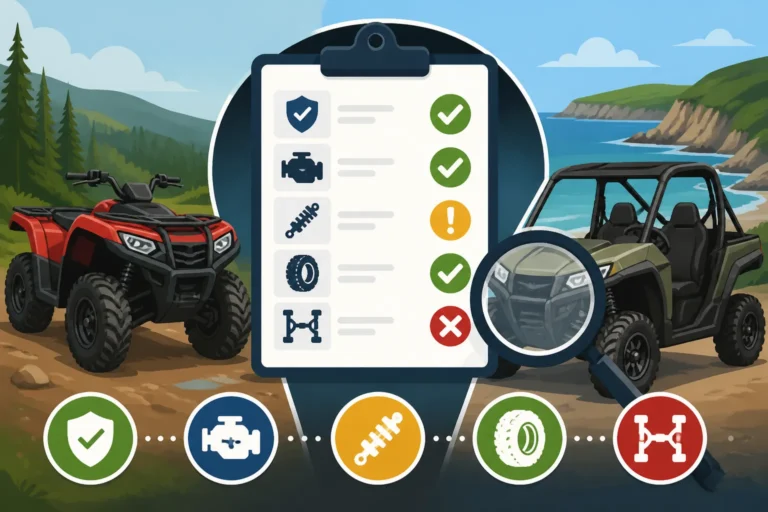
When you're looking at a used machine, inspecting the VIN should be one of your very first steps. Don't just glance at it; take the time to thoroughly check its condition and verify its authenticity.
- Locate the VIN: Know where the VIN is typically located on the specific make and model you're considering. It's usually stamped directly into the frame, often on the right-hand side near the steering head or front suspension.
- Check for Legibility: Ensure every character of the 17-digit VIN is clear and readable. If it's corroded, worn, or partially obscured, that's a major red flag.
- Look for Signs of Tampering: Check for grinder marks, welding, or any indications that the numbers have been altered or restamped. The area around the VIN should look consistent with the rest of the frame. Any sign of tampering means you should walk away immediately.
- Compare Across Documents: Ask the seller for the registration certificate and any other paperwork (like previous bills of sale). The VIN on the machine must exactly match the VIN on all documents. If there's a discrepancy, investigate thoroughly or reconsider the purchase.
- Take Photos: Always take clear photos of the VIN before you finalize a purchase. This serves as a record of its condition at the time of sale. [Photographing a VIN Before You Buy] is a great reference for this.
- Conduct a Record Search: For added peace of mind, consider requesting a record search (sometimes called a lien search) through Service New Brunswick or a third-party service using the VIN. This can reveal if there are any liens against the machine or if it has been reported stolen. This step is detailed further in [What a Record Search Shows Before You Buy Used] and can prevent you from buying a machine that belongs to someone else. It's also wise to check whether the machine has been reported stolen, as outlined in [Checking Whether a Used Quad Is Stolen].
Safeguarding Your Machine's VIN
Once you own a machine, taking steps to protect its VIN is essential for maintaining its legal identity and resale value.
- Regular Cleaning: After riding, especially in mud, saltwater, or corrosive environments, thoroughly clean the area where the VIN is located. Mud and grime can trap moisture and accelerate rust.
- Protective Coatings: Consider applying a clear coat, wax, or rust-inhibiting spray to the VIN area. This creates a barrier against the elements without obscuring the numbers.
- Avoid Physical Damage: Be mindful of where the VIN is located and try to prevent impacts or abrasions to that area.
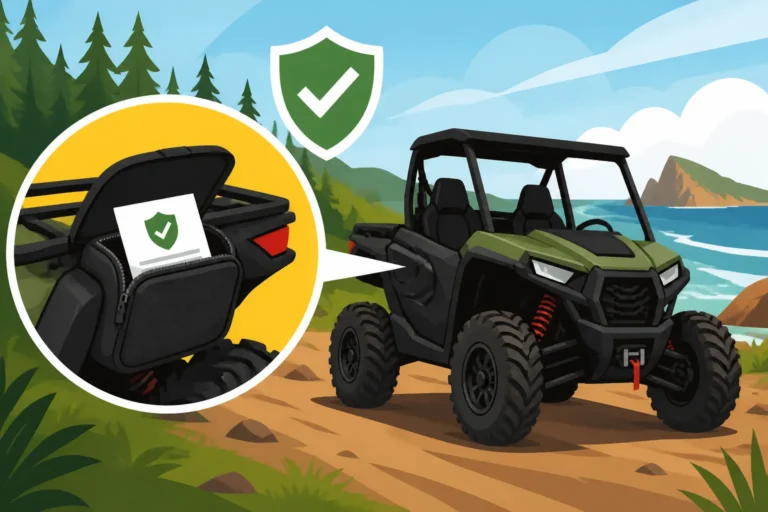
- Keep Paperwork Secure: Store your registration certificate, bill of sale (which you might have created using a trusted source like LawDepot for legal precision), and other important documents in a safe place. Having copies, both physical and digital, can be a lifesaver if originals are lost or damaged. Even if the physical VIN is compromised, robust paperwork can help prove your ownership.
By following these preventative measures, you significantly reduce the risk of ever having to navigate the challenging waters of registering an ORV with a missing or damaged VIN.
Disclaimer
This article is for general informational purposes only and does not constitute professional advice. Laws, prices and regulations vary by location and change over time. Consult a qualified professional for guidance on your specific situation.