New Brunswick Rules for Riding a Village Street
It's a familiar scenario for many of us who love hitting the trails: you're out riding, the sun is shining, and you realize you're getting hungry or running low on fuel. You see a village in the distance, maybe a little gas station or a diner calling your name, and the thought immediately pops into your head: "Can I just ride my quad down that street to get there?" The temptation is real, but navigating village streets on your ATV or UTV in New Brunswick isn't as straightforward as it might seem. This guide is here to clear up the confusion, explain the regulations, and help you understand exactly what's allowed and, more importantly, what isn't when it comes to riding your machine on public village roads.
The General Rule: No Unrestricted Village Street Riding
Let's be blunt: generally speaking, you cannot just hop on your ATV or side-by-side and ride it freely down a village street in New Brunswick. The default rule for most municipalities, villages, and towns is that off-road vehicles (ORVs) are not permitted on public roads. This isn't just a suggestion; it's a legal restriction aimed at ensuring public safety and maintaining the peace. It can be incredibly frustrating when you're just trying to get from Point A to Point B, and a paved road seems like the most direct route, but the rules are there for a reason. Ignoring them can lead to significant penalties, not to mention putting yourself and others at risk.
Why the Default is 'No'
You might wonder why there's such a blanket prohibition. After all, your machine has lights, brakes, and can often keep up with traffic in a low-speed environment. However, the provincial regulations and local bylaws are primarily concerned with safety and the unique characteristics of ORVs. Unlike cars or trucks, ATVs and UTVs are designed for off-road conditions. Their tires, suspension, and handling characteristics aren't optimized for paved surfaces, especially when interacting with heavier, faster-moving road traffic. There are also concerns about noise, particularly in residential areas, and the potential for damage to road surfaces or private property. Think about the roar of a modified exhaust or the aggressive knobby tires designed for mud and rock; these aren't always compatible with the quiet, smooth flow of village life. Plus, there’s the fundamental difference in how ORVs are registered and insured compared to highway vehicles. You'll need to remember that [New Brunswick Requires Insurance on Trails], but that's a different beast than road insurance.
The Fine Print for Infractions
If you decide to chance it and ride your ATV or UTV on a village street where it's not permitted, you're looking at more than just a stern warning. Law enforcement officers, whether RCMP or local municipal police, can and do enforce these rules. The penalties can be substantial, often involving hefty fines that can quickly spoil your day, your weekend, and your riding budget for months. Beyond the monetary cost, there’s the potential for your machine to be impounded, and repeated offenses could lead to more severe consequences. It’s simply not worth the risk. When you weigh the convenience of a shortcut against a fine like [New Brunswick's $292.50 Highway Fine], the trail suddenly looks a lot more appealing.
How Village Streets CAN Become Accessible (Bylaws & Permits)
Now, here's where it gets interesting and a little less black and white. While the general rule is "no," there are specific legal mechanisms that allow some village streets to be opened up for ORV use. This isn't a free-for-all, but rather a carefully managed process that requires local government action or specific permits. It means that while you can't assume any village street is open, some absolutely can be, provided the proper steps have been taken. It's crucial for riders to understand these nuances to avoid inadvertently breaking the law.
Municipal Bylaws: The Power of Local Councils
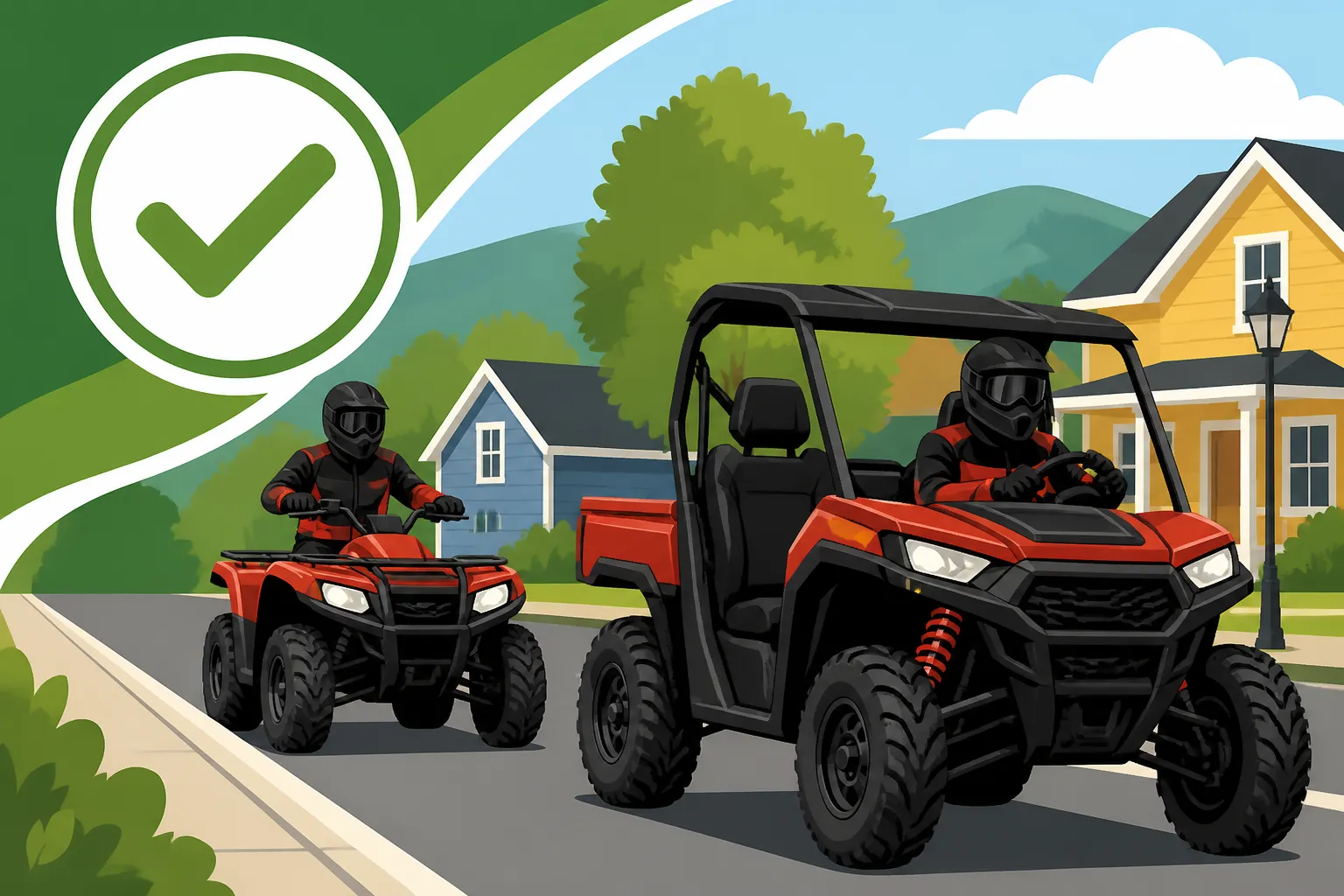
The primary way village streets become accessible to ATVs and UTVs is through municipal bylaws. Local councils, like those in the Village of Perth-Andover or the Town of St. Stephen, have the authority to pass bylaws that designate specific roads or sections of roads for ORV use. These bylaws are usually enacted after public consultation and careful consideration of local needs, safety, and traffic flow. A designated road might allow riders to access a gas station, a restaurant, a trailhead, or simply connect different parts of a community's trail network. These bylaws often come with specific conditions, such as speed limits, hours of operation, and even requirements for certain safety equipment beyond the provincial minimums. Always check for [New Brunswick Municipal Bylaws That Open Roads] before planning your route. Knowing how to look up your town's ATV bylaw online is a vital skill for any responsible rider.
It's not uncommon for these designated roads to be signed with clear signage indicating that ORVs are permitted. However, don't assume that just because one street is open, every street in that village is. Bylaws are very specific about which roads are included. If you're a serious rider who often visits different regions, it's worth taking the time to consult the local municipality's website or contact their administrative office. Some villages, especially those that cater to outdoor tourism, are quite proactive in opening up connections, recognizing the economic benefits that ORV riders bring to local businesses. You might find some excellent [New Brunswick Towns That Allow Quads] that make your trip much more convenient.
Highway Usage Permits: When These Come Into Play for Specific Stretches
Beyond municipal bylaws, there's another tool in the shed: Highway Usage Permits. These are typically issued for specific, often short, stretches of provincial highways or roads that connect two designated trail sections. While less common for riding through an entire village street, they can be crucial for bridging gaps where a trail might momentarily meet or run alongside a road. These permits are usually applied for by ATV clubs or federations, like QuadNB, rather than individual riders. They grant permission to use a segment of a highway for ORV travel under strict conditions.
For riders, this usually means following specific instructions, such as riding on the shoulder, maintaining a reduced speed, and often requires bright visibility gear. You'll likely encounter these on the outskirts of villages or between communities rather than within the heart of a residential area. It's a pragmatic solution for trail continuity but doesn't equate to free reign on village roads. It’s always about connecting the larger trail system, not generally for general transportation within the village. These permits are often a key part of how [New Brunswick Shared Highway Sections] are managed.
Crossing Roads, Not Riding Them: The Crucial Difference
This is a really important distinction that often gets overlooked. Even where riding an ORV on a village street is generally prohibited, the law usually allows for crossing a public highway or road. But there are very specific rules for how these crossings must be executed. You can't just barrel across! You must come to a complete stop, yield to all highway traffic, cross at a right angle, and only when safe to do so. The goal is to minimize your time on the road and reduce any potential for conflict with highway vehicles.
This rule is designed to allow riders to move from one trail section to another when a road intersects their path. It’s not an excuse to ride down a street for a block or two to get to the store. The spirit of the law is about incidental crossing, not utilizing the road as a travel corridor. Understanding [New Brunswick Rules for Crossing a Road] is paramount to safe and legal riding, and it applies whether you're in a bustling village or a quiet rural area. Never confuse the ability to cross with the permission to ride.
Practical Considerations and Rider Responsibilities
Even if you find a village street or designated road where ORVs are permitted, your responsibilities as a rider don't end there. In fact, they become even more critical. When you're sharing space with pedestrians, bicycles, and motor vehicles in a community setting, awareness and courtesy are paramount. It's not just about following the letter of the law; it's about being a good ambassador for the sport and ensuring that these privileges, once granted, aren't revoked due to irresponsible behavior. Many of us appreciate the freedom our machines offer, and keeping village access open depends on all of us riding respectfully.
The 'Must-Haves' on Any Legal Ride
No matter where you're riding, certain items are non-negotiable. If you're on a village street that permits ORVs, these requirements are even more strictly enforced.
- Registration: Your machine must be properly registered with Service New Brunswick. This includes having your current plate affixed as required by law. Don't forget your [New Brunswick ORV Registration Explained] before hitting the trails.
- Insurance: Proof of insurance is essential. While [New Brunswick Requires Insurance on Trails], the specific type and coverage might differ if you're on a designated road section, so always ensure your policy covers you for any permissible road use. Carry proof of this.
- Helmet: A properly fitted, approved helmet is mandatory for every occupant of the ORV. This isn't just a suggestion; it's a critical safety measure and a legal requirement for [New Brunswick ATV Helmet Law].
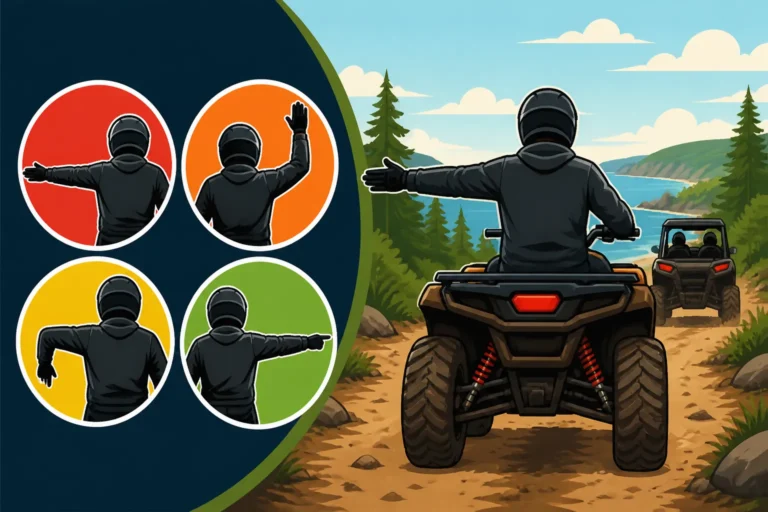
- Lights & Signals: Your machine must be equipped with working headlights, taillights, and brake lights, especially if you're riding after dusk or in low visibility conditions. While many ATVs don't have turn signals, knowing [New Brunswick Hand Signals Without Lights] is vital when interacting with other traffic. If your machine, like many UTVs or some aftermarket setups from brands like SuperATV, has added turn signals and mirrors, that's even better for road safety and visibility.
- Documents: Always carry your proof of registration, insurance, and your operator's license (if applicable) with you. An officer can and will ask to see these. Knowing [New Brunswick Documents You Must Carry] is key.
Respecting the Community: Noise, Speed, and Courtesy
When you're riding on a village street, you're entering shared space, and that comes with shared expectations.
- Speed Limits: Adhere strictly to posted speed limits. Village streets are often 50 km/h or less, and many ORV bylaws will impose even lower limits on designated sections. Children and pets are common in residential areas, and reduced speed gives you more reaction time.
- Noise: Be mindful of your machine's noise levels. While a throaty exhaust might sound great out in the woods, it can be disruptive in a residential neighborhood. Try to avoid unnecessary revving or prolonged idling. This is about being a good neighbour and preserving the privilege of road access.
- Yielding and Right-of-Way: Treat other road users with respect. Yield to pedestrians, cyclists, and all other vehicles as you would in a car. Maintain a safe following distance and anticipate sudden stops or turns. Remember that [New Brunswick Quads Yield to Motor Vehicles] is a fundamental rule.
- Dust and Dirt: Especially in drier conditions, ORVs can kick up a lot of dust. Be aware of this, particularly when passing homes or businesses, and slow down to minimize the impact. Similarly, try to keep mud and dirt from your tires off clean paved surfaces where possible.
Gear and Machine Readiness
Your machine itself needs to be ready for the road, even for short stretches.
- Tires: While knobby tires are great for mud, they can be less stable on pavement and wear quickly. Ensure your tires are in good condition and properly inflated for mixed terrain. Companies like SuperATV offer a wide range of tires, and while they specialize in off-road, some models are more suitable for occasional road use than others.
- Visibility: Consider adding reflective tape or brightly coloured flags to your machine, especially if you're using it on village roads. Anything that enhances your visibility to other drivers is a bonus. Aftermarket mirrors, easily found from suppliers, are also a smart addition for any machine that sees road use, even brief stretches.
- Maintenance: Before any ride that involves road sections, do a quick check of your brakes, lights, and steering. A mechanical issue on a trail is one thing, but on a paved village street shared with cars, it can be far more dangerous.
| Aspect | General Village Street (No Bylaw) | Designated Village Street (With Bylaw) |
|---|---|---|
| Legality of Riding | Generally Prohibited | Permitted under specific conditions |
| Fines for Riding Illegally | Yes, substantial fines likely | No, if following bylaw rules |
| Crossing Roads | Generally Permitted (with rules) | Generally Permitted (with rules) |
| Registration Required | Yes | Yes |
| Insurance Required | Yes | Yes |
| Helmet Required | Yes | Yes |
| Speed Limits | Not Applicable (shouldn't be there) | Strictly Enforced (often lower) |
| Traffic Interaction | Avoid at all costs | Requires high vigilance and courtesy |
| Signs to Look For | None (absence means no ORV) | Specific ORV permitted signage |
| Local Knowledge | Essential to avoid trouble | Essential to know permitted routes |
Riding your ATV or UTV in New Brunswick is an incredible experience, offering access to thousands of kilometres of stunning trails. But that freedom comes with responsibility, especially when you're looking to navigate built-up areas. By understanding the rules around village streets – knowing when you can ride, when you can cross, and when you absolutely cannot – you're not only protecting yourself from fines but also contributing to the positive reputation of ORV riders across the province. Always do your homework, respect the community, and ride safely.
Disclaimer
This article is for general informational purposes only and does not constitute professional advice. Laws, prices and regulations vary by location and change over time. Consult a qualified professional for guidance on your specific situation.