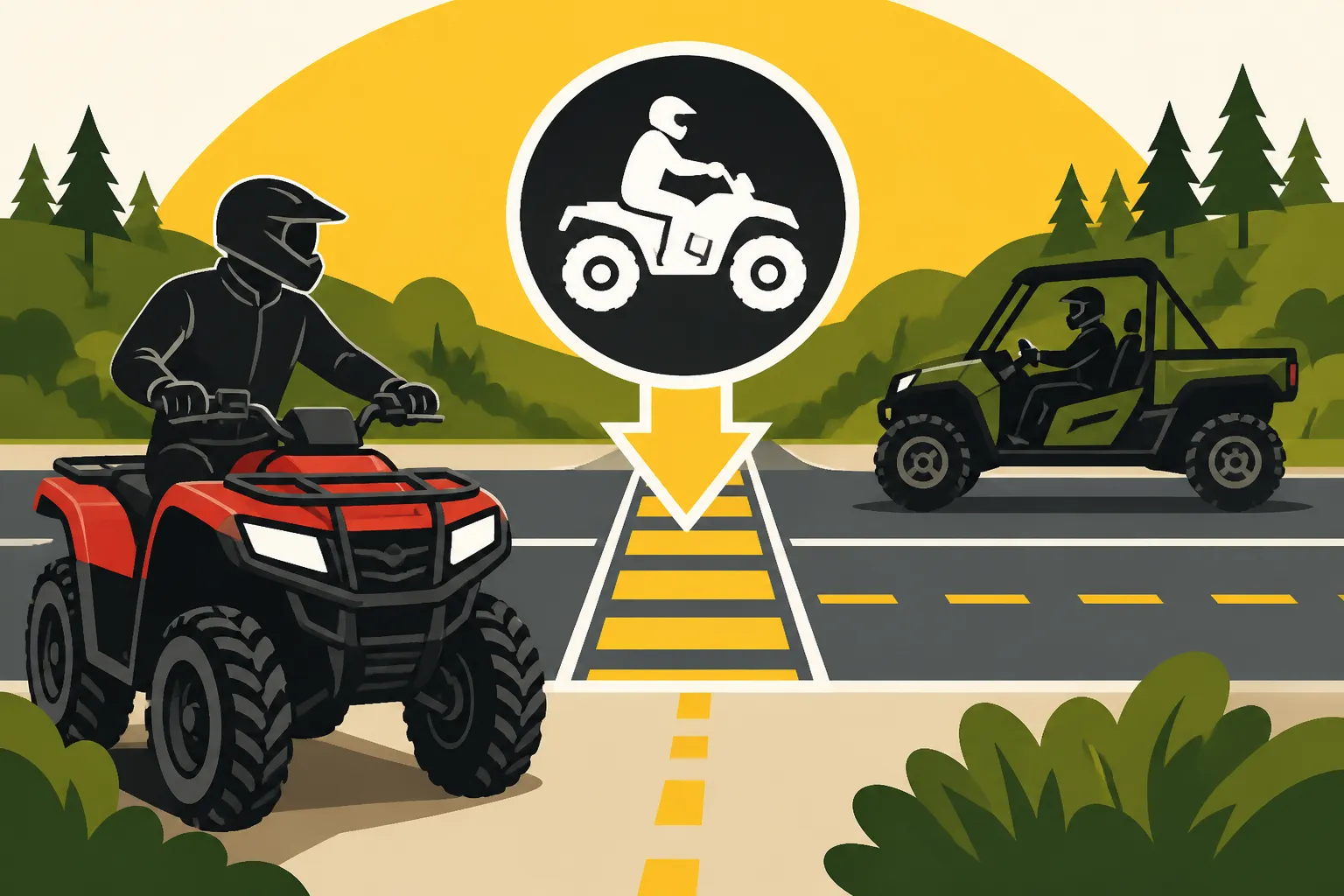
New Brunswick Rules for Crossing a Highway
Navigating New Brunswick's vast network of off-road vehicle (ORV) trails often means encountering paved roads or highways that break up the wilderness paths. This necessity of crossing a highway can be a major source of anxiety and confusion for riders, as the rules aren't always crystal clear and the stakes for getting it wrong are incredibly high. This guide is here to demystify those regulations, helping you cross safely and legally, ensuring your enjoyment of New Brunswick's incredible riding opportunities remains uninterrupted by unnecessary risks or fines.
The Balancing Act: Why Highway Crossings are a Concern for New Brunswick Riders
Riding your ATV or side-by-side through New Brunswick's breathtaking landscapes is an experience like no other. From the rolling hills of the Miramichi to the rugged Fundy coast, the trails offer freedom and adventure. However, these fantastic trails often crisscross public roads and highways. That moment when the dirt path suddenly meets asphalt can be jarring, not just visually, but also legally and practically. It’s a point where the exhilarating world of off-roading collides with the structured rules of public roadways, creating unique challenges for every rider.
The Inherent Dangers of Mixing ORVs with Highway Traffic
Let's be real – ORVs and highway traffic are like oil and water. They operate on entirely different principles and at vastly different speeds. A highway is designed for high-speed vehicular traffic, where drivers expect cars, trucks, and motorcycles moving at rapid paces. Your ATV, while powerful and capable off-road, is a much smaller, slower, and often less visible vehicle in this environment. The sheer speed differential creates an immediate danger. A driver travelling at 100 km/h has far less time to react to an ORV suddenly appearing or crossing than they would to another car.
Furthermore, the physical characteristics of an ORV – its open design, knobby tires, and higher center of gravity – make it less stable and less protective in a collision with a road vehicle. There’s also the issue of driver expectation; many motorists simply aren't looking for an ATV to appear on a highway, especially in unexpected spots. This lack of expectation significantly increases the risk of accidents. It's not just about what you can do, but what's safe to do, and mixing with high-speed traffic for anything longer than absolutely necessary is inherently risky.
Navigating the Law: Why Specific Rules Exist
The provincial government isn't trying to make your life difficult by having specific rules for highway crossings. Quite the opposite, these regulations are a crucial layer of protection, designed to safeguard both ORV operators and other motorists. Without clear guidelines, every crossing would be a chaotic free-for-all, leading to a much higher incidence of accidents and injuries. Think of it as a necessary framework to allow ORV enthusiasts to connect trails while minimizing the risks associated with shared infrastructure.
The rules aim to standardize how these encounters happen, ensuring predictability and reducing ambiguity. They dictate everything from where you can cross to how you must approach and execute the crossing. These laws are an acknowledgement that ORVs are a vital part of New Brunswick's recreational and working landscape, but that their operation needs careful integration with the broader transportation network. Understanding the why behind these rules often helps with internalizing and consistently following them, making every ride safer for everyone involved.
Deciphering New Brunswick's Highway Crossing Regulations
When it comes to crossing highways in New Brunswick, it's not simply a matter of looking both ways and gunning it. There are very specific legal parameters you need to understand and adhere to. These aren't suggestions; they are laws designed to keep you safe and avoid dangerous encounters with much larger, faster traffic. Getting these details right is paramount for any responsible ORV rider.
The "7.5 Metre Rule" and Its Implications
One of the most foundational rules you'll encounter is the [7.5 Metres From the Travelled Portion] stipulation. This law generally dictates that you cannot operate an ORV within 7.5 metres (approximately 25 feet) of the travelled portion of a highway. The "travelled portion" refers to the part of the road normally used by vehicles, excluding shoulders, ditches, or embankments. This rule essentially means you cannot ride alongside the highway, even on the shoulder, unless a specific ministerial designation or municipal bylaw allows it, or you are in the act of directly crossing.
The implication here is clear: ORVs are largely separated from highway traffic. When you approach a highway that needs crossing, you must stay off the travelled portion until you are ready to make the direct crossing. This separation minimizes the risk of incidents that could arise from ORVs operating in close proximity to high-speed traffic for extended periods. It's a critical safety buffer. Understanding [What Counts as the Travelled Portion of a Highway] is key to correctly applying this rule. Some riders mistakenly think the gravel shoulder is fair game, but generally, that's not the case unless explicitly stated otherwise by local ordinance or signage.
The "Shortest Route" Principle
When you do need to cross a highway, the law is quite explicit: you must do so by the shortest, most direct route available. This isn't just about efficiency; it's about minimizing your exposure to highway traffic. Every second you spend on the paved surface is a second of increased risk. You're expected to approach the highway, stop, assess, and then cross perpendicular to the flow of traffic, getting back onto the trail or private land as quickly as possible.
This means no meandering, no riding a short distance down the highway to reach a different access point, and certainly no recreational cruising on the pavement. The intent is to make your presence on the highway as brief and predictable as possible for other drivers. It's about being in and out, like a quick dash, not a leisurely stroll. Always plan your crossing point to ensure it's truly the shortest path between two safe off-road points.
Essential Equipment and Visibility Requirements
Even for a quick crossing, your machine needs to be equipped for visibility and control. While you're not operating a street-legal vehicle, certain minimum requirements enhance safety. Your ORV must have working headlights and taillights, especially if there's any chance you'll be riding near dusk, dawn, or in adverse weather. Good brakes are non-negotiable for obvious reasons, allowing you to stop safely before entering traffic.
Beyond the legal minimums, consider enhancements. Upgrading your stock lighting to brighter, more robust LED setups – options readily available from aftermarket specialists like SuperATV – can make a substantial difference in how visible you are to oncoming traffic. Reflective tape on your machine, especially on the front and rear, can also significantly boost your visibility. Remember, the goal is to be seen. The clearer you are to others, the safer your crossing will be. Always review the full list of [New Brunswick Equipment a Rider Must Carry] to ensure compliance not just for crossing, but for all trail riding.
Yielding, Stopping, and Right-of-Way
This is perhaps the most crucial aspect of highway crossing: you, as the ORV operator, always yield to highway traffic. The Off-Road Vehicle Act makes this unequivocally clear. Before entering any highway, you must bring your machine to a complete stop. This isn't a "rolling stop" like some might attempt at an intersection; it means coming to a full halt. Then, you must yield the right-of-way to all vehicles and pedestrians on the highway. Only when it is absolutely safe to proceed, with no approaching traffic that would be forced to slow down or alter its course, should you begin your crossing.
Think of it as pulling out onto a major thoroughfare from a private driveway – you wait until the coast is truly clear. This includes looking left, then right, then left again, and being aware of any vehicles that might be turning onto the highway or approaching from further distances. Even if you think you have time, if a vehicle is approaching and your crossing might cause them any inconvenience, you wait. This rule is often stated as [New Brunswick Quads Yield to Motor Vehicles], and it's not one to take lightly.
Practical Steps for a Safe and Legal Highway Crossing
Knowing the rules is one thing; putting them into practice safely and effectively is another. Highway crossings require a deliberate, cautious approach. It's a moment when you need to switch gears from relaxed trail riding to highly focused, defensive maneuvering. Let's break down the practical steps to ensure you navigate these intersections without incident.
Pre-Crossing Assessment: Look, Listen, and Plan
Before you even get close to the pavement, start your pre-crossing assessment. Slow down well in advance of the highway. Scan your surroundings for any signs of traffic, both on the highway and on any roads leading to it. Listen for the sound of approaching vehicles that you might not yet see, especially around blind curves or hills. If you're using a GPS or trail map, identify your exact crossing point and confirm it aligns with the "shortest route" principle.
Once at the edge of the highway, come to a complete stop at a point where you have a clear, unobstructed view of traffic in both directions, but without encroaching on the travelled portion. Turn off your engine or put your machine in neutral to eliminate engine noise, allowing you to hear better. Take a deep breath. This isn't a race; it's a critical safety check. Look left, then right, then left again. Check your mirrors if your machine has them. Be aware of weather conditions that might affect visibility for you or other drivers. This methodical approach is your best defense against the unexpected.
Executing the Crossing: A Step-by-Step Guide
When you've determined the path is absolutely clear and you have ample time to cross safely:
- Engage Gear: Select the appropriate gear (usually a low gear for good torque and control).
- Accelerate Smoothly: Enter the highway and accelerate smoothly and steadily across. Do not lurch forward suddenly, but also don't hesitate. The goal is a controlled, continuous movement.
- Maintain Straight Path: Cross perpendicular to the highway's flow of traffic. Do not attempt to angle your machine or drive down the shoulder.
- Stay Focused: Keep your eyes on the opposing side of the highway and on any potential incoming traffic.
- Exit Quickly: Once you've safely cleared the travelled portion, continue directly onto the next trail section or private property.
Remember, hand signals can be helpful for visibility, especially if you're in a group or if your machine's lights aren't as bright as highway vehicles. Review [New Brunswick Hand Signal Requirements] to be prepared. If you're riding a side-by-side, ensure all occupants are aware of the plan and are seated with seatbelts fastened.
Riding the Shoulder or Ditch: When is it Allowed?
As touched upon with the 7.5 metre rule, riding on the shoulder or in the ditch alongside a highway is generally not permitted for ORVs in New Brunswick. The core principle is separation. However, there are exceptions. Some municipalities may have specific bylaws that allow ORV access on certain roads or shoulders within their boundaries for short distances, often to connect trails or access services. Additionally, there might be specific, designated [New Brunswick Highway Usage Permits] issued for particular events or purposes.
Crucially, never assume it's allowed. Always look for clear signage indicating ORV access or consult local municipal regulations and maps provided by organizations like QuadNB. If there’s no clear indication, default to the 7.5-metre rule: stay off the shoulder and ditch areas adjacent to the travelled portion of the highway. Violating this rule often falls under [New Brunswick Fines for Riding Near a Highway] and can lead to significant penalties.
Group Riding Considerations
Crossing a highway in a group adds layers of complexity, but also an opportunity for enhanced safety through coordinated effort.
- Designate a Leader: A clear leader who understands the rules and can make the "all clear" call is essential.
- Staggered Crossing (Often Best): Instead of crossing all at once, which spreads out your presence across multiple lanes and for a longer duration, it's often safer to cross one or two machines at a time. The leader crosses, secures the other side, and then signals the next rider when it's safe.
- Maintain Spacing: If crossing in quick succession, ensure enough space between machines for each rider to react and for highway traffic to potentially pass between ORVs if necessary.
- Communication is Key: Use clear hand signals or communication systems to relay "all clear" or "wait" messages.
- No Stragglers: Ensure everyone in the group is accounted for and understands the plan. Never leave a rider behind to cross alone if the group crossed together.
Even in a group, each individual rider is responsible for their own safe crossing and for adhering to the "yield" principle. The buddy system works, but individual vigilance is paramount.
| Action | Legal & Safe | Illegal & Risky |
|---|---|---|
| Approach | Slow down, come to complete stop off pavement | Speed up, roll through stop, encroach on travelled portion |
| Visibility | Use working lights, wear bright gear, check mirrors | No lights, dark clothing, ignore mirrors |
| View | Clear view of traffic both ways | Obstructed view due to hills, curves, or parked vehicles |
| Route | Shortest, most direct path across highway | Riding down shoulder, angled crossing, cutting corners |
| Yielding | Yield to all highway traffic and pedestrians | Assume right-of-way, force traffic to slow/swerve |
| Acceleration | Smooth, steady acceleration across | Hesitant, stop-and-go, or overly aggressive |
| Group Ride | Staggered, communicated crossings | All-at-once rush, uncoordinated, no designated leader |
The Serious Ramifications of Improper Highway Crossings
It's easy to get caught up in the thrill of the ride, but cutting corners when crossing a highway can have severe, long-lasting consequences. These aren't just minor infractions; they can impact your wallet, your insurance, your legal standing, and even the future of ORV riding in New Brunswick. Understanding these potential outcomes should reinforce the importance of meticulous adherence to the rules.
Financial Penalties and Fines
New Brunswick has established clear financial penalties for ORV violations, and improperly crossing or operating too close to a highway is certainly on that list. You could face a significant fine, often starting in the hundreds of dollars, for violations like riding within the prohibited 7.5-metre zone or failing to yield right-of-way. These aren't just minor tickets; they're substantial hits to your pocketbook.
Beyond the immediate fine, there might be administrative fees, and in some cases, your machine could even be impounded, leading to additional towing and storage costs. Imagine having to pay a hefty fine and the expense of retrieving your ORV, all for a moment of carelessness or a lapse in judgment. For example, [New Brunswick Fines for Riding Near a Highway] can be substantial, and these costs add up quickly. These fines exist to deter unsafe behaviour, and the authorities are serious about enforcing them.
Insurance Implications and Liability
An accident during an illegal highway crossing is a nightmare scenario for your insurance. If you're involved in a collision while violating ORV rules – such as riding on the paved surface outside of a direct crossing, failing to yield, or operating an unregistered machine – your insurance company might deny coverage entirely. While [New Brunswick Requires Insurance on Trails] for most machines, policies often have clauses that exclude coverage for illegal activities.
This means you could be personally liable for not only the damages to your own machine but also for damages to the highway vehicle, medical costs for anyone injured (including yourself), and any legal fees. The financial burden could be catastrophic, potentially wiping out savings or leading to long-term debt. Always ensure your machine is properly registered and insured. It's not just about meeting legal requirements; it's about protecting yourself from unimaginable financial ruin. An unregistered machine, for instance, could lead to [New Brunswick Penalties for Riding Unregistered] which compound the issues of an accident.
Community Impact and Trail Access
Beyond personal repercussions, every incident involving an ORV on a highway, especially those resulting from illegal crossings, has a ripple effect on the entire riding community. Negative publicity from accidents can fuel public perception that ORVs are inherently dangerous or that riders are reckless. This, in turn, can lead to increased restrictions, reduced access to trails, and more stringent regulations for everyone.
Local municipalities and the province are constantly evaluating trail access and road usage. A rise in accidents or complaints related to highway crossings could prompt them to close off crossing points, deny future trail development, or impose stricter enforcement. Organizations like QuadNB work tirelessly to advocate for rider rights and expand trail networks, but their efforts can be undermined by a few irresponsible actions. By always crossing legally and safely, you're not just protecting yourself; you're contributing to the positive image of the ORV community and helping to preserve the future of riding for all of us in New Brunswick. Make sure you have [Carrying Four Documents at Once] as well to ensure you are fully prepared for any encounter with enforcement.
Disclaimer
This article is for general informational purposes only and does not constitute professional advice. Laws, prices and regulations vary by location and change over time. Consult a qualified professional for guidance on your specific situation.