New Brunswick Parent Responsibility for Passengers
As a parent, you want nothing more than to share your love for the outdoors and adventure with your children. Getting out on the trails with an ATV or side-by-side can create incredible family memories, but the thought of having your child, or another young person, as a passenger often brings a wave of questions and concerns. You're trying to balance fun with safety and, let's be honest, stay on the right side of the law. It’s tough to navigate all the rules, and the last thing any parent wants is to put their child at risk or face unforeseen legal trouble. This guide is here to untangle the specifics of parental responsibility for ATV passengers in New Brunswick, helping you understand the regulations so you can ride confidently and safely.
Understanding Parental Responsibility Under New Brunswick Law
When it comes to off-road vehicles (ORVs) in New Brunswick, the law is pretty clear: adults, especially parents or guardians, bear significant responsibility for the actions and safety of any minor under their care. This isn't just about general supervision; it's about a legal framework designed to protect young riders and ensure everyone on the trail operates safely. It can feel like a lot to keep track of, but breaking it down helps make it less daunting.
The Legal Framework for Young Riders
The province’s Off-Road Vehicle Act is the backbone of these regulations. It sets out the rules for operating ATVs, side-by-sides, dirt bikes, and snowmobiles, and it explicitly addresses the role of parents and guardians. Essentially, if a minor is operating or riding as a passenger on an ORV, the adult responsible for them is legally accountable for ensuring all rules are followed. This means if your child makes a mistake, or if they're not properly equipped, the responsibility often lands squarely on your shoulders.
Imagine a scenario where your 12-year-old, eager to try out the trails, is given permission to ride your ATV. Unbeknownst to you, they decide to pick up their younger sibling for a quick spin. If an incident occurs, even if you weren't physically present, the Act sees you as the adult who enabled the situation by providing access to the machine. The law views parents as having a duty of care, and that duty extends to making sure your children understand and adhere to the regulations, especially regarding passengers. It's about proactive supervision and education, not just reactive responses.
Who Qualifies as a "Passenger" and Why It Matters
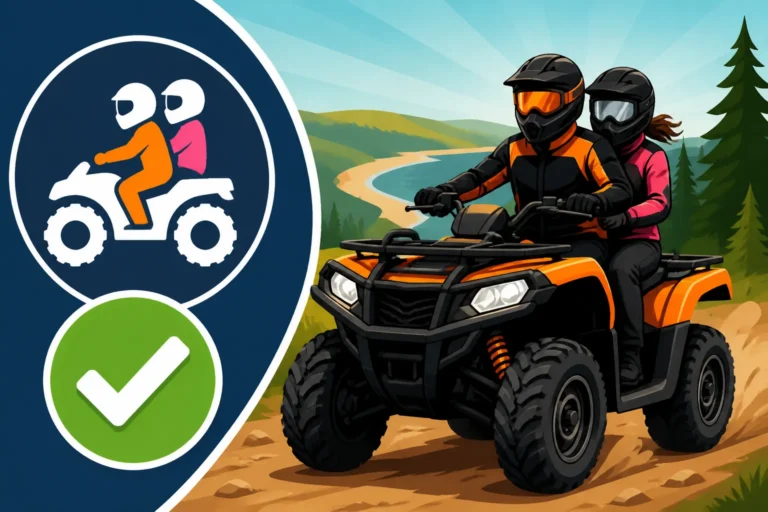
In the eyes of the New Brunswick Off-Road Vehicle Act, a "passenger" is any person riding on an ORV who is not the operator. This might seem obvious, but the crucial part is understanding where and how that passenger can ride. The law is very specific about ensuring that any ORV carrying a passenger is actually designed by the manufacturer for more than one person. This is a critical distinction that often gets overlooked.
Think about a standard single-seat ATV. It's built for one rider and one rider only. The seat, footrests, and handholds are all positioned for a single operator. Now, picture someone trying to squeeze a small child behind them on that same single seat, or worse, have them stand on the rear rack. Not only is this incredibly dangerous, but it's also illegal. The machine is not designed for it, and it compromises the balance and control of the vehicle. If you see a two-up ATV, or a side-by-side, you'll notice it has clearly defined separate seating, additional handholds, and proper footrests for the passenger. Ignoring this crucial design specification for convenience or to save on a second machine is a common mistake and one that puts your child at immense risk. Whether you're considering accessories from companies like SuperATV, always ensure any modifications respect the original machine's intended capacity and don't encourage unsafe passenger arrangements.
Distinguishing Between Drivers and Passengers When It Comes to Age
New Brunswick has distinct age requirements for who can drive an ATV versus who can ride as a passenger. This distinction is vital for parents to grasp, as their responsibilities shift depending on the child's role. For example, a 14-year-old can operate an ATV if they hold a Class 9 licence and have completed a certified safety course, and are under adult supervision. However, the rules for them carrying a passenger are separate.
When it comes to passengers, generally, the age limit is a bit more flexible, as long as the machine is designed for two and the driver is legally allowed to carry a passenger. However, a parent allowing a very young child to ride as a passenger on a two-up machine still carries the responsibility to ensure that child can safely reach footrests, hold onto handholds, and is properly helmeted and secured. You can read more about [New Brunswick ATV Age Requirements] and [New Brunswick Rules for a Child Passenger] to get the full picture. It's not just about the numbers; it's about the child's physical ability to participate safely in the ride. As a parent, you need to use your judgment, but always within the bounds of what the law permits, to ensure your child's safety and avoid potential hazards.
Age, Supervision, and Training Requirements for Young Riders
Navigating the world of ATV riding with children means understanding not just if they can ride, but how and under what conditions. New Brunswick has specific guidelines around age, the necessity of adult presence, and safety training. These rules are put in place for a good reason: to keep everyone safe, especially our younger adventurers.
Minimum Age for ATV Passengers
While the Off-Road Vehicle Act specifies minimum ages for operating an ATV, it also touches on passengers. Generally, if an ATV is designed to carry a passenger, there isn't a hard-and-fast provincial minimum age for that passenger, as long as they are properly secured, can reach the footrests, and hold on to the grab handles. However, this is where parental responsibility truly comes into play. Just because the law doesn't state "no passengers under 6," for instance, doesn't mean it's automatically safe or responsible.
Consider a parent who wants to take their three-year-old on a short, slow ride on a two-up ATV. While the machine is designed for a passenger and the parent might drive cautiously, a child that young lacks the physical strength, stamina, and cognitive ability to effectively participate as a passenger. They might fall asleep, lose their grip, or be unable to brace themselves effectively. As a parent, you have to realistically assess if your child is mature and strong enough to ride as a passenger, even if the machine accommodates them. Always ensure they can fit comfortably and securely with all safety gear. Your common sense and primary concern for their well-being should always supersede just barely meeting a regulation.
The Role of Adult Supervision
Adult supervision is a cornerstone of safe ATV riding for minors, whether they are driving or simply riding along as a passenger. New Brunswick law outlines specific requirements for adult escorts when teenagers are operating ORVs. For instance, a 14 or 15-year-old with a Class 9 licence and safety course certificate must be escorted by an adult who is also certified and at least 19 years old. This isn't just about having an adult present; it's about having a responsible, knowledgeable adult who can intervene if needed and who understands the rules themselves.
If your child is a passenger with another young, permitted driver, your responsibility as a parent extends to ensuring that both the young driver and your child as a passenger are adhering to all safety protocols and legal requirements. This could mean riding nearby, maintaining visual contact, or communicating regularly. It's not enough to just wave them off. The adult escort is essentially an extension of parental responsibility on the trail. For a deeper dive, check out [New Brunswick Adults Escorting Young Riders]. This structured supervision is critical, especially when you're combining youthful enthusiasm with powerful machines.
Safety Training and Its Impact on Responsibility
While ATV passengers typically aren't required to complete a safety training course, the driver often is, and this directly impacts parental responsibility. A parent allowing their child to drive an ATV with a passenger without the required safety training is taking a massive risk, both legally and ethically. The safety course teaches crucial skills like hazard avoidance, proper braking techniques, how to handle different terrain, and the importance of responsible operation. These are all magnified when a passenger is on board, as the machine handles differently, and there's another life depending on the driver's skill.
If a collision occurs and the young driver hasn't completed their mandatory safety course, the consequences for the parent can be severe, ranging from hefty fines to civil liability in case of injury. Investing in a [New Brunswick Quad Safety Course Explained] for your child isn't just about getting a certificate; it's about equipping them with the knowledge and confidence to operate an ATV safely, especially when they're responsible for a passenger. It’s an investment in everyone’s safety, significantly reducing the chances of an accident and mitigating a parent's legal exposure.
Essential Equipment and Machine Requirements for Passengers
Beyond age and supervision, the physical equipment – both what the passenger wears and the machine they ride on – is paramount. New Brunswick law is very specific about these aspects, and for good reason. Safety isn't just about knowing the rules; it's about having the right gear and the right machine for the job.
Helmet Laws for Every Occupant
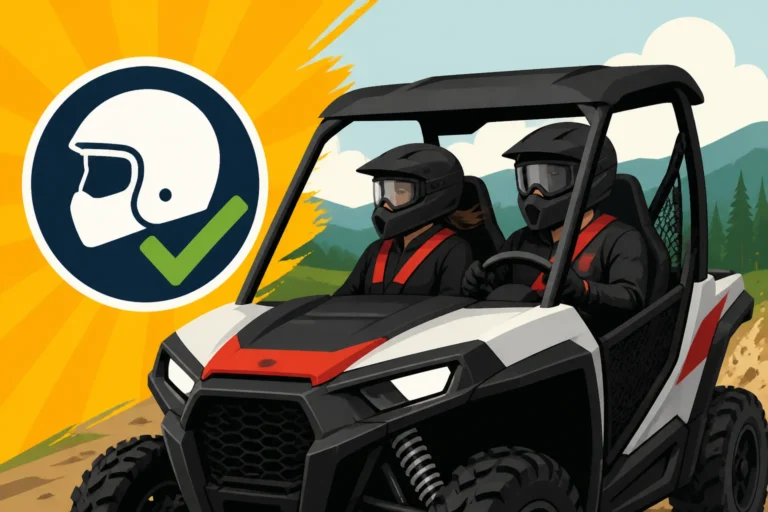
Let's be absolutely clear: New Brunswick's helmet law for ORVs applies to every single occupant, not just the driver. This is non-negotiable. If your child is a passenger, they must wear an approved, properly fitted helmet. No exceptions, no excuses. This means a helmet that meets recognized safety standards like DOT, Snell, or CSA D230. The helmet should be snug, level on their head, and the chin strap securely fastened. An ill-fitting helmet, or one that isn't certified, offers little protection and could lead to fines.
As a parent, you are responsible for ensuring your child has an appropriate helmet. This isn't a place to cut corners. A helmet is the single most important piece of safety gear. For more details on what's required, check out [New Brunswick ATV Helmet Law] and [New Brunswick Helmet Standards Accepted]. I’ve seen too many riders, young and old, trying to make do with an old, oversized helmet, or one that’s expired. Helmets have a lifespan, and proper fit is critical. You wouldn't send them on a bike without one, so don't let them on an ATV without one.
Machine Design and Seating Capacity
This is where many people get it wrong. An ATV must be specifically designed by the manufacturer to carry a passenger. This means it needs a longer, dedicated seat, separate footrests, and usually handholds for the passenger. A regular single-rider ATV, even if it looks like there's enough room on the back rack or a small child can fit behind the driver, is NOT designed for two people. Trying to carry a passenger on a single-rider ATV is dangerous, compromises the vehicle's stability, and is a direct violation of the Off-Road Vehicle Act.
Many side-by-sides (UTVs) are designed for multiple occupants, often two, three, or even four people, with individual seats and seatbelts, much like a car. This makes them a safer option for carrying passengers, especially children, as they offer roll-over protection and seatbelt restraints. When considering a machine, always check the manufacturer's specifications for seating capacity. Even if you're looking at aftermarket accessories from a company like SuperATV to enhance comfort or storage, ensure they don't modify the machine in a way that encourages unsafe or illegal passenger configurations. Don't be tempted to add a "buddy seat" to a single-rider machine; it's simply not safe or legal in New Brunswick.
Other Safety Gear and Considerations
While helmets are legally mandated, other safety gear is highly recommended for passengers, even if not strictly required by law. Think about sturdy boots that cover the ankles, long pants, a long-sleeved shirt or jacket, and gloves. Eye protection is also crucial, especially if the ATV doesn't have a windshield (like a side-by-side often does). Dust, debris, and low-hanging branches can cause serious eye injuries.
Beyond personal gear, consider the machine itself. Are the passenger footrests secure? Are the handholds easy for your child to grip? Is there anything on the machine, like exposed hot exhaust pipes or moving parts, that could injure a passenger? Parents should do a thorough check before every ride. You might consider adding accessories like a SuperATV rear storage box for essentials, but again, ensure it doesn't impede passenger safety or comfort. Remember, your responsibility extends to mitigating all foreseeable risks, not just the legally mandated ones.
Where Riding with Passengers is Permitted (or Not)
The question of where you can ride an ATV with a passenger is just as important as how you do it. New Brunswick has a vast network of trails and different land designations, each with its own set of rules. Understanding these distinctions is key to avoiding legal trouble and ensuring a safe outing for your family.
Public Trails and Designated Areas
Most of New Brunswick's extensive network of public ATV trails, managed by organizations like QuadNB, operate strictly under the provincial Off-Road Vehicle Act. This means all the rules we've discussed – proper helmet use, machines designed for passengers, and appropriate age/supervision for drivers and passengers – are in full effect. These trails are patrolled by enforcement officers, and violations are taken seriously. If you're planning a family ride on the [New Brunswick ATV Trails: The QuadNB Network], you absolutely must adhere to these regulations.
Riding on these designated trails is a privilege, and respecting the rules helps maintain access for everyone. Taking shortcuts with passenger safety on public trails isn't just dangerous; it undermines the efforts of clubs and volunteers who work hard to maintain these recreational opportunities. Imagine an officer stopping your group for an inspection and finding a child riding unsafely – that's not the memory you want to create for your family.
Private Land and Exemptions
It's a common misconception that "rules don't apply" on private land. While the Off-Road Vehicle Act does have some exemptions for private land – for instance, you might not need an ORV registration sticker if the machine never leaves your own property – fundamental safety laws, especially those involving minors, still generally apply. If you allow your child to carry a passenger on your private woodlot, you are still responsible for their safety.
Even if the law allows a slight relaxation of some specific regulations on your own property, you still have a moral and civil liability to ensure the safety of anyone on your land, particularly children. If an accident occurs with an unsafe passenger arrangement on your private property, you could still face legal repercussions and certainly a lot of heartache. The [New Brunswick Owner-Only Private Land Exemption] refers primarily to registration and insurance requirements for machines that are never operated off that land, not a blanket waiver for all safety protocols, especially when minors are involved. Safety should always be your top priority, regardless of who owns the land.
Roads and Highway Crossings with Passengers
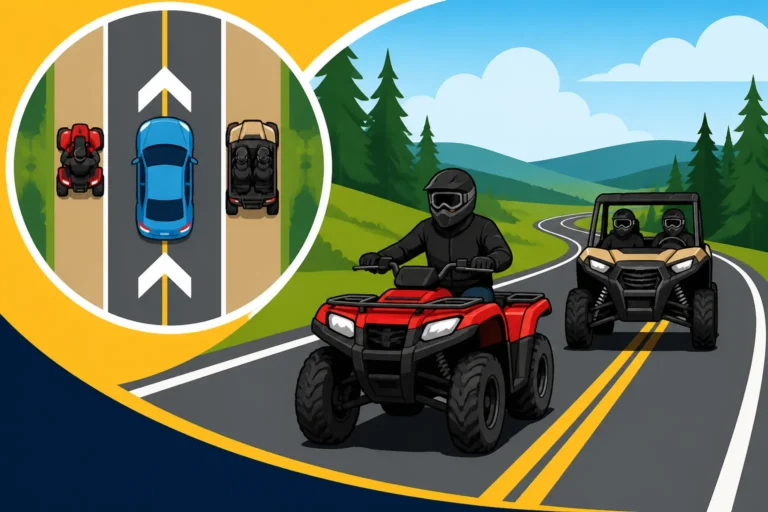
Riding ATVs on public roads in New Brunswick is highly restricted, and adding a passenger significantly complicates matters. Generally, ATVs are not permitted to be operated on the travelled portion of a highway, with very limited exceptions for things like short, direct road crossings or designated highway usage permits in specific areas. If a road crossing is necessary, it must be done safely and efficiently, typically by driving directly across at a right angle after yielding to traffic.
When you have a passenger, particularly a child, these restrictions become even more critical. The risks associated with road riding – encountering much larger, faster vehicles, navigating different traffic laws – are compounded when there's an additional person on board. You should never, under any circumstances, ride on a highway with a passenger unless it's a ministerial designation or a clearly marked, approved section for ORVs with specific permits. For more information, please consult [New Brunswick ATV Road Rules Explained] and [New Brunswick Rules for Crossing a Highway]. The safety of your child simply isn't worth the risk of improper road usage.
Consequences of Non-Compliance and Parent Liability
As a parent, understanding the rules isn't just about fun and safety; it's also about protecting yourself from legal and financial repercussions. When you allow a minor to operate an ATV, or ride as a passenger, without adhering to New Brunswick's regulations, the consequences can be significant.
Fines and Penalties for Violations
New Brunswick has specific fines for violations of the Off-Road Vehicle Act, and these can quickly add up. If your child is caught riding without a helmet, or with an unauthorized passenger, you, as the responsible adult, could be issued a substantial fine. For example, a violation of the helmet law can result in a [New Brunswick's $172.50 Helmet Fine]. If your child is riding a machine that's not registered, or if they don't have the appropriate licence or supervision, those are additional fines.
Here’s a snapshot of common violations and their implications:
| Violation Type | Potential Consequence for Parent (via minor) | Example Scenario |
|---|---|---|
| Improper Passenger Carriage | Fines for operating a single-seat ATV with a passenger; possible civil liability | Child rides with a friend on a machine designed for one. |
| Helmet Violation | [New Brunswick's $172.50 Helmet Fine] per person without an approved helmet | Child or passenger not wearing a helmet, or wearing an unapproved helmet. |
| Underage/Unlicensed Operator | Fines for allowing an unqualified minor to operate the ORV | 13-year-old driving an ATV without a Class 9 licence or adult escort. |
| Unregistered Machine | [New Brunswick No-Registration Fine of $172.50] for operating an unregistered ORV | Child riding a machine on a public trail that lacks a valid registration. |
| Uninsured Machine | [New Brunswick Uninsured ATV Fine of $604.50] for operating without required insurance | Accident occurs on a public trail with a machine lacking liability insurance. |
It’s not just about a single ticket; multiple infractions can lead to thousands of dollars in penalties. These set fines are designed to deter unsafe practices and ensure compliance. As the parent, you are ultimately responsible for ensuring your child is operating within the law, and that includes who they are carrying as passengers. You can't claim ignorance if your child is ticketed; the onus is on you.
Insurance Implications and Civil Liability
Beyond fines, the most severe consequences often lie in insurance and civil liability. New Brunswick requires that any ORV operated on a public trail or crown land have liability insurance. If you or your child are involved in an accident while carrying an unauthorized passenger, or while operating the machine illegally (e.g., without a helmet, underage, or on a non-approved road), your insurance policy could be voided. This means your insurance company might refuse to cover damages or injuries.
Imagine a tragic scenario where your child, with a friend as an illegal passenger, is involved in a collision that causes serious injury to the passenger. If your insurance refuses to pay because the rules were broken, you, as the parent, could be personally liable for medical bills, lost wages, and pain and suffering – potentially amounting to hundreds of thousands or even millions of dollars. This is not hyperbole; it is a very real risk. The best way to protect your family financially is to ensure strict adherence to all regulations, including [New Brunswick Insurance Requirements for Riders]. Don't leave your family vulnerable to such devastating financial ruin by cutting corners on safety.
Prioritizing Safety to Avoid Issues
Ultimately, understanding and following these rules isn't just about dodging fines or preventing lawsuits; it's about protecting the people you love. Prioritizing safety means making informed decisions, even when they might be inconvenient. It means taking the time to educate your children about the rules, ensuring they have the right safety gear that fits, and providing them with a machine that is suitable for their age and the activity.
It also means being a responsible adult and setting a good example. If you bend the rules, your children will learn to do the same. Make a habit of checking all equipment before each ride, ensuring everyone has their helmet, and that your machine is properly maintained. If you’re ever unsure about a rule, err on the side of caution. A quick call to Service New Brunswick or a local QuadNB club can clear up any confusion. The peace of mind that comes from knowing you’ve done everything possible to keep your children safe is truly priceless.
Disclaimer
This article is for general informational purposes only and does not constitute professional advice. Laws, prices and regulations vary by location and change over time. Consult a qualified professional for guidance on your specific situation.