Blueberry Barrens and New Brunswick Riders
There’s nothing quite like the open air and the thrill of exploring New Brunswick’s vast landscapes on your ATV or UTV. But sometimes, when you’re out on a long ride, you might find yourself eyeing a seemingly open stretch of land, like a blueberry barren, and wonder if it’s okay to cross or ride through. This can be a real headache, trying to figure out what’s private, what’s public, and what the rules are. This guide is here to clear up the confusion about riding your off-road vehicle near, on, or around New Brunswick’s blueberry barrens, helping you ride safely, legally, and respectfully.
Understanding New Brunswick's Blueberry Barrens
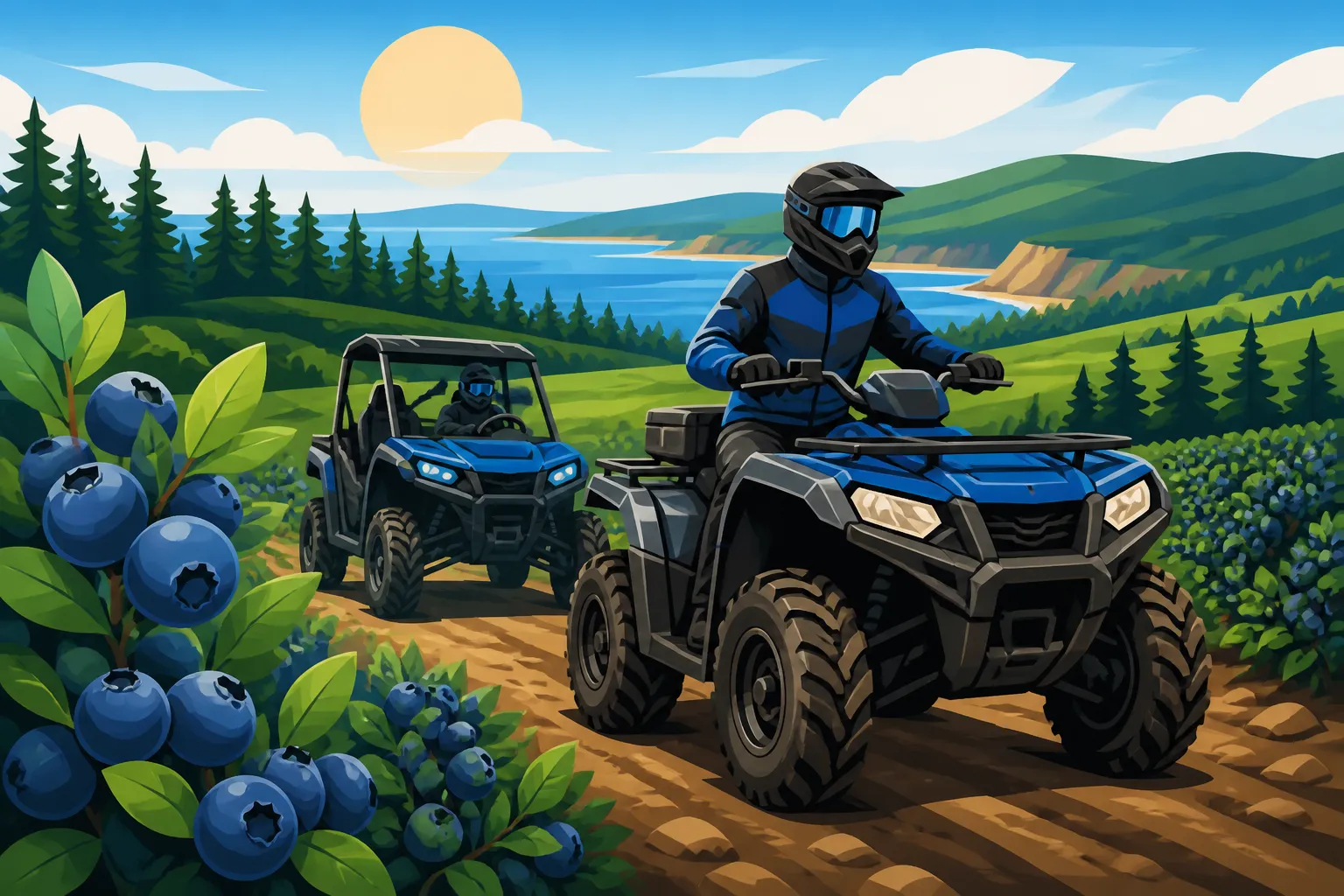
New Brunswick is known for its beautiful, sprawling blueberry barrens, particularly in the Acadian Peninsula and other regions. These aren't just pretty landscapes; they are vital agricultural areas. They represent significant investments for farmers and are a cornerstone of the province's agricultural economy. Riders often see these vast, open spaces and think they might be excellent for riding, but there's a lot more to them than meets the eye.
What are Blueberry Barrens?
Imagine immense fields stretching out, covered in low-lying blueberry bushes. These are often wild blueberries, cultivated on a large scale. They might look like natural, untamed areas, but they are very much managed and harvested. Farmers prepare the land, manage pests, ensure proper pollination, and bring in large machinery for harvesting. The soil, especially during certain seasons, can be quite delicate and easily damaged by vehicle traffic. The ground might appear firm, but underneath, it could be soft, especially after rain or during spring thaw, leading to ruts and erosion.
Why Are They Sensitive Areas for ORVs?
The delicate ecosystem of a blueberry barren is not designed for the weight and traction of off-road vehicles. Even a single pass can cause significant damage.
Firstly, the plants themselves are vulnerable. Tires can easily crush the low-growing blueberry plants, reducing future yields. Think of all the hard work and investment a farmer puts into these fields; one wrong turn can undo a lot of that.
Secondly, the soil structure is critical for healthy growth. Driving over it can compact the soil, making it harder for water to penetrate and for the plants' roots to breathe. This compaction can also lead to increased erosion, especially on slopes or after heavy rains, which then impacts water quality in nearby streams and rivers.
Finally, barrens are often home to various small wildlife. Uncontrolled ORV use can disrupt their habitats, displace animals, and even pose a direct threat to slower-moving creatures. It's not just about the blueberries; it's about the entire environment that supports them.
The Legal Landscape: Trespass and Permission
This is where many riders get into trouble, often without even realizing it. The biggest misconception is that if an area isn't fenced or explicitly marked, it's public land or fair game. In New Brunswick, this simply isn't the case, especially with agricultural land. Blueberry barrens are almost exclusively private property, and riding on them without explicit permission is trespassing, with serious legal and financial consequences.
The Clear Rules on Private Property
New Brunswick has clear laws regarding trespassing on private land. While you might see unposted fields or woodlots, the assumption should always be that it is private unless you know for a fact it's public Crown land or a designated trail. Blueberry barrens fall squarely into the private property category. Even if you don't see fences or "No Trespassing" signs everywhere, the land is owned, managed, and legally protected.
Under New Brunswick law, riding your ATV or UTV on private land without the owner's permission is trespassing. This isn't just a minor infraction; it can lead to fines, your machine being impounded, and potential civil lawsuits for damages. Imagine the cost if you accidentally damaged a section of a farmer's crop – that could be thousands of dollars in lost revenue and repair costs you’d be on the hook for. It’s always better to err on the side of caution and assume land is private. If you're unsure, don't ride there.
How to Obtain Permission (and Why It's Often Unlikely)
So, you've identified a blueberry barren that looks enticing. Is it possible to get permission to ride there? Technically, yes, if you can find the landowner. This means doing your homework:
- Identify the Owner: This can be tricky. Sometimes, local residents might know who owns which barren. You might also have to visit the local Service New Brunswick office to do a property search, though this might not be practical for every curious rider.
- Make a Formal Request: If you identify the owner, approach them respectfully. Explain what you want to do (e.g., cross a corner, ride along an edge) and assure them you understand the sensitivity of the land.
- Be Prepared for "No": More often than not, the answer will be a polite but firm "no." And honestly, that's completely understandable from a farmer's perspective. They face liability issues, potential crop damage, and disruption to their operations. Even if you promise to be careful, the risk for them is usually too high. Offering to ride carefully doesn't negate the potential for significant damage or liability.
It's also crucial to understand that even if you obtain permission, it will likely come with very strict conditions about where and when you can ride. This isn't like asking to ride on a friend's back forty. These are commercial operations.
Consequences of Illegal Riding
The consequences of riding illegally on blueberry barrens can be severe.
- Fines: Trespassing fines can be substantial. Beyond that, if your machine isn't registered or insured, you could face additional fines, such as [New Brunswick No-Registration Fine of $172.50] or [New Brunswick Uninsured ATV Fine of $604.50]. The costs add up quickly.
- Impoundment: Law enforcement can impound your ATV or UTV, leading to towing and storage fees on top of any fines. Getting your machine back can be a lengthy and expensive process.
- Civil Action: As mentioned, landowners can pursue civil action for damages. If your machine causes ruts, crushes plants, or disturbs the soil, you could be liable for the costs of repair and lost harvest, which could run into thousands of dollars.
- Reputation Damage: Beyond the legal and financial aspects, riding illegally damages the reputation of all off-road enthusiasts. It makes it harder for clubs to gain access or maintain positive relationships with landowners, potentially leading to more restrictions for everyone. This is a battle [New Brunswick Trespass Law for Riders] tries to prevent.
Best Practices for Respectful Riding Near Barrens
Even if you can't ride directly on a blueberry barren, you might find yourself riding on trails or roads adjacent to them. Knowing how to conduct yourself respectfully is vital to being a responsible rider in New Brunswick.
Respecting Boundaries and Signage
Always assume property lines are closer than they appear. If you're on a designated trail that runs alongside a barren, stay strictly on the trail. Do not venture off. If you encounter any signage, whether it's "No Trespassing," "Private Property," or even just a farmer's field entrance, respect it. These signs are there for a reason and ignoring them can lead to serious trouble. Sometimes, the edge of a barren might have a small ditch or an old fence line that isn't immediately obvious from your riding position. Pay close attention to your surroundings and any visual cues that indicate private land.
Minimizing Environmental Impact
Even when riding legally on adjacent trails, responsible practices are key.
- Stay on Marked Trails: This is the golden rule. Venturing off-trail can lead to erosion, spread invasive species, and disturb wildlife. Designated trails are designed to handle ORV traffic, minimizing environmental harm.
- Control Speed and Noise: Excessive speed can kick up dust, erode trails, and pose a danger to others. High engine noise can disturb local residents and wildlife, leading to complaints and potentially stricter regulations. Be mindful of your throttle and ride responsibly.
- Tread Lightly: Think about the ground you're on. Avoid riding in overly wet or muddy conditions if it means creating deep ruts. These ruts can channel water, leading to further erosion, and make the trail difficult for others. If you're looking to upgrade your machine for better traction on varying terrain without causing excessive damage, consider looking at specialized tires or robust skid plates from brands like SuperATV that are designed for different conditions.
- Pack It In, Pack It Out: Leave no trace. Any garbage, even small items, should be carried out with you. This simple act of respect goes a long way in maintaining positive relationships with communities and landowners.
What to Do If You Encounter a Landowner
It's entirely possible that while riding near a barren, you might encounter the landowner or their representative.
- Be Polite and Courteous: Even if you feel you're in the right, maintaining a respectful and friendly demeanor is paramount. A negative confrontation helps no one.
- Identify Yourself: Offer to show your registration and identification. This shows you're a responsible rider. Make sure you have your [New Brunswick Documents You Must Carry] with you.
- Explain Your Presence: Clearly state where you believe you are and what your intentions are.
- Comply with Requests: If asked to leave, do so immediately and without argument. Even if you think you have a right to be there, arguing on the spot is rarely productive and can escalate the situation unnecessarily. You can always follow up later with the appropriate authorities or your local ORV club if you believe there's a misunderstanding about access.
Finding Legal and Appropriate Riding Alternatives
The good news is that New Brunswick offers an incredible network of legal and well-maintained trails for ATV and UTV enthusiasts. Instead of risking a fine or confrontation on private land, focus on exploring the numerous designated routes.
Embracing New Brunswick's Trail Network
New Brunswick boasts thousands of kilometers of managed trails through organizations like QuadNB (formerly the NBATVF). These trails are specifically designed and maintained for off-road vehicles. They crisscross the province, offering diverse terrain from rolling hills to dense forests, and often link communities, making it possible to ride from town to town. These trails are where your [New Brunswick Trail Permits for 2026 and 2027] are valid.
You'll find fantastic riding opportunities in regions all over the province, like [New Brunswick Miramichi Riding], [New Brunswick Acadian Peninsula Riding], and the vast [Skedaddle Ridge Trails in New Brunswick]. These networks are supported by dedicated clubs and volunteers who work hard to ensure safe and enjoyable riding. Plus, riding on these trails supports the local economy and the future of organized off-roading in the province.
Planning Your Rides
Before heading out, a little planning goes a long way.
- Consult Trail Maps: Use resources like the QuadNB trail maps, available online or through their MapGear app, to plan your route. These maps clearly show designated trails, points of interest, fuel stops, and potential amenities. They are invaluable for avoiding private land. Check out [New Brunswick ATV Trail Map Downloads] for more info.
- Join a Local Club: Becoming a member of a local ATV club is one of the best ways to discover new trails, learn about local regulations, and connect with experienced riders. Clubs often organize group rides and are a fantastic source of local knowledge. Plus, your trail permit often includes club membership!
- Utilize Apps and GPS: Modern technology makes navigation easier than ever. Apps and GPS devices loaded with trail maps can help you stay on track and avoid accidentally straying onto private property. For challenging terrain or remote areas, having durable accessories like those offered by SuperATV, such as a reliable GPS mount or even a robust winch for recovery, can enhance your safety and confidence.
- Research Crown Land Access: While most blueberry barrens are private, New Brunswick does have extensive Crown land. However, even on Crown land, there can be specific regulations, restrictions, or environmental sensitivities you need to be aware of. It's always best to check [New Brunswick Crown Land Riding Rules] before assuming open access.
A Quick Comparison: Riding Zones
To help clarify the differences, here's a quick look at where you can generally ride in New Brunswick:
| Riding Zone | Description | Legality for ORVs | Best Practices |
|---|---|---|---|
| Designated ATV Trails | Maintained trails managed by organizations like QuadNB, often clearly marked. | Legal with a valid trail permit. These are your primary and safest riding areas. | Stay on marked trails, respect signage, adhere to speed limits, pack out all trash, ensure your machine is registered and insured, and carry your [New Brunswick Trail Permit Cost in 2026]. |
| Crown Land | Publicly owned land managed by the provincial government, often vast forests and wilderness. | Generally permitted with caution, but check specific regulations. Certain areas (e.g., parks, protected zones) may have restrictions or require specific permits. | Research local Crown land rules beforehand, avoid sensitive ecosystems, practice low-impact riding, respect any posted closures, and be aware that these areas may not have regular maintenance. Consider recovery gear from SuperATV for remote Crown land excursions. |
| Private Land (Non-Barrens) | Woodlots, fields, and other properties owned by individuals or businesses. | Only with explicit permission from the landowner. Without permission, it is trespassing. | Always seek and obtain written permission. Respect boundaries, avoid creating ruts or damage, and leave gates as you found them. Understand that the [New Brunswick Owner-Only Private Land Exemption] applies to your land, not everyone else's. |
| Blueberry Barrens | Large agricultural fields dedicated to cultivating wild blueberries. Highly managed and sensitive. | Almost always private property. Riding without explicit, rare permission is trespassing, with severe legal and financial consequences. | Avoid at all costs unless you have direct, written permission from the landowner. Even then, tread lightly. Focus on legal alternatives. The risks far outweigh any potential reward. |
| Roads/Highways | Public roads and highways. | Generally illegal except for specific, designated crossings, limited road-sharing sections, or with a special permit. | Understand [New Brunswick ATV Road Rules Explained], know your local bylaws, respect traffic laws, and only cross or ride on roads where explicitly permitted. Never assume you can ride on any road. |
Ultimately, being a responsible ATV or UTV rider in New Brunswick means understanding and respecting the land, whether it’s a dedicated trail, Crown land, or private property like a blueberry barren. By choosing legal riding areas and practicing good trail etiquette, we can all help ensure the future of off-road riding in our beautiful province.
Disclaimer
This article is for general informational purposes only and does not constitute professional advice. Laws, prices and regulations vary by location and change over time. Consult a qualified professional for guidance on your specific situation.