Hand Signals on a New Brunswick Trail
Riding the beautiful trails of New Brunswick on your ATV or side-by-side is an incredible experience, but the roar of the engine, the dust in the air, and the sheer distance between riders can make basic communication a real challenge. Whether you're navigating a tricky section, need to stop quickly, or just want to tell the person behind you about an upcoming hazard, shouting often doesn't cut it. This guide is here to walk you through the essential hand signals that every New Brunswick off-road rider should know and use, ensuring you and your riding buddies stay safe and connected on every adventure.
Why Hand Signals Are Crucial for New Brunswick Riders
Picture this: you're cruising down a scenic trail near Fundy National Park, enjoying the fresh air and the hum of your machine. Suddenly, the rider in front of you throws their hand up, makes a quick motion, and you instinctively understand exactly what they need you to do. That's the power of hand signals on the trail. They're not just for show; they're a vital part of trail safety and communication, especially when verbal cues are impossible.
The Silent Language of Safety on the Trail
Our off-road vehicles are fantastic machines, but they can be incredibly noisy. The constant rumble of the engine, the drone of tires on gravel, and the wind whipping past your helmet all conspire to make verbal communication nearly impossible, even at moderate speeds. Add to that the dust clouds kicked up by a group of machines, which can obscure vision, and you've got a recipe for miscommunication if you're relying solely on shouting or hoping someone reads your mind.
This is where hand signals shine. They offer a universal, silent language that transcends engine noise and visual obstructions. Imagine you're riding through a dense section of trail in the Miramichi region, and the lead rider spots a fallen tree just around a blind corner. A quick, clear hand signal for "stop" or "hazard ahead" can prevent a serious incident for the riders following close behind. It's about being proactive and ensuring everyone in your group is on the same page, no matter the conditions or the terrain you're tackling.
New Brunswick's diverse landscapes, from the rocky trails of the Restigouche to the expansive rail beds, mean riders encounter all sorts of conditions. Being able to convey a message instantly, whether it's about an upcoming turn on a winding path or an animal crossing on an open stretch, drastically reduces the risk of accidents. It’s a core component of responsible riding and a common courtesy that makes the trail safer for everyone.
Bridging the Gap When Your Quad Lacks Indicators
Let's face it, not every ATV or UTV comes equipped with turn signals right from the factory. Many older models, especially those beloved machines that have been faithful companions for years, might only have basic headlights and taillights. Even some newer, performance-oriented quads or side-by-sides might skip turn signals in favour of a more minimalist design. This is a common reality for many riders in New Brunswick, and it presents a clear challenge when it comes to indicating your intentions.
If your machine doesn't have mechanical turn signals, then hand signals aren't just a good idea – they're absolutely essential for communicating turns, lane changes, and stops to other riders and even other trail users. While the law in New Brunswick may emphasize the use of mechanical signals where present, it's widely understood that hand signals fill this crucial void. They ensure that you're not leaving other riders guessing about your next move, which could lead to dangerous situations, particularly when riding on or [New Brunswick Shared Highway Sections].
Even if your rig is decked out with all the latest gear, perhaps you've added some robust aftermarket parts from a company like SuperATV, it's still smart to be proficient in hand signals. Sometimes mechanical signals can get obscured by mud, snow, or even cargo. Or, in bright sunlight, they might simply be harder to see than a clearly articulated hand signal. Learning these gestures adds another layer of safety and confidence to your ride, ensuring that your intentions are always understood, regardless of your machine's specific setup. It's about being prepared for any situation the trail throws at you.
Mastering the Official New Brunswick ATV Hand Signals
Just like learning the rules of the road, mastering a few core hand signals is fundamental to safe and enjoyable ATV and UTV riding in New Brunswick. These aren't just arbitrary gestures; they are widely recognized and understood, forming a crucial part of trail etiquette. Learning them by heart means you'll always know how to communicate your intentions clearly, and you'll understand what other riders are trying to tell you.
The Essential Signals Every Rider Must Know
There are several universal hand signals that every rider in New Brunswick should commit to memory. These cover the most common situations you’ll encounter on the trail, from indicating a stop to alerting others to a hazard.
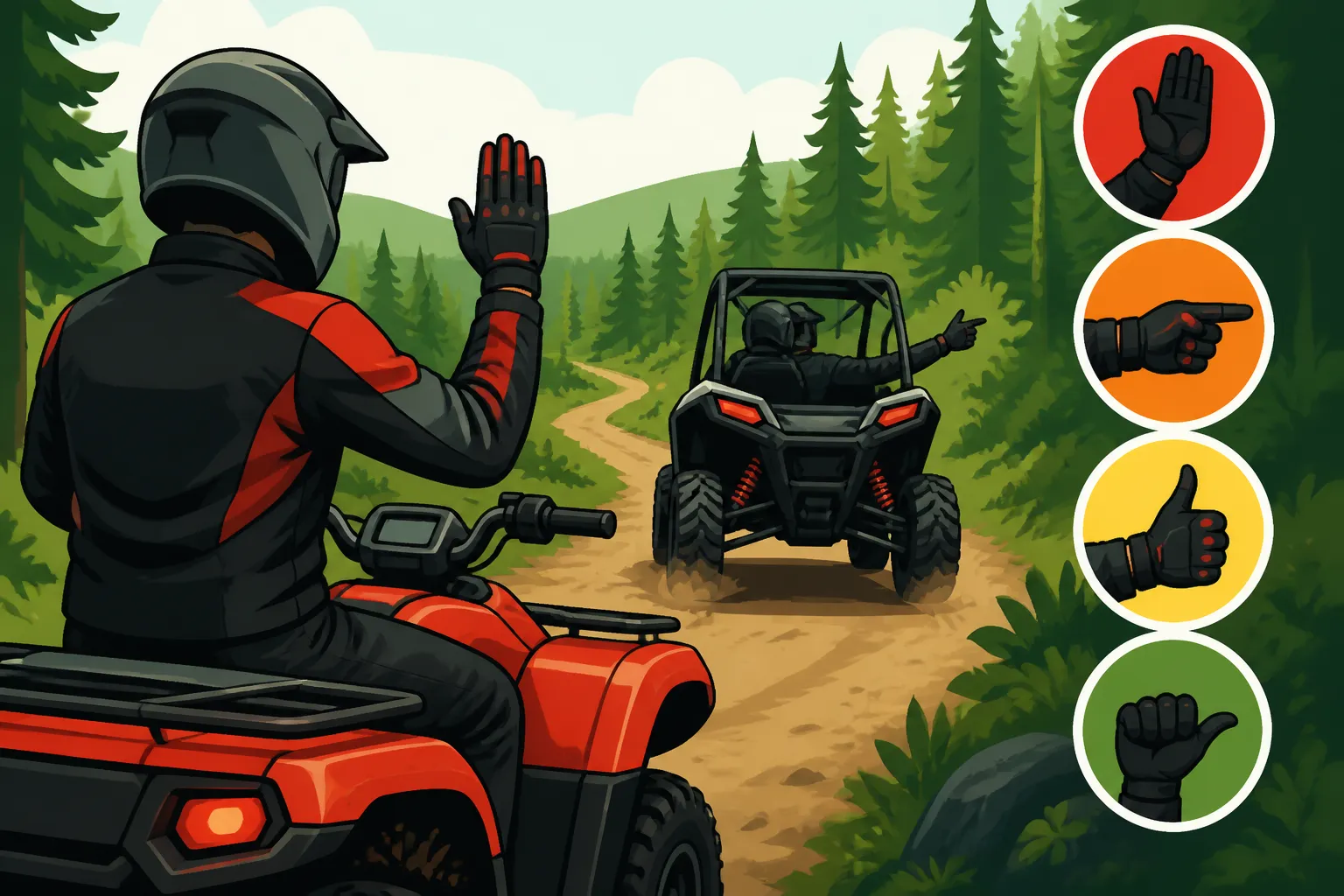
Stop: This is perhaps the most critical signal. Extend your left arm straight out to the side, elbow bent, with your hand pointing downwards and palm facing backwards. Hold it firm and clear. This tells everyone behind you that you are slowing down or coming to a complete stop, giving them precious time to react and avoid a rear-end collision. Whether you're stopping for a break, a photo op, or because you've encountered an unexpected obstacle, this signal is paramount.
Left Turn: Extend your left arm straight out to the side, horizontal to the ground, with your palm open and facing forward. This clearly indicates your intention to turn left. It’s a simple, unmistakable gesture that prevents confusion and ensures following riders know which way you’re heading.
Right Turn: Extend your left arm straight out to the side, elbow bent, with your hand pointing upwards and palm facing forward. This signal, though using the left arm, is the universally accepted hand signal for a right turn, preventing riders from having to take their right hand off the throttle. Make sure it's high enough to be seen over your machine or any gear you might be carrying.
Slow Down: Extend your left arm out to the side, slightly downwards, and wave your hand up and down with your palm facing the ground. This tells those behind you to reduce their speed, often used when approaching rough terrain, a busy area, or when the lead rider is adjusting to conditions. It's a gentle but firm reminder to ease off the throttle.
Hazard/Obstacle Ahead: Point directly at the hazard with either hand, keeping your arm straight. If it's on the right, use your right hand; if on the left, use your left. This is crucial for alerting riders to potholes, deep puddles, fallen branches, or even wildlife. It’s an immediate visual warning that allows everyone to prepare and navigate the obstacle safely. This signal is especially useful when riding on less-groomed paths or [New Brunswick Trails That Cross Private Woodlots].
Last Rider/Tail End: This signal is typically given by the very last rider in a group to confirm to anyone waiting, or to other trail users, that there are no more machines following. Extend your left arm straight up over your head with your fist clenched. This is a very helpful signal for managing traffic, especially on shared trails or when navigating busy intersections. It's a sign that the group is complete, and it also lets the lead rider know that everyone has successfully passed a certain point.
Practicing Proper Signal Execution and Placement
Knowing the signals is one thing; executing them effectively is another. A lazy wave or a half-hearted gesture can be easily misinterpreted or missed entirely, negating the entire purpose of the signal. The key is clarity and conviction.
Always make your signals deliberate and exaggerated. Don't just flick your wrist; move your entire arm with purpose. Hold the signal for a few seconds so that everyone behind you has ample time to see and understand it. Imagine yourself riding in a group on a dusty trail; a quick, weak signal might disappear in the haze. A strong, sustained signal, however, cuts through the visual noise. This attention to detail can be the difference between a smooth ride and a sudden stop.
Visibility is also paramount. Most standard hand signals are performed with the left arm, primarily because it's often easier to take the left hand off the handlebar (your right hand typically controls the throttle). Ensure your signal isn't blocked by your body, your backpack, a passenger, or any cargo you might be carrying. If you've accessorized your machine, perhaps with a SuperATV roof or a cargo box, always do a quick check to see if your signal is still clearly visible to those behind you. If it's not, you might need to adjust your body position slightly or even use both hands (if safe to do so for "hazard").
Here's a quick reference table for the most common New Brunswick ATV hand signals:
| Signal Action | Description of Hand/Arm Position | Purpose |
|---|---|---|
| Stop | Left arm extended out to the side, elbow bent, hand pointing down, palm facing backward. | Indicates a stop or slowing down. Crucial for avoiding collisions. |
| Left Turn | Left arm extended straight out to the side, horizontal to the ground, palm open facing forward. | Shows intention to turn left. |
| Right Turn | Left arm extended out to the side, elbow bent, hand pointing upwards, palm facing forward. | Shows intention to turn right (using left arm for safety). |
| Slow Down | Left arm extended out to the side, slightly downwards, hand waving up and down, palm facing down. | Signals to reduce speed, often for rough terrain or hazards. |
| Hazard Ahead | Point directly at the obstacle with the hand closest to it (left for left, right for right). | Warns riders of dangers like potholes, branches, or animals. |
| Last Rider | Left arm extended straight up over head, fist clenched. | Confirms to others that no more machines are following in the group. |
| Follow Me | Left arm extended straight out to the side, hand pointing forward, palm forward, then sweeping forward. | Invites another rider to follow you, often to take the lead or indicate a direction. |
Remember, consistency is key. When riding with a group, ensure everyone understands and uses the same signals. A quick pre-ride briefing, especially if you have new riders, can go a long way in establishing clear communication protocols.
Beyond the Basics: Group Riding Etiquette and Advanced Signals
While mastering the fundamental hand signals is essential, effective communication on New Brunswick trails goes deeper, especially when you're riding with a group. Group dynamics, environmental factors, and even communicating with other types of trail users require a bit more nuance and a shared understanding of trail etiquette.
Communicating in a Group Ride Environment
Group riding is fantastic – there’s safety in numbers, shared experiences, and usually a lot of laughs. However, it also amplifies the need for seamless communication. The "follow the leader" principle of signaling is paramount here. When the lead rider spots a hazard, needs to turn, or has to slow down, they signal clearly. It's then the responsibility of the second rider to repeat that signal, and the third rider, and so on, all the way down the line. This repetition ensures that even the last rider in a long procession gets the message. It's like a game of visual telephone, but with much higher stakes!
Imagine navigating a winding section of [Skedaddle Ridge Trails in New Brunswick] with a group of friends. The leader signals a right turn, and each rider repeats it. This prevents anyone from missing the turn and getting separated, which can be disorienting and even dangerous in remote areas. The sweep rider, who is typically the last person in the group, plays a crucial role too. They're often tasked with ensuring no one falls behind and can use specific signals to communicate back to the lead rider if there's a problem, like a mechanical issue or a rider needing to stop.
For larger groups, or when riding side-by-sides from a brand like SuperATV that can carry multiple passengers, clear and consistent signaling becomes even more critical. Everyone needs to be vigilant and aware. There are also some less official, but widely understood, signals that can be useful:
- Increasing Speed: A clenched fist, thumb up, moved rapidly upwards.
- Single File/Double File: One finger up for single file, two fingers up for double file (only when safe and permitted, like on wide forest roads or specific open areas).
- Fuel Stop Ahead: Pointing to your fuel tank or making a 'filling up' motion with your hand.
These informal signals often develop within specific riding groups, so it’s always a good idea to discuss them before setting out. Effective [New Brunswick Group Ride Planning] always includes a communication strategy.
Situational Awareness and Environmental Factors
New Brunswick weather and trail conditions can change quickly, and these factors can significantly impact the effectiveness of hand signals. Dust, for example, can be a major issue on dry days, making it hard to see anything beyond the machine directly in front of you. In such conditions, exaggerated signals held for longer durations are crucial, and maintaining a safe following distance becomes even more important.
Sun glare, especially when riding directly into the setting or rising sun, can also make signals hard to discern. Similarly, heavy rain or snow can reduce visibility to near zero. In these challenging scenarios, riders need to rely on a combination of visual signals, pre-established group communication plans, and perhaps even electronic communication devices if they have them. However, nothing beats a clear, visible hand signal in most situations.
Beyond your own group, you might encounter other users on the vast New Brunswick trail network. Hikers, mountain bikers, and even snowmobilers (especially during winter on [New Brunswick Snowmobile and Quad Sharing] trails) might not be familiar with ATV-specific hand signals. In these cases, universal gestures like waving hello, a "slow down" signal, or simply making eye contact and giving a friendly nod can help ensure respectful and safe sharing of the trails. It's all part of demonstrating good [New Brunswick Trail Etiquette Locals Expect].
The Legal and Safety Implications of Signal Usage
While the joy of off-road riding in New Brunswick is often about freedom, it's never about being free from responsibility. Understanding and utilizing hand signals correctly isn't just a matter of convenience; it has significant legal and safety implications that every rider should be aware of.
New Brunswick Hand Signal Requirements
In New Brunswick, the Off-Road Vehicle Act and its regulations outline various rules for safe operation, and while they specifically address things like registration, insurance, and helmet use, the spirit of the law always leans towards safe operation and clear communication. While the regulations don't mandate hand signals if your machine is equipped with functioning mechanical turn signals, they certainly don't prohibit them. In fact, common sense, and the expectation of safe conduct, strongly suggest their use in many situations.
Consider [New Brunswick Hand Signal Requirements] as a best practice, even if not explicitly legislated in every specific scenario. When you're making a turn on a public road that's designated for ATV use, or crossing a highway, using a clear hand signal alongside your mechanical indicator provides an undeniable and unambiguous message to everyone around you. It reduces ambiguity and minimizes risk, which is exactly what the law aims for in promoting public safety.
For those machines that lack mechanical turn signals – a common situation for many quads – hand signals become the de facto standard for indicating turns and stops. An officer observing a rider in such a situation would expect clear hand signals to be used. Failing to indicate your intentions, whether by mechanical means or hand signals, could be seen as unsafe operation and potentially lead to a citation, depending on the circumstances and the officer's discretion. It's about showing you're a responsible rider, aware of your surroundings and actively working to prevent incidents.
Preventing Accidents Through Clear Communication
The most compelling reason to master and consistently use hand signals is the role they play in preventing accidents. Miscommunication is a leading cause of mishaps on the trails, from minor fender-benders to serious collisions. Imagine a scenario where the lead rider suddenly brakes hard for a washed-out culvert, but the rider behind them doesn't see or understand the signal. The result could be a pile-up, injuries, and damage to machines.
By using clear, universally understood hand signals, you create a seamless chain of communication within your riding group. This allows everyone to react appropriately, maintain safe distances, and navigate obstacles without unexpected surprises. This proactive communication provides a crucial buffer, giving riders time to assess the situation and adjust their speed or direction safely. It's a fundamental aspect of the [New Brunswick Safety Course Explained], where emphasis is placed on responsible riding practices.
Furthermore, hand signals contribute significantly to the overall enjoyment and flow of a ride. When communication is smooth, the group can move efficiently and confidently, reducing stress and increasing the fun factor. Even if your side-by-side is fully loaded with communications gear from SuperATV or another top brand, sometimes a simple, direct hand signal is the quickest and most effective way to convey an urgent message in a dynamic trail environment. It's a non-negotiable tool in every New Brunswick rider's safety toolkit, offering peace of mind and significantly reducing the likelihood of needing to deal with [New Brunswick Accident Reporting Rules].
Disclaimer
This article is for general informational purposes only and does not constitute professional advice. Laws, prices and regulations vary by location and change over time. Consult a qualified professional for guidance on your specific situation.