Speed Limits Posted for Everyone
Navigating the diverse landscape of New Brunswick on your ATV or UTV is one of life’s great joys, but it can also be a minefield of rules, especially when it comes to understanding where you can ride and, crucially, how fast. Many riders find themselves scratching their heads, wondering if the speed limit is the same on a designated road as it is on a club trail, or if their local village has its own special rules. This guide is here to untangle the confusion surrounding speed limits for ATVs and UTVs across various riding environments in New Brunswick, helping you ride confidently and legally.
Understanding Where You Can Ride Before You Focus on Speed
Before we even delve into how fast you can go, it's absolutely vital to grasp where you're permitted to ride your ATV or UTV in New Brunswick. Many riders assume that because they own an off-road vehicle, they can take it anywhere, but that's simply not the case. The rules are designed for safety, land preservation, and coexistence with other users, and knowing them is the first step to avoiding a hefty fine or, worse, an accident.
The Legal Framework for ORV Use
New Brunswick's Off-Road Vehicle Act is the foundational document that governs how and where you can operate your ATV or UTV. It’s not just a suggestion; it’s the law, and it outlines everything from registration and insurance requirements to helmet laws and, yes, where your wheels are allowed to touch the ground. This Act makes it clear that certain areas are off-limits entirely, while others are open only under specific conditions. It’s easy to feel frustrated by the sheer volume of information, but the spirit of the law is to keep everyone safe and preserve our beautiful natural spaces. Understanding the Act prevents those head-scratching moments when you see a "No ORV" sign and wonder why.
For instance, riding on public highways that aren't specifically designated for ORV use is generally prohibited, save for very limited, designated crossings. This isn't about being restrictive for the sake of it, but about ensuring the safety of both ORV riders and traditional motor vehicle traffic, which often operates at much higher speeds. You’ll want to check out [What New Brunswick's Off-Road Vehicle Act Covers] for a deeper dive into the legalities.
Designated Roads and Permitted Areas
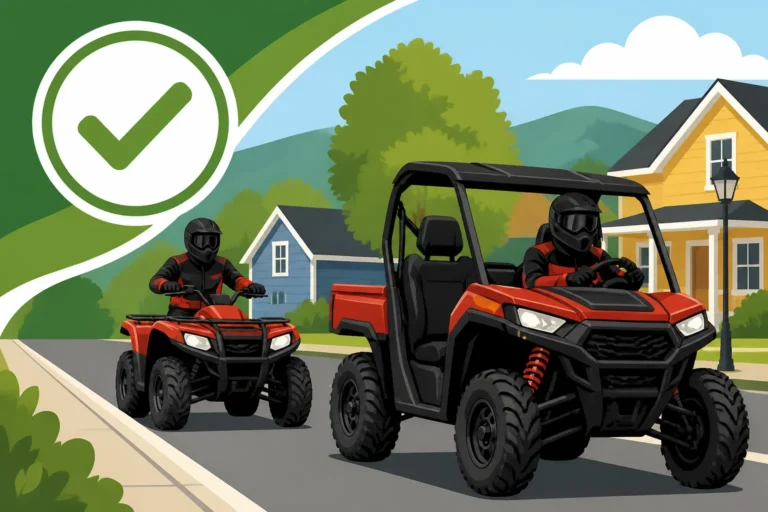
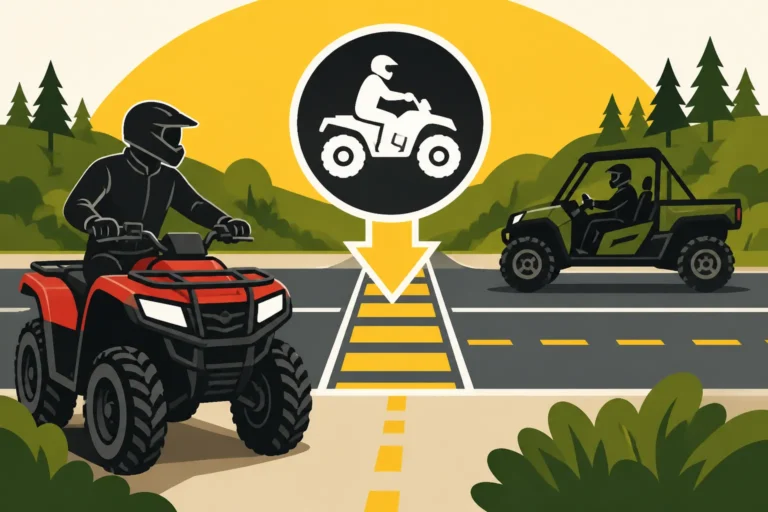
Now, this is where things get interesting for speed limits. While primary highways are generally a no-go, many municipalities have taken steps to integrate ATVs and UTVs into their local road networks. These are what we call "designated roads," and they're usually marked with signage indicating that ORVs are permitted. The frustration here often comes from the patchwork nature of these designations; one town might embrace ORVs on its streets, while the next one over might not.
Local municipalities, through their own bylaws, can designate specific roads or sections of roads for ORV use. This means you might be able to ride right from your driveway to a trail connector in some areas, which is incredibly convenient. However, it also means you need to be vigilant about checking local signage or municipal websites. Then there are special situations, like needing [New Brunswick Highway Usage Permits] for specific, short stretches of highway crossing. These permits aren't for joyriding on highways but for connecting essential parts of the trail system or accessing services. The underlying principle, no matter the specific local rule, is always safety and shared use, often dictating lower speed limits than what cars might observe. If you're planning a trip, it's smart to look up [New Brunswick Towns That Allow Quads] to see what the lay of the land is before you go.
Navigating Speed Limits on Designated Roads
Once you've confirmed that you're on a road where your ATV or UTV is legally permitted, the next crucial piece of information is understanding the speed limit. This isn't just about avoiding a ticket; it's fundamentally about safety, especially when sharing the road with other vehicles, pedestrians, or even cyclists.
General Speed Limits for ORVs on Roads
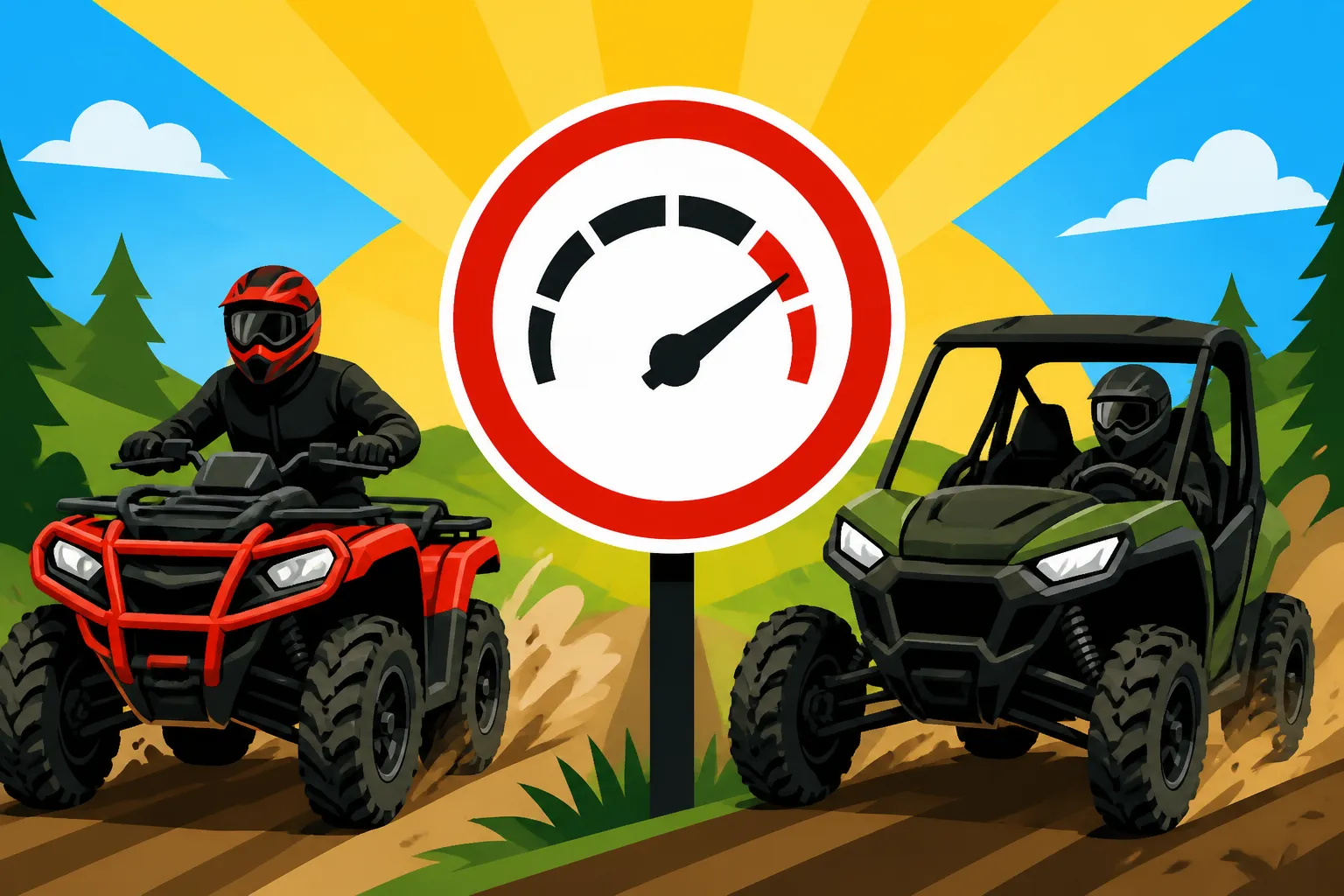
In New Brunswick, when you're operating an ORV on a designated public road or a street opened by a municipal bylaw, there's a specific provincial speed limit that applies to you. Generally, this limit is lower than what you might see posted for cars on the same stretch of road. The province-wide default is often around 50 kilometres per hour, or even lower in certain zones. This lower limit reflects the different handling characteristics of an ATV or UTV compared to a car, especially when it comes to braking, turning, and stability. You might have a high-performance machine with great aftermarket parts from, say, SuperATV, but the law still applies to everyone regardless of your machine's capabilities. It's about being a responsible road user. Always look for signage, but assume the lower ORV speed limit as a default. For specific details on this, you'll want to read [New Brunswick Speed Limits on Designated Roads].
How Local Bylaws Can Alter Speed Limits
Here's where it gets a little more complex, and admittedly, can be a source of frustration. While the province sets a general guideline, municipalities have the authority to enact their own bylaws that can further restrict speed limits for ORVs on roads within their jurisdiction. This means a town might designate a street for ORV use but impose a speed limit of 30 km/h or even 20 km/h, especially in residential areas, school zones, or near parks.
Why do they do this? It's usually a response to community concerns about noise, dust, and safety. A tight-knit village might welcome ORV traffic for local businesses but want to ensure residents feel safe and undisturbed. As a rider, this means you can't just assume the 50 km/h rule applies everywhere. You must be on the lookout for local signage that indicates these reduced speed limits. Missing these signs can quickly lead to a fine under [New Brunswick Fines for Riding Near a Road]. Always consult [New Brunswick Municipal Bylaws That Open Roads] for specific information about the local regulations in the areas you plan to ride.
Shared Highway Sections and ORV Speed
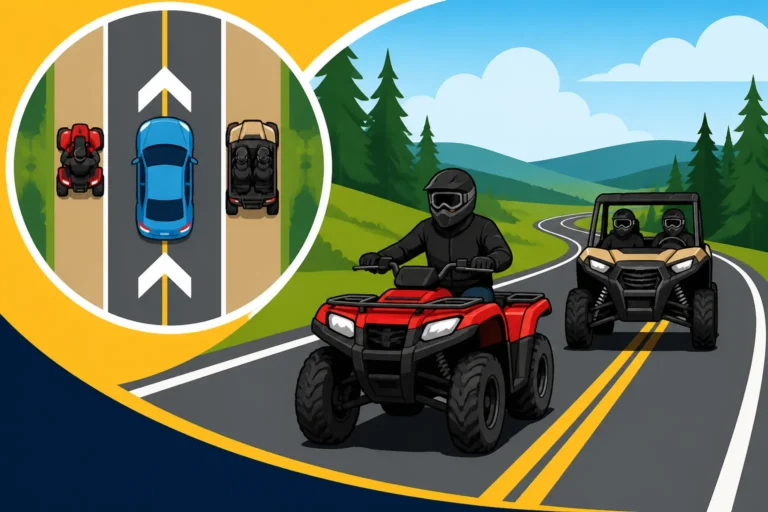
There are rare instances where New Brunswick allows ORVs to use very short, specific sections of a provincial highway to connect trails. These are not stretches for cruising; they are strictly for transit between legal riding areas. In these unique cases, the speed limit for ORVs might align with the posted highway speed limit for regular vehicles, but these are exceptions, not the rule, and are always clearly signed.
It’s paramount that you treat these sections with the utmost caution. You’ll be sharing the road with much faster, heavier traffic. It’s not the time to test your machine's top speed, even if it's equipped with rugged parts from SuperATV. The focus is on getting across safely and efficiently. Always be alert, use appropriate hand signals, and be prepared to yield. Remember, the goal is always a safe passage, not setting a new personal record. For a broader overview of how your machine is allowed to interact with roadways, check out [New Brunswick ATV Road Rules Explained].
Speed Limits on Non-Designated Paths and Trails
Away from the asphalt and gravel of public roads, the world of dedicated ATV trails and unmaintained woods roads offers a different set of challenges and considerations when it comes to speed. While you might not find "Speed Limit 50" signs in the deep woods, that doesn't mean it's a free-for-all. Responsible riding principles still very much apply.
Club Trails and Unposted Limits
New Brunswick boasts an incredible network of managed trails, many maintained by QuadNB member clubs. These trails are designed for off-road recreation, but they are not racetracks. While you generally won't see explicit speed limit signs every few kilometres, there are strong expectations for safe and courteous riding. The unwritten rule, often reinforced by trail etiquette, is to ride at a speed that is safe for the conditions, your skill level, and the presence of others.
Think about it: blind corners, unexpected hills, other riders, hikers, or even wildlife can appear at any moment. Kicking up excessive dust, spraying mud on others, or roaring past a family enjoying a picnic are all signs of irresponsible riding, even if there's no posted limit. Many clubs encourage a "sight-line" speed limit – meaning you should only go as fast as you can see clearly ahead and react safely. If you’re pushing your machine with some high-performance axles or a lift kit from SuperATV, remember that added capability comes with added responsibility. It's about maintaining a comfortable pace that respects the trail and fellow users. Becoming familiar with [New Brunswick Trail Etiquette Locals Expect] will help you understand these unspoken rules.
Woods Roads, Private Land, and Cautionary Speeds
When you venture onto unmaintained woods roads or private land (with permission, of course!), the formal speed limits might disappear entirely. Here, you're truly on your own, and common sense becomes your most important guide. These roads are often rough, with unseen hazards like washouts, fallen trees, deep ruts, or slippery surfaces. They might be actively used by logging trucks or other heavy equipment, making high speeds incredibly dangerous.
On private land, while the landowner might not post a specific speed limit, they expect you to ride responsibly and respectfully. Damaging property, tearing up soft ground, or endangering livestock or people will quickly lead to your riding privileges being revoked. Even though it might feel like an open canvas, remember that reckless operation, even on private property, can still lead to legal consequences if it endangers others or causes significant damage. The general rule of thumb is to ride defensively and consider what lies just beyond your immediate line of sight.
Special Cases: Beaches, Rail Beds, and Other Areas
Certain unique environments in New Brunswick have their own, often more stringent, rules regarding ORV speed. Beaches, for example, are highly sensitive ecological areas and often have strict restrictions or outright bans on ORV use, or permit it only at very low speeds in designated zones to protect wildlife and natural habitats. Violating these rules is not only illegal but can also cause irreversible environmental harm.
Similarly, multi-use rail beds, while offering long, relatively flat stretches, are often shared with hikers, cyclists, and sometimes even horses. Speed limits on these corridors, if not explicitly posted, are implicitly very low to ensure the safety of all users. Imagine rounding a corner at high speed only to encounter a family strolling along – the potential for disaster is real. Always be aware of your surroundings and consider the slowest user on the path. Respecting these diverse environments and their varying regulations is crucial for the long-term enjoyment of ORV riding in New Brunswick.
The Importance of Responsible Riding and Enforcement
Beyond the specific numbers on a sign, the core message behind any speed limit for ATVs and UTVs in New Brunswick is about responsibility and safety. Ignoring these limits doesn't just put you at risk; it impacts everyone around you and can jeopardize the future of ORV riding access in our province.
Why Speed Limits Matter for Safety
It might seem obvious, but it bears repeating: speed kills. On an ATV or UTV, especially, excessive speed dramatically reduces your reaction time, increases your stopping distance, and makes your machine less stable. A sudden turn, a patch of gravel, or an unexpected obstacle can turn a thrilling ride into a serious accident in an instant. This risk is compounded when you're riding on roads shared with other vehicles or trails shared with other people.
High speeds can lead to losing control, rollovers, or collisions, resulting in severe injuries or fatalities for yourself, your passengers, or innocent bystanders. New Brunswick's [New Brunswick ATV Helmet Law] is there for a reason, as are other safety regulations, because the risks are real. Adhering to speed limits, whether posted or implied by common sense and trail etiquette, is not just about avoiding a ticket; it's about prioritizing your life and the lives of those around you.
Penalties for Speeding and Reckless Operation
Ignoring speed limits in New Brunswick can come with significant consequences. Enforcement officers, whether from the RCMP, local police, or conservation services, are out there, and they take ORV regulations seriously. A speeding ticket on a designated road can be costly, often coming with set fines that reflect the seriousness of the offence. If your speed is deemed excessively dangerous or you're operating your machine recklessly, you could face much more severe charges, potentially including fines in the hundreds or thousands of dollars, vehicle impoundment, or even criminal charges in extreme cases.
Think about it: a fine for [New Brunswick Penalties for Riding Near a Road] could easily pay for some great upgrades for your machine. It’s simply not worth the risk. Officers also look for other violations like unregistered machines, lack of insurance, or improper equipment, so it’s wise to keep all your paperwork and gear in order. You’ll want to review [Carrying Four Documents at Once] to ensure you're always prepared.
Equipping Your Machine for Safe Speeds
Even at legal speeds, having a well-maintained and properly equipped machine is crucial for safety. Your brakes, tires, suspension, and steering components need to be in top working order to respond predictably. If you're venturing onto roads, ensuring your lighting and mirrors meet requirements is essential for visibility and awareness. A reliable speedometer is also key to knowing if you're adhering to posted limits.
Many riders invest in aftermarket parts to enhance their machine's performance or durability, and that's great! Companies like SuperATV offer a wide range of components that can make your machine more capable and safer. Whether it's heavy-duty control arms for better stability, upgraded tires for improved grip, or robust skid plates to protect vital components, these can contribute to a safer ride. However, remember that even the best equipment doesn't override the need for responsible driving and adherence to speed limits. A well-equipped machine operated recklessly is still a dangerous one. Regular maintenance checks, along with smart upgrades, will ensure your ATV or UTV is always ready for a safe and enjoyable ride, no matter the speed limit.
Disclaimer
This article is for general informational purposes only and does not constitute professional advice. Laws, prices and regulations vary by location and change over time. Consult a qualified professional for guidance on your specific situation.