New Brunswick Rules for Riding on Ice
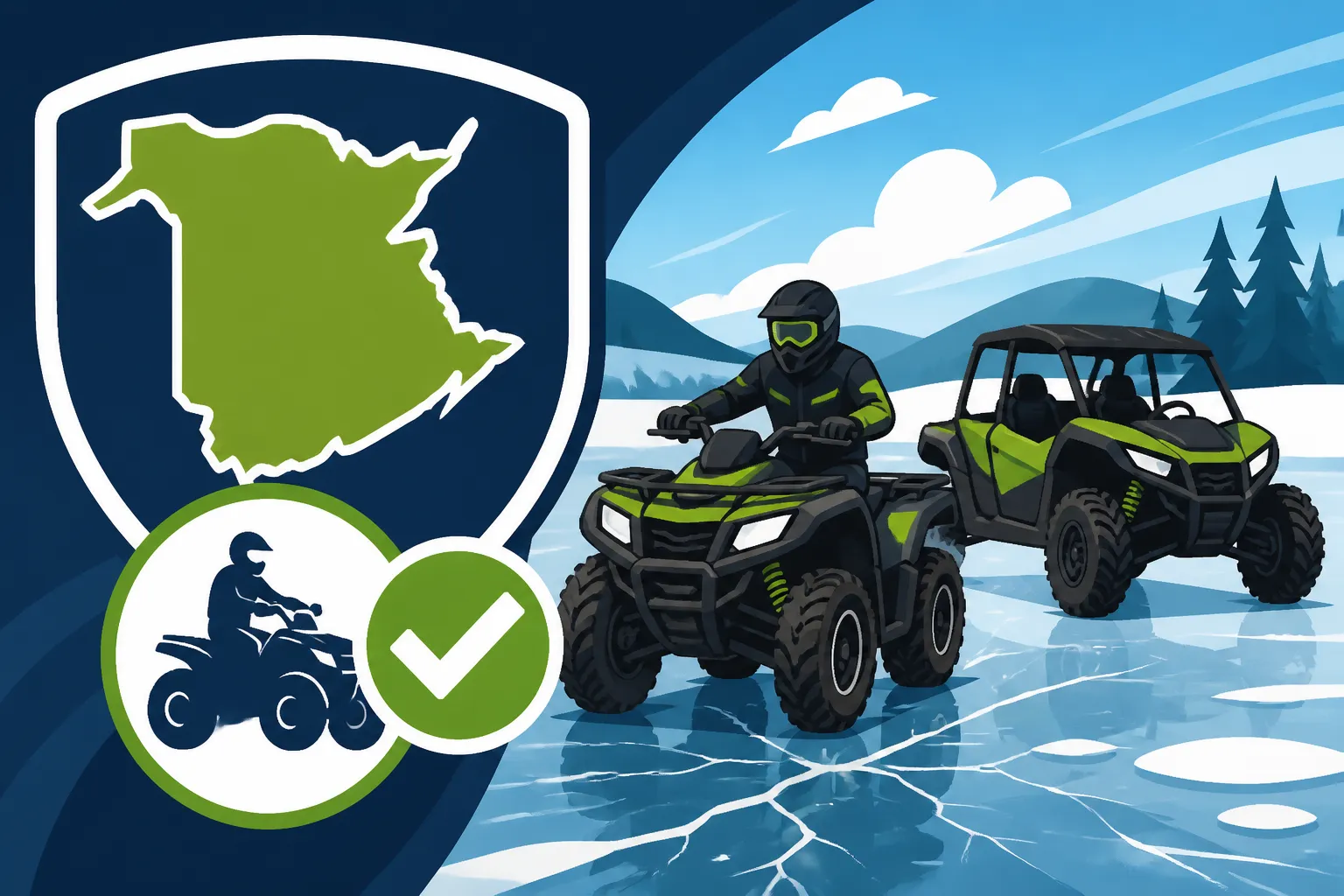
The lure of a vast, frozen expanse can be incredibly strong for ATV and UTV riders here in New Brunswick. That feeling of wide-open space, the thrill of sliding on slick surfaces, it’s undeniably appealing. But as many experienced riders will tell you, the ice can be one of the most unpredictable and unforgiving terrains you’ll ever encounter. This guide aims to clear up the common misconceptions and provide clear, realistic insights into the rules and, more importantly, the critical safety considerations for riding on ice in our beautiful province.
The Allure and The Reality: Why Ice Riding is Different
There’s nothing quite like that feeling of boundless freedom on a perfectly clear, frozen lake or river. It’s a completely different kind of riding experience than hitting the trails, offering wide-open spaces, opportunities for speed, and a unique challenge. Many riders are drawn to the novelty, the stunning winter scenery, and the sheer fun of navigating a slick, expansive surface. It feels like a temporary playground that only appears for a few months each year.
The Thrill and the Hidden Dangers
While the thrill is undeniable, the hidden dangers of riding on ice are very real and can change in an instant. What looks like a solid, uniform sheet of ice from the shoreline can be a deadly trap just a few feet out. You might be cruising along feeling invincible, only to hit a patch of dangerously thin ice caused by an underwater spring, a changing current, or even just differing sun exposure. The stakes are incredibly high when you break through, as your machine can drag you down, and the cold water presents an immediate, life-threatening emergency. We’ve all heard the stories, and none of them end well when proper precautions aren't taken.
Beyond the obvious risk of falling through, ice can also conceal other hazards. Submerged rocks, logs, or stumps that were harmlessly beneath the water's surface in summer become unyielding obstacles just below the ice. A thin layer of snow can completely hide these dangers, turning a smooth ride into a sudden, bone-jarring impact that could damage your machine or, far worse, injure you. The euphoria of the ride can quickly turn into a desperate struggle, and that’s a reality every rider needs to confront before putting a wheel on the ice.
Beyond the Surface: What You Can't See
One of the biggest challenges with ice riding in New Brunswick, or anywhere for that matter, is that you simply cannot tell what's going on beneath the surface with the naked eye. Ice thickness is rarely uniform. Rivers, especially, are notorious for unpredictable currents that can thin the ice from below, even if it appears thick and safe further upstream or downstream. Areas around inlets, outlets, bridges, and points are particularly vulnerable to rapid thinning. The water movement prevents consistent freezing, creating weak spots that are invisible from above.
Adding to this complexity is the effect of snow cover. A fresh blanket of snow, while beautiful, acts as an insulating layer, slowing down the ice-making process. It can also mask cracks, slushy areas, or even open water. Furthermore, the weight of accumulated snow can actually depress the ice, forcing water up through cracks to create a slush layer on top, which can then refreeze into weak, layered ice. This "sandwich ice" is structurally unsound and poses a significant risk. What appears to be a thick, white expanse could be a death trap. It’s why relying solely on visual inspection is never enough. You truly need to understand the body of water you're on, and even then, caution is paramount.
Navigating the Legal Landscape: Specific Rules for New Brunswick
When it comes to riding ATVs and UTVs on frozen bodies of water, many riders assume it's a legal free-for-all, but that's not quite the case. While there aren't specific laws only for ice riding, the general rules governing off-road vehicles in New Brunswick still apply, as does a healthy dose of common sense. Ignorance of the law, or of basic safety, won't protect you if something goes wrong.
The Off-Road Vehicle Act and Ice
The New Brunswick Off-Road Vehicle Act broadly defines where an ORV can be operated, and a frozen lake or river, while temporary, is considered a surface. This means that all the standard requirements you follow for riding trails apply equally to riding on ice. Your ATV or UTV must be properly [New Brunswick ORV Registration Explained], you must carry proof of [New Brunswick Requires Insurance on Trails], and if you're a youth rider, or an adult accompanying one, the [New Brunswick Quad Safety Course Explained] requirements are still in effect. An officer can still ask for your documents on the ice, just as they would on a land trail.
Many riders mistakenly believe that because they are "off-road," these formalities don't matter on a frozen lake. However, if an incident occurs – whether an accident or simply being stopped by law enforcement – failing to meet these basic requirements can result in significant fines and legal trouble. Imagine getting stuck or having an accident on the ice and then facing penalties for not having your machine registered or insured. It adds insult to injury, and it's easily avoidable by simply adhering to the rules you already know for land-based riding. The "surface" your machine is on just happens to be frozen water.
The Unspoken Rules: Common Sense and Local Bylaws
While the provincial Off-Road Vehicle Act covers the basics of your machine's legality, it doesn't delve into the specifics of how to ride safely on ice, largely leaving that up to rider discretion and common sense. This is where the "unspoken rules" come into play. These are the practices that experienced ice users, like ice fishers and seasoned snowmobilers, have learned over decades. For instance, never assuming the ice is safe just because others are on it, always checking conditions yourself, and maintaining a respectful distance from permanent structures or fishing shanties.
Beyond common sense, it's important to remember that local municipalities or Indigenous communities might have specific bylaws related to noise, access points, or restricted areas, even on frozen bodies of water. While the water itself might be public, the access points often cross private property. Riding too close to shorelines where homes are located can lead to noise complaints, and repeatedly using a private landowner's access without permission could lead to issues under [New Brunswick Trespass Law for Riders]. Always check if there are specific local regulations for the area you intend to ride, and remember that [New Brunswick Noise Complaints About Quads] can arise from riding anywhere, including on ice. A bit of research and respect goes a long way.
Who Owns the Ice? Public vs. Private Access
The question of who "owns" the ice can be a bit murky in New Brunswick. Generally, for navigable waters like larger rivers and lakes, the water itself is considered public domain. When it freezes, the surface of that ice can often be accessed by the public. This means you might be legally able to ride on a large, frozen lake that is open to navigation. However, this general rule doesn't grant you carte blanche to access that ice from any point. Shoreline properties are typically private.
If you are accessing a frozen body of water by crossing private land, you absolutely need the landowner's explicit permission. This applies even if you're just driving down to the edge to put your machine on the ice. Without permission, you are trespassing. Furthermore, smaller, entirely enclosed ponds or lakes that are completely surrounded by private property may be considered private, and therefore, off-limits without express permission from the property owner. This is similar to the [New Brunswick Owner-Only Private Land Exemption] for riding on land. Always confirm your access rights before heading out; don't just assume.
Essential Safety Practices When Venturing Onto the Ice
Riding on ice is perhaps one of the most hazardous forms of off-road vehicle recreation, and it demands an extremely high level of respect and preparedness. The consequences of a mistake can be far more severe than a simple trail mishap. This isn't just about following rules; it's about survival.
Before You Even Think About It: Preparation is Key
Seriously, before you even consider taking your machine out onto a frozen body of water, you must do your homework and prepare thoroughly. First and foremost, check local ice conditions. Are there reputable reports from ice fishing clubs, snowmobile associations, or local outfitters? Never trust a single source, and always verify what you hear. Visually inspect the ice from the shore. Look for colour variations – clear blue ice is strongest, while white or opaque ice is weaker, and grey or mottled ice can be extremely dangerous. Slushy areas are a huge red flag.
Secondly, gather your safety gear. This isn't optional for ice riding. You need a set of ice picks (worn around your neck or in an easily accessible pocket), a length of sturdy rope, and ideally, a full flotation suit designed for ice conditions. A fully charged communication device (cell phone, satellite messenger if remote) and a way to signal for help are also crucial. Beyond personal gear, never ride alone. Seriously, never. An ice buddy can be the difference between a close call and a tragedy. Ensure your machine is in top mechanical condition, and consider carrying a robust recovery winch. Brands like SuperATV offer heavy-duty winches that can be invaluable for self-rescue or pulling a companion out of a sticky (or icy) situation, adding a layer of security when venturing into unpredictable winter environments. This goes hand-in-hand with making sure you have [New Brunswick Equipment a Rider Must Carry] on every ride.
On the Ice: What to Do and What to Avoid
Once you're actually on the ice, your behaviour needs to be fundamentally different from how you'd ride a land trail. Maintain moderate speeds and keep a significant distance between your machine and others. Riding in a tight pack concentrates weight and can stress the ice. Avoid sudden stops, starts, or sharp turns, as these can put undue pressure on the ice and reduce your traction significantly. If you're sliding uncontrollably, ease off the throttle and steer gently into the slide.
Constantly scan the ice ahead for any changes in colour, texture, or signs of pressure cracks. Pressure cracks are where ice sheets meet and push against each other, creating ridges or open fissures that can be incredibly dangerous. Slow down and cross them at a right angle if they appear safe, but it's often better to find a way around. If you encounter slush, turn back. Slush usually indicates underlying weak ice or water on top that can quickly bog down your machine and make it impossible to move. If you hear loud cracking sounds, it's a critical warning. Spread out your group immediately and move slowly and deliberately towards the nearest solid ground.
The "What If" Scenarios: Emergency Preparedness
Despite all precautions, accidents can happen. If you or someone in your group falls through the ice, every second counts. For self-rescue, immediately deploy your ice picks. Use them to dig into the ice ahead of you and pull yourself forward, kicking your legs to create buoyancy. Don't remove your heavy winter clothes unless absolutely necessary, as they can provide some initial warmth and flotation. Once you're out, roll away from the hole to distribute your weight, then crawl or slide back to thicker ice. Get to warmth immediately to prevent hypothermia.
If someone else falls through, do not rush to them. Your weight will only put you at risk. Stay low, spread out your weight, and extend a rope, branch, or anything that can reach them. Talk to them, keep them calm, and guide them in their self-rescue. Once they are out, focus on getting them warm and seeking immediate medical attention. Always ensure someone knows your route and estimated return time before you head out. This "float plan" is crucial for search and rescue efforts if you don't return. For detailed procedures on what to do if an incident occurs, familiarize yourself with [New Brunswick Accident Reporting Rules].
Responsible Ice Riding: Community and Environmental Considerations
Riding on ice isn't just about your safety; it's also about being a good neighbour and a responsible steward of our natural environment. The frozen landscape is a shared space, and our actions can have a ripple effect on others and the delicate ecosystems beneath.
Respecting Other Ice Users and Wildlife
New Brunswick's frozen lakes and rivers are popular spots for more than just ATV and UTV riders. Ice fishers spend countless hours setting up their shanties and lines, and their peace can be easily disturbed by loud machines and excessive speed. Similarly, cross-country skiers, snowshoers, and even snowmobilers are using these areas, and everyone deserves respect and space. Excessive noise, especially close to shorelines where homes are located, can lead to negative perceptions of ORV riders and potential complaints.
Beyond human users, our winter landscape is home to wildlife. Many animals, from deer seeking easier travel to various birds, rely on these areas. Disturbance from noisy machines can cause stress, disrupt their feeding patterns, or force them to expend precious energy during the lean winter months. Always be mindful of your surroundings, reduce speed and noise when near other users or potential wildlife habitats, and remember that shared spaces require shared respect.
Environmental Stewardship
The very nature of riding on ice means you are operating on a temporary surface that will eventually melt and become part of our waterways. This makes environmental stewardship particularly important. Ensure your ATV or UTV is well-maintained and free of leaks. Oil, gas, or other fluids leaking onto the ice will eventually enter the water system, causing pollution and harming aquatic life. This is where investing in quality maintenance parts and checking your machine thoroughly before each ride truly matters.
Finally, leave no trace. This fundamental principle of outdoor recreation is paramount on the ice. Any trash, whether it's fuel containers, snack wrappers, or broken machine parts, will not disappear when the ice melts. It will become marine litter, polluting our beautiful lakes and rivers. Pack out everything you pack in, and if you see litter left by others, consider doing your part to remove it. Our natural spaces are a privilege to enjoy, and it's our collective responsibility to protect them.
Here's a quick reference guide on general ice thickness recommendations. Remember, these are minimum guidelines, and no ice is 100% safe. Always exercise extreme caution.
| Activity | Recommended Ice Thickness (Clear, Hard Ice) | Notes |
|---|---|---|
| Ice Fishing/Walking | 4 inches (10 cm) | Single person, light gear. |
| Snowmobiles/ATVs | 5-7 inches (12.5 – 18 cm) | Single machine, no passengers. Be extremely cautious and check regularly. |
| Cars/Light Trucks | 8-12 inches (20 – 30 cm) | Limited travel, usually for ice fishing access; only on established ice roads or tested areas. |
| Medium Trucks/UTVs | 12-15 inches (30 – 38 cm) | Only on very well-established, maintained ice roads. Very rare for recreational UTVs unless highly tested. |
This table provides a general idea, but always rely on local, up-to-date conditions and your own critical judgment. When in doubt, stay off the ice.
Disclaimer
This article is for general informational purposes only and does not constitute professional advice. Laws, prices and regulations vary by location and change over time. Consult a qualified professional for guidance on your specific situation.