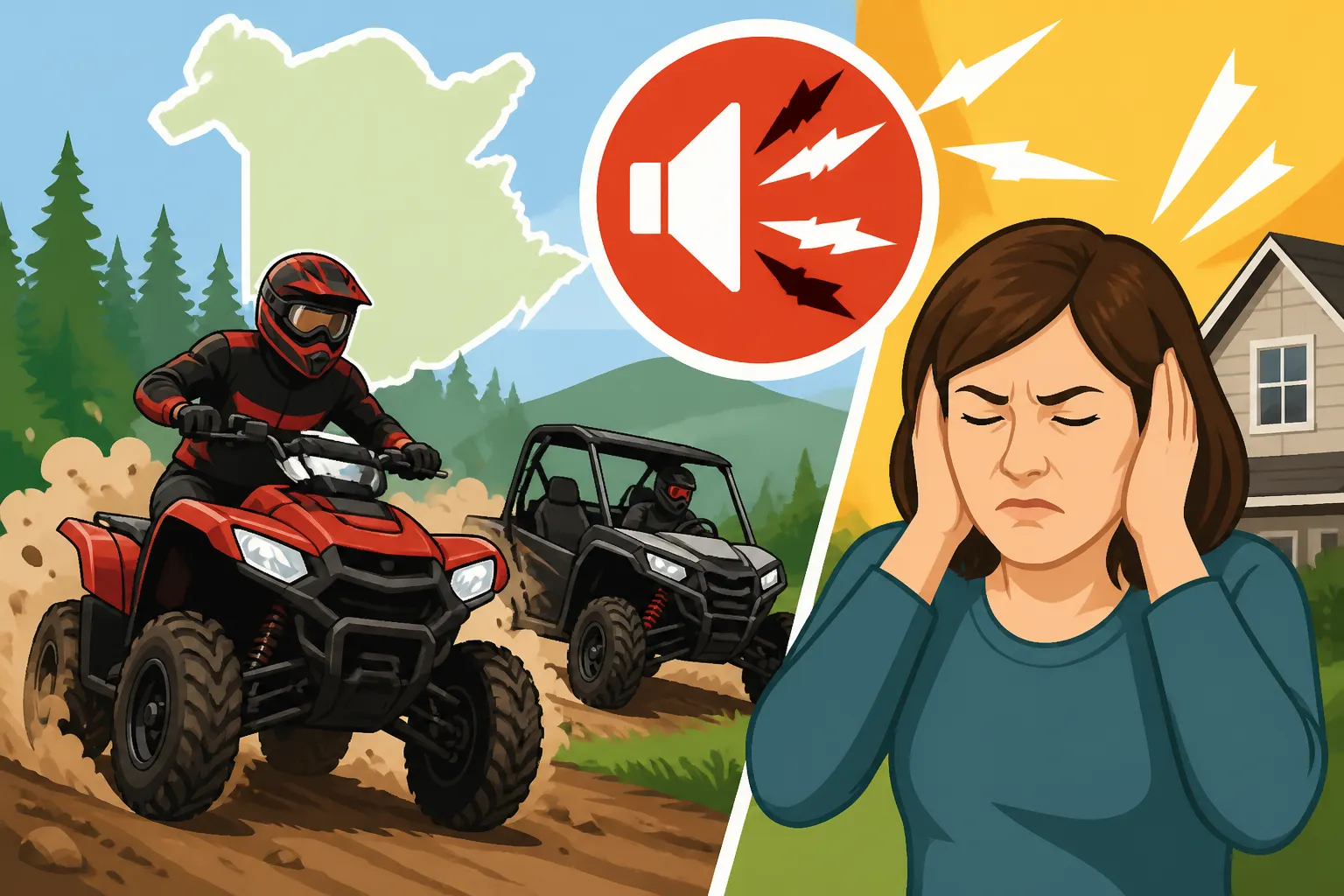
New Brunswick Noise Complaints About Quads
Let's be honest, there's nothing quite like the freedom of hopping on your quad or side-by-side and heading out for a rip, whether it's through the woods, along a rail bed, or just a short hop down a gravel road to a neighbour's place. But lately, many riders in New Brunswick are finding themselves caught in a growing tension: the sound of their machines clashing with the peace and quiet that many rural residents cherish. This guide is all about tackling those tricky noise complaints head-on, helping you understand why they happen, what the rules are, and most importantly, how you can be a better neighbour on four wheels.
Understanding Why Noise is Such a Big Deal for Residents
For us riders, the rumble of an engine is often music to our ears – it signifies adventure, power, and the open trail. But for someone living nearby, especially if they're not into the ATV lifestyle, that same sound can be a real nuisance. It's not always about outright hostility; sometimes, it's just a fundamental difference in how we perceive sound in our daily lives.
The Impact on Quality of Life
Imagine you're trying to enjoy a quiet afternoon on your deck, perhaps reading a book, listening to the birds, or simply unwinding after a long week. Now, picture an ATV or UTV roaring past repeatedly, or idling for an extended period, especially with an aftermarket exhaust that amplifies the sound. That peace is shattered instantly. For families with young children, a loud machine can wake a napping baby, disrupt bedtime routines, or make it impossible for kids to play or study quietly.
It's also a major issue for those who work from home, a growing demographic across New Brunswick. A constant drone or sudden bursts of engine noise can make phone calls difficult, concentration impossible, and generally turn a peaceful workspace into a source of frustration. When someone's quality of life is consistently impacted, even if it's "just for a few minutes," those frustrations can quickly escalate into official complaints. We need to put ourselves in their shoes and understand that what's a momentary thrill for us might be a sustained annoyance for them.
The "Out-of-Place" Perception
Another major factor is how ATVs and UTVs are perceived in certain settings. In many rural or semi-rural areas of New Brunswick, people move there specifically for the tranquility. They expect the sounds of nature, maybe the occasional farm equipment, or the hum of passing cars on a main road. An ATV, especially a performance-tuned one, has a very distinct, often higher-pitched or guttural sound compared to, say, a family sedan or even a lawnmower.
This isn't to say that all ATV noise is inherently bad, but rather that it often stands out. It's an "out-of-place" noise in a residential context, signifying something recreational or off-road, rather than typical neighbourhood activity. This perception can lead to a quicker trigger finger when it comes to complaints. It's less about the absolute decibel level and more about the character of the sound and where it's heard. If an ATV is riding on a [New Brunswick Woods Road] that's clearly a recreational corridor, the expectation of noise is different than if it's weaving through a quiet subdivision.
Property Values and Quiet Enjoyment
It might sound extreme, but for some residents, persistent noise can even become a concern about their property values. Imagine trying to sell a home in a supposedly quiet area, only for potential buyers to be deterred by regular, loud ATV traffic nearby. While it might not be a direct cause-and-effect in every sale, the perception of an area as "noisy" can definitely impact desirability.
Beyond sales, there's the legal concept of "quiet enjoyment" of one's property. People expect to use and enjoy their land without undue interference. When ATV noise becomes a regular and disruptive presence, it can feel like that right is being infringed upon. It's not just a minor irritation; for some, it's a serious boundary violation. Understanding this deeper level of concern can help us approach our riding habits with more empathy and respect for our neighbours.
New Brunswick's Rules and How Noise Complaints are Handled
Unlike some jurisdictions that have specific decibel limits for off-road vehicles, New Brunswick's Off-Road Vehicle Act doesn't lay out precise numbers. However, that doesn't mean riders are free to make as much noise as they please. The Act, alongside municipal bylaws and general nuisance laws, still provides avenues for residents to report disruptive noise.
The Off-Road Vehicle Act and Noise
While the New Brunswick Off-Road Vehicle Act (ORV Act) doesn't explicitly mention decibel levels, it does address the general operation of off-road vehicles in a manner that could lead to nuisance complaints. For instance, the Act specifies where and when you can operate your machine, and riding outside of these designated areas or times, especially near residential zones, automatically increases the likelihood of a complaint. For example, operating an ORV within 7.5 metres of the travelled portion of a highway is generally prohibited, and even if it's a designated crossing point, speed and manner of operation still matter.
Operating a machine in a careless or negligent manner, or in a way that causes a disturbance, can fall under the broader umbrella of nuisance. Even if your exhaust system is technically "legal" because it came with the machine, if you're operating it in a way that is excessively loud and disruptive to neighbours – such as repeatedly revving the engine, driving aggressively on a quiet street where ORVs are temporarily permitted, or riding late at night – you could still face consequences. The key isn't just what your machine sounds like, but how and where you're riding it. For more details on where you can and cannot ride, check out [New Brunswick ATV Road Rules Explained].
How Complaints Get Filed
When a resident is fed up with ATV noise, they usually have a few avenues to pursue. Often, the first step is to contact local law enforcement, such as the RCMP or a municipal police force. Many communities in New Brunswick also have dedicated bylaw enforcement officers who handle nuisance complaints, including noise.
When a complaint is filed, the authorities will typically ask for details: the time of day, the duration of the noise, the type of machine, and sometimes even a description of the rider or machine if they can identify it. Repeated complaints from multiple residents can strengthen a case. While it's rare for an officer to carry a decibel meter to issue a direct noise violation specific to an ORV (unless a local bylaw specifies), they can certainly address general nuisance, unsafe operation, or violations of where and when an ORV can be operated. They might observe the situation themselves or follow up based on the information provided. It's important to remember that simply because a specific decibel limit isn't in the provincial ORV Act, it doesn't mean there are no consequences for creating excessive noise.
Potential Consequences for Riders
If a noise complaint leads to an investigation and an officer finds a violation, the consequences can range from a warning to a formal ticket. The fines can be substantial. For instance, being caught riding in a prohibited area, riding too close to a highway, or operating in a careless manner can all incur fines. While there isn't a specific "noise fine" in the provincial ORV Act, the behavior that generates the noise often violates other sections of the Act or local bylaws. For example, if you're riding your quad on a village street not designated for ORV use and causing a racket, you could be ticketed for operating in an unauthorized area, which carries a set fine. This is different from [New Brunswick Impaired Riding Penalties] but still impactful.
A first offense might be a warning, but repeat offenses or particularly egregious situations can lead to fines for various infractions related to illegal or improper operation. These fines can add up quickly, especially when combined with court costs if the matter goes beyond a simple ticket. Ignoring these issues can also erode goodwill in the community, making it harder for clubs to advocate for new trails or for local municipalities to consider opening up roads for ORV access. Keeping tabs on local rules by checking [New Brunswick Bylaw Lookups Before You Ride] can save you a lot of headaches and fines.
| Noise Mitigation Strategy | Description | Proactive Maintenance Check |
|---|---|---|
| Exhaust System | Ensure muffler packing is intact, no leaks, and not modified for loudness. | Inspect muffler for rust, cracks, loose bolts. Check exhaust pipe for leaks. |
| Engine Components | Loose engine parts, rattling heat shields, or worn bearings can increase noise. | Listen for unusual rattles or vibrations. Tighten loose shrouds. |
| Drive Train | Worn chains, sprockets, or CV joints can create whining or clunking sounds. | Lubricate chain, check for excessive play in bearings/joints. |
| Tires | Aggressive tire treads can be noisy on hard surfaces, especially at speed. | Consider less aggressive tires for mixed-use riding if noise is an issue. |
| Loose Accessories | Anything not securely fastened can vibrate and create noise. | Secure cargo, toolboxes, flag mounts, and any aftermarket additions. |
| General Upkeep | Regular washing and inspection can reveal issues early. | Clean machine regularly, visually inspect for anything amiss. |
Practical Steps Riders Can Take to Be Better Neighbours (and Avoid Complaints)
The good news is that many noise complaints are avoidable with a bit of mindfulness, good maintenance, and a willingness to engage positively with your community. It's about being part of the solution, not adding to the problem.
Equipment Checks and Maintenance
One of the easiest ways to reduce noise is to ensure your machine is in top-notch mechanical condition. A poorly maintained ATV or UTV can be significantly louder than one that's well cared for. Think about a car with a hole in the muffler – it's instantly noticeable and much louder than a healthy exhaust system.
Start by regularly inspecting your exhaust system. Look for cracks, loose connections, or holes that could be letting out more sound than intended. Ensure any muffler packing is still effective; over time, this can degrade, making your muffler less efficient at dampening sound. If you've got an aftermarket exhaust, be honest with yourself about its sound output. While many performance exhausts are designed to be louder, there are also options available that focus on enhancing performance without significantly increasing noise levels. Some riders might explore aftermarket accessories from brands like SuperATV, which offers a range of parts, including exhaust components and sound-dampening kits for UTVs. If you’re looking at these, always research how they impact sound levels.
Beyond the exhaust, listen for other rattles and vibrations. Loose heat shields, worn engine mounts, or even cargo not properly secured can contribute to a symphony of unwanted noise. Tighten any loose bolts you find during your regular [New Brunswick Equipment Checks by Officers] preparation, and ensure all parts are working as they should. Sometimes, a little bit of grease or a new bushing can make a surprising difference.
Mindful Riding Habits
This is perhaps the most critical area for avoiding noise complaints. It's less about the machine itself and more about how you operate it.
- Timing is Everything: Try to restrict your riding near residential areas to reasonable daytime hours. Early mornings (before 9 AM) and late evenings (after 8 PM) are often the times when people are most sensitive to noise. If you're heading out for a longer trip, consider trailering your machine a short distance away from houses before unloading and starting your ride. For those quick trips to a neighbour or gas station, be extra mindful.
- Location, Location, Location: Stick to designated trails and routes. Avoid cutting through private property without explicit permission, even if it seems like a shortcut, as this directly contributes to [New Brunswick Trespass Law for Riders] issues and noise concerns. When riding on public roads that are opened to ORVs, respect residential zones by slowing down and keeping engine noise to a minimum. Remember, [Riding Quietly Past Houses at Night] is always a good practice.
- Throttle Control: Aggressive riding, such as rapidly accelerating, revving your engine unnecessarily, or performing stunts like wheelies, generates a lot more noise and draws negative attention. A steady, moderate throttle not only reduces noise but is also safer and often more fuel-efficient.
- Idling: Avoid prolonged idling near homes. If you need to stop for a moment, consider shutting off your engine, especially if you're going to be stationary for more than a minute or two.
Engaging with Your Community
Sometimes, the best offense is a good defense – by building positive relationships with your neighbours and community.
- Join a Local Club: Becoming a member of a local ATV club, such as those affiliated with QuadNB, is an excellent way to connect with other riders who often share a similar commitment to responsible riding. These clubs are active in trail maintenance and community relations and often host events that can help bridge gaps with non-riding residents. [New Brunswick Quad Clubs Worth Joining] often have insights into local noise hotspots or community concerns.
- Be Approachable: If a neighbour approaches you with a concern about noise, listen respectfully. Even if you feel you're not doing anything wrong, hearing them out can go a long way. Offer to adjust your riding habits if feasible, or explain your route and why you're riding where you are. A polite conversation can often de-escalate a situation before it becomes a formal complaint.
- Support Responsible Riding Initiatives: Participate in local community clean-ups, trail maintenance days, or other events that show riders are invested in the community, not just using it. This builds goodwill and helps shift the perception of riders from noisy nuisances to responsible community members.
Aftermarket Solutions for Noise Reduction
For riders who want to take an extra step, there are various aftermarket solutions designed to reduce ATV and UTV noise. These are particularly popular for UTVs, which are often used for utility purposes around homes or campgrounds.
- Exhaust Silencers and Quiet Inserts: Many manufacturers, including some aftermarket companies, offer exhaust silencers or inserts that can be added to your existing muffler to further reduce sound output without significantly hindering performance. Always ensure any modifications comply with local regulations and don't create back-pressure issues for your engine.
- Sound-Dampening Mats and Insulation: For side-by-sides, a significant amount of engine and drivetrain noise can enter the cab. Products like sound-dampening mats or acoustic insulation (which you can find from general automotive suppliers or even specialized ORV vendors like SuperATV) can be applied to the floorboards, firewall, and engine covers to absorb sound and reduce cabin noise. This doesn't directly reduce external noise, but it makes the experience more pleasant for riders and can reduce some radiating noise.
- Quiet Tires: While knobby tires are great for traction off-road, they can generate a surprising amount of road noise on hard-packed surfaces. If you frequently ride on gravel roads or paved sections (where legally permitted), consider tire options with a less aggressive tread pattern that are designed for a quieter ride.
Ultimately, navigating noise complaints about quads in New Brunswick comes down to a blend of understanding, respect, and proactive measures. By being mindful of your machine, your riding habits, and your neighbours, you can continue to enjoy the incredible trails and open spaces New Brunswick offers, while fostering a more harmonious relationship with the communities you ride through.
Disclaimer
This article is for general informational purposes only and does not constitute professional advice. Laws, prices and regulations vary by location and change over time. Consult a qualified professional for guidance on your specific situation.