New Brunswick Rules for a Child Passenger
Riding an ATV or UTV in New Brunswick is an incredible way to experience our beautiful landscapes, from rugged woods roads to expansive rail beds. But for many families, the joy of the ride comes with a significant question mark: "Can I bring my child along, and what are the actual rules for having a young passenger?" It's a question fraught with worry, given the varying laws and the inherent risks of off-road riding. This guide aims to cut through the confusion, providing clear, empathetic, and realistic advice on New Brunswick's specific regulations for child passengers on off-road vehicles, helping you navigate the trails safely and legally with your little ones.
Understanding the Basics: Age and Machine Restrictions for Young Passengers
When it comes to having children as passengers on your off-road vehicle (ORV) in New Brunswick, it's not as simple as just finding a spot for them to sit. The rules are designed with safety in mind, and they differentiate significantly between different types of machines and how they are designed to carry passengers. Many riders get this wrong, assuming any extra seat means it's okay, but the province has specific guidelines to prevent accidents and ensure everyone's well-being.
The "Designated Seat" Rule: What It Means for Kids
This is perhaps the most critical rule to understand. The New Brunswick Off-Road Vehicle Act is very clear: a passenger, especially a child, can only be carried on an ORV if that machine is specifically designed by the manufacturer to carry more than one person and has a designated passenger seat. What does this really mean for your family?
For most traditional ATVs (often called quads), they are designed as single-rider machines. Even if your ATV has a long seat, or you've added a rear rack pad, it is generally not considered a designated passenger seat by the manufacturer, and therefore, carrying a passenger on such a machine is illegal and incredibly dangerous. These machines are engineered for one rider to control their weight and balance effectively over varying terrain. Adding a passenger, especially a small child, dramatically alters the centre of gravity and can lead to loss of control, tip-overs, and serious injury.
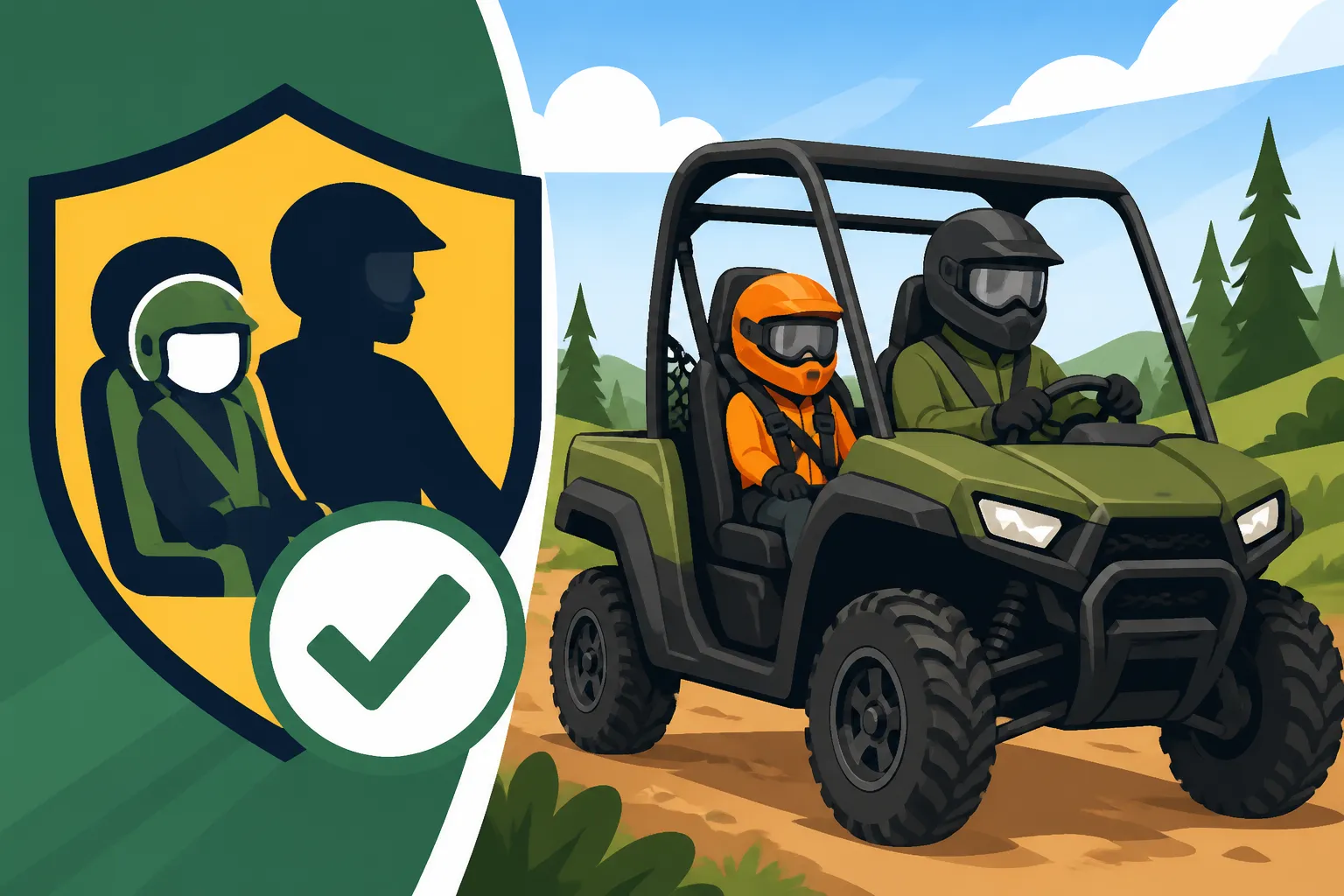
This is where side-by-side vehicles (UTVs) shine for family riding. Side-by-sides, by their very design, come with multiple factory-installed seats, seatbelts, and often roll cages, making them the primary choice for carrying passengers, including children, legally and more safely. These machines are built with the intention of carrying multiple occupants, and their stability and safety features reflect that. So, if you're dreaming of family trail rides with the kids, a side-by-side is generally the machine you should be looking at.
Age-Specific Limitations on Carrying Children
While the "designated seat" rule is paramount, there are also age considerations, particularly for the driver, which indirectly affects passengers. New Brunswick's Off-Road Vehicle Act states that the driver of an ORV must be at least 16 years old and hold a valid driver's licence or a Class 9 ORV licence. For younger riders aged 14 and 15, they can operate an ORV if they have a Class 9 licence and are supervised by an adult with a full driver's licence and an ORV safety course certificate.
However, for passengers, the law focuses more on the machine's design rather than the passenger's age. There isn't a specific minimum age for a passenger in a properly designed side-by-side, but it's universally understood that the child must be able to sit securely in the seat, use the provided safety restraints (like seatbelts), and fit safely within the machine's passenger compartment. Common sense dictates that infants and very young toddlers are not suitable passengers for any ORV due to their inability to brace themselves or properly use restraints.
Parents must use their judgment to ensure their child is mature enough, can follow instructions, and is physically capable of being a passenger. Even in a side-by-side, jerky movements, bumps, and unexpected stops are part of the ride. A child passenger needs to be able to understand and react to these conditions to some degree, even if they're just holding on and staying seated.
Machine Suitability: Is Your ORV Passenger-Ready?
Beyond the legal definition of a "designated seat," true machine suitability involves a deeper look at the vehicle itself. As mentioned, most single-rider ATVs are simply not built for carrying a passenger. Their suspension, steering, and braking systems are calibrated for one person. Adding a second person can overstress these components, compromise stability, and make the machine dangerously unpredictable.
Side-by-sides, on the other hand, are designed from the ground up for multiple occupants. They have features like bucket seats, four or five-point harness systems (sometimes standard, sometimes an aftermarket upgrade), full doors, and robust roll-over protection structures (ROPS). When considering a side-by-side for family use, look for models that offer excellent suspension to absorb bumps, a wide stance for stability, and reliable braking. Many aftermarket companies, like SuperATV, offer a range of accessories that can enhance the safety and comfort of your side-by-side, such as door inserts for added security or enhanced harness systems, though these are typically enhancements to an already passenger-ready machine, not conversions for single-rider ATVs. Always ensure any modifications comply with local regulations and do not compromise the manufacturer's original safety design.
The core principle remains: if the manufacturer didn't intend it for a passenger, it’s not safe or legal to carry one. This applies equally to a small child as it does to an adult. Prioritizing the correct type of machine is the first and most crucial step towards safely bringing your child along for the ride. For more on specific machine types, check out [Does a Side-by-Side Register the Same Way?].
Essential Safety Gear and Rider Responsibility
Once you've ensured your ORV is legally capable of carrying a child passenger, the next critical layer of protection is ensuring they have the correct safety gear and that the driver understands their heightened responsibilities. It’s not just about following the law; it’s about providing the best possible protection for your most precious cargo.
Mandatory Helmets: No Exceptions for Little Heads
New Brunswick's Off-Road Vehicle Act is crystal clear: "No person shall operate or be a passenger on an off-road vehicle unless the person is wearing a helmet." This applies equally to children. There are no exemptions based on age or location (whether on trails or private property). A properly fitted, approved helmet is non-negotiable for every single person on an ORV.
What constitutes an "approved" helmet? It must meet specific safety standards. In New Brunswick, acceptable standards include:
- CSA D230 (Canadian Standards Association)
- DOT FMVSS 218 (U.S. Department of Transportation)
- SNELL (Snell Memorial Foundation)
- ANSI (American National Standards Institute)
When choosing a helmet for a child, fit is paramount. A helmet that is too large can shift during a ride, obstructing vision or failing to provide protection in a fall. A helmet that is too small will be uncomfortable and potentially offer inadequate coverage. Take the time to measure your child's head and ensure a snug, comfortable fit. The helmet should sit level on their head, not tilted back, and the chin strap should be fastened securely. Remember, a child's head is particularly vulnerable, so investing in a high-quality, properly fitting helmet is one of the best safety decisions you can make. For more details on helmet requirements, see [New Brunswick ATV Helmet Law].
Appropriate Attire and Protective Equipment
Beyond the helmet, a child passenger needs robust protective clothing. Just like adult riders, children should wear:
- Eye Protection: Goggles or a full-face helmet with a visor are crucial to protect against dust, debris, insects, and low-hanging branches. Even in a side-by-side with a windshield, dust and debris can find their way into the cabin.
- Gloves: Proper riding gloves protect hands from abrasions in a tip-over and improve grip, even for passengers who are just holding onto grab handles.
- Long-Sleeved Shirt and Long Pants: These provide a barrier against scrapes, cuts, sun exposure, and bug bites. Denim or other durable fabrics are preferable to thin cotton.
- Sturdy Over-the-Ankle Boots: Flip-flops or sandals simply won't cut it. Boots protect feet and ankles from impacts, provide stability, and prevent feet from slipping off footrests.
Think of it this way: if an adult rider wouldn't wear it on the trail, a child certainly shouldn't. The elements and terrain are unforgiving, and children often have more delicate skin and bones. Dressing them in layers is often a good strategy, allowing for adjustments to temperature throughout the ride, especially when exploring different regions like those accessible via the [New Brunswick Miramichi Riding] network.
The Driver's Role: Ensuring a Safe Ride for Youngsters
As the driver, your responsibility multiplies when you have a child passenger. You are not only responsible for your own safety but for the well-being of the child in your care. This demands a heightened level of caution and awareness.
Before You Ride:
- Machine Check: Ensure your ORV is in excellent mechanical condition, especially brakes, tires, and suspension.
- Passenger Briefing: Explain the rules to your child. Tell them where to keep their hands and feet, the importance of staying seated, and what to do if you encounter bumps or rough terrain.
- Proper Restraints: Double-check that all seatbelts or harness systems are securely fastened and adjusted for the child's size.
- Route Planning: Choose trails that are appropriate for the child's comfort level and the machine's capabilities. Avoid overly technical or extremely bumpy trails.
During the Ride:
- Reduced Speed: You must significantly reduce your speed when carrying a passenger, especially a child. Their ability to brace and react is not the same as an adult's.
- Smooth Operation: Avoid sudden acceleration, sharp turns, or abrupt braking. Drive smoothly and predictably.
- Constant Communication: Regularly check in with your child. Are they comfortable? Are they feeling sick? Do they need a break?
- Increased Awareness: Be extra vigilant for obstacles, changing terrain, and other riders. Anticipate potential hazards much further in advance.
Remember that the ultimate responsibility for a child passenger's safety rests squarely on the driver's shoulders. Your choices behind the wheel directly impact their experience and safety. Taking an ORV safety course yourself can significantly enhance your skills and awareness, benefiting any passenger you might carry.
Navigating the Rules: Where Can Children Ride as Passengers?
Knowing how to carry a child passenger safely is just one piece of the puzzle. You also need to know where it's permissible to ride with them. New Brunswick has a diverse landscape, from vast club trail networks to private woodlots and public roads, each with its own set of rules and nuances that impact how and where you can enjoy off-road adventures with your family.
Trail Riding with Kids: What's Allowed on the QuadNB Network
New Brunswick boasts an extensive network of managed trails, primarily maintained by QuadNB and its member clubs. This network, spanning thousands of kilometres, is often the safest and most enjoyable place for family riding. When riding on designated QuadNB trails, the rules regarding designated seating and helmets apply stringently. You'll need a valid trail permit for your machine, which also supports the ongoing maintenance of these trails. For information on permits, see [New Brunswick Trail Permits for 2026 and 2027].
The beauty of the club trail system is that it's designed for ORV use. Trails are typically signed, often have maintenance crews, and are generally (though not always) less hazardous than unmarked woods roads. When planning a family ride on these trails, choose routes marked as "easy" or "beginner-friendly." Many clubs, like those associated with [New Brunswick Miramichi Riding], offer various trail difficulties. Look for trails that avoid deep mud, large rocks, or steep inclines that could jostle a young passenger unnecessarily. Companies like SuperATV can provide robust skid plates or A-arm guards which might offer peace of mind when traversing less predictable sections of trail, even on well-maintained paths.
It's also a good practice to research specific trail conditions before you go. Spring thaw can create challenging mud holes, and heavy rains can lead to washouts. A quick call to the local QuadNB club or checking their social media can often provide up-to-date information on trail conditions, ensuring a smoother and safer ride for everyone, especially those with young passengers.
Roads, Highways, and Crossings: Limits for Young Passengers
This is where things become significantly more restrictive and risky. New Brunswick's Off-Road Vehicle Act generally prohibits the operation of ORVs on public roads and highways, with very specific exceptions. These exceptions usually involve designated crossing points or short stretches of highway opened by ministerial designation or municipal bylaw, often for access to services or to connect trail segments.
When riding on a designated road or crossing a highway with a child passenger, all the ORV safety rules still apply, but with an added layer of caution. Traffic on public roads moves much faster than on trails, and the risks are substantially higher. If you must use a designated road section, keep your speed to the absolute minimum, stay to the far right, and be hyper-vigilant for other vehicles. Children, being smaller, are less visible to other motorists.
Furthermore, there are specific rules for young ORV drivers regarding road crossings, as highlighted in [New Brunswick Under-16 Riders Cannot Cross a Road]. While this primarily concerns young operators, it underscores the general provincial cautiousness about ORVs and roads, especially where children are involved. The safest approach is to minimize road exposure as much as possible when carrying children. Stick to the trails designed for ORV use whenever you can.
Private Property vs. Public Land: Different Rules, Same Safety Priority
The rules for ORVs can differ slightly depending on whether you are on private land or Crown land. On private property where you have explicit permission to ride, provincial registration and insurance requirements still apply. The helmet law also applies regardless of where you are riding. While enforcement might feel less immediate on a secluded private woodlot, the safety principles remain identical. If you are carrying a child passenger on private land, they still need to be in a designated seat and wearing an approved helmet.
On Crown land, the provincial Off-Road Vehicle Act is fully in effect, just as it is on the QuadNB trail system. There are often additional rules concerning environmental protection, hunting seasons, and access restrictions that riders need to be aware of. It's always a good idea to research the specific Crown land area you plan to ride to ensure there are no surprises.
Regardless of whether you are on private land, Crown land, or a managed trail, the safety of your child passenger should always be your top priority. The laws are the minimum standard; responsible riding goes above and beyond. Even if a particular rule seems less strictly enforced in a remote area, adhering to all safety guidelines protects your child from potential harm.
Consequences of Non-Compliance and Best Practices
Ignoring the rules for child passengers on ORVs in New Brunswick isn't just a minor oversight; it carries significant legal, financial, and, most importantly, safety consequences. As responsible adults and enthusiasts of the outdoors, understanding these ramifications is crucial for protecting your family and upholding the reputation of the riding community.
Fines and Penalties: What Happens When Rules Are Broken
New Brunswick has established set fines for various violations of the Off-Road Vehicle Act. These fines are not trivial and are designed to deter unsafe practices. Here are some of the key penalties that could apply when rules regarding child passengers are not followed:
| Violation Category | Potential Fine (Driver) | Specifics Relevant to Child Passengers |
|---|---|---|
| No Helmet (Driver or Passenger) | $172.50 | Each passenger (including a child) not wearing an approved helmet. [New Brunswick's $172.50 Helmet Fine] |
| Improper Passenger Carriage | Varies by officer | Carrying a child passenger on a machine not designed for passengers. |
| Operating Unregistered ORV | $172.50 | If the ORV itself is not registered, regardless of passenger status. [New Brunswick No-Registration Fine of $172.50] |
| Operating Uninsured ORV (on trail) | $604.50 | Mandatory insurance on designated trails. [New Brunswick Uninsured ATV Fine of $604.50] |
It's important to understand that these fines are usually applied to the driver of the ORV. As the adult in charge, you are held accountable for ensuring all passengers, especially children, are compliant with the law. Multiple violations can result in cumulative fines. Beyond the financial impact, repeat offenses could lead to further legal action or even the suspension of your ORV operating privileges. No one wants to end a family outing with a substantial ticket, especially when the goal was to create happy memories.
Prioritizing Safety: Beyond the Law, It's About Well-being
While fines provide a legal incentive to follow the rules, the most compelling reason to adhere to passenger regulations is the safety and well-being of the child. The laws are the absolute minimum standards, often written in response to accidents and injuries. True safety goes beyond mere compliance.
Consider the physics of off-road riding: sudden changes in terrain, unexpected turns, and potential obstacles. Even at moderate speeds, an improperly seated child, or one without adequate protection, is at severe risk in a collision or rollover. Injuries can range from scrapes and bruises to broken bones, concussions, or worse. The emotional trauma for both the child and the responsible adult in such an event can be profound and long-lasting.
Choosing a properly equipped side-by-side, such as those that SuperATV helps outfit with custom parts and accessories, dramatically enhances safety compared to a modified ATV. These vehicles provide a much more stable platform and better occupant protection. Think of it not as an inconvenience, but as an investment in your child's future well-being and your peace of mind.
Parental Guidance and Supervision: A Constant Need
As a parent or guardian, your role extends far beyond simply strapping a helmet on your child. You are their primary educator and role model for safe riding practices.
- Lead by Example: Always wear your own safety gear, adhere to speed limits, and respect trail rules. Children learn by watching.
- Continuous Education: Talk to your child about off-road safety, why certain rules exist, and the potential dangers. Make it a regular conversation, not a one-time lecture.
- Assess and Adapt: Continuously assess your child's comfort level, fatigue, and the riding conditions. Be prepared to shorten a ride, take more breaks, or choose a less challenging route if needed. What was fun last week might be too much today.
- Hands-on Training (when age-appropriate): If your child eventually progresses to operating their own ORV, ensure they complete a certified [New Brunswick Quad Safety Course Explained] and start on appropriate machines in a controlled environment. For specific age guidelines for young riders, see [New Brunswick Rules for a 12-Year-Old Rider].
Creating a culture of safety within your family's riding adventures ensures that every trip is not just fun, but also responsible and secure. It's about instilling respect for the machine, the environment, and the rules that keep everyone safe on our incredible New Brunswick trails.
Disclaimer
This article is for general informational purposes only and does not constitute professional advice. Laws, prices and regulations vary by location and change over time. Consult a qualified professional for guidance on your specific situation.