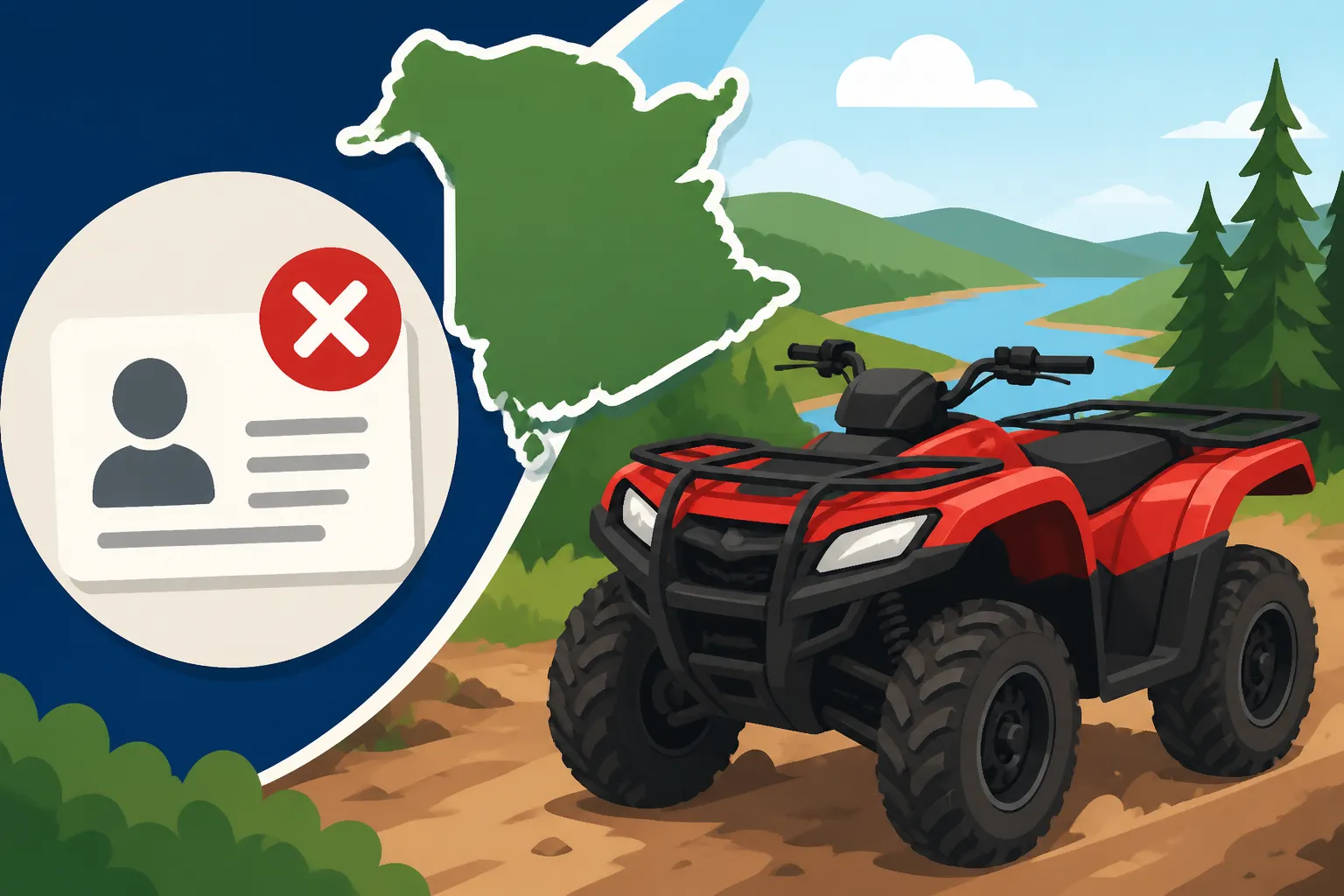
Do You Need a Licence for an ATV in New Brunswick?
It’s a question that trips up a lot of riders, new and seasoned alike, here in New Brunswick: "Do I need a driver's licence to operate my ATV?" It's not as straightforward as you might think, and the confusion often leads to frustrating situations or even fines. This guide will break down the licence requirements for riding ATVs and UTVs across our beautiful province, helping you understand exactly what paperwork you need before you hit the trails or venture onto designated roads.
The Short Answer: It Depends on Your Age and Where You Ride
The need for a driver's licence to operate an Off-Road Vehicle (ORV) in New Brunswick isn't a simple yes or no. It really hinges on two main factors: the age of the operator and the specific location where the machine is being ridden. Understanding these distinctions is crucial for staying legal and safe, preventing headaches down the trail. Many folks assume that because it’s not a car, a driver’s licence isn’t needed at all, but that’s not always the case, especially as ATVs become more integrated into our road and trail networks.
Adults (16+) on Designated Trails and Private Land
For adults aged 16 and over, the good news is that typically, you don't need a conventional Class 5 driver's licence just to ride your ATV or UTV on designated off-road trails or on private property you have permission to access. This is where most of our recreational riding happens, whether it's exploring the vast network of QuadNB trails or simply cruising around your own camp or woodlot. The provincial Off-Road Vehicle Act focuses more on registration, insurance, and safety training for these environments rather than a specific road driver's licence.
However, don't mistake this for a free-for-all. While a Class 5 licence might not be a direct requirement, being a responsible and knowledgeable rider is. Many experienced riders will still recommend completing a [New Brunswick Quad Safety Course Explained], as it provides invaluable skills and knowledge regardless of whether it's legally mandated for your specific situation. This training helps you understand machine operation, trail etiquette, and emergency procedures, which are far more practical for off-road environments than the skills assessed for a car licence. So, while your wallet might not need to hold a specific licence for the trails, your mind should certainly hold the knowledge from proper safety education.
Minors (Under 16) and the Class 9 Licence
This is where the licensing requirements become a bit more specific, especially for our younger riders. In New Brunswick, if you are 14 or 15 years old, and you want to operate an ORV on public trails, you must obtain a Class 9 off-road vehicle licence. This isn't just a suggestion; it's a legal requirement designed to ensure that these younger operators have a foundational understanding of the rules and safe operation before venturing out. It's a recognition that while they might not be ready for a car, they can certainly learn to operate an ATV responsibly with proper instruction.
To get this Class 9 licence, a 14 or 15-year-old must complete an approved ATV driver training course and obtain their parents' or guardians' consent. The course covers everything from machine maintenance to safe riding practices and environmental awareness. It's a significant step in ensuring they are prepared. Furthermore, these young riders must always be accompanied by an adult (19 years or older) who holds a valid driver’s licence and also possesses a [New Brunswick Driver Training Certificates] for ORV operation. This adult escort must be actively supervising the minor. It’s also important to remember that even with a Class 9 licence, there are still restrictions, like the inability to cross public highways, a point we'll delve into further. Understanding [New Brunswick Adults Escorting Young Riders] is critical for families hitting the trails together.
Younger Riders (Under 14) and Supervised Riding
For children even younger than 14, the rules shift considerably, moving away from formal licensing to strict supervision and machine limitations. Children aged 6 to 13 are generally only permitted to operate an ORV on a "closed course" – that is, a designated area where there is no interaction with public roads or other traffic, and under the direct supervision of an adult. This setup is often found at organized events, private properties, or specific training facilities. The focus here is entirely on learning in a controlled and safe environment, far removed from the complexities of public trails or road crossings.
There are also strict [New Brunswick Engine Caps for Young Riders] based on age. For instance, a 6-year-old might be limited to a 70cc machine, while a 12 or 13-year-old can operate larger, but still age-appropriate, machines. These engine displacement limits are in place to ensure that the machine's power and size are suitable for the child's physical capabilities and maturity. So, while there's no licence to worry about at this age, parents and guardians bear a significant responsibility in adhering to these guidelines, ensuring their child operates a machine that is safe for them and only in appropriate environments. For more detailed information on specific age groups, you might want to look into [New Brunswick Rules for a 12-Year-Old Rider] to understand the nuances for pre-teen operators.
When a Driver's Licence Is Required: Road Crossings and Designated Roads
While the trails are often forgiving regarding a traditional driver's licence, the moment your wheels touch certain public areas, the rules change, and that Class 5 licence (or equivalent) becomes very important. This is where many riders get caught off guard, assuming that because their ATV is an ORV, it's exempt from typical highway rules, but that's a dangerous assumption to make.
Crossing Public Highways
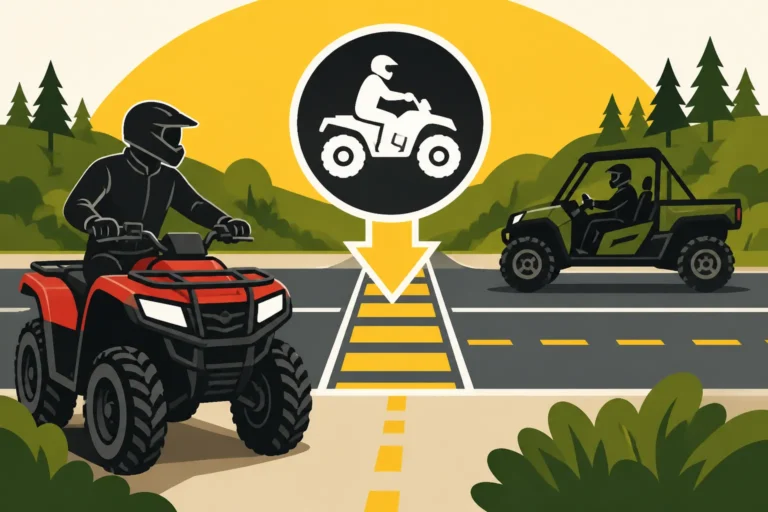
Picture this: you're enjoying a fantastic ride on a club trail, and suddenly, the trail meets a paved road, requiring you to cross to continue on the other side. This is a common scenario, and it's precisely where a standard driver's licence usually becomes necessary. If you, as an adult (16+), need to cross a public highway or road, you generally must hold at least a valid Class 7 learner's permit or a full Class 5 driver's licence. The logic here is that during the act of crossing, you are briefly sharing the road space with other motor vehicles, and therefore need to possess the basic qualifications of a road vehicle operator.
This requirement for a driver's licence during crossings is not about controlling an ORV on a trail but about navigating a specific interaction with public road infrastructure. It's a safety measure to ensure that anyone operating a machine in proximity to road traffic understands traffic laws and has demonstrated some level of competence in a road vehicle. For minors (under 16), the rules are even stricter: even with a Class 9 ORV licence, they are generally not permitted to cross public roads, regardless of whether they have an escort. It’s a significant restriction designed to protect our youngest riders from the inherent dangers of highway traffic. To fully understand these critical moments, a deeper dive into [New Brunswick Rules for Crossing a Highway] is highly recommended.
Riding on Designated Public Roads
Beyond mere crossings, some municipalities in New Brunswick have adopted bylaws that permit ATVs and UTVs to ride on specific sections of public roads within their boundaries. These are often rural roads or village streets where traffic is lighter, and they serve to connect trail segments, provide access to services like fuel or food, or allow residents to travel from their homes to the trails. If you find yourself on one of these designated public road sections, a valid driver's licence (at least a Class 7 learner's permit for adults 16+, or a full Class 5) is almost always required.
These designated road sections come with their own set of rules, including specific speed limits, operating hours, and often requirements for road-legal accessories like mirrors or turn signals. It's not just about having the licence; it's about adhering to all the conditions that come with sharing the road with other vehicles. Always check for [New Brunswick Municipal Bylaws That Open Roads] in the area you plan to ride, as these rules can vary significantly from one town to another. Additionally, in some unique cases, such as accessing a remote hunting camp, you might need a special [New Brunswick Highway Usage Permits] for specific stretches, which also typically demands a valid driver's licence.
Riding on Shoulder or Ditch Alongside a Highway
Another common scenario that can lead to confusion is riding in the ditch or on the shoulder directly adjacent to a public highway. New Brunswick has a "7.5-meter rule" which states that an ORV must operate at least 7.5 meters from the travelled portion of a highway. This rule aims to separate ORVs from active road traffic for safety. However, even if you are adhering to this 7.5-meter separation, the question of a driver's licence can still arise depending on the exact interpretation and the specific context of where you are riding.
While the primary intent of the 7.5-meter rule is safety and separation, if an officer determines you are operating your ORV in a manner that could be considered part of the highway right-of-way, or that your operation impacts highway traffic, a valid driver's licence may still be deemed necessary. It's a grey area that's best avoided by sticking to clearly designated trails or areas where ORV use is explicitly permitted. The safest bet is to treat any proximity to a public highway as requiring the same caution and adherence to rules as if you were on the highway itself. Understanding [New Brunswick's 7.5 Metre Rule From a Highway] is vital, but always err on the side of caution regarding licensing when near public roads.
Beyond the Licence: Other Essential Requirements
While knowing the licensing rules is a huge step, having a driver's licence is just one piece of the puzzle. There are other crucial requirements you absolutely must meet to legally and safely operate an ATV or UTV in New Brunswick. Ignoring these can lead to serious fines, impoundment of your machine, and even puts you and others at risk. Think of it like this: your car licence doesn't magically make your car registered or insured, and the same principle applies to your ORV.
ATV Registration and Plate
Hands down, one of the most fundamental requirements for nearly all ATVs and UTVs in New Brunswick is proper registration with Service New Brunswick and displaying a valid plate. This isn't optional; it's a legal mandate for any ORV that will be operated off your own private property, and even for machines used on private land if that land isn't exclusively yours. This process involves filling out paperwork, paying a fee, and then receiving your official registration certificate and licence plate. The plate must be affixed to the rear of your machine, clearly visible, and your registration must be renewed annually.
The reason for registration is multifaceted: it helps identify machines, supports trail infrastructure through fees, and ensures a record of ownership. Without it, you're not just breaking a minor rule; you're operating illegally. Service New Brunswick handles this process, and they have clear guidelines on how to get your machine on the books. Riders often get confused, thinking that if they have a licence, they're good to go, but registration is a completely separate, and equally vital, step. If you're new to this, learning about [New Brunswick ORV Registration Explained] is your first priority after understanding the licence rules. Remember, that plate needs to be displayed prominently, and your registration certificate should always be carried with you on the machine.
Mandatory Insurance
Another non-negotiable requirement for riding legally in New Brunswick, especially on the extensive network of managed trails, is liability insurance. The province mandates that all ORVs operating on designated trails must carry a minimum amount of third-party liability insurance. This insurance is there to protect you and others in case of an accident where your machine causes injury or damage. It's a critical safety net, ensuring that victims of an incident aren't left holding the bag for medical bills or property repairs.
While the requirement is strict for trails, there are some specific exemptions, such as when riding exclusively on your own private land where no other ORVs have access. However, for most recreational riders hitting the vast New Brunswick wilderness, insurance is a must-have. Don't assume your homeowner's policy covers your ATV, as dedicated ORV insurance is usually required. Getting caught without valid insurance on a trail can lead to significant fines and penalties, sometimes exceeding the annual cost of the policy itself. Make sure you understand [New Brunswick Requires Insurance on Trails] before you even think about putting a wheel on public access land. The [New Brunswick Uninsured ATV Fine of $604.50] is a stark reminder of how seriously this is taken.
Safety Equipment and Training
Beyond licences, registration, and insurance, safety equipment and proper training form the bedrock of responsible ORV operation. The most important piece of safety equipment is, without a doubt, a helmet. New Brunswick law mandates that all ATV and UTV operators and passengers wear an approved helmet when riding. This isn't just a suggestion; it's a critical life-saving measure. An approved helmet must meet specific safety standards (such as DOT, CSA, Snell, or ECE) to provide adequate protection in the event of an impact. Just having a helmet isn't enough; it must be properly fitted and securely fastened.
While formal safety training might not be a legal requirement for every adult rider over 16, it is highly recommended for everyone, regardless of age or experience level. These courses teach you not only how to handle your machine effectively but also about emergency procedures, trail etiquette, and environmental responsibility. For minors, as discussed, an approved safety course is a prerequisite for obtaining their Class 9 licence. Investing in good quality gear beyond the helmet—like goggles, gloves, sturdy boots, and appropriate riding apparel—can significantly enhance your safety and comfort on the trails. Many riders also add aftermarket parts to their machines for enhanced safety and performance. Brands like SuperATV offer a huge range of accessories, from full skid plates for added undercarriage protection to specialized lighting systems that improve visibility on those late afternoon rides. They even have mirrors and turn signal kits, which are often necessary to bring your UTV into compliance for those designated road sections. Even if not legally mandated, these upgrades, and the peace of mind they bring, are invaluable. For information on the strict helmet rules, refer to [New Brunswick ATV Helmet Law], and avoid the heavy [New Brunswick Safety Course Fines] associated with non-compliance for young riders.
Common Misconceptions and Penalties
It's easy to fall prey to common myths and misunderstandings when it comes to ORV regulations. These misconceptions often stem from incomplete information, old rules, or just wishful thinking. Unfortunately, operating on misinformation can lead to costly fines, damaged reputations, and even serious accidents. Let's clear up some of the most persistent confusions that many New Brunswick riders encounter.
"If I'm on my own land, I don't need anything."
This is perhaps one of the most common and potentially misleading assumptions riders make. While it's true that some requirements are relaxed when you're riding exclusively on land you own and which isn't accessible to the public, it's very rarely a complete exemption from all rules. For instance, while you might not need a trail permit or even insurance if your machine never leaves your private, inaccessible property, the ATV itself still needs to be registered with Service New Brunswick. The registration identifies the owner and machine, which is crucial for theft recovery and establishing clear ownership.
The provincial government defines "private land" quite specifically. If your land is part of a larger woodlot or has easements or shared access with others, or if any public trails or rights-of-way cross it, then those limited exemptions may not apply. It's a nuanced area, and simply saying "it's my land" isn't a magic bullet against all regulations. Always double-check the specifics of your situation. For a detailed breakdown of this particular exemption, you'll want to review [New Brunswick Owner-Only Private Land Exemption] which clarifies exactly what conditions must be met for this to apply. Don't risk a fine by making assumptions; verify the rules for your specific property.
"My friend has a licence, so I'm covered."
Another dangerous misconception is the idea of "borrowed" licensing or responsibility. When you're operating an ATV or UTV, you are the operator, and you are personally responsible for meeting all the legal requirements. This means having your own appropriate licence (if required), ensuring the machine you're on is registered, and that it has valid insurance. Your friend's spotless driving record or their full Class 5 licence doesn't transfer to you just because they're riding alongside you or even because they own the machine.
Imagine getting pulled over on a trail or a designated road section, and you tell the officer your friend has a licence. That simply won't fly. Each operator must individually meet the legal criteria for their age and the location they are riding. This applies equally to safety courses: if you're a minor requiring a Class 9 licence, you need to have completed the course and earned your certificate, not just your parent or guardian. This individual responsibility is a cornerstone of ORV legislation, emphasizing that safe and legal operation starts with each person at the controls.
Penalties for Non-Compliance
The provincial authorities in New Brunswick, particularly law enforcement and conservation officers, take ORV regulations very seriously. Riding without the proper licence, registration, or insurance isn't just frowned upon; it carries significant financial penalties and other potential consequences. These fines are often "set fines," meaning there's a predetermined amount for specific infractions, and they can be quite substantial. For example, operating an unregistered ATV can incur a hefty fine, and getting caught without insurance on a trail can be even more expensive.
Beyond monetary fines, repeated non-compliance can lead to your machine being impounded, or in severe cases, even legal proceedings. Furthermore, if you're involved in an accident while operating an unregistered or uninsured machine, you could face immense personal liability, potentially covering the costs of damages or injuries out of your own pocket. This is why understanding and adhering to all the rules, not just the licence requirements, is so vital. Being prepared with all your documents means you can enjoy the trails without the lingering worry of a costly encounter with the law. You can read up on [New Brunswick Penalties for Riding Unregistered] and [New Brunswick Penalties for Riding Uninsured] to get a clear picture of the financial implications of not playing by the rules.
Summary of New Brunswick ATV/UTV Licence Requirements
To make it a little clearer, here's a quick reference guide to New Brunswick's ATV/UTV licence requirements based on age and riding location. Remember, this is a general overview, and specific bylaws or unique circumstances may apply. Always verify local rules and ensure your machine is also registered and insured.
| Operator Age | Riding Location | Licence Requirement | Other Key Requirements |
|---|---|---|---|
| 16+ | Designated ORV Trails, Private Land | No traditional driver's licence required. | Machine must be registered. Insurance required for trails. Helmet. Recommended safety course. |
| 16+ | Crossing Public Highway | Valid Class 7 (Learner's) or Class 5 (Full) driver's licence. | Machine registered, insured. Helmet. Adhere to crossing rules. |
| 16+ | Designated Public Roads (by bylaw) | Valid Class 7 (Learner's) or Class 5 (Full) driver's licence. | Machine registered, insured. Helmet. Adhere to local bylaws (speed, time, equipment). |
| 14-15 | Designated ORV Trails | New Brunswick Class 9 ORV licence. | Machine registered, insured. Helmet. Must be escorted by qualified adult (19+). |
| 14-15 | Crossing Public Highway, Public Roads | Not Permitted. | Even with Class 9 licence, cannot cross or ride on public roads. |
| 6-13 | Closed Course (private, supervised) | No licence required. | Adult supervision. Age-appropriate machine (engine size). Helmet. |
| 6-13 | Public Trails, Public Roads, Crossings | Not Permitted. | Strict restrictions; generally not allowed on public ORV trails or near roads. |
Final Thoughts on Licensing for Your New Brunswick ATV
Navigating the world of ATV and UTV regulations in New Brunswick can feel a bit like a maze, especially when it comes to figuring out what kind of licence you need. But as we've explored, it really boils down to understanding your age and where you intend to ride. For adults enjoying our vast trail networks or private lands, a traditional driver's licence isn't usually the focus. However, the moment you interact with public roads, even just for a quick crossing or on a specially designated route, that Class 5 licence becomes your ticket to legal operation.
For our younger riders, the rules are clearer and stricter, emphasizing safety, training, and supervision. The Class 9 licence for 14 and 15-year-olds is a testament to the province's commitment to responsible riding from a young age. Beyond the licence itself, remember that registration, insurance, and proper safety equipment like a helmet are non-negotiables for almost every rider. Investing in quality accessories, perhaps from a brand like SuperATV, can also enhance your safety and help you meet specific requirements for road-legal use.
By understanding these distinctions and adhering to all the requirements, you're not just avoiding fines; you're contributing to a safer, more enjoyable riding experience for everyone in New Brunswick. So, do your homework, get your paperwork in order, and hit those trails with confidence and peace of mind!
Disclaimer
This article is for general informational purposes only and does not constitute professional advice. Laws, prices and regulations vary by location and change over time. Consult a qualified professional for guidance on your specific situation.