Why Both the Teen and the Escort Need Training
Navigating the rules for young ATV and UTV riders in New Brunswick can feel like a maze, especially when it comes to who needs what training. It's a common source of confusion, leaving many parents and guardians wondering if they're truly compliant when heading out on the trails. This guide will cut through the fog, explaining exactly why both the teen operator and their adult escort must complete certified safety training, and what that means for your next family adventure.
Understanding New Brunswick's ATV Age and Training Requirements
New Brunswick takes the safety of its off-road vehicle (ORV) users very seriously, and that's especially true when it comes to young riders. It’s not just about getting a machine and hitting the trails; there are specific age, licensing, and training requirements designed to protect everyone. Many parents are surprised by the details, often assuming that if a child is supervised, that's enough. However, the province has a more comprehensive approach.
The "Class 9" Licence for Young Riders
For teenagers aged 14 and 15 who want to operate an ATV or UTV on designated trails and certain public roads, New Brunswick has a special licence category: the Class 9 Off-Road Vehicle licence. This isn't just a formality; it signifies a level of competency and legal permission. Without this specific licence, a 14 or 15-year-old cannot legally operate an ORV on most public trails, even if they are with an adult. It's a critical step in allowing young riders to participate in the sport safely and legally. [New Brunswick Class 9 Licence for Teens] goes into more detail about what this entails.
It’s easy to think that a regular driver’s licence for a car should cover everything, but ORVs have their own unique operating characteristics and environmental challenges. That’s why the Class 9 is distinct. It ensures that young operators have at least a foundational understanding of the specific rules and safe operating practices relevant to ATVs and UTVs. The process to obtain it helps instill responsibility from a younger age, which is vital for reducing accidents on our beautiful New Brunswick trails.
Mandatory Training for Under-16 Operators
Beyond the Class 9 licence for 14 and 15-year-olds, all ORV operators under the age of 16 are legally required to complete a certified ATV safety course. This isn't just a suggestion; it's a provincial mandate. This applies even to younger children, aged 6 to 13, who might be riding smaller, age-appropriate machines on closed courses. The course provides essential hands-on training and theoretical knowledge that simply cannot be gained from informal instruction in the backyard. It covers everything from basic machine controls and proper riding posture to understanding trail etiquette and emergency procedures.
Many parents initially find this requirement to be an extra hurdle, but it's truly designed with their child's well-being in mind. A formal course, often taught by experienced instructors through organizations like QuadNB, gives young riders the tools to react safely in unexpected situations. [New Brunswick Safety Course Explained] can offer more insight into the content of these vital programs. Think of it as investing in their safety education, much like swimming lessons or bicycle safety courses. It builds a strong foundation for a lifetime of responsible riding.
Parental and Escort Responsibilities for Young Riders
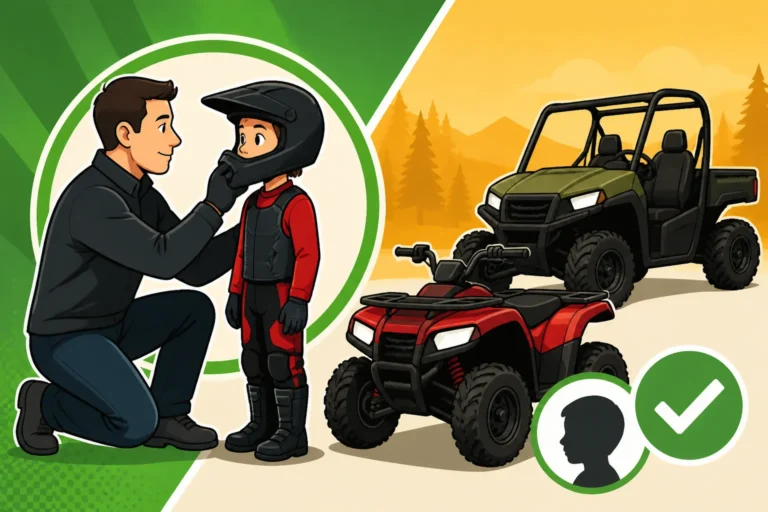
When an ORV operator is under 16, they cannot ride unsupervised on designated trails. They must always be accompanied by an adult escort, and this escort carries significant responsibility. This isn't just about being present; it's about active supervision and ensuring the young rider adheres to all safety rules. The escort is essentially the legal guardian of the ride, accountable for the young rider's actions and safety. This responsibility is why the province extends the training requirement to these escorts, as we'll explore further.
The role of the escort goes beyond simply riding along. It involves setting an example of safe riding practices, reinforcing the lessons learned in the safety course, and being prepared to assist in any situation. For instance, if a young rider encounters a difficult section of trail or has a mechanical issue, the escort needs to have the knowledge and experience to guide them or intervene. This shared responsibility ensures a layered approach to safety, where both the learner and the guide are equipped for the journey. [New Brunswick Adults Escorting Young Riders] details these important roles.
Why Escorts Also Need Certified Training
This is often where the biggest surprise lies for many adults. It's one thing for a young rider to need training, but why does the adult escort, who might have years of riding experience, also need a formal course? New Brunswick's Off-Road Vehicle Act is quite clear on this point, and it's rooted in ensuring the highest possible standard of safety for vulnerable young operators. It removes any ambiguity about the escort's qualifications and ensures they are up-to-date on provincial regulations.
The "Adult Escort" Requirement Explained
Specifically, for any operator under the age of 16, the adult escort (who must be at least 19 years old) is legally required to hold a valid Off-Road Vehicle Operator's Safety Certificate. This means the parent, guardian, or designated adult accompanying the young rider must have successfully completed the same type of certified safety course that the young rider would take, or an equivalent. It's not enough to be an experienced rider; you need the documented proof of formal training. This ensures a consistent standard of knowledge and safety awareness across the board.
This rule emphasizes that supervising a young rider isn't just about showing them how to ride; it's about being fully conversant with the legal framework, the best safety practices, and the specifics of ORV operation in New Brunswick. An escort who hasn't completed the course might inadvertently allow practices that are unsafe or illegal, simply because they aren't aware of the latest guidelines. The province leaves no room for doubt: if you're escorting a minor, you need to be formally trained yourself.
The Rationale Behind Dual Training
The logic behind requiring both the teen and the escort to be trained is multi-faceted. Firstly, it ensures that the adult escort is proficient in teaching and reinforcing the safety lessons that the young rider has just learned. They can speak the same "safety language" and understand the techniques being taught. Secondly, it standardizes the knowledge base. An adult who completed a course many years ago might have outdated information, or simply rely on anecdotal experience. The mandatory training brings everyone up to current provincial standards, including specific rules for [New Brunswick Under-16 Riders Cannot Cross a Road].
Consider a scenario where an escort believes a certain maneuver is safe, but it goes against the principles taught in the modern safety course. If the young rider has just learned the correct method, this discrepancy could create confusion or compromise safety. By having both parties undergo the same or similar training, there's a harmonious understanding of safe operation. This dual training approach significantly reduces the chances of miscommunication or conflicting instructions out on the trail, which could be crucial in an emergency.
Practical Benefits for Safety on the Trail
Beyond the legal requirements, there are immense practical benefits to both the teen and their escort having certified training. The escort gains a deeper understanding of potential hazards, proper risk assessment, and effective emergency responses. They are better equipped to identify situations that might challenge a young rider and can provide informed guidance. For example, knowing the proper way to navigate steep inclines or declines, or how to handle slippery terrain, becomes a shared, formally educated skill. This enhanced knowledge directly translates to safer rides for everyone involved.
Moreover, having an escort who is formally trained boosts the confidence of both the young rider and the escort. The young rider feels more secure knowing their adult companion is fully qualified to guide and protect them. The escort, in turn, can lead with greater assurance, knowing they have the latest safety information and practical skills. This creates a much more positive and secure riding environment. Even aftermarket accessories that enhance visibility or control, such as specialized mirrors or larger tires often found through suppliers like SuperATV, contribute to this overall safety, but they are no substitute for proper training.
Navigating the Training Process in New Brunswick
So, you understand why the training is necessary for both the teen and the escort. Now, let's talk about how to actually get it done. The process in New Brunswick is quite streamlined, designed to be accessible to all ORV enthusiasts. It involves finding an approved course, attending the sessions, and receiving your certification. It’s an investment in time, but one that pays dividends in peace of mind and enhanced safety.
Finding an Approved ATV Safety Course
In New Brunswick, the primary organization offering certified ATV safety courses is the New Brunswick All-Terrain Vehicle Federation (QuadNB), through its network of member clubs and accredited instructors. You can typically find course schedules and registration information on their official website or by contacting local ATV clubs directly. These courses are regularly offered across the province, especially during warmer months, to accommodate demand. It's always a good idea to book in advance, as spots can fill up quickly, particularly for youth courses.
When searching for a course, ensure it is indeed an approved program that meets provincial standards. Attending an uncertified course won't fulfill the legal requirement. Many courses also offer opportunities to rent a machine if you don't own one yet, which can be helpful for first-time riders or those still deciding on a purchase. [New Brunswick Safety Course Schedule] is a good place to look for upcoming dates. Don't be shy about asking questions when you register; instructors and club volunteers are usually very happy to guide you through the process.
What the Safety Course Covers
A certified ATV safety course is comprehensive, typically blending classroom instruction with practical, hands-on riding exercises. For both teens and escorts, the curriculum generally covers:
- Pre-Ride Inspection: How to check your machine (T-CLOC: Tires, Controls, Lights, Oil & Fuel, Chain/Driveshaft) before every ride.
- Basic Operation: Starting, stopping, turning, shifting gears (if applicable), and proper body positioning.
- Hazard Avoidance: Identifying and reacting to obstacles, varying terrain, and unexpected situations.
- Safe Riding Practices: Maintaining safe speeds, following distances, and navigating hills and turns.
- Environmental Awareness: Respecting nature, avoiding sensitive areas, and minimizing impact.
- Rules and Regulations: Understanding New Brunswick's Off-Road Vehicle Act, trail signs, and local bylaws.
- Emergency Procedures: What to do in case of an accident, breakdown, or getting lost.
The practical portion is particularly valuable, as it allows riders to apply theoretical knowledge in a controlled environment under expert supervision. This builds muscle memory and confidence, which is essential for safe riding on real trails. The courses often highlight the importance of proper safety gear, from helmets meeting CSA D230 standards to protective clothing. [New Brunswick Helmet Standards Accepted] details what is considered acceptable.
Certification and Proof of Training
Upon successful completion of the certified safety course, both the teen operator and the adult escort will receive an Off-Road Vehicle Operator's Safety Certificate. This document is your official proof of training and is crucial. Just like your driver's licence, you must carry this certificate (or a valid copy) with you whenever you are operating or escorting an ORV on public land or designated trails. Law enforcement officers, such as the RCMP or local peace officers, can and do ask for this documentation during routine checks.
Losing your certificate can be a hassle, so it's wise to keep a digital copy or a photocopy in a safe place, separate from the one you carry. If you do lose it, there's usually a process to obtain a replacement through the certifying body. Remember, simply completing the course isn't enough; you need to be able to prove you've completed it when asked. This certificate, alongside your ORV registration and proof of insurance, forms the essential trio of documents you need to carry when riding in New Brunswick. [Carrying Four Documents at Once] elaborates on all the required paperwork.
Specific Scenarios and Common Questions
The rules around young riders and their escorts can feel very specific, leading to many questions about how they apply in different real-world situations. Let's tackle some of these common scenarios to provide clarity and help you stay on the right side of the law. Understanding these nuances is key to enjoying New Brunswick's beautiful trails without unexpected issues.
Crossing Public Roads with Young Riders
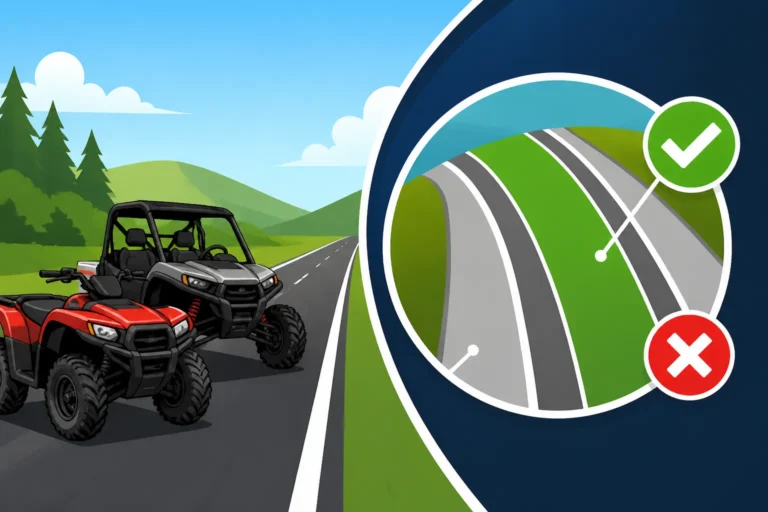
This is a major point of confusion and a critical safety concern. In New Brunswick, operators under 16 years of age are generally prohibited from crossing a public highway or road, even if they are accompanied by a trained adult escort. This rule is in place due to the inherent dangers of mixing inexperienced ORV operators with faster-moving vehicular traffic. The only exception often involves very specific, designated crossings where explicit signage permits it, and even then, strict rules apply.
If your trail route requires a road crossing and you have a rider under 16, the legal and safest approach is for the adult escort to dismount the young rider, cross the road on their machine, and then have the young rider walk their machine across or be transported across by another means. Alternatively, if multiple machines are involved, the adult escort might operate the young rider's machine across the road. This may seem inconvenient, but it prioritizes safety above all else, ensuring that the most vulnerable riders are not exposed to highway traffic. [New Brunswick Rules for Crossing a Road] offers more detailed guidance.
Riding on Private Land vs. Public Trails
The rules for training, licensing, and escorts primarily apply when operating an ORV on public lands, designated trails, or where the Off-Road Vehicle Act is in force. If you are riding strictly on your own private land, and not connected to any public trail network or public access, some of these stringent requirements may not apply in the same way. For instance, while safety training is always highly recommended for any rider, the legal mandate often centers on public access.
However, even on private land, you still have a duty of care to ensure safe operation. If you allow a child to ride on your private property without training and an incident occurs, you could still face civil liability. The spirit of the law, which is about safety education, should extend to private property riding too. Always check local bylaws, as some municipalities might have specific rules even for private land use, especially regarding noise or age restrictions. [New Brunswick Owner-Only Private Land Exemption] offers insight into specific exemptions related to registration and insurance, but safety training is still generally a wise choice.
Consequences of Non-Compliance
Ignoring the training requirements for either the teen operator or the adult escort can lead to significant penalties. These aren't just minor inconveniences; they can result in substantial fines and even have implications for your ability to ride in the future. New Brunswick law enforcement agencies, including the RCMP and local police, regularly patrol ORV trails and are authorized to check for compliance with all aspects of the Off-Road Vehicle Act, including proof of safety training.
If a young operator is found riding without the mandatory safety certificate, or if their adult escort does not possess the required certification, both parties could be subject to fines. These fines are designed to be a strong deterrent, reflecting the seriousness with which the province views ORV safety. Beyond the financial penalty, an incident involving an untrained rider could also complicate insurance claims and potentially lead to civil lawsuits. It’s simply not worth the risk. [New Brunswick Penalties for No Safety Course] outlines some of these consequences, serving as a stark reminder of the importance of compliance.
Equipping Young Riders and Their Escorts for Safety
Beyond legal compliance, a huge part of responsible ORV riding, especially with young operators, comes down to proper equipment and preparation. Safety gear and machine maintenance are just as crucial as formal training. It’s about creating a holistic safety plan that covers everything from head to toe, and from the engine to the tires.
Essential Gear for Safe Riding
For both young riders and their escorts, proper protective gear is non-negotiable. It's the first line of defense in preventing injuries.
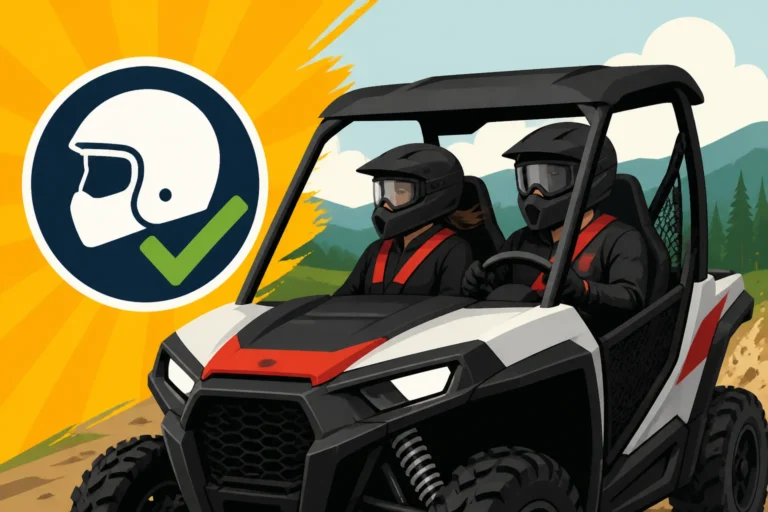
- Helmets: Absolutely mandatory for every occupant on an ORV in New Brunswick. The helmet must be an approved type, meeting standards like CSA D230, DOT FMVSS 218, or Snell. It must fit snugly and be securely fastened. [New Brunswick ATV Helmet Law] reinforces this critical requirement.
- Eye Protection: Goggles or a full-face helmet visor are essential to protect eyes from dust, debris, branches, and insects.
- Gloves: Protect hands from blisters, abrasions, and provide a better grip.
- Long Sleeves and Pants: Durable, long-sleeved shirts and long pants (jeans or riding pants) protect against scrapes, cuts, and sun exposure.
- Over-the-Ankle Boots: Sturdy boots provide ankle support and protect feet from impacts and the machine's hot parts.
Investing in quality gear is not just about meeting regulations; it's about safeguarding yourself and your young riders. Sometimes, finding smaller sizes for youth can be a challenge, but brands like SuperATV offer a range of accessories that can enhance safety and comfort, such as specialized youth-sized seats or improved handguards.
Machine Size and Age-Appropriate Use
One of the most common mistakes is putting a young rider on a machine that is too large or too powerful for their age, size, and skill level. New Brunswick's regulations have specific guidelines for engine displacement based on age:
- Ages 6-11: Limited to machines with an engine size of 70cc or less.
- Ages 12-13: Limited to machines with an engine size of 90cc or less.
- Ages 14-15: Can operate larger machines, but must meet specific licensing and training requirements and be accompanied by a trained adult.
It’s crucial to ensure the young rider can comfortably reach and operate all controls, including the throttle, brakes, and steering. Their feet should be able to touch the footrests, and they should be able to maintain proper balance. An ill-fitting machine is a major safety hazard. For multi-passenger UTVs, ensure all occupants meet age and height requirements for seatbelts and passenger handholds. [New Brunswick Rules for a 12-Year-Old Rider] provides more information on these specific age restrictions.
Pre-Ride Checks and Trail Etiquette
Before every ride, both the escort and the young rider should participate in a thorough pre-ride inspection of all machines. This includes checking tire pressure, fluid levels, brakes, lights, and ensuring all nuts and bolts are secure. This habit reinforces responsibility and can catch potential mechanical issues before they become dangerous problems on the trail. Carrying a basic tool kit, a first-aid kit, and emergency supplies (like water, snacks, and a way to signal for help) is also highly recommended, especially on longer excursions.
Beyond mechanical checks, instilling good trail etiquette is paramount. This includes staying on marked trails, respecting private property, yielding to other trail users, minimizing noise, and packing out everything you pack in. The escort should model this behavior and actively teach it to the young rider. It's about being a good steward of the trails and ensuring everyone has a safe and enjoyable experience. Remember, the trails are a shared resource, and respect for others and the environment is key to keeping them open and enjoyable for all.
| Rider Age | Licence Required | Training Required | Escort Required | Escort Training Required | Max Engine Size (ATV) | Allowed Riding Areas (Public) |
|---|---|---|---|---|---|---|
| 6-11 | None | Yes | Yes (19+) | Yes | 70cc | Closed courses only |
| 12-13 | None | Yes | Yes (19+) | Yes | 90cc | Closed courses only |
| 14-15 | Class 9 ORV | Yes | Yes (19+) | Yes | No limit (if fit) | Designated trails, specific roads |
| 16+ | Driver's Licence | Highly Recommended | No | N/A | No limit | Designated trails, specific roads |
Disclaimer
This article is for general informational purposes only and does not constitute professional advice. Laws, prices and regulations vary by location and change over time. Consult a qualified professional for guidance on your specific situation.