New Brunswick Equipment a Rider Must Carry
Riding an ATV or UTV in New Brunswick offers some of the most breathtaking adventures you can imagine, from winding through dense Acadian forests to traversing vast, open rail beds. But before you hit those incredible trails, there's a real and often overlooked hurdle: knowing exactly what equipment you're legally required to carry and what gear can literally save your day. This guide will help you sort through the must-haves and the smart-to-haves, ensuring you're fully prepared and compliant for every unforgettable journey across our beautiful province.
Understanding the "Must-Carry" Mindset for New Brunswick Trails
It's easy to get caught up in the excitement of a new machine or a fresh trail, but skipping over the basics of what you need to carry can quickly turn an epic day into a frustrating or even dangerous one. In New Brunswick, our trails are a mix of maintained club trails, shared woods roads, and even some designated highway sections. This varied environment means that what's "essential" isn't just about personal safety; it's often rooted in provincial laws and regulations designed to keep everyone safe and preserve access to our trail network.
Why Preparation Isn't Just for Emergencies
When we talk about carrying equipment, many riders immediately think of breakdowns or accidents. And yes, those are absolutely critical scenarios to prepare for. But preparation extends far beyond just reacting to something going wrong. It's about proactive riding. It's about having the right tools to make a minor adjustment before it becomes a major problem, like tightening a loose bolt on your [New Brunswick Machines Stored Over Winter] machine or clearing a fallen branch that's blocking your path. It's also about comfort – having extra layers, water, or a snack can prevent fatigue and keep your focus sharp, reducing the likelihood of making a mistake. Think about those long stretches in the Miramichi region where the next town is quite a distance; having a plan for self-sufficiency isn't just smart, it’s essential for enjoying the ride rather than just enduring it.
The Legal Side of Carrying Documents and Safety Gear
Beyond personal preparedness, there's a significant legal aspect to consider. New Brunswick has specific rules about what documents you must have on your person or readily accessible on your machine, as well as mandatory safety equipment. Failure to comply with these can result in fines and could even lead to your ride being cut short by an officer. Imagine being stopped on a remote trail near Florenceville-Bristol by an enforcement officer only to realize your paperwork is back at the cottage. That’s not a fun conversation, and it’s completely avoidable. These rules aren't arbitrary; they’re in place to ensure accountability, track ownership, and promote safe riding practices across our extensive [New Brunswick ATV Trails: The QuadNB Network]. Knowing these requirements isn't just about avoiding a penalty; it's about being a responsible member of the riding community.
Essential Documents You Must Have on Your Machine
Alright, let's cut to the chase with the non-negotiables. You know how important your driver's licence is when you're pulled over in your car? The same level of importance applies to your ATV or UTV documents. These aren't just pieces of paper; they're your proof that you're operating your machine legally and responsibly. Forgetting them, or having them stored where they can get damaged, is a common misstep that can lead to headaches on the trail.
Registration, Proof of Ownership, and Where to Keep It
Every ATV or UTV operated in New Brunswick must be properly registered. This isn't just a suggestion; it's the law. Your registration certificate serves as official proof that your machine is recognized by the province and that you are its rightful owner, or at least the authorized operator. When an officer asks, you need to be able to produce this document. Think about how many times you’ve heard stories of people buying a used machine and not completing the [New Brunswick Transfer of Ownership Explained] right away. That’s a risky move, as you can’t register it properly until it’s legally yours.
The critical part here isn't just having the registration, but where you keep it. It needs to be on the machine, easily accessible, and protected from the elements. Stuffing it in a wallet that's in your back pocket might work, but what if your wallet gets soaked or lost? A clear, waterproof pouch secured in a glove box, a cargo box, or even a ziplock bag tucked into a sturdy, waterproof saddlebag is a much better solution. Just make sure it’s not somewhere it can fly out or get completely mangled on a bumpy section of the trail near Fundy National Park. Remember, the [New Brunswick Documents You Must Carry] mandate that this paperwork is with the machine.
Insurance: Your Financial Safety Net
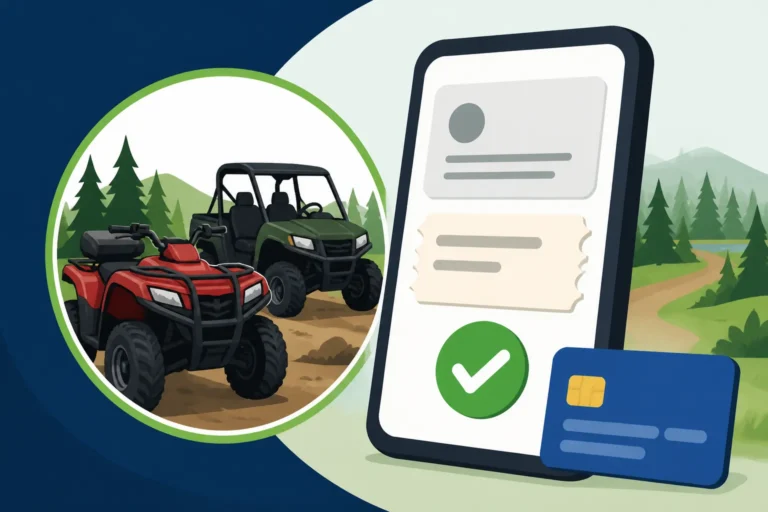
Another absolute must-have in New Brunswick is proof of insurance. Just like your car, your ATV or UTV needs to be insured, especially if you plan to ride on managed trails. This isn't just about covering potential damage to your machine; it's about liability. Accidents happen, and if you're involved in one where another person or their property is damaged, your insurance is there to protect you financially. The minimum coverage required for off-road vehicles in New Brunswick aligns with general liability principles, meaning you need to be covered for third-party damage.
Carrying proof of insurance is just as vital as carrying your registration. An insurance card or certificate should be kept in the same secure, waterproof location as your registration. Officers conducting [New Brunswick Equipment Checks by Officers] will ask for this, and not having it can lead to significant fines. It’s not just a polite request; it’s a legal requirement. Think of it this way: New Brunswick has a mandatory [New Brunswick Requires Insurance on Trails] rule because the provincial government and trail organizations want to ensure that riders are protected and responsible. Don't leave home without it, or you could face a hefty [New Brunswick Uninsured ATV Fine of $604.50].
Your Trail Permit and Why It Matters So Much
If you’re planning to ride on the amazing network of managed trails maintained by QuadNB clubs across the province, your trail permit is non-negotiable. This isn't just a sticker; it's your membership, your contribution to trail maintenance, and your ticket to legal access. The fees from these permits go directly back into the trails, funding everything from brushing and culvert repair to bridge construction and signage. Without these permits, our incredible [New Brunswick's 10,000 Kilometres of Trail] network simply wouldn't exist in the condition it is today.
Your permit comes in the form of a sticker that needs to be affixed to your machine in a visible location. Typically, this means on the left front fender or another easily seen spot. Make sure it's mounted correctly and securely, as it needs to withstand the elements and remain legible. Enforcement officers routinely check for valid permits on trails. If you're caught riding on a managed trail without a valid permit, you can expect a significant fine. [New Brunswick Trail Permit Fines] are a reality, and they're much higher than the cost of the permit itself. So, consider your trail permit an investment in your riding enjoyment and a key piece of documentation that validates your responsible participation in the riding community.
Mandatory Safety Equipment for Every Ride
When you're out on the trails, especially in the more rugged areas near the Restigouche, safety isn't just a suggestion—it's paramount. The right safety gear can be the difference between a minor shake-up and a serious injury. New Brunswick, like many other jurisdictions, has very clear rules about what constitutes mandatory safety equipment, especially when it comes to personal protective gear. Don't ever compromise on these items; they are designed to protect your most vital assets.
Helmets: Non-Negotiable Protection for All Riders
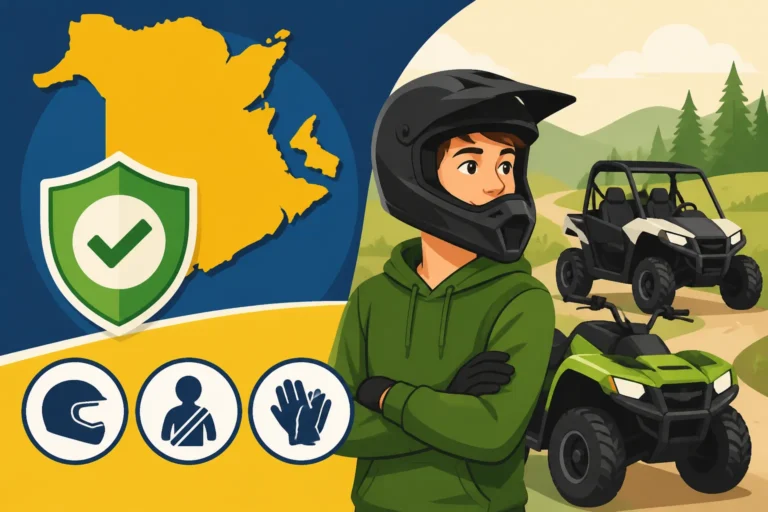
This is probably the most fundamental piece of safety equipment, and for good reason: your brain is irreplaceable. In New Brunswick, it is legally required for every rider and passenger on an ATV or UTV to wear an approved helmet. There are no exceptions to this rule when operating on public lands, trails, or designated routes. This isn't just for inexperienced riders; even seasoned veterans can face unexpected hazards. A low-hanging branch, a sudden rut, or an unexpected stop can all lead to head injury if you're not properly protected.
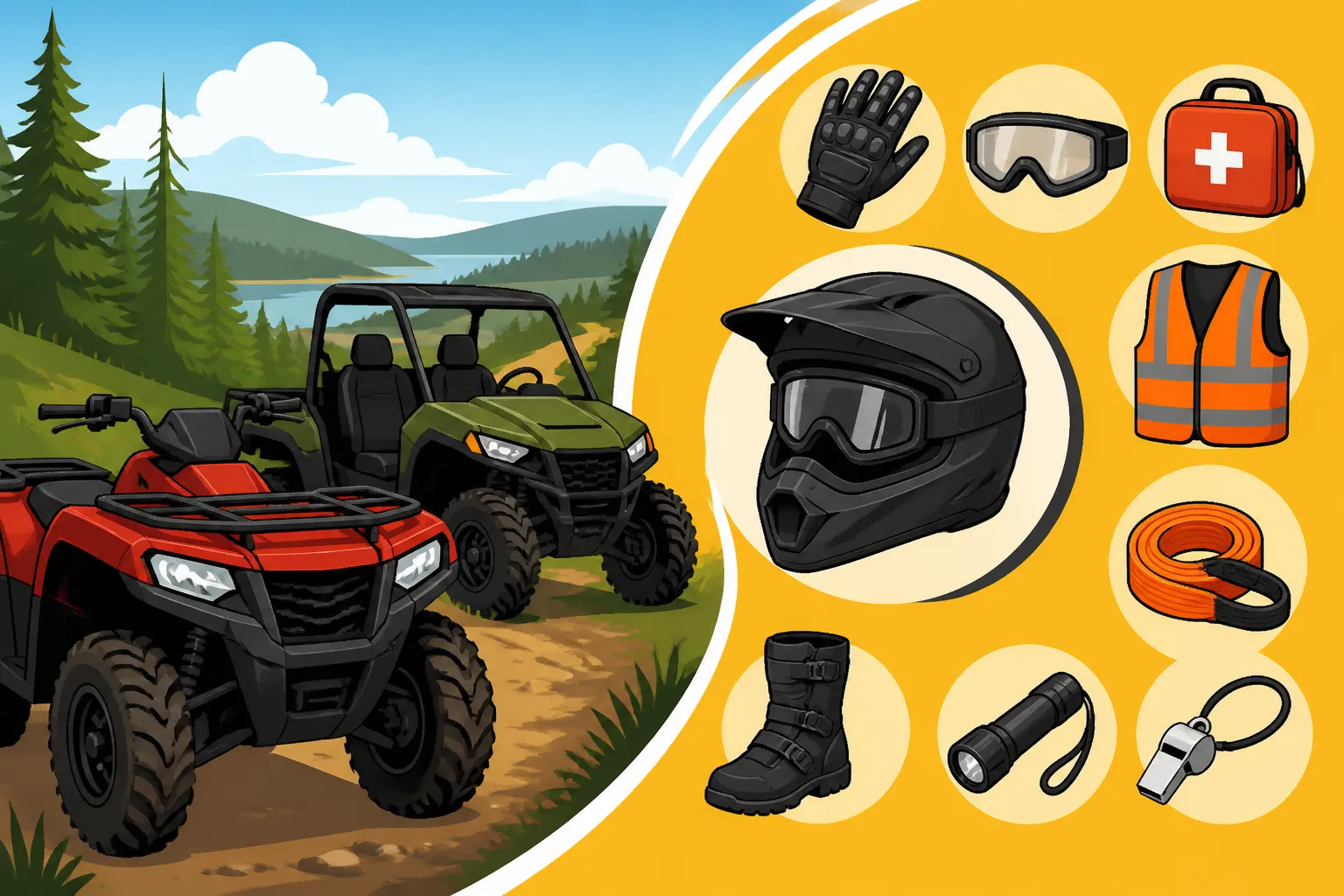
The key here is "approved helmet." This means the helmet must meet recognized safety standards. Look for certifications like DOT (Department of Transportation), Snell, CSA (Canadian Standards Association), or ECE (Economic Commission for Europe). These certifications indicate that the helmet has undergone rigorous testing to ensure it provides adequate impact protection. A bicycle helmet or a construction hard hat simply won't cut it and won't pass muster if an officer checks your gear. Ensure your helmet fits snugly, is fastened correctly, and is in good condition—no cracks or compromised structure. Remember, [New Brunswick Helmet Law for Every Occupant] means everyone on board, no matter their age or where they're sitting. Not only can you face a [New Brunswick's $172.50 Helmet Fine], but more importantly, you risk serious injury.
The Often-Overlooked Importance of Eye Protection
While helmets get a lot of attention, eye protection is another absolutely mandatory item that sometimes gets overlooked. Yet, think about what you encounter on a New Brunswick trail: dust, mud, flying debris from other machines, low branches, insects, and even harsh sunlight. Any of these can impair your vision in an instant, leading to a loss of control and a potential accident. Protecting your eyes isn't just about comfort; it's about maintaining clear vision, which is crucial for safe operation.
Approved eye protection includes goggles specifically designed for off-road riding or a full-face helmet with a clear visor. Regular sunglasses, while offering some sun protection, typically don't provide sufficient impact resistance or coverage from debris. They can also fly off your face or fog up easily. Off-road goggles are designed to fit securely, offer a wide field of vision, and often come with anti-fog coatings or ventilation. Invest in a good pair that fits comfortably with your helmet. A scratch or a speck of mud in your eye at 40 km/h is more than just an annoyance; it's a hazard.
Footwear and Clothing: Beyond Basic Comfort
While not always explicitly listed as a "mandatory" item in the same way as helmets, appropriate footwear and clothing are absolutely essential for both safety and comfort, and are often implied in responsible riding guidelines. You wouldn't go hiking in flip-flops, and the same logic applies—perhaps even more so—to ATV and UTV riding. Your clothing choices can significantly impact your protection from the elements, abrasion, and even minor impacts.
Sturdy, over-the-ankle boots are highly recommended. They protect your feet and ankles from impacts, provide good grip on footpegs, and can prevent sprains or breaks if your foot slips or gets caught. Avoid open-toed shoes, canvas sneakers, or anything that offers minimal protection. As for clothing, long pants and long-sleeved shirts are advisable, even in warm weather. They offer protection from scrapes, sunburn, and insects. Dress in layers, especially when riding in spring or fall, as temperatures can fluctuate dramatically throughout the day, particularly in varied terrain like what you'd find near Grand Falls. Materials that wick moisture away from your body are great for staying comfortable. And always consider gloves; they protect your hands from blisters, impacts, and offer better grip on the handlebars. While an officer might not fine you for inappropriate footwear, a minor tip-over could become a much more painful incident if your feet and hands aren't properly protected.
Recommended Gear for Common New Brunswick Riding Scenarios
Beyond the legal requirements, there’s a whole world of "highly recommended" gear that can truly elevate your riding experience and get you out of a bind. New Brunswick’s trails, especially in the more remote areas, can be unpredictable. Being prepared for common challenges isn’t about expecting the worst; it’s about being self-sufficient and resourceful when you’re miles from the nearest service center or even cell signal.
Basic Tools and Repair Kits for Trailside Fixes
Picture this: you're deep in the woods near Plaster Rock, enjoying a beautiful day, and suddenly, a loose battery cable kills your power, or a flat tire brings your adventure to a grinding halt. Without a basic tool kit, you're stuck waiting for help, which could be hours away. A compact tool kit is an absolute must for any responsible rider. This doesn’t mean you need a full mechanic's chest, but rather a selection of crucial items.
Your trail tool kit should include:
- Wrench Set: Covering common bolt sizes on your machine.
- Screwdriver Set: Flathead and Phillips.
- Pliers: Combination or needle-nose.
- Tire Repair Kit: Plug kit, small air compressor that runs off your 12V outlet, and tire gauge. This is a game-changer for patching small punctures.
- Zip Ties and Electrical Tape: Invaluable for quick, temporary repairs.
- Spare Spark Plug: And the appropriate wrench to change it.
- Knife or Multi-tool: Always handy.
Many riders also carry a small amount of spare fuel in an approved container, especially if venturing on long loops in areas with few gas stations. Products from brands like SuperATV offer robust cargo boxes that can securely hold these tools, keeping them dry and organized no matter how bumpy the trail gets. Having these basics means you can often fix minor issues and continue your ride without needing a costly and inconvenient tow.
First Aid and Emergency Supplies for the Unexpected
Even with the safest riding practices and all the mandatory gear, accidents and minor injuries can happen. A well-stocked first aid kit is not optional; it’s a critical component of responsible riding. You might encounter scrapes, cuts, sprains, or even insect bites. Having the supplies to address these immediately can prevent them from worsening and make the difference between a quick recovery and a spoiled trip.
Your first aid kit should include:
- Bandages and Gauze Pads: Various sizes.
- Antiseptic Wipes and Ointment: To clean and protect wounds.
- Pain Relievers: Such as ibuprofen or acetaminophen.
- Allergy Medication: If anyone in your group has known allergies.
- Tweezers: For splinters or thorns.
- Small Scissors: For cutting tape or bandages.
- Gloves: For administering first aid safely.
- Emergency Blanket: A compact, Mylar blanket can be crucial for shock or hypothermia.
Beyond the first aid kit, consider other emergency supplies. A whistle for signaling, a small flashlight or headlamp (even during the day, in case you're out longer than expected or need to look under your machine), and a fire starter (matches, lighter) can be invaluable. Even a simple change of socks can boost morale and prevent blisters if your feet get wet. When planning a multi-day trip or even a long day ride, always consider what you'd need if you had to spend an unexpected night out in the wilderness.
Navigation and Communication in Remote Areas
New Brunswick boasts vast stretches of wilderness, and while that's part of the appeal, it also means you can quickly find yourself out of cell service. Relying solely on your phone for navigation and communication is a risky gamble. Losing your way or being unable to call for help are scenarios every rider should actively try to avoid. [New Brunswick Cellular Reception Maps] will quickly show you how many dead zones exist once you get off the main highways.
Essential navigation tools include:
- Printed Trail Map: Always carry a physical map of the area you’re riding, especially if it’s a QuadNB sanctioned trail. Even if you have a digital map, paper doesn't run out of battery.
- GPS Device: A dedicated GPS unit preloaded with trail maps (like the ones available from the QuadNB federation) is far more reliable than a smartphone in terms of battery life and signal retention. Applications like MapGear are excellent, but always have a backup plan.
- Compass: And know how to use it, even if just for basic orientation.
For communication, a fully charged cell phone is a start, but don't count on it. Consider carrying a satellite messenger or a two-way radio (FRS/GMRS) if riding in a group. Satellite messengers allow you to send pre-programmed messages or even SOS signals from anywhere, even without cell service. This is especially important if you're exploring the more remote trails in the Restigouche region. Before you head out, tell someone your route and your expected return time. This simple step can be a lifesaver if things go sideways.
Seasonal and Terrain-Specific Additions to Your Kit
New Brunswick offers four distinct seasons, each with its own charm and its own set of challenges for ATV and UTV riders. What you carry in July for a ride along the Acadian Peninsula will be vastly different from what you need for a November trek through the Miramichi woods. Adapting your gear to the season and the specific terrain you plan to tackle is a hallmark of an experienced and smart rider.
Wet Weather and Muddy Trail Considerations
Ah, New Brunswick weather! It can change on a dime, especially during spring and fall. A sunny morning can turn into a downpour, transforming well-groomed trails into muddy, water-filled adventures. Being prepared for wet conditions isn't just about staying dry; it's about staying comfortable, maintaining visibility, and protecting your electronics.
For wet and muddy riding, consider adding:
- Full Rain Gear: A good quality, waterproof jacket and pants are essential. Look for materials that are breathable to prevent sweating.
- Waterproof Gloves: Wet hands get cold quickly and lose grip.
- Spare Dry Clothes: Even if it's just a dry pair of socks and a shirt, having something dry to change into back at the truck or camp can be a huge morale booster.
- Extra Eye Protection: Mud can quickly obscure goggles. Having a spare set or tear-offs for your current goggles can be a lifesaver for visibility.
- Waterproof Bags or Dry Bags: To protect your documents, first aid kit, electronics, and spare clothes. SuperATV offers fantastic dry storage bags and cargo boxes specifically designed to keep your gear bone-dry no matter how deep the mud puddles get.
- Winches and Recovery Gear: If you're tackling serious mud, a winch on your machine is highly recommended, along with a recovery strap, shackles, and a tree saver. Getting stuck in deep mud without recovery gear can ruin your day, or worse, put you in a dangerous situation.
Winter Riding: Staying Warm and Prepared
While many ATVs and UTVs are stored for the winter, a growing number of riders embrace the colder months for snow riding. But winter riding comes with a whole new set of safety considerations. Temperatures can plummet, and the risks of hypothermia, frostbite, and getting stranded in the cold are significantly higher. You must be much more vigilant about what you carry.
For winter riding, your kit should include:
- Extreme Cold Weather Gear: Layering is key. Thermal base layers, insulating mid-layers, and a waterproof, windproof outer shell are essential.
- Heated Grips/Thumb Warmers: These make a huge difference in comfort and control.
- Heavy-Duty Winter Gloves/Mitts: With good insulation and waterproofing.
- Balaclava or Neck Gaiter: To protect exposed skin.
- Extra Fuel: Machines often burn more fuel in cold weather.
- Shovel and Small Axe/Saw: For clearing snow or downed trees.
- Traction Aids: Such as a small bag of sand or cat litter, or even tire chains for extreme ice.
- High-Energy Snacks and Hot Drinks: A thermos of hot tea or coffee can be incredibly comforting and help maintain core body temperature.
- A Fully Charged Power Bank: Cold weather drains battery life quickly from phones and GPS devices.
Always check the weather forecast carefully before heading out in winter, and let someone know your exact route. [New Brunswick Riding in Winter] is beautiful but unforgiving.
Tools for Clearing the Path: Small Saws and Axes
It’s an unfortunate reality that trails, especially in wooded areas, can become blocked by fallen trees or branches, particularly after a storm or during high winds. Coming across a massive log across the path can force you to turn back, significantly delaying your trip or even stranding you if it's your only way out. While trail clubs do an incredible job of maintenance, they can't be everywhere at once.
For clearing obstacles, consider carrying:
- Folding Saw: A small, sturdy folding saw is lightweight and incredibly effective for cutting through branches and smaller logs that might block a trail. It's much safer and quieter than a chainsaw for minor clearing.
- Small Axe or Hatchet: For slightly larger limbs or for splitting wood for a trailside fire (if permitted and safe to do so).
- Work Gloves: Essential for handling wood and preventing splinters.
Remember to exercise caution and good judgment when clearing trails. Never attempt to move or cut large, unstable trees. Your priority is safety, and if an obstruction is too big or dangerous to handle, it's best to report it to the local [New Brunswick Clubs and What They Maintain] and find an alternate route if possible. These tools are for minor impediments, not major forestry work!
Smart Packing and Storage Tips for Your ATV/UTV
You’ve got all your essential and recommended gear, which is fantastic! But having it isn't enough; you need to carry it efficiently and safely. A poorly packed machine can be unstable, damage your gear, or make it impossible to find what you need in a hurry. Smart packing is about maximizing space, protecting your items, and maintaining the balance of your machine.
Maximizing Space with Smart Storage Solutions
ATVs and UTVs have varying amounts of storage space, from small glove boxes to larger cargo racks. The key is to utilize every inch wisely without overloading. For ATVs, front and rear racks are prime real estate, but anything mounted here needs to be securely fastened.
Consider these options for maximizing space:
- Cargo Boxes: These hard-sided, often lockable boxes attach to your racks and provide waterproof, secure storage. They come in various sizes and configurations, some even with built-in cooler sections. Brands like SuperATV specialize in rugged, ATV/UTV-specific cargo solutions that are built to withstand the rigors of trail riding in New Brunswick.
- Fender Bags/Saddlebags: These soft-sided bags drape over your fenders or sit on your racks, offering convenient, easily accessible storage for smaller items like a water bottle, snacks, or your first aid kit. Look for waterproof options.
- Under-Seat Storage: Some UTVs have surprisingly roomy under-seat compartments, perfect for less frequently accessed items like recovery gear or a larger tool kit.
- Glove Box/Dash Compartments: Ideal for frequently accessed items like your phone, documents, or a small snack. Ensure these are waterproof or use a dry bag inside.
Always consider the dimensions and weight limits of your machine's racks and storage compartments. Overloading can strain your suspension, affect handling, and even be dangerous.
Protecting Your Gear from the Elements
New Brunswick weather, as we’ve discussed, can be unpredictable. Dust, mud, rain, and snow are all part of the riding experience. If your gear isn't protected, it won't last long, and critical items like documents or electronics can be rendered useless.
Strategies for protecting your gear:
- Waterproof Dry Bags: Even if you have a waterproof cargo box, adding an extra layer of protection for sensitive items with individual dry bags is a smart move. They come in various sizes and are fantastic for clothes, electronics, and paperwork.
- Heavy-Duty Ziploc Bags: A simple, cost-effective solution for documents, maps, and smaller first aid items.
- Secure Latches and Straps: Ensure all cargo boxes have tight-sealing latches, and anything secured with straps is cinched down firmly. Bungee cords are okay for light items, but for anything critical, use cam straps or ratchet straps that won't stretch or come loose on rough terrain.
- Dust Covers: For items that might be exposed, a dust cover can protect them from fine trail dust, which can get into everything.
Distributing Weight for Safe Handling
This is a crucial, yet often overlooked, aspect of packing. How you distribute weight on your ATV or UTV directly impacts its handling, stability, and safety. A poorly balanced machine can be difficult to steer, prone to tipping, and generally less predictable, especially on uneven terrain or when crossing a side hill.
Tips for weight distribution:
- Keep Heavy Items Low and Central: This maintains a low center of gravity, which is vital for stability. Avoid stacking heavy items high on racks.
- Balance Front to Back: Try to distribute weight evenly between the front and rear of the machine. Too much weight on the front can make steering heavy and hard, while too much on the rear can make the front end light, affecting steering and traction.
- Balance Side to Side: Ensure roughly equal weight on both sides to prevent the machine from pulling to one side or feeling lopsided.
- Secure Everything Firmly: Any shifting weight, especially heavy items, can dramatically alter handling. Make sure everything is tied down so it cannot move, even over aggressive bumps or during sudden stops.
- Consider Passenger Weight: If you frequently ride with a passenger, factor their weight into your overall distribution, and adjust any cargo accordingly. Always ensure your machine is rated for carrying passengers safely.
By thinking strategically about what you carry and how you carry it, you can ensure that every ride in New Brunswick is not only exciting and memorable but also safe and worry-free.
Disclaimer
This article is for general informational purposes only and does not constitute professional advice. Laws, prices and regulations vary by location and change over time. Consult a qualified professional for guidance on your specific situation.