New Brunswick Documents You Must Carry
Picture this: you're out on a beautiful New Brunswick trail, the engine humming, the sun dappling through the trees, and then, suddenly, you see those flashing lights. Or maybe it's just a friendly trail warden asking to see your papers. If you've ever felt that little knot of anxiety in your stomach wondering if you have everything you need, you're not alone. This guide is here to clear up the confusion and make sure you always have the right documents when you hit the trails, helping you avoid those stressful situations and hefty fines.
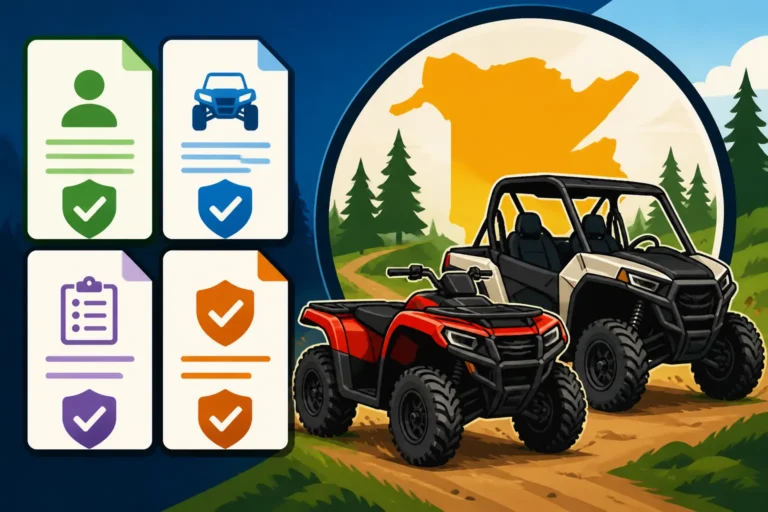
The Core Four: Your Essential Trail Documents
Riding an ATV or side-by-side in New Brunswick is an incredible experience, offering access to thousands of kilometres of breathtaking trails. But with that freedom comes responsibility, and a big part of that is ensuring you're legally compliant. It’s not just about avoiding a ticket; it’s about contributing to the safety and longevity of our beloved trail system. When you're stopped by law enforcement or a trail warden, they're typically looking for four key pieces of documentation. Think of them as your riding passport – essential for smooth travels.
Your ATV's Registration Certificate
First and foremost, you absolutely must carry your ATV or UTV's registration certificate. This isn't just a piece of paper; it's official proof that your machine is properly registered with the Province of New Brunswick. It links your vehicle's unique serial number, often called the VIN, directly to you as the owner. Without it, there's no official record of your machine being legally recognized for use on public trails or designated routes. This certificate contains vital information like the year, make, model, and VIN of your machine, as well as your name and address. It’s the foundational document for proving ownership and legal operation.
Imagine buying a used quad from a neighbour, getting it all serviced up, and heading out for its maiden voyage under your ownership. If you haven't completed the transfer of ownership at Service New Brunswick and received your new registration certificate, you could be riding a machine that, on paper, still belongs to someone else. This is where many riders get caught out, especially after a private sale. Even if you have a bill of sale tucked away, the official registration certificate is what an officer will want to see. [New Brunswick Registration After a Private Sale] covers this process in detail.
Proof of Off-Road Vehicle Insurance
Just like your car needs insurance to be on the road, your ATV or UTV needs proof of insurance to be on New Brunswick's trails. This isn't optional; it's a mandatory requirement under the Off-Road Vehicle Act. The purpose of this insurance is to provide financial protection in case of an accident, covering things like damage to other property or injuries to third parties. It’s there for everyone's safety, including yours. Having your proof of insurance readily available demonstrates that you've taken the necessary steps to be a responsible rider.
Your insurance card or a certificate from your provider serves as this proof. It typically includes the policy number, the effective dates of coverage, and the details of the insured machine. A common mistake riders make is assuming their home insurance or car insurance automatically covers their ATV. While some policies might offer limited coverage, it’s crucial to have specific off-road vehicle insurance that meets provincial requirements for trail use. Don't leave it to chance; call your insurance provider and make sure you have the correct coverage. For more details on this, check out [New Brunswick Requires Insurance on Trails].
Your Trail Permit Sticker
If you're planning to ride on any of the designated and maintained trails across New Brunswick, you need a valid trail permit sticker from QuadNB, our provincial ATV federation. This sticker isn't just a pretty decal; it's your contribution to the vast network of trails we all enjoy. The funds generated from these permits go directly back into trail maintenance, grooming, signage, and infrastructure, ensuring safe and enjoyable riding for everyone. Without it, you're essentially using a service without paying for it, and that's not fair to the thousands of riders who contribute.
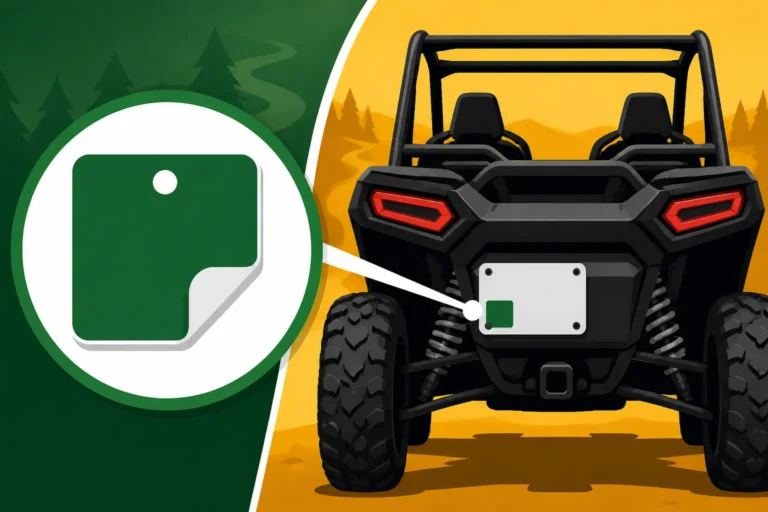
The permit sticker must be affixed to your ATV or UTV in a specific location – typically on the left side of the machine, clearly visible. It's designed to be easily checked by trail wardens or law enforcement to verify its validity. There are different types of permits, such as groomed and non-groomed, and youth permits, depending on where and when you plan to ride. Make sure you have the correct one for your activities. For information on costs and types, explore [New Brunswick Trail Permit Cost in 2026].
Your Driver's Licence or Equivalent
Last but certainly not least, you need to carry a valid form of personal identification, most commonly your driver's licence. This identifies you as the operator of the machine and verifies that you are legally old enough and qualified to be riding an ORV. It's about personal accountability. Just as you wouldn't drive a car without your licence, you shouldn't operate an ATV on public trails without proper ID.
For adult riders, a standard Class 5 New Brunswick driver's licence (or an equivalent valid licence from another province or country) is usually sufficient. However, for younger riders, the rules can be a bit more nuanced. [New Brunswick Safety Course for a 14-Year-Old] highlights the requirements for teens, often involving a Class 9 licence or a driver training certificate. Regardless of your age or experience level, having that photo ID ready helps confirm your identity and ensures you meet the minimum age requirements for operating an ORV in New Brunswick.
Why These Documents Matter So Much
It might feel like a hassle to keep track of all these papers, but each document serves a crucial purpose, far beyond just satisfying a regulation. They are foundational to responsible ORV use and help protect not only you but also other riders, the environment, and the trail system itself. Understanding the 'why' behind the rules can make it easier to embrace them as part of our riding culture.
Avoiding Fines and Legal Headaches
Let's be blunt: not having the correct documents can be an expensive mistake. New Brunswick has established specific fines for various infractions related to ORV documentation. Getting caught without your registration, insurance, or a valid trail permit can quickly turn a fun day out into a financial headache. These fines aren't trivial; they're designed to be a deterrent and reinforce the importance of compliance. Forgetting your registration certificate or proof of insurance means facing a penalty that could easily overshadow the cost of an annual permit.
Imagine you're stopped and found to be missing your registration. That's a minimum set fine that could be well over a hundred dollars, plus court costs. If you're missing proof of insurance, the fine shoots up significantly, potentially into the hundreds. These penalties are designed to sting, encouraging all riders to make sure their paperwork is in order before they even load up their machine. Beyond the immediate fine, repeated offenses or serious incidents could lead to more severe consequences, including potential impoundment of your machine in some cases. It's simply not worth the risk. [New Brunswick No-Registration Fine of $172.50] and [New Brunswick Uninsured ATV Fine of $604.50] paint a clear picture of the costs involved.
Ensuring Safety and Accountability
Beyond the monetary penalties, these documents are vital for safety and accountability on the trails. When every rider is properly registered and insured, it creates a safer environment for everyone. If an accident occurs, having current registration details ensures that the machine and its owner can be quickly identified, facilitating insurance claims and accident reporting. This streamlined process benefits all parties involved, allowing for faster resolution and support.
Moreover, the requirement for a driver's licence or equivalent ensures that operators meet a minimum standard of age and, in some cases, training. This helps reduce the likelihood of inexperienced or underage riders causing accidents. When everyone on the trail is accountable for their actions and can be identified, it fosters a more responsible and respectful riding community. Knowing that there's a system of accountability in place encourages safer driving habits and helps maintain order on shared trails.
Supporting the Trail System You Love
The trail permit, in particular, is a direct investment in the future of off-road riding in New Brunswick. The funds collected through QuadNB permits are essential for the maintenance and expansion of our extensive trail network. Our provincial federation, with its dedicated member clubs, works tirelessly to clear trails, repair bridges, install signage, and ensure that thousands of kilometres remain accessible and safe. Without these funds, our trails would quickly degrade, becoming unrideable or even unsafe.
By carrying and proudly displaying your trail permit, you're not just complying with a rule; you're actively supporting the infrastructure that makes our passion possible. It's a visible sign of your commitment to the sport and your fellow riders. It tells other riders, and those who maintain the trails, that you're doing your part. This collective effort is what allows us to boast such an incredible network of trails, from the Skedaddle Ridge system to the scenic routes along the Miramichi.
Understanding Your ATV Registration Certificate
Your ATV registration certificate is perhaps the most fundamental document connecting you to your machine legally. It’s more than just a piece of paper; it’s proof of ownership and authorization to operate on designated lands. Understanding its contents and how to manage it is crucial for every ORV owner in New Brunswick.
What the Registration Certificate Contains
Your New Brunswick ORV registration certificate is packed with essential information. At the top, you'll see details about the province and the issuing authority, Service New Brunswick. Below that, it clearly identifies the registered owner(s) of the vehicle, including their full name and mailing address. This is critical for proving who legally owns the ATV. Further down, you'll find comprehensive information about the off-road vehicle itself: the year it was manufactured, its make (e.g., Polaris, Can-Am, Honda), the specific model name or number, and most importantly, the Vehicle Identification Number (VIN). The VIN is a unique 17-character code that is specific to your machine, acting like its fingerprint.
The certificate also includes the date of issue and the expiry date, which, for all ORVs in New Brunswick, is December 31st of the year issued. You'll also see the class of vehicle (e.g., ATV, dirt bike, side-by-side) and often the fee paid. All of these details are important because they cross-reference with the physical attributes of your machine and your identity as the owner. When an officer checks your papers, they're verifying that the VIN on your certificate matches the VIN stamped on your ATV, and that the name on the certificate matches your identification. This helps prevent theft and ensures that only legally owned and registered machines are on the trails.
Keeping Your Certificate Accessible and Safe
It’s one thing to have the certificate; it’s another to have it when you need it. You are legally required to carry the registration certificate with you whenever you are operating your ORV off your own private property. This doesn’t mean leaving it in a filing cabinet at home. It means having it on your person or securely on your machine. However, the woods are not kind to paper documents. Rain, mud, sweat, and jostling can quickly turn a crisp certificate into an illegible mess.
Many riders opt for a waterproof pouch or a small, hard-shell container that can be kept in a glove box, a saddlebag, or even a zippered pocket of their riding jacket. Some even laminate a copy (though it's wise to keep the original safe elsewhere and confirm with Service New Brunswick if a laminated copy is universally accepted for all purposes). The goal is to protect the document from the elements while ensuring it’s readily accessible if requested. Remember, an unreadable document is as good as no document at all. Always ensure the text and numbers are clear and legible. [Keeping a Copy of the Registration on the Machine] is a good practice for this reason.
What to Do if Your Certificate is Lost or Damaged
Things happen. Papers get lost, soggy, or torn. If your New Brunswick ORV registration certificate is lost, stolen, or becomes too damaged to read, don't just hope for the best. You need to get a replacement. The process for replacing a lost or damaged certificate is straightforward and can typically be done at any Service New Brunswick centre. You’ll usually need to provide your personal identification and details about your ORV, such as the VIN, to confirm your ownership.
There is a fee for a replacement certificate, so it’s always best to take care of your original. It’s a minor inconvenience and cost compared to the hassle and potential fines of being caught without it. Getting a replacement promptly ensures you can continue to ride legally and without worry. Consider it part of your routine maintenance checklist: check your documents, just like you check your oil. For specific details on this, see [New Brunswick Replacement Certificate at $20].
Demystifying Off-Road Vehicle Insurance
Insurance often feels like a dry topic, but when it comes to riding your ATV or UTV in New Brunswick, it's a non-negotiable part of responsible ownership. It's not just a suggestion; it's a legal mandate that protects everyone on the trails.
The Mandatory Nature of Trail Insurance
In New Brunswick, if you’re riding your off-road vehicle anywhere other than your own private land (and even then, specific circumstances might apply), you are legally required to have at least third-party liability insurance. This isn't just a recommendation from your local ATV club; it's enshrined in the Off-Road Vehicle Act. Third-party liability insurance covers damages or injuries you might cause to another person or their property while operating your ORV. It’s crucial because accidents, while nobody wants them, can and do happen.
Think about it: if you accidentally swerve and hit another rider's machine, or if you somehow damage private property adjacent to a trail, who pays for that? Without insurance, you could be personally liable for thousands of dollars in repairs, medical bills, or legal fees. That's a burden no one wants. This mandatory insurance requirement is a fundamental aspect of operating an ORV responsibly, providing a safety net for unfortunate incidents. [New Brunswick Insurance Requirements for Riders] details these obligations.
Acceptable Forms of Proof for Insurance
So, you’ve got your insurance policy – great! But how do you prove it when you’re out on the trail? Your insurance company will provide you with a paper or digital insurance card, or a certificate of insurance. This document must clearly state that it is for an off-road vehicle, list the policy number, the effective dates of coverage, and identify your specific ORV by its VIN. Just like your registration certificate, this proof needs to be carried with you when you ride.
A common pitfall is to assume that your regular car insurance or home insurance policy covers your ATV for trail use. While some general policies might offer minimal coverage for certain situations, they rarely meet the specific requirements for trail riding in New Brunswick. Always confirm with your insurance provider that you have dedicated ORV insurance that complies with the provincial Act. Keep your insurance card in the same waterproof, accessible spot as your registration certificate. This simple act can save you a world of trouble. [New Brunswick Proof of Insurance on the Machine] details the specific expectations.
What Happens if You're Caught Uninsured
Being caught riding an ORV without the mandatory liability insurance in New Brunswick carries serious consequences. This isn't a minor infraction; it's treated with significant gravity due to the potential financial fallout of uninsured accidents. The set fine for operating an uninsured ORV is substantial, often running into the hundreds of dollars for a first offense. This penalty is designed to underscore the critical importance of being properly covered.
Beyond the immediate fine, being uninsured can lead to further complications. If you're involved in an accident while uninsured, you could face immense personal financial liability for any damages or injuries. This could mean paying out of pocket for repairs to other machines, medical treatment for injured parties, and potentially legal costs if a lawsuit is filed against you. The financial strain can be devastating. Moreover, repeated offenses could lead to your registration being suspended, or even your machine being seized. It's a stark reminder that spending a bit on insurance premium upfront is far better than risking a major fine or financial ruin down the line.
Navigating the New Brunswick Trail Permit
The New Brunswick trail permit is your key to accessing thousands of kilometres of maintained trails across the province. It's more than a simple pass; it's a critical component of the funding and management of our extensive ORV network.
The Different Types of Trail Permits
QuadNB, the New Brunswick All-Terrain Vehicle Federation, offers different types of trail permits to suit various riding needs, and it's essential to get the right one for your style of riding. The most common are the "Groomed Trail Permit" and the "Non-Groomed Trail Permit." The groomed permit typically covers year-round access to trails that are maintained and, in some cases, groomed for snowmobiles in winter (though ATVs share these trails in other seasons). The non-groomed permit provides access to trails that are maintained but don't receive the same level of grooming or may have seasonal closures.
There are also "Youth Permits" for riders within a specific age bracket, often at a reduced cost, encouraging younger generations to get involved responsibly. For those visiting New Brunswick or just trying out the trails for a short period, "Day Permits" and "Week Permits" are available. Each permit type has specific conditions and costs. It's crucial to understand which permit applies to your machine and your riding habits to avoid any issues on the trail. Always ensure your permit matches your machine's registration and your age. For example, if you have a side-by-side, you'll generally need the same permit as an ATV.
Proper Placement and Display of Your Permit
Once you've purchased your QuadNB trail permit, it’s not enough to just toss it in your glove box. The sticker must be prominently displayed on your ATV or UTV so that it can be easily seen and verified by trail wardens and law enforcement. The standard placement is on the left side of the machine, typically on the front fender or a visible part of the cowling. This specific location ensures consistency and ease of checking across all ORVs.
The permit sticker is designed to be tamper-proof, meaning it's difficult to remove without destroying it, preventing fraudulent transfers between machines. Make sure the area where you apply it is clean and dry for good adhesion. A well-placed and visible permit shows you're a responsible rider and prevents wardens from having to stop you unnecessarily to check. If your sticker fades, peels, or gets damaged, you'll need to obtain a replacement to maintain compliance. [New Brunswick Permit Placement on a Machine] provides specific visual guidance.
Reciprocity and Visiting Riders
New Brunswick has established reciprocity agreements with some neighbouring provinces and states, meaning your QuadNB permit might be honoured elsewhere, and permits from those regions might be valid here. For example, New Brunswick often has agreements with Nova Scotia and Prince Edward Island, allowing riders with valid permits from those provinces to use New Brunswick trails, and vice-versa. This is fantastic for regional tourism and gives riders more options.
However, these agreements can change, and it's absolutely vital to check the current status before you travel. For instance, New Brunswick ended its reciprocity agreement with Quebec a few years ago, meaning New Brunswick riders now need a Quebec permit to ride there, and Quebec riders need a QuadNB permit to ride here. Similarly, if you're visiting from Maine, there might be specific agreements in place. Always verify the current reciprocity rules with QuadNB or the relevant provincial/state federation before you head out. Don't assume your home permit is valid everywhere; a quick check can save you from a fine and a ruined trip. [New Brunswick Reciprocity With Nova Scotia] is a good example of how these agreements work.
Your Personal Identification: Driver's Licence or Other
Operating an ORV, even on a trail, is like operating any other motor vehicle. It requires you to be identified and, depending on your age, to meet certain licensing or training requirements. Your personal identification is key to this.
Standard Driver's Licence Requirements
For most adult riders in New Brunswick, carrying a valid driver's licence is the simplest and most common way to meet the personal identification requirement. A Class 5 (or full privilege) driver's licence issued by Service New Brunswick, or an equivalent from another Canadian province, territory, or even a foreign country (if you're a visitor), is generally accepted. This licence not only identifies who you are but also implies that you have met a minimum standard of driving competence.
When a law enforcement officer or trail warden asks for identification, they are verifying your identity and often checking your age to ensure you meet the legal requirements for operating an ORV. It’s also important in case of an accident or incident, providing immediate verification of who was operating the machine. Always keep your licence current and carry it with you. An expired licence is not a valid form of identification for this purpose.
Rules for Youth and Special Licences
The rules for youth operating ATVs in New Brunswick are more stringent and require specific documentation beyond a standard driver's licence. Generally, children under 16 years of age require special certification to ride on designated trails, and there are strict rules regarding supervision and machine size. For example, a 14- or 15-year-old rider typically needs a Class 9 ORV licence and a driver training certificate. This ensures they've received specific instruction on ORV safety and operation.
Furthermore, these young riders often need to be accompanied by an adult who also holds a valid driver training certificate. There are also limits on the engine size of machines that can be operated by different age groups. It's not enough for a parent to simply say their child is allowed to ride; the specific documentation and age criteria must be met. For families riding together, understanding and adhering to these rules, and having the corresponding certificates, is paramount. [New Brunswick Class 9 Licence for Teens] details these requirements comprehensively.
What if You Don't Have a Traditional Driver's Licence?
While a driver's licence is the most common form of ID, what if you don't have one? Perhaps you've never learned to drive a car, or your licence is currently suspended for reasons unrelated to ORV operation. In such cases, other forms of government-issued photo identification might be acceptable for proving your identity and age, such as a provincial ID card or passport. However, you'll still need to ensure you meet any specific ORV operator requirements.
It's important to note that merely having photo ID does not automatically grant you the legal right to operate an ORV if specific licensing or training certifications are also mandated (as they are for youth). For adults, while a driver's licence is typical, the primary requirement is proof of identity and age, and that you are not prohibited from operating an ORV. If you're unsure about your specific situation, it's always best to contact Service New Brunswick or QuadNB directly to clarify what documentation you need to carry. Their guidance will ensure you're fully compliant and can enjoy your ride without any worries.
Practical Tips for Carrying Your Documents
You've got all the right papers – now how do you carry them effectively on the trail? The harsh environment of off-road riding demands smart solutions for protecting and accessing your vital documents.
Protecting Your Papers from the Elements
The biggest enemy of paper documents on an ATV trail is the weather. Rain, snow, mud, and even just persistent dampness from humidity can quickly turn your crisp registration certificate or insurance card into a soggy, illegible mess. Sweat can also be an issue if you carry documents close to your body. Investing in good waterproof storage is non-negotiable.
Many riders use small, heavy-duty Ziploc bags, but for better long-term protection, dedicated waterproof cases or pouches are highly recommended. You can find these at outdoor gear stores, marine supply shops, or even online. Look for pouches designed for maps or electronic devices that feature roll-top closures or durable seals. Some riders even laminate copies of their documents (though always keep the originals safe elsewhere and check if laminated copies are fully accepted for all official purposes). The goal is to create an impenetrable barrier between your essential papers and the elements.
Secure and Accessible Storage Options
Beyond being waterproof, your documents need to be both secure and accessible. "Secure" means they won't fall out while you're bouncing over rough terrain, and they won't be easily lost or stolen. "Accessible" means you can quickly retrieve them when asked by an officer or warden, without having to unpack your entire gear bag.
Good options include:
- Built-in glove boxes or storage compartments: Many ATVs and UTVs come with small, sealed compartments. These are ideal for a waterproof document pouch.
- Saddlebags or fender bags: If your machine has these, a smaller, dedicated waterproof pouch can be secured inside.
- Riding jacket pockets: Look for a zippered, internal pocket in your riding jacket, especially one that is designed to be waterproof. This keeps documents close to your person.
- Small, hard-shell cases: These can be strapped to a rack or placed in a cargo box, offering excellent protection.
Avoid putting documents in open pockets, loosely in a backpack that might flip open, or in spots where they can easily get wet or fall out. The trick is to have a routine: put your documents in the same designated spot every single time you prepare for a ride. This consistency helps prevent leaving them behind. [Carrying Four Documents at Once] is a legal expectation, so be prepared!
Digital vs. Physical Copies: What's Accepted?
In our increasingly digital world, many wonder if a photo of their registration or insurance card on their phone is sufficient. While some jurisdictions are moving towards accepting digital proof, it’s always safest to carry physical copies of your essential New Brunswick ORV documents. The Off-Road Vehicle Act specifically states that documents must be "carried on the person operating the off-road vehicle or on the off-road vehicle." While a digital image might suffice for your insurance in a car, the ORV Act often implies a physical copy.
Furthermore, cell service can be spotty, or non-existent, on many remote New Brunswick trails. Relying solely on a digital copy means you could be unable to produce it if your phone battery dies, gets damaged, or you lose signal. Until official regulations explicitly state that digital copies are universally accepted for all ORV documents, and considering the practical limitations of trail riding, physical, waterproofed copies remain the gold standard. A quick call to Service New Brunswick or QuadNB can confirm the absolute latest policies if you're ever in doubt, but for now, play it safe.
Common Misconceptions and Troubleshooting
Even experienced riders can sometimes misunderstand the rules or find themselves in a tricky situation. Let's address some common misconceptions and offer advice for troubleshooting document-related issues.
"It's My Own Land, So I Don't Need Papers"
This is a common and often dangerous misconception. While New Brunswick's Off-Road Vehicle Act does include an exemption for riding unregistered or uninsured machines on land owned by the operator, this exemption has very specific limits. It means you can technically ride your machine on your own private property without a registration or insurance. However, the moment even one wheel touches public property, a public road allowance, or a designated trail, you are subject to all the provincial regulations.
Many rural properties have public road allowances running through or alongside them, or abut directly onto Crown land or managed trails. If you're riding your "farm quad" a mere few feet onto the shoulder of the road to get to another field, you're technically on public property and could be fined. Similarly, if your private woodlot has a multi-use trail running through it, you'd likely need papers even on your own property while on that trail. It's a fine line, and often safer to simply have your machine registered and insured if there's any chance it will leave your immediate private acreage. [New Brunswick Owner-Only Private Land Exemption] clarifies these specific rules.
Dealing with an Officer's Request
Being stopped by a law enforcement officer or a designated trail warden can be a little unnerving, but approaching the situation calmly and respectfully is key. If you are stopped, turn off your engine, remove your helmet (if safe to do so), and keep your hands visible. Wait for the officer or warden to explain why they've stopped you and what they need.
When asked for your documents, retrieve them calmly from their secure, waterproof spot. Present all four required documents: your registration, proof of insurance, trail permit, and driver's licence/ID. Be polite, answer any questions truthfully, and avoid arguing. If you believe there's been a misunderstanding, address it respectfully. Showing you're prepared and cooperative can make the interaction much smoother. Remember, these officials are often out there to ensure safety and compliance for everyone's benefit.
What to Do if You Forget a Document
Forgetting a document can happen to anyone, especially if you're rushing out the door. However, ignorance is not an excuse in the eyes of the law. If you are stopped and realize you've forgotten your registration, insurance, or ID, it's best to be honest with the officer or warden. Explain the situation calmly. While they might be understanding, they are still obligated to enforce the law, and you could still receive a fine.
In some cases, if you can prove the document exists (e.g., have someone bring it to you, or if it's verifiable in a database), the officer might issue a warning or a less severe penalty, but this is at their discretion. It's not something to count on. The best course of action is prevention: always have a dedicated spot for your documents and make checking them part of your pre-ride routine. You might even consider using a checklist before every ride. Services like LawDepot can assist with creating a comprehensive checklist or other legal documents related to ATV ownership, such as a bill of sale, ensuring you have all your ducks in a row.
What to Expect During a Document Check on the Trail
Encounters with law enforcement or trail wardens are generally positive, as these individuals are often passionate about ORV safety and trail preservation themselves. Knowing what to expect during a document check can help ease any anxiety and ensure a smooth interaction.
The Role of Law Enforcement and Trail Wardens
In New Brunswick, both the RCMP (Royal Canadian Mounted Police) and provincially designated trail wardens have the authority to stop ORV operators and request to see their documents. RCMP officers enforce the Off-Road Vehicle Act and other provincial statutes, much like they do for highway vehicles. Trail wardens, often volunteers appointed by QuadNB or other bodies, are specifically trained and empowered to enforce rules on designated trails, including checking for valid permits, registrations, and proof of insurance.
Their role is not just about issuing fines; it's primarily about education, safety, and ensuring the sustainability of our trail network. They are often the first line of defense against unsafe practices, illegal riding, and damage to the trails. When you see them, remember they are there to help ensure everyone can enjoy the trails safely and legally. Their presence is a reminder that the trails are a shared resource that requires responsible use.
What Officers Are Looking For
When an officer or warden stops you and asks for your documents, they have a few specific things they are verifying. First, they'll check your personal identification (driver's licence or equivalent) against your face to confirm you are who you say you are and that you meet age requirements. Second, they'll scrutinize your ORV registration certificate. They’ll look to ensure the VIN on the certificate matches the VIN on your machine (usually found on the frame), that the registration is current, and that you are the registered owner.
Third, they'll examine your proof of insurance, confirming it's valid for your specific ORV and that the coverage dates are current. Finally, they’ll check your QuadNB trail permit sticker to ensure it's properly affixed, current for the season, and visible. They might also do a quick visual check of your machine for basic safety equipment (like a helmet) or obvious modifications that might violate regulations. It's a thorough check, but if you have everything in order, it's a quick and simple process.
The Importance of Cooperation
Cooperation is paramount during any interaction with law enforcement or trail wardens. Responding politely and promptly to their requests, providing the requested documents without hesitation, and answering questions clearly will lead to the quickest and most positive outcome. Remember, these individuals are performing a public service to keep our trails safe and accessible. Becoming argumentative, evasive, or refusing to provide documents will only escalate the situation and could lead to additional charges or complications.
Think of it as a brief pit stop to ensure everyone is playing by the rules. Once they confirm you’re compliant, you’ll be back on your way to enjoy the rest of your ride. By cooperating, you contribute to a respectful and law-abiding riding community, reinforcing the positive image of ORV enthusiasts in New Brunswick.
Final Thoughts on Being a Prepared Rider
Being prepared is a hallmark of any good outdoors person, and ATV riding is no exception. Having your documents in order is just as important as having a full tank of gas or a well-maintained machine. It's about respecting the law, respecting other riders, and respecting the incredible trail system we have here in New Brunswick.
Your Responsibility to Know the Rules
The onus is on you, as the operator of an ORV, to know and understand the laws and regulations that govern its use in New Brunswick. This isn't just about the documents you carry, but also about age restrictions, helmet laws, speed limits, where you can and cannot ride, and [What New Brunswick's Off-Road Vehicle Act Covers]. Laws evolve, and regulations can be updated, so staying informed is an ongoing responsibility. Regularly checking the Service New Brunswick website or the QuadNB site for updates is a good practice. Ignorance of the law is never a valid defense.
Being proactive in learning the rules not only protects you from fines but also enhances your enjoyment of the sport. When you know what's expected, you can ride with confidence, knowing you're fully compliant and contributing positively to the riding community.
Making Document Checks Part of Your Pre-Ride Routine
To ensure you never forget your essential papers, integrate a document check into your pre-ride routine. Just like you check your oil, tire pressure, and fuel level, make a habit of verifying that your registration certificate, proof of insurance, valid trail permit, and driver's licence/ID are all present and accounted for in their secure, waterproof spot.
A simple mental checklist, or even a laminated physical checklist you keep with your gear, can be incredibly effective. Consider asking a riding buddy to double-check if you're riding in a group. This small step, taking only a minute or two, can save you hours of hassle, hundreds of dollars in fines, and ensure your day on the trails remains enjoyable and stress-free. Happy riding!
| Document Type | Where to Carry It | Key Information | Why It's Needed | Potential Consequence of Not Having It |
|---|---|---|---|---|
| Registration Certificate | On your person or securely on the machine | Owner name, VIN, make, model, expiry date | Proof of legal ownership and provincial registration | Significant fine, potential impoundment |
| Proof of ORV Insurance | On your person or securely on the machine | Policy number, coverage dates, insured machine VIN | Mandatory liability coverage for accidents | Substantial fine, personal liability in accident |
| Trail Permit Sticker (QuadNB) | Affixed to the left side of the ORV, visible | Valid year, permit type | Access to designated and maintained trails | Fine, being turned back from trail |
| Driver's Licence / ID | On your person | Photo ID, name, date of birth, licence class | Proof of identity, age, and legal qualification to operate | Fine, inability to operate the machine legally |
Disclaimer
This article is for general informational purposes only and does not constitute professional advice. Laws, prices and regulations vary by location and change over time. Consult a qualified professional for guidance on your specific situation.