Carrying Four Documents at Once
It's incredibly frustrating to head out for what should be a relaxing day on the trails in New Brunswick, only to be stopped and find yourself scrambling for paperwork, or worse, realizing you don't have something you desperately need. The rules around what documents you're required to carry when operating an off-road vehicle (ORV) can feel like a moving target, leaving many riders feeling anxious. This guide is here to clear up the confusion, walking you through the four essential documents you should always have with you, why they matter, and how to keep them secure so you can ride with peace of mind.
The Essential Quartet: Unpacking Your Mandatory Documents
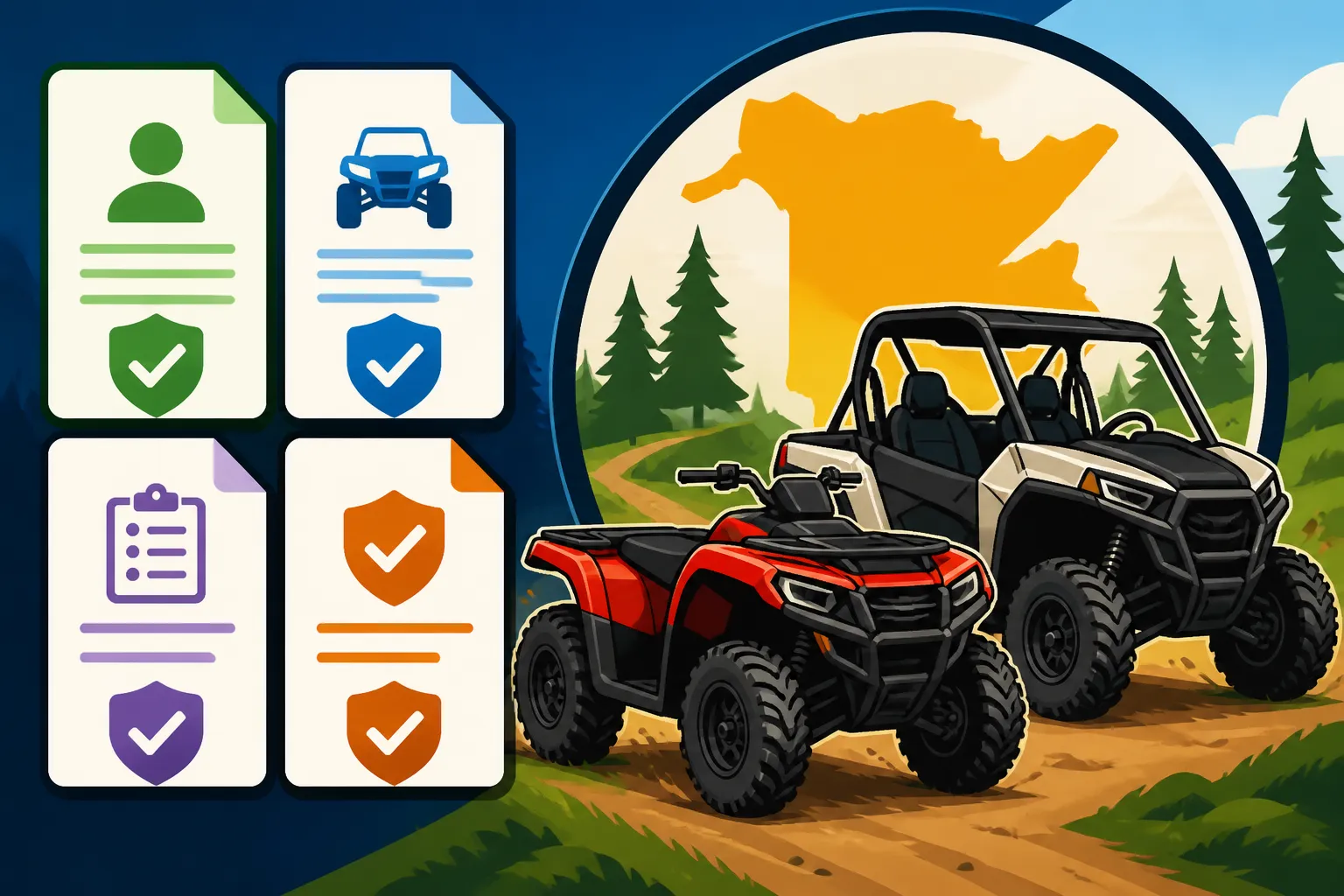
When you're out enjoying the vast network of trails across New Brunswick, whether it's on an ATV, UTV, or dirt bike, there are specific pieces of paper that the law requires you to have on your person or readily accessible on your machine. Think of these as your "Riding Passport" – crucial for verifying your identity, your machine's legality, and your right to be on the trail. Failing to have even one of these can lead to headaches and unwelcome fines, turning a great day into a costly one.
Your Driver's Licence or Other Acceptable Identification
First and foremost, you need to prove who you are and that you're of legal age to operate the machine you're riding. For most adult riders, this means carrying your valid driver's licence. It's the simplest way to confirm your identity and that you meet the age requirements for ORV operation in the province. If you possess a driver's licence, that's generally your go-to.
However, if you don't have a driver's licence, other forms of government-issued photo identification might be accepted, especially for youth riders or those who don't drive on public roads. The key is that it must clearly show your name, photograph, and date of birth. This is fundamental for any interaction with law enforcement, ensuring they can quickly identify you and confirm your eligibility to be behind the handlebars. Don't leave home without it; it's the bedrock of proving your identity on the trail.
Your ORV Registration Certificate
Just like your car, your off-road vehicle needs to be officially registered with Service New Brunswick. The registration certificate is the proof that your machine is legally on the books and belongs to you. This isn't just a formality; it's how the province tracks ownership and ensures that every ORV operating on public or club-managed land is accounted for. [New Brunswick ORV Registration Explained]
This certificate contains vital information about your machine, including its make, model, year, Vehicle Identification Number (VIN), and your details as the registered owner. It’s important to carry the original or a certified copy, as an officer may need to verify the information against your machine. This document confirms that your ATV or UTV is legitimate and not reported stolen, which is a common concern for enforcement officials. Make sure the information on it is current and reflects your ownership accurately.
Proof of Insurance (if applicable)
For most ORVs ridden on designated trails or Crown land in New Brunswick, carrying valid third-party liability insurance is a non-negotiable requirement. This isn't just about protecting yourself; it's about protecting others in case of an accident where you are at fault. The province mandates insurance to ensure that victims of ORV-related incidents have a means of recourse for damages or injuries. [New Brunswick Requires Insurance on Trails]
Your proof of insurance is typically a card or a declaration page provided by your insurance company. It will state your policy number, the coverage period, and the details of your insured machine. While many dirt bikes have an exemption from this rule if they are only ridden on private land, if you plan to hit any organized trail systems or Crown land, you absolutely must have this document. Be sure to check your policy for specific coverage details and keep your proof of insurance handy, as failing to produce it can result in significant fines. [New Brunswick Uninsured ATV Fine of $604.50]
Your Valid Trail Permit (if applicable)
If you plan on riding on any of the fantastic club-maintained trails that crisscross New Brunswick, you must possess a valid trail permit issued by QuadNB (or its snowmobile equivalent during winter). This permit acts as your membership and contribution to the maintenance and development of these trails, ensuring they remain safe and enjoyable for everyone. It's how the trail system is funded and kept in top condition. [New Brunswick Trail Permits for 2026 and 2027]
The trail permit usually comes as a sticker that you affix to your machine, along with a corresponding card that you should carry with you. The sticker itself isn't enough; you need the actual permit card as proof of purchase and to show it's registered to you and your machine. If you're riding trails without one, you're essentially freeloading on the hard work of volunteers and risking a hefty fine. Always confirm your permit is current for the season you're riding, as they often expire at specific times of the year.
Why Carrying These Documents Isn't Just a Suggestion
It’s easy to think of carrying paperwork as a hassle, another thing to remember when you’re just trying to get out and ride. However, the requirement for these four documents isn’t arbitrary. It’s deeply rooted in safety, accountability, and the efficient management of New Brunswick’s off-road network. Understanding the "why" behind the rules can sometimes make it a little easier to embrace them.
Avoiding Steep Fines and Penalties
Let's be brutally honest: nobody wants a ticket. The fines for not having your required ORV documents in New Brunswick can be substantial, easily eclipsing the cost of a registration or a trail permit. Getting caught without your valid registration, proof of insurance, or trail permit can result in immediate fines that quickly add up, turning a fun outing into a very expensive lesson. [New Brunswick No-Registration Fine of $172.50]
Imagine being pulled over and asked for your papers. If you can't produce them, an officer has every right to issue a citation. These aren't just minor slaps on the wrist; they are designed to deter non-compliance and ensure everyone is playing by the rules. Beyond the financial hit, a fine can also mean additional court costs or even impact future insurance rates. It’s a completely avoidable headache if you simply ensure your documents are in order before you head out. [New Brunswick Penalties for Riding Unregistered]
Streamlining Interactions with Law Enforcement
Encountering a conservation officer, RCMP, or local police while on the trails is a part of responsible ORV riding. When an officer requests your documents, being able to produce them quickly and efficiently makes the entire interaction smoother and more positive. It demonstrates that you are a responsible rider who understands and respects the regulations in place. [What an Officer Can Ask to See on a Trail]
Conversely, fumbling around, claiming you left them at home, or simply not having the necessary paperwork can prolong the stop and create unnecessary suspicion. Officers are there to ensure public safety and resource protection, and readily available documents help them do their job with minimal disruption to your ride. It builds trust and shows you're a responsible member of the riding community, making everyone's experience better.
Essential for Accident Reporting and Insurance Claims
While we all hope for incident-free rides, accidents can happen. In the unfortunate event of an ORV accident, whether it's a minor scrape or something more serious, your documents become absolutely critical. They provide the immediate information needed for accident reporting and are the foundation for any subsequent insurance claims. [New Brunswick Accident Reporting Rules]
If you're involved in an accident, your registration certificate identifies the machine, your driver's licence identifies you, and your proof of insurance ensures that you have coverage in place. Without these, reporting the incident becomes significantly more complicated, potentially delaying medical attention, hindering investigations, or even jeopardizing your ability to make a claim. Having everything at your fingertips ensures that in a stressful situation, at least the paperwork side of things is manageable.
Practical Storage Solutions for Your Important Papers
You've got the four essential documents, but where do you put them so they're safe, accessible, and protected from the elements while you're out on the trails? Shoving them in a pocket isn't always the best idea, especially with New Brunswick's unpredictable weather and the rough nature of off-road riding. Thoughtful storage is key to ensuring your papers survive the adventure as well as you do.
Weatherproof and Secure Storage Options
The number one enemy of paper documents on the trail is moisture. Rain, splashes from puddles, or even just condensation can quickly turn your crisp registration certificate into a soggy mess. Investing in a good quality, waterproof document holder or a small, hard-shell case is highly recommended. Many ORVs come equipped with small storage compartments, but always ensure they are truly waterproof. If not, a Ziploc bag inside that compartment is a simple, effective solution. [Carrying Papers on a Long Trail Day]
Beyond weather protection, security is also paramount. You want your documents to stay put, even over rough terrain. Choose a storage spot that is securely latched or zipped, preventing documents from bouncing out unnoticed. Common locations include a dedicated waterproof pouch in a glove box, a small dry bag strapped to a rack, or a compartment under the seat. The goal is to keep them protected from both the elements and accidental loss.
Accessibility in a Pinch
While security is important, your documents also need to be reasonably accessible. Imagine being pulled over and having to unload half your gear just to get to your registration. This isn't efficient for you or the officer. The ideal spot is somewhere that you can reach easily without having to dismount or unstrap significant cargo.
For many riders, a glove box or a small, front-mounted tank bag offers the best balance of accessibility and protection. You should be able to retrieve your documents with relative ease when asked. Practice getting them out a few times before your ride so you know exactly where they are and how to grab them quickly. This preparedness will make any interaction with enforcement much smoother and less stressful.
The Role of Digital Copies
In our increasingly digital world, it's natural to wonder if a photo of your documents on your phone is sufficient. While an officer might appreciate seeing a digital copy, it's crucial to understand that in New Brunswick, digital copies alone are generally not legally sufficient for required documents like your driver's licence, registration certificate, or proof of insurance. The law typically specifies that you must carry the physical original document.
However, having digital backups is still an excellent practice. Take clear photos of all your documents and save them to your phone, or better yet, upload them to a secure cloud service. If your physical documents are somehow lost, damaged beyond recognition, or stolen, these digital copies can be invaluable for reference when you need to order replacements. They provide a quick way to recall important numbers and dates, especially when filing a police report or contacting Service New Brunswick. They are a complement, not a replacement, for your physical papers.
What Happens When a Document is Missing or Out of Date?
It’s happened to the best of us: you get all geared up, arrive at the trailhead, and suddenly realize you've forgotten something vital. Or perhaps you're halfway through the season and realize your registration expired last month. These moments of panic are frustrating, but knowing what steps to take can alleviate some of the stress and help you rectify the situation as quickly as possible.
Lost, Stolen, or Damaged Registration Certificates
If your ORV registration certificate goes missing, is stolen, or becomes so damaged it's unreadable, you need to address it promptly. Riding without a valid and presentable registration is a violation. Your first step should be to contact Service New Brunswick to inquire about a replacement. There is usually a nominal fee for issuing a duplicate certificate. [What to Do If You Lose Your Registration Certificate]
In cases of theft, it's also wise to file a police report. This creates an official record and can be helpful if your machine is later found or if someone attempts to use your stolen document. Until you have a new, valid certificate in hand, it's generally best to avoid riding on public or club trails to prevent potential fines. LawDepot also offers templates for various declarations that might be useful if you need to formally declare a lost document for your records, though Service New Brunswick will handle the official replacement.
Dealing with Expired Permits or Registrations
An expired registration or trail permit is essentially the same as not having one at all in the eyes of the law. [New Brunswick Registrations Expire December 31] Many registrations expire annually, often at the end of December, and trail permits are typically valid for a specific season. It's your responsibility to keep track of these dates and renew them before they lapse. [New Brunswick Registration Renewal Deadline]
If you discover an expired document, the immediate solution is to renew it. Registrations can often be renewed online, by phone, or in person at a Service New Brunswick centre. Trail permits are usually available through QuadNB clubs, dealers, or online. Don't simply hope you won't get caught; officers are vigilant, especially early in the riding season. Riding on an expired permit or registration is a guaranteed way to earn a fine.
Provisional Proof and "I Just Bought It" Scenarios
So, you just bought a shiny new (or new-to-you) ORV! Congratulations! But what about the paperwork while you're still in the process of getting everything transferred and registered in your name? This is a common situation that can cause confusion. [New Brunswick Registration After a Private Sale]
When purchasing an ORV, especially through a private sale, you should always get a bill of sale. This document is crucial proof of ownership, even if the registration isn't yet in your name. You can find robust templates for bills of sale through resources like LawDepot, ensuring all necessary details are covered. When riding immediately after a purchase but before your new registration certificate arrives, carry your bill of sale, the previous owner's signed-off registration (if applicable), and proof that you’ve applied for the new registration. Some provinces offer temporary registration permits for this interim period; check with Service New Brunswick for their specific allowances. Having this provisional proof can go a long way in demonstrating good faith to an officer.
Navigating Specific Riding Situations with Your Documents
The "four documents" rule is a good baseline, but different riding scenarios can introduce nuances. Whether you're borrowing a friend's machine, are a youth rider, or visiting from out of province, understanding these specific requirements can prevent unexpected issues and ensure your ride remains within legal bounds.
Riding a Rental or Borrowed ORV
Riding a machine that isn't registered in your name introduces a layer of complexity. If you're renting an ORV from an outfitter, they will provide you with the machine's registration certificate and proof of insurance. You, as the operator, will still need your valid driver's licence or other acceptable ID, and the machine will need a valid trail permit if you're on QuadNB trails. Ensure the rental agreement specifies that the machine is legally compliant.
If you're borrowing an ORV from a friend or family member, it’s highly advisable to carry not only your own ID but also the machine's registration certificate and proof of insurance. It's a good idea to have a written note of permission from the owner, just a simple statement saying you have their consent to operate their machine. While not always legally required, it eliminates any doubt during an enforcement stop. Templates for such letters of consent can often be found on platforms like LawDepot, offering a quick and easy way to formalize permission. [Riding a Borrowed Quad With No Insurance]
Youth Riders and Their Escorts
New Brunswick has specific regulations for youth ORV operators, particularly concerning age, licensing, and supervision. If you're a youth rider (under 16), you'll likely need a Class 9 licence (for ages 14-15) or be riding under direct adult supervision on a closed course (for younger riders). In these cases, the youth rider must carry their Class 9 licence or equivalent proof of age and any safety course certificates. [New Brunswick Rules for a 14-Year-Old Rider]
The adult escort or supervisor must also carry their own driver's licence, the ORV's registration and insurance proof, and a valid trail permit if on club trails. Remember, the rules regarding engine size and locations where youth can ride are strict, so ensuring all relevant documents for both the youth and the escort are carried is paramount for compliance and safety.
Out-of-Province Visitors
New Brunswick is a popular destination for ORV enthusiasts from neighbouring provinces and states. If you're visiting from Nova Scotia, Prince Edward Island, Ontario, or Maine, you generally need to comply with New Brunswick's ORV regulations, but there are some reciprocal agreements. For example, your valid Nova Scotia or PEI trail permit might be recognized in New Brunswick, meaning you don't need to purchase a separate New Brunswick permit. [New Brunswick Reciprocity With Nova Scotia]
However, you will absolutely still need to carry your valid driver's licence from your home province/state, your machine's registration from your home jurisdiction, and proof of insurance that is valid in New Brunswick. Always check the current reciprocity agreements before your trip, as these can change. If there's no agreement, you'll need to purchase a New Brunswick trail permit to ride on club trails. For visitors from other areas, such as Quebec, specific agreements may have ended, requiring you to obtain a New Brunswick permit regardless of your home province's sticker. [New Brunswick Rules for a Visiting Quebec Rider]
A Quick Reference for Your Riding Documents
To help you keep track of what you need and why, here's a handy summary of the four key documents you should always have with you when riding your ORV in New Brunswick.
| Document | Purpose | Where to Keep It | Important Considerations |
|---|---|---|---|
| Driver's Licence/ID | Proves your identity and age for legal operation. | On your person (wallet) or easily accessible on machine. | Must be valid, government-issued, with photo. Required for all operators. |
| ORV Registration Certificate | Proves machine ownership and legal registration. | Secure, weatherproof compartment on the machine. | Must be the original or certified copy. Ensure details match your machine and are current. Replacements available from Service New Brunswick. |
| Proof of Insurance | Confirms third-party liability coverage (if applicable). | Secure, weatherproof compartment on the machine. | Required for most ORVs on trails/Crown land. Not having it can lead to hefty fines. Dirt bikes on private land may be exempt. Check policy for validity in New Brunswick. |
| Valid Trail Permit | Grants access to club-maintained trails. | Card on your person, sticker affixed to machine. | Required for riding QuadNB trails. Supports trail maintenance. Ensure it's valid for the current season. Reciprocity agreements exist with some provinces, but always verify current status. |
Remember, being a responsible ORV rider means more than just knowing how to handle your machine; it also means respecting the rules and ensuring you have all your ducks—or rather, all your documents—in a row. A little preparation before each ride can save you a lot of trouble down the trail.
Disclaimer
This article is for general informational purposes only and does not constitute professional advice. Laws, prices and regulations vary by location and change over time. Consult a qualified professional for guidance on your specific situation.