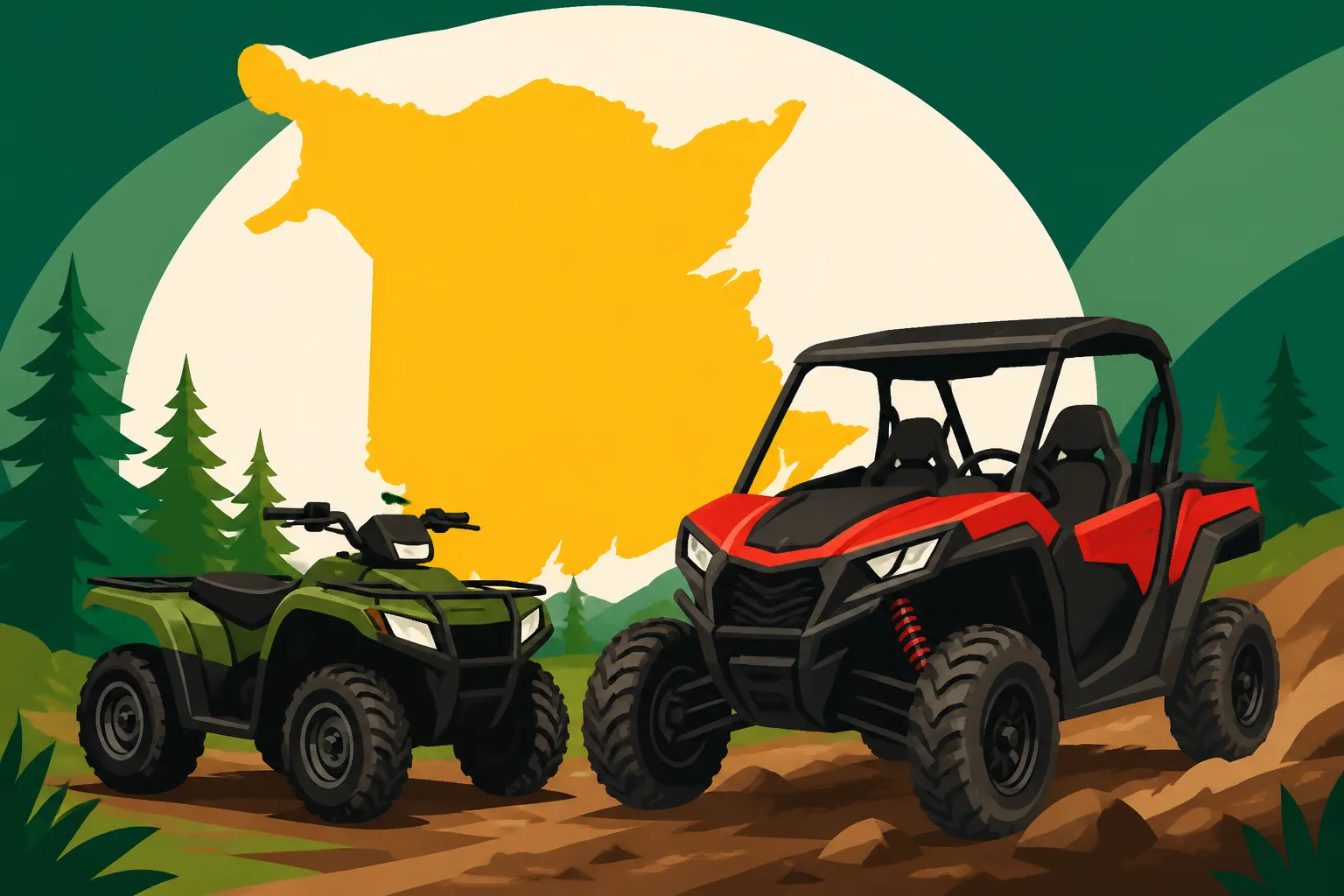
The Sixty-One Thousand Machines Registered in New Brunswick
A figure of 61,000 registered machines helps show the scale of ATV and UTV use in New Brunswick, but it can be easy to mistake for a count of trail users or permit holders. The distinction matters when you are checking what paperwork your machine needs, whether a visitor can ride, and what reciprocity actually covers.
What the 61,000-machine figure tells you
The figure in the title is a useful way to picture the size of New Brunswick’s registered off-road vehicle fleet. It does not, by itself, tell you how many machines are on trails on a given day, how many people ride, or how many trail permits have been sold.
Those are different measures. A machine may be registered but used mostly on private land. A rider may use more than one machine at different times. A family might share a machine, while a single rider might own several. Trail permits, meanwhile, relate to access on the organized trail network rather than simply to the number of vehicles registered.
Registration and trail permits also serve different purposes. Registration is the vehicle record handled through the provincial registration system. A trail permit is associated with permission to use a participating trail network under its rules. A machine can need both when it is used on public trails, and having one does not automatically replace the other. For the provincial registration side, see New Brunswick ORV Registration Explained. For trail access, New Brunswick’s Groomed Trail Permit and New Brunswick’s Non-Groomed Trail Permit explain the separate permit categories.
A large registered fleet is a sign that off-road riding is a substantial activity in the province. It can also mean more pressure on trail maintenance, signage, bridges, and relationships with landowners. But the raw total is not a trail map, a current permit count, or proof that any particular route is open.
What a registration count can and cannot show
A registration count can help describe the number of machines recorded in a system. It is not necessarily a count of active machines. Some may be stored, sold, used infrequently, or kept for work on private property. A registered machine also does not necessarily have a current trail permit.
When you see a fleet figure, ask what it is counting:
- Is it registered machines, permit stickers, owners, or riders?
- Does it include multiple types of off-road vehicles?
- Is it a snapshot from a particular period, or a figure being used as a general benchmark?
- Does it include machines used only on private property?
Without those details, avoid treating the figure as a precise measure of trail traffic or current participation. It is better understood as context: New Brunswick has a sizable community of machine owners, and access rules matter to many people.
If you are deciding what applies to your own vehicle, begin with its registration requirements, then check the trail permit rules for the trail you plan to use. Do You Need to Register an ATV in New Brunswick? is a useful starting point for the first question. Do You Need a Trail Permit on Your Own Land? addresses a different question about trail access and private property.
Registration is not the same as a trail permit
The terms can sound interchangeable in everyday conversation, but they refer to separate requirements. Registration identifies a machine in the provincial system. A trail permit allows access under the rules of the trail network that issues or recognizes it. Riders should check both rather than assume a plate, registration certificate, or permit sticker covers every requirement.
The practical distinction becomes especially important when a machine is registered in New Brunswick but is used in another province, or when a visitor brings an out-of-province machine here. Registration from home does not necessarily grant access to another province’s trail system. A trail permit from one jurisdiction may be recognized elsewhere only where a current reciprocity arrangement applies.
| Item | What it generally relates to | What to confirm |
|---|---|---|
| Vehicle registration | The machine’s provincial registration record and required vehicle documents | Whether the machine must be registered for the way and place you plan to use it |
| Trail permit | Access to a particular trail network under its conditions | Which permit type and season apply to that trail |
| Reciprocity | Recognition of a visiting rider’s permit across participating jurisdictions | Whether the agreement is active and what locations or conditions it covers |
| Insurance | Financial protection and legal requirements for riding | Whether coverage is required for the planned use and whether proof must be carried |
Do not use the table as a substitute for checking the rules for a specific machine or route. Requirements can depend on the vehicle category, where it is ridden, and whether the route is a managed trail, road, or private property.
A machine kept on a camp or woodlot may have a different pattern of use from one taken onto a club trail. That does not automatically settle the registration or insurance question. See A Camp Machine and New Brunswick Paperwork for the camp-use situation and New Brunswick Requires Insurance on Trails for the trail-insurance issue.
The same separation applies to safety documents and proof of insurance. A permit sticker does not prove that a machine is insured, and registration documents do not necessarily establish that the rider has every required permit. Before leaving, check the full document list in New Brunswick Documents You Must Carry and make sure the papers are available in a form you can produce if asked.
A simple routine helps:
- Identify the machine and the type of riding planned.
- Confirm that its registration is appropriate and current.
- Check whether the route requires a trail permit and which type applies.
- Verify insurance and any rider-related requirements.
- Carry the documents the rules require and check that stickers are properly displayed.
This avoids the common mistake of treating “the machine is registered” as the end of the preparation.
What reciprocity means for New Brunswick riders
Reciprocity is an arrangement under which one jurisdiction recognizes a permit or membership issued by another. It can make cross-border riding easier, but it is not a blanket permission to ride anywhere. The agreement may apply only to certain networks, permit types, seasons, or conditions, and the arrangement can change.
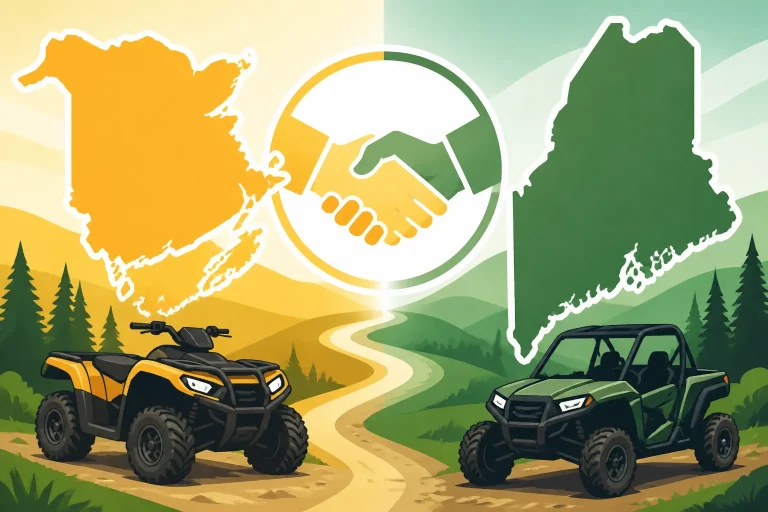
For New Brunswick riders, the practical question is not simply whether the province has reciprocity. It is whether the specific permit on the machine is accepted where you intend to ride, and whether the local trail rules have any additional requirements. New Brunswick’s arrangements with nearby jurisdictions should be checked before a trip; the reference list includes separate information on New Brunswick Reciprocity With Nova Scotia, New Brunswick Reciprocity With PEI, New Brunswick Reciprocity With Ontario, and New Brunswick and the Maine Agreement.
Quebec requires particular care. The reference list notes that the former agreement ended, so do not assume a New Brunswick permit is accepted there. Confirm the current pass requirements with the relevant trail organization before crossing the border. New Brunswick Riders Visiting Quebec covers the visitor question from the other direction.
Reciprocity concerns trail access, not every legal obligation connected with the vehicle. A recognized permit does not automatically replace the machine’s home registration, insurance, safety equipment, or local operating rules. When riding away from home, check both the destination’s trail rules and the laws that apply to the roads or land you may encounter along the way.
A quick pre-trip check
Before transporting a machine across a provincial or international border, check:
- Whether the destination accepts your permit or requires its own.
- Whether the permit type matches the trails you plan to use.
- Whether the agreement applies to the machine, rider, and season in question.
- Whether your home registration and insurance remain suitable for the trip.
- Whether you need to carry proof of registration, insurance, or a safety certificate.
- Whether route closures, land access rules, or local restrictions affect your plan.
Ask the organization responsible for the destination trail system rather than relying only on an old sticker, a friend’s past trip, or a general statement that “there is reciprocity.” A permit may be valid for its home network while still being insufficient for another location.
For visiting riders coming into New Brunswick, the same logic applies in reverse. Check whether the home permit is recognized here and whether any additional conditions apply. New Brunswick Reciprocity With Nova Scotia and New Brunswick Visitors From Maine can help orient those trips, but current acceptance should be verified before riding.
How to use the fleet figure when planning a ride
The 61,000-machine figure is most useful as background. It signals that New Brunswick has a sizeable registered off-road vehicle population, but it does not tell you where you may ride or what your specific machine needs. Use it to understand the scale of the activity, not as a shortcut through the rules.
A practical planning order is to start with the route. Identify whether you will be on a managed trail, a road, private land, or a mixture. Then confirm registration, trail permit, insurance, and any rider-specific requirements that apply to those places. If you are crossing a border, add a reciprocity check and verify that the destination recognizes your permit.
Do not rely on a registration figure to estimate how busy a trail will be. Trail use can vary by location, day, weather, closures, and season. Check trail conditions and notices before departure, and follow posted signs even if a route appears on an older map. A machine’s registration does not grant permission to use a closed trail or cross land without authorization.
It is also worth keeping digital and physical paperwork organized. A secure document pouch can protect paper copies from rain and mud; a simple waterproof pouch from a retailer such as Amazon is one option. Keep any required originals or official documents in the form the relevant authority accepts, and do not assume a phone photo will be accepted everywhere.
For a first outing, make a short checklist and use it every time. Confirm the vehicle paperwork, permit sticker, insurance proof, safety gear, route status, and emergency plan. If the machine is borrowed or newly purchased, check that its paperwork matches the current owner and vehicle details. Articles such as New Brunswick Registration After a Private Sale and New Brunswick Registration for a New Resident address common cases where the registration record may need attention.
The main takeaway is straightforward: a large fleet count gives context, not permission. Registration, trail permits, and reciprocity answer separate questions. Check each one for the machine and route you actually plan to use, and verify cross-border recognition before setting out.
Disclaimer
This article is for general informational purposes only and does not constitute professional advice. Laws, prices and regulations vary by location and change over time. Consult a qualified professional for guidance on your specific situation.