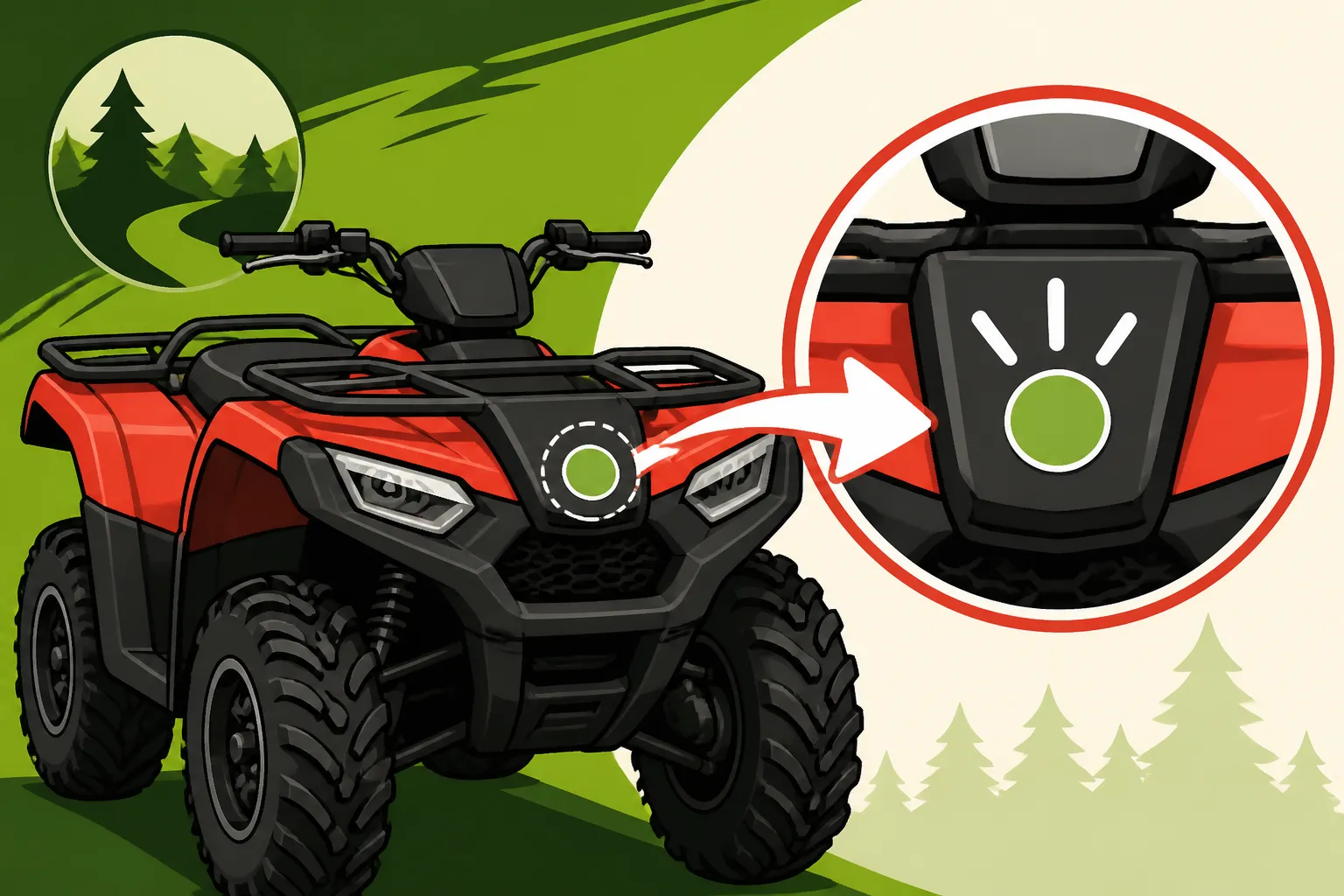
Where the Trail Permit Sticker Mounts on a Quad
A trail-pass sticker can be easy to misplace when you’re dealing with a registration plate, machine decals and other paperwork. In New Brunswick, the key requirement is that an ATV’s trail pass be securely attached and clearly visible on the vehicle. The province’s stated rule does not specify a particular ATV panel, so the practical goal is to choose a suitable spot without confusing the pass with other identification.
What New Brunswick requires for an ATV trail pass
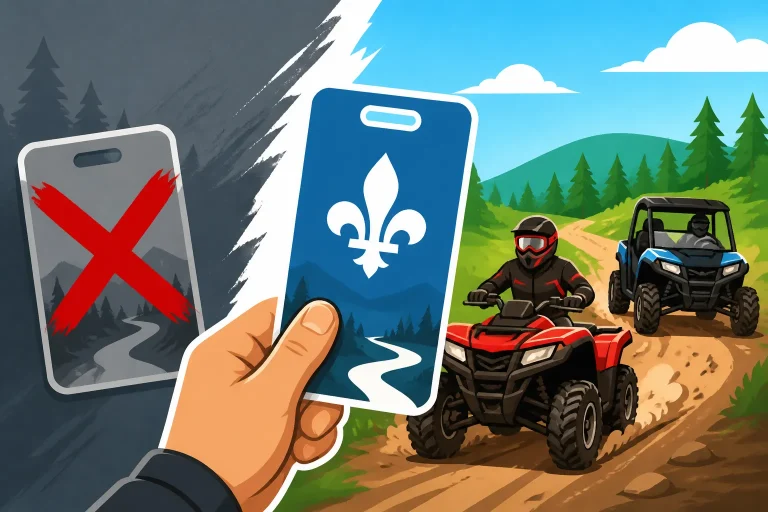
According to the Government of New Brunswick, an all-terrain vehicle using a managed trail must have its trail pass securely attached to the vehicle and clearly visible. That gives you two requirements to meet: the pass must stay put, and it must be easy to see.
The rule provided for ATVs does not name a specific fender, side or other mounting point. So don’t assume that a familiar location used by another rider, a dealer or a sticker on a different kind of machine is automatically the required position. When in doubt, check current placement instructions with the pass seller or the relevant trail manager.
| What you’re checking | What matters for an ATV | What not to assume |
|---|---|---|
| Attachment | The pass must be securely attached to the vehicle | That a loose pass or one kept in a pocket meets the requirement |
| Visibility | The pass must be clearly visible | That a covered, obscured or hard-to-see spot is suitable |
| Exact location | The stated rule does not name a specific ATV panel | That every ATV must use one particular fender or side |
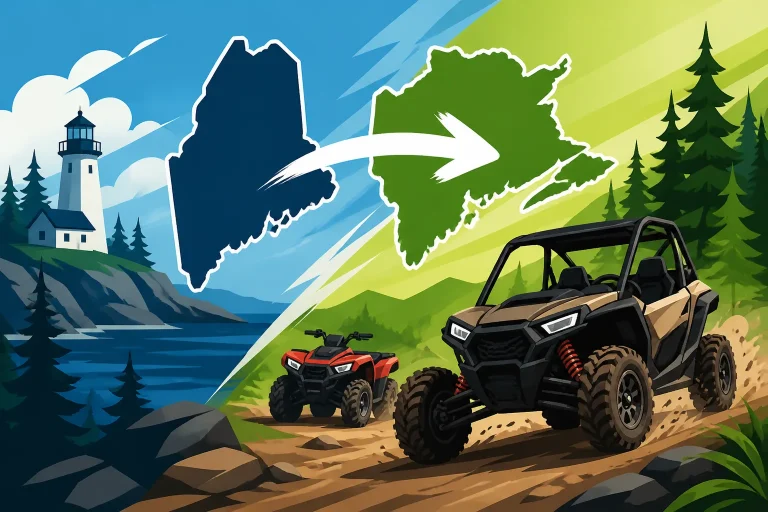
| Snowmobile placement | The Government of New Brunswick specifies the bottom centre of the windshield for a snowmobile pass | That the snowmobile location also applies to an ATV |
This distinction matters because trail permits and vehicle registration identification are not the same thing. A registration plate must be securely attached to the rear of an ATV, according to the Government of New Brunswick. That plate requirement does not, by itself, tell you where to put the trail-pass sticker.
Likewise, don’t treat a registration decal as the trail pass. They serve different purposes, and an ATV using a managed trail must still have its trail pass attached and visible. For a broader explanation of which pass applies to a machine, see New Brunswick Groomed vs Non-Groomed Permits. For machine placement details, New Brunswick Permit Placement on a Machine is a related topic.
Choosing a practical spot on your quad
Since the stated ATV rule focuses on secure attachment and visibility rather than naming a panel, choose a stable, easy-to-see area that suits the shape and materials of your machine. The best available surface will depend on your quad’s design, existing decals, cargo setup and how the machine is used.
Before committing the sticker, consider these practical checks:
- Can someone see it without searching? Avoid placing it under a rack, behind a bag, beneath a cover or in a spot that is routinely blocked by equipment.
- Will it stay attached? A surface that is rough, dirty, wet, oily or heavily curved may make it harder for a sticker to adhere properly.
- Will it be exposed to regular wear? Mud, brush, pressure washing and contact with boots or straps can wear down or lift a sticker.
- Does anything cover the area during normal use? Think about how the ATV looks with its usual accessories, not just when it is parked with nothing fitted.
- Is the surface appropriate for an adhesive sticker? If you are unsure about a plastic panel or finish, check the machine manufacturer’s care instructions or ask the pass seller for guidance.
A clear, exposed body panel may be more practical than a tucked-away spot, but that is a practical suggestion, not a province-specified location. Avoid presenting a common mounting habit as a legal rule unless the current instructions for your pass explicitly say so.
Keep the trail pass separate from registration identification
A plate is attached to the rear of an ATV under the Government of New Brunswick’s requirement. The trail pass, by contrast, needs to be securely attached and clearly visible; the stated rule does not give it the same rear placement instruction.
That difference can prevent a simple mistake: putting the pass wherever the registration plate or registration decal sits because the items seem related. Check what each item is before mounting it. If you are sorting out plates, decals and certificates together, New Brunswick Documents You Must Carry can help clarify the paperwork side.
The same caution applies when you read advice about other vehicles. The Government of New Brunswick specifies a bottom-centre windshield location for a snowmobile trail pass. That snowmobile instruction is not an ATV placement instruction. For ATV riders, the requirement remains secure attachment and clear visibility.
How to attach the pass so it stays visible
A careful application helps reduce the risk of a pass peeling, folding or becoming difficult to read. Follow any instructions supplied with the pass first; if those instructions give a specific placement for your ATV, use them. If they do not, select a suitable visible area and apply the sticker to a clean, dry surface.
- Choose the spot before peeling the backing. Hold the pass against the panel and view it from a few angles. Check that racks, bags, bodywork or other equipment will not block it during normal riding.
- Check the panel. Avoid a surface covered in mud, dust, grease or water. If you clean it, let it dry fully before applying the pass.
- Follow the sticker instructions. Use the method and handling guidance provided with the pass. Don’t stretch or crease the sticker, and try to keep it flat against the surface.
- Press it down firmly. Pay attention to the edges, where peeling may start. Avoid trapping dirt or wrinkles beneath the sticker.
- Look at the result. Make sure the pass is legible and visible, and check that no accessory or panel edge hides part of it.
- Recheck it after riding. Inspect for lifted corners, cracks, heavy mud or damage, especially after washing the machine or riding through brush.
If the sticker will not adhere to a panel, do not try to solve the problem by placing it somewhere hidden. Ask the seller or trail manager about an appropriate location or replacement options. If a pass is lost or damaged, New Brunswick Permit Replacement If Lost covers the next question to investigate.
A pass should not be moved casually between machines. Its placement is meant to identify the machine using the managed trail, and transfer rules can depend on the permit. Before moving one, check New Brunswick Permit Transfers Between Machines rather than assuming a sticker can simply be peeled off and reused.
Common sticker mistakes and the checks to make before riding
The most avoidable problems come from confusing the trail pass with another decal or making it hard to see. A sticker can be physically attached and still be a poor choice if it is covered by gear, hidden on an inward-facing panel or difficult to distinguish from the machine’s other markings.
Watch for these common issues:
- Putting it somewhere merely because another quad has it there. Similar machines can have different panels, accessories and visibility. Use your own ATV’s layout and the pass instructions.
- Confusing it with a registration sticker. A registration-related decal and a trail pass are not interchangeable. Confirm which document or sticker you are handling.
- Placing it where cargo blocks it. A pass that is visible while the ATV is empty may be hidden once a bag, tool kit or other accessory is fitted.
- Leaving it loose or carrying it separately. The Government of New Brunswick requires the ATV trail pass to be securely attached to the vehicle, not just available in a pocket or storage compartment.
- Applying it to a damaged or unsuitable surface. A peeling or folded sticker may be hard to see and may not remain securely attached.
- Assuming the snowmobile rule applies to ATVs. The specified bottom-centre windshield position is for snowmobiles, not the ATV placement rule.
The consequences are worth taking seriously. The Government of New Brunswick lists a fine of $340.50 for a permit that is not properly attached, as of November 2026. If you are unsure whether your sticker is positioned or attached correctly, check before heading onto a managed trail rather than waiting until a trail check.
The trail pass is only one part of being ready to ride. According to the Government of New Brunswick, trail use also requires insurance for off-road vehicles, with exceptions for dirt bikes and dune buggies, and operators must carry proof of insurance. Make sure the documents and equipment rules that apply to your machine are covered too. What an Officer Looks For When Checking Stickers and New Brunswick Registration Before Your First Ride are useful next steps.
Before leaving, do a quick walk-around: confirm the pass is attached to the ATV, easy to see and not blocked by accessories; make sure it has not lifted or been damaged; and check that the machine’s registration plate and required documents are in order. If the pass seller or trail manager has provided current ATV-specific placement directions, follow those instructions. Otherwise, keep to the rule the province states: securely attached and clearly visible.
Sources
- Government of New Brunswick — Infractions and penalties – gnb.ca (checked November 3, 2026)
Disclaimer
This article is for general informational purposes only and does not constitute professional advice. Laws, prices and regulations vary by location and change over time. Consult a qualified professional for guidance on your specific situation.