What Thirty-One Thousand Club Members Pay For
A trail permit can feel like one more sticker to buy before an ATV ride, especially when it is not obvious what the payment actually supports. For New Brunswick’s roughly 31,000 federation members, the value is less about a decal and more about the clubs, access agreements, signs, trail work and shared network that make organized riding possible.
What New Brunswick trail members help support
A managed trail network
New Brunswick’s organized ATV trail system is a substantial undertaking: the network is described as spanning about 10,000 kilometres, maintained through a federation and its local clubs. That mileage is not simply a collection of paths that stays ready on its own. Routes need to be marked, checked, cleared, and sometimes closed or rerouted when conditions change.
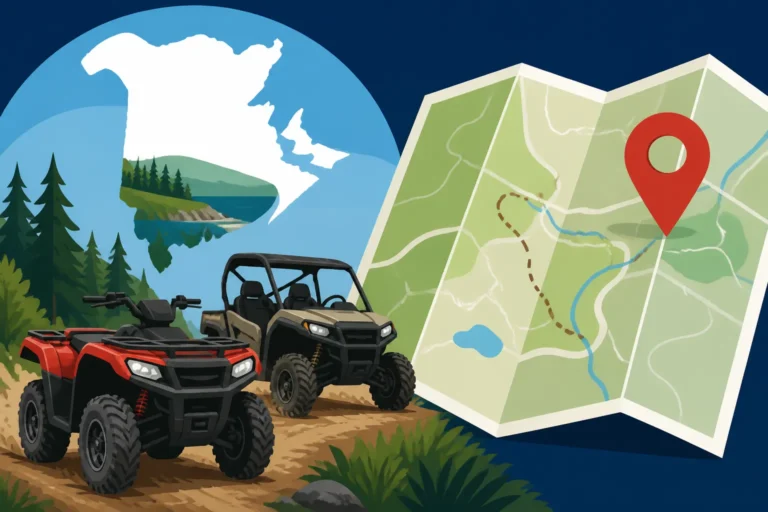
A rider heading out from Woodstock, Miramichi or Bathurst may see a finished trail and never notice the work behind it. Volunteers and clubs help maintain corridors, deal with washouts, update signs and communicate changes. Membership and permit revenue contribute to the organized system, though the precise way funds are allocated can vary. [New Brunswick's 10,000 Kilometres of Trail]
The network also depends on local knowledge and relationships. A trail can cross different land types and involve access arrangements that need ongoing attention. Supporting a club helps sustain the people and coordination that make a marked corridor usable, rather than treating every woods road as though it were automatically open to ATV traffic.
Local clubs and the work riders rarely see
The federation includes 57 member clubs across eight regions. Those clubs connect broad provincial coordination with the practical work that happens close to home: maintaining a particular stretch, sharing trail information, organizing volunteer days, and helping riders understand local conditions. [Fifty-Seven Clubs in Eight Regions]
That local layer matters when a storm knocks down trees or a bridge needs attention. A map may show where a trail normally goes, but it cannot always tell you whether a section has been affected by recent weather or whether a reroute has been marked. Clubs are often a useful place to look for current local updates before loading the machine.
Membership also helps sustain a community around riding. Some members volunteer directly; others support the system by purchasing a permit and following the rules that protect access. You do not need to be on a work crew every weekend to contribute, but understanding what local clubs do can make the permit feel less like an unexplained charge.
What the permit and membership relationship means
A trail permit is more than registration
New Brunswick riders should distinguish a trail permit from vehicle registration and insurance. They are different requirements with different purposes. Registration identifies the machine under the applicable rules; insurance addresses financial protection requirements; and the trail permit is connected to access on the organized trail network. A permit does not replace the other documents or permissions a rider may need.
For many riders, the permit is also the route into federation membership. In practical terms, buying a trail permit can support the system and include membership-related benefits. The exact permit type matters, so check what applies to your machine and the trails you intend to ride. [New Brunswick Permit Equals Membership]
This distinction is easy to miss when a rider is preparing for a first outing. Imagine someone has registered a quad, put the paperwork in a storage compartment and assumes that means every marked trail is open to them. Registration alone does not establish trail access. Checking permit requirements before leaving home avoids the frustrating discovery of a missing sticker at a trailhead. [How to Buy a New Brunswick Trail Permit]
Permit types and the kind of riding you plan to do
Permit options are not necessarily interchangeable. The right choice depends on the machine, the season and whether you expect to use groomed or non-groomed trails. A rider who only plans an occasional outing may have different needs from someone who rides frequently through the winter and wants access to groomed routes.
| What to check | Why it matters before you ride |
|---|---|
| Trail type | Confirm whether your planned route is groomed, non-groomed or a mix |
| Season | Some routes and permits have seasonal distinctions |
| Machine | Check that the permit is suitable for the vehicle you will use |
| Sticker placement | Put the permit sticker where required and keep it visible |
| Other paperwork | A trail permit does not replace registration or insurance |
| Local conditions | Check club updates for closures, damage and reroutes |
It is worth checking the distinction between groomed and non-groomed access rather than choosing by name alone. Winter riding can involve shared trails and seasonal arrangements, while thawing conditions can make some sections vulnerable to damage. A permit does not mean every route is open in every condition. [New Brunswick Groomed vs Non-Groomed Permits]
For navigation, an app such as onX Offroad can help riders review routes and orient themselves, especially when planning a trip through unfamiliar areas. Use it as a navigation aid, not as proof that a route is legally open or currently passable. Pair it with official trail information and local club updates. onX Offroad can be useful for keeping a ride plan organized, but it cannot replace a permit or permission to travel on land.
Where membership value shows up on a ride
Trail information, signs and safer decisions
A marked trail system helps riders make choices before and during a ride. Signs can point out route direction, intersections, hazards or changes in access. They are particularly useful when several roads or trail corridors meet and it is not obvious which one belongs to the organized network.
Good information also helps prevent accidental trespass. A woods road that looks rideable is not automatically part of a permitted ATV trail. Staying on the marked corridor respects land access and helps protect the relationships that keep routes available. When signs are missing or a section looks damaged, slowing down and checking local updates is safer than improvising a shortcut.
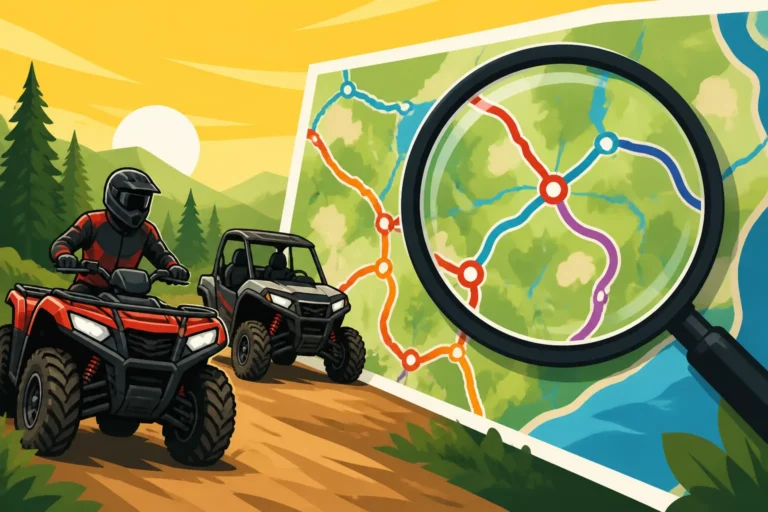
Before a longer ride, review the relevant trail map and save the information you will need. onX Offroad may help with general route awareness, but it should be cross-checked against the official trail map and current club notices. Cell service can be limited in remote areas, so do not assume you can search for a reroute once you are deep in the woods. [Zooming In on the QuadNB Federation Trail Map]
Maintenance, closures and responsible riding
Trail maintenance is not just clearing a route so a machine can get through. Drainage, bridges, signs and the surrounding ground all affect whether a trail remains usable. Riding around a wet or damaged section can widen the disturbed area and create more work for the club. If a trail is closed, follow the closure rather than treating it as a suggestion.
Seasonal conditions make this especially important. A trail that was in good shape on a dry summer weekend may be soft after heavy rain or during spring thaw. Temporary closures can protect the surface and reduce damage that would take significant effort to repair. Checking conditions before setting out is a practical way to respect both the land and the people maintaining the route. [New Brunswick Trail Conditions Before You Go]
The contribution of members is therefore not only about fixing damage after it happens. Responsible riding helps prevent avoidable repairs. Staying on marked trails, obeying signs, avoiding wet detours and reporting a problem to the club all support the same shared system. If you use onX Offroad to plan a route, keep the plan flexible enough to follow an official closure or reroute instead of pushing ahead because a track appears on your screen.
Membership benefits beyond the trail corridor
Member perks and practical value
The trail network is the main reason many riders buy a permit, but federation membership can also connect members with additional benefits. These may include insurance-related savings or lodging discounts through participating arrangements. The details depend on the benefit and provider, so check the current terms directly before relying on a discount or assuming a particular policy applies. [New Brunswick Member Insurance Savings]
That distinction matters when comparing the permit’s value. A possible discount is not the same as insurance coverage, and a membership benefit does not automatically mean a rider’s machine or trip is insured. Read the provider’s conditions and confirm what is covered. For lodging, ask whether a business recognizes the membership and whether the benefit applies to the dates and booking type you have in mind. [Which Businesses Honour a QuadNB Membership Card]
For a weekend trip, the benefit may be practical in a different way: riders can plan around local clubs, trail information and businesses familiar with ATV visitors. A member travelling to a new region can use those connections to learn where to start, what routes are open and what local expectations apply. That does not remove the need to plan carefully, but it can make a new area less intimidating.
How to make your contribution count
The most useful approach is to treat membership as part of preparing for a responsible ride, not as a one-time transaction you forget after the sticker is on. Choose a permit suited to your use, check that it is displayed correctly, and carry the documents required for your ride. [Where the Trail Permit Sticker Mounts on a Quad]
Before heading out, look at local trail conditions and any club notices. If a route is closed or a section has been damaged, follow the marked alternative. Once you return, report significant hazards or missing signs through an appropriate club channel rather than relying on a social post to reach the people who can address it.
If you ride often, consider helping with a club volunteer day or sharing accurate trail information with other riders. If you only ride occasionally, buying the proper permit and staying on authorized routes still supports the system. Those small choices help the trails remain available to the next rider, whether they are setting out from a nearby town or visiting New Brunswick for a longer trip.
Disclaimer
This article is for general informational purposes only and does not constitute professional advice. Laws, prices and regulations vary by location and change over time. Consult a qualified professional for guidance on your specific situation.