Registering With a Bill of Sale From a Neighbour
You've just bought that sweet ATV or UTV from your neighbour down the road. Maybe you've admired it for years, or perhaps it was a spur-of-the-moment deal over a backyard barbecue. The handshake felt good, the cash changed hands, and now you're thinking, "Great, new ride!" But then the reality hits: how do you actually get this machine legally registered in your name so you can hit the trails without worry? This guide is here to walk you through the often-confusing process of registering an off-road vehicle in New Brunswick when all you have is a bill of sale from a trusted neighbour.
The Essential Role of a Bill of Sale in New Brunswick
It might seem overly formal when you're buying something from someone you know and trust, especially a neighbour. You've seen them riding that machine for years, you know its history, and you trust their word. So, why do you suddenly need a formal "bill of sale"? Believe me, this isn't about distrust; it's about legality and protecting both you and your seller in the eyes of the law, and crucially, for Service New Brunswick.
Why a Formal Bill of Sale is Non-Negotiable
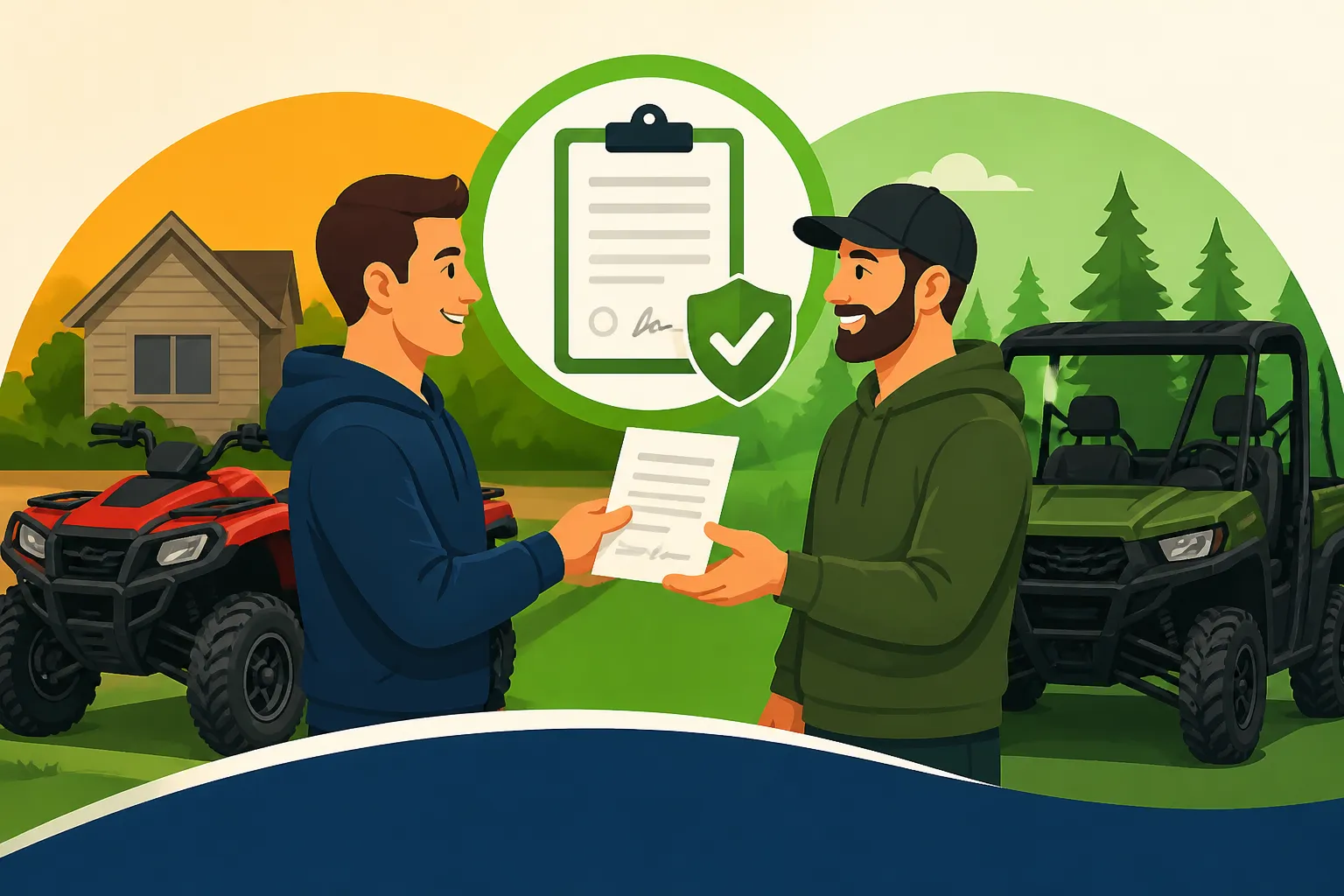
When you're dealing with a motor vehicle, even an off-road one, the government needs a clear, verifiable record of ownership transfer. A verbal agreement or a scribbled note on a napkin, while perhaps sufficient for a friendly loan, simply won't cut it for official registration. The bill of sale is your official proof that you are now the rightful owner. It documents the transaction date, the sale price, and identifies both the buyer and the seller, preventing any future disputes or misunderstandings. Without it, you could face significant hurdles at Service New Brunswick trying to prove the machine is yours. It also forms the basis for calculating the provincial sales tax (HST) on the transaction, a detail that Service New Brunswick definitely pays attention to. You can learn more about this in our guide on [New Brunswick Tax on a Private ATV Sale]. Even for a neighbourly deal, a proper bill of sale ensures everything is above board and protects both parties.
What Information Must Be Included
To be considered valid and acceptable by Service New Brunswick, your bill of sale needs to be comprehensive. It should include:
- Buyer's Full Name and Address: This is you! Make sure it matches your identification.
- Seller's Full Name and Address: This is your neighbour. Again, ensure accuracy.
- Date of Sale: The exact date the ownership officially transferred.
- Make, Model, and Year of the ORV: For example, a 2018 Polaris Sportsman 570.
- Vehicle Identification Number (VIN): This is paramount. It's the unique identifier for your machine and must be accurate. Double-check it against the physical VIN on the ORV.
- Purchase Price: Even if it was a gift or a trade, a nominal value might be required, or the fair market value will be assessed for tax purposes. Keep in mind that Service New Brunswick may assess the fair market value of the ATV, regardless of the price you actually paid, to determine the HST. We cover this in depth in [New Brunswick HST on an ATV Purchase].
- Signatures of Both Buyer and Seller: This confirms both parties agree to the terms of the sale.
If you're unsure how to draft one that covers all bases, resources like LawDepot offer templates that can simplify the process, ensuring no critical details are missed. A template can be incredibly helpful for making sure everything is in order, even for a casual sale.
Gathering Your Registration Documents
So, you've got that shiny, properly filled-out bill of sale. Fantastic! That's the cornerstone of your registration. But like any good foundation, it needs a few other crucial pieces to support the entire structure. Registering your ATV or UTV, even one bought from a neighbour, involves more than just proof of purchase. Service New Brunswick has a specific list of items they need to see before they can put that plate in your hand.
Beyond the Bill of Sale: What Else You Need
Think of this as your personal scavenger hunt for paperwork before your trip to Service New Brunswick. You'll need more than just the bill of sale to prove your identity and the machine's legitimacy. Here’s a detailed rundown:
- Your Valid Identification: This usually means a current driver's license. It confirms who you are and verifies your address. Make sure the name on your ID matches the name on the bill of sale exactly. Any discrepancies could cause delays.
- Proof of New Brunswick Residency: If your driver's license doesn't clearly show your current New Brunswick address, or if it's recently changed, you might need an additional document. This could be a utility bill, a property tax statement, or a lease agreement. The key is that it must be current and clearly state your name and address.
- Previous Registration Certificate (if available): While you can register an ATV without the previous owner's registration certificate (more on that in a moment), having it makes the process smoother. Your neighbour might still have their old certificate. If so, it will contain the VIN and other important details that match the bill of sale and help verify the machine's history. It’s like a cheat sheet for Service New Brunswick. Even if they don’t have it, don’t panic – it’s not an absolute deal-breaker, just a helpful bonus.
- Vehicle Identification Number (VIN) Verification: The VIN is essentially your ATV's unique fingerprint. It's usually stamped on the frame in a visible location. Service New Brunswick needs to verify this number against your bill of sale. Take a photo of it, or even better, write it down accurately on your bill of sale. Some older machines might have less obvious VINs, so take the time to locate it before you go. This helps prevent fraud and ensures you're registering the correct machine.
It's a pretty comprehensive list, but ticking off each item before you go will save you a lot of hassle. For a complete guide, check out our [New Brunswick Registration Paperwork Checklist]. It's always a good idea to have all your [New Brunswick Documents You Must Carry] ready, not just for registration, but for future trail rides too.
What if Your Neighbour Doesn't Have the Old Registration?
This is a common scenario, especially with older machines or if your neighbour bought it from someone else years ago and simply never bothered to hold onto the old certificate. Don't worry, it's not the end of the world. While having the previous registration is ideal, you can still register your machine without it.
In this situation, the bill of sale becomes even more critical. It's your primary document proving ownership. Service New Brunswick will rely heavily on the VIN listed on your bill of sale to cross-reference their records and ensure there are no outstanding liens or issues with the machine. They may perform a more thorough search on the VIN. This is why having a robust and accurate bill of sale, perhaps generated using a template from a service like LawDepot, is so important. It helps bridge that gap in the paperwork chain. If the machine has never been registered in New Brunswick before, the process is slightly different, but the bill of sale remains central.
The Registration Process at Service New Brunswick
You've got your meticulously prepared bill of sale, your identification, and all the other necessary documents in a neat folder. Now comes the moment of truth: heading to Service New Brunswick. While it might feel a bit daunting, especially if it's your first time, remember that the staff are there to help you navigate this process. Having everything organized will make it a smooth experience.
Step-by-Step at the Service Centre
This isn't a race, it's a methodical process. Here’s what you can expect when you walk through those doors:
- Locate a Service New Brunswick Centre: First things first, find the most convenient location. Not all Service New Brunswick centres handle ORV registrations, so it’s always a good idea to check their website or call ahead to confirm. We have a helpful guide on [New Brunswick Service Centres That Register ORVs] that might make this step easier.
- Take a Number and Wait (or Book an Appointment): Like many government services, you might need to take a number and wait your turn, especially during peak hours. Some centres offer online booking for appointments, which can save you a lot of time.
- Present Your Documents: When your number is called, approach the counter with all your documents. Hand over your bill of sale, your driver's license, proof of address, and any previous registration documents you might have. The staff member will review everything to ensure it's complete and accurate.
- Complete the Application for Vehicle Registration: The Service New Brunswick representative will assist you in filling out the official application form for off-road vehicle registration. This form formalizes all the details from your bill of sale and personal identification. Having prepared the bill of sale accurately will make this step much faster, as most information can be simply transcribed. You can get a head start by reviewing [Filling Out the Application for Vehicle Registration].
- VIN Verification and System Check: The staff member will enter the VIN into their system to conduct a search. This checks for any previous registrations, outstanding liens, or theft reports associated with the machine. This is a critical step for both your protection and for official record-keeping.
- Pay the Applicable Fees: Once all documents are approved and the system check is clear, you'll be required to pay the registration fees and the Harmonized Sales Tax (HST) on the purchase price (or assessed fair market value). The fees for off-road vehicles vary depending on the type of machine. Our articles on [New Brunswick ORV Plate Costs] and specifically [New Brunswick Charges $41 for an ATV] can give you a general idea, though exact amounts can change, so always check the current rates.
- Receive Your Plate, Sticker, and Registration Certificate: Congratulations! Once payment is processed, you'll be issued your new New Brunswick off-road vehicle license plate, a registration sticker (which goes on the left front fender of your machine), and your official registration certificate. This certificate is vital; keep it safe and carry a copy with you when riding.
Even if your neighbour had a simple handwritten note, using a more formal bill of sale from a platform like LawDepot can streamline things at the Service New Brunswick counter, as it typically includes all the necessary fields that the staff will be looking for.
Common Hiccups and How to Avoid Them
Even with the best intentions and all your documents in hand, sometimes things don't go exactly as planned. Buying from a neighbour can sometimes lead to a more casual approach to paperwork, which might create minor headaches during the official registration process. Knowing what potential issues might arise can help you prepare and avoid delays.
Dealing with Less-Than-Perfect Paperwork
Let's face it, not everyone is a stickler for paperwork. Your neighbour might be fantastic, but perhaps their "bill of sale" is just a brief note, or maybe they've lost their old registration certificate entirely.
- Missing Information on the Bill of Sale: If the bill of sale you received is missing crucial details like the full VIN, the exact date of sale, or even proper identification for both parties, Service New Brunswick might send you back. Solution: Before you even leave your neighbour's driveway, carefully review the bill of sale against the requirements mentioned earlier. If anything is missing, politely ask your neighbour to add it and initial the change. It's much easier to fix it before you go to the service centre. Using a template, perhaps from LawDepot, can truly cut down on potential headaches by ensuring all necessary details are included upfront.
- No Previous Registration Certificate: As discussed, this isn't a deal-breaker. However, it means Service New Brunswick will rely solely on your bill of sale and their internal VIN search. Solution: Ensure your bill of sale is impeccable. Also, be prepared for potentially a slightly longer processing time while they verify the machine's history thoroughly. Our guide on [New Brunswick Registration Without a Bill of Sale] goes into more detail on this specific scenario.
- Illegible or Missing VIN: This is a big one. The VIN is paramount for identification. If it's rusted, scratched off, or otherwise unreadable on the machine itself, you've got a problem. Solution: Before buying, always physically check the VIN on the machine and compare it to any paperwork. If it's unreadable, you might need to explore options like a VIN inspection by a qualified professional, which adds time and cost. Sometimes, Service New Brunswick has protocols for these situations, but it's best to avoid them entirely. We explain the challenges in [New Brunswick Registration When the VIN Is Gone].
Tax Assessments and Processing Times
Even when the paperwork is in order, a few other considerations can cause a hiccup.
- Fair Market Value Assessment: If you purchased the machine for a very low price, or if it was a gift, Service New Brunswick might not calculate HST based on that amount. They can, and often do, assess the "fair market value" of the ATV or UTV and charge tax based on that higher figure. This can sometimes come as a surprise. Solution: Be aware that this is a possibility. While you can sometimes dispute the assessment with supporting evidence (like independent appraisals or classified ads for similar machines), it's often simpler to accept the assessment to move the registration forward.
- Processing Time: While many registrations are processed on the spot, especially if you have all your paperwork, sometimes unusual circumstances (like a missing VIN or complex ownership history) can lead to delays. Solution: Be patient and factor in potential processing time. Don't expect to walk in and out with a plate five minutes before your big trail ride if there are any complexities. Read more about typical timeframes in [New Brunswick Registration Processing Time].
By being proactive, ensuring your bill of sale is detailed and accurate, and understanding these common pitfalls, you can ensure a much smoother and quicker registration experience for your new-to-you off-road vehicle.
Disclaimer
This article is for general informational purposes only and does not constitute professional advice. Laws, prices and regulations vary by location and change over time. Consult a qualified professional for guidance on your specific situation.