New Brunswick Ended Quebec Reciprocity
New Brunswick and Quebec riders once had a trail-permit arrangement that made cross-border rides simpler. That agreement has ended, so a permit from one province should not be assumed to cover club trails in the other. This guide explains what changed, what to arrange before riding in Quebec, and which other requirements still matter.
What Quebec reciprocity meant and what changed
Reciprocity is an agreement under which one jurisdiction recognizes a trail permit or membership from another for specified trail access. It is not the same as recognizing a vehicle registration, insurance policy, safety certificate or licence. Those requirements have their own rules.
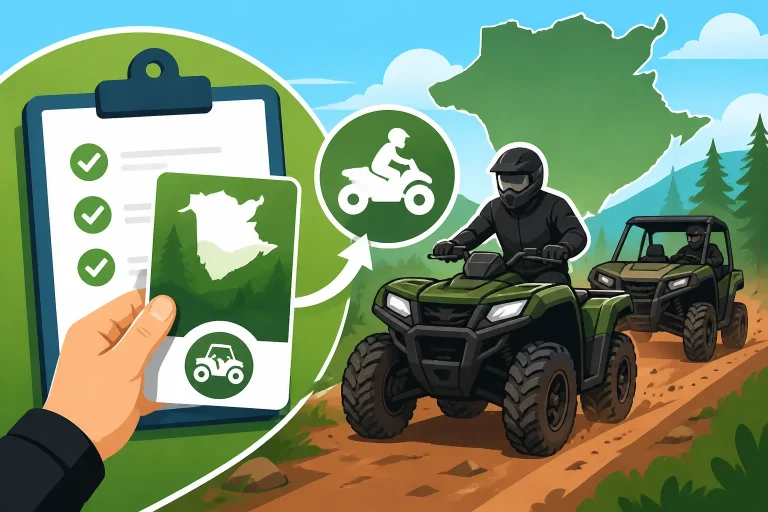
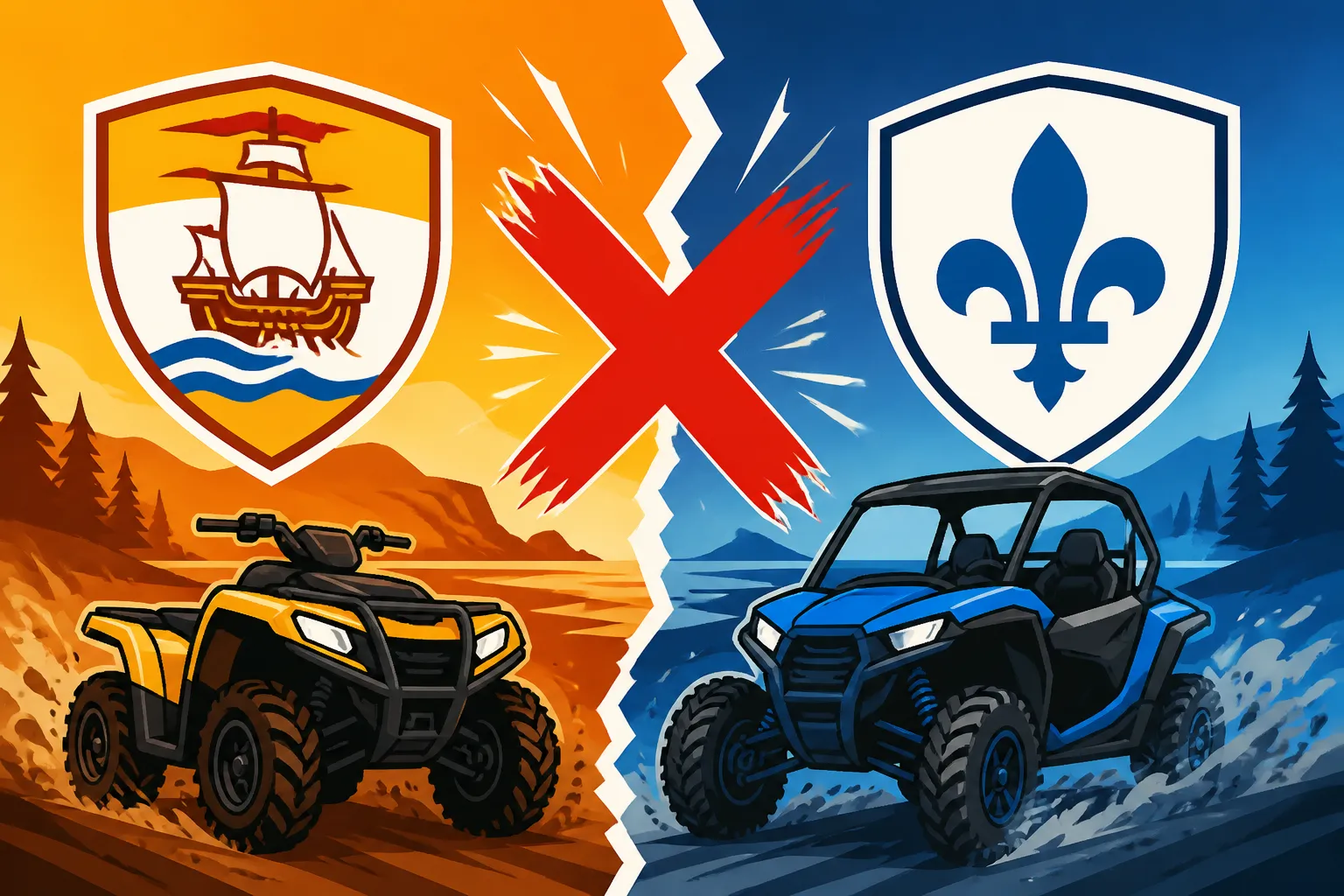
New Brunswick’s reciprocity agreement with Quebec ended in May 2023. The practical effect for a New Brunswick rider is straightforward: do not rely on a New Brunswick trail permit as authorization to ride Quebec’s managed club-trail network. Riders planning to use those trails should arrange the appropriate Quebec trail pass before setting out and confirm the current requirements with the relevant Quebec organization or local club.
The change is sometimes confused with the New Brunswick registration system. Registration identifies the machine under provincial rules; a trail permit is about access to a particular trail network. Having a valid New Brunswick registration does not replace a Quebec trail pass. The reverse is also true: a Quebec trail pass does not automatically satisfy New Brunswick registration, insurance or riding requirements.
| What you have | What it generally addresses | What it does not automatically replace |
|---|---|---|
| New Brunswick ORV registration | Provincial registration requirements for the machine | A Quebec trail pass, proof of insurance or local riding permissions |
| New Brunswick trail permit | Access to eligible New Brunswick club trails under the applicable permit rules | A Quebec trail pass after the reciprocity agreement ended |
| Quebec trail pass | Access to eligible Quebec club trails under Quebec’s current rules | New Brunswick registration or New Brunswick insurance requirements |
| Insurance document | Proof of insurance, subject to the policy and local rules | Registration or permission to use a club trail |
| Safety certificate or training record | Evidence of training where required | A trail permit, vehicle registration or insurance |
The change matters most to riders who live near the border, travel to Quebec for a weekend, or plan a longer ride that crosses between provincial trail systems. It can also affect visitors who have heard older advice from a friend, a club post or a previous trip. An arrangement that worked for an earlier ride may no longer apply.
The safest way to interpret the change is not “New Brunswick riders can’t ride in Quebec.” Rather, riders need to meet Quebec’s current requirements instead of relying on the former reciprocal arrangement. Quebec trails remain a possible destination, but the permit and access details need to be checked for the specific ride.
For the New Brunswick side of the picture, New Brunswick’s Ended FQCQ Agreement explains the agreement’s end, while May 2023 and What It Meant focuses on the change itself. If you need the New Brunswick permit rules more broadly, start with [New Brunswick Trail Permit Cost in 2026] and confirm current permit details before buying.
Who needs to make a change before riding
If your ride stays entirely on New Brunswick trails, the end of Quebec reciprocity does not, by itself, change the permit you need for that New Brunswick ride. You still need to follow the current New Brunswick trail-permit rules, carry the required documents and make sure the trails you plan to use are open.
The change is relevant when your intended route includes Quebec club trails. It is also relevant if you are launching from a Quebec trailhead, joining a Quebec club ride, or planning to cross onto trails managed under Quebec’s system. Do not assume that a trailhead’s proximity to the border means your New Brunswick permit is accepted there.
A few common rider situations are worth separating:
- New Brunswick resident riding in Quebec: Arrange a Quebec trail pass that covers the intended use, and check any other Quebec requirements that apply to you and your machine.
- Quebec resident visiting New Brunswick: Check New Brunswick’s current visitor and reciprocity rules rather than assuming Quebec’s permit covers every New Brunswick trail.
- Rider doing a cross-border route: Check both jurisdictions and identify where the route changes from one trail system to the other. A permit valid on one side may not be valid on the other.
- Rider with a permit bought before a trip: Verify that it is valid for the correct province, season, machine and trail type. A sticker or receipt from a prior season is not proof that the current ride is covered.
- Rider joining a guided or club event: Ask the organizer which permits participants must have. An event booking or guide’s approval does not necessarily replace an individual trail permit.
This distinction is especially useful for riders who already own a New Brunswick annual permit. It is easy to think of a permit as a general riding pass, but it is tied to the rules and network that issued it. Membership benefits, trail access and cross-border recognition can be different things. A New Brunswick club membership may offer local benefits without granting permission to ride in Quebec.
If you are deciding whether a Quebec ride is worth the extra planning, compare the route options rather than focusing only on the border. You may be able to stay on New Brunswick trails for the full trip, or you may want a Quebec pass because the destination or route is worth it. The right choice depends on where you want to ride, the season, available trail access and the requirements in force when you travel.
For a quick starting point, read New Brunswick Riders Visiting Quebec. It is useful for the broader cross-border checklist, while Buying a Quebec Trail Pass After the Deal Ended focuses on the key step for a New Brunswick rider entering Quebec’s trail network.
How to arrange a Quebec trail pass
Because permit systems and sales arrangements can change, check current instructions with the Quebec trail organization or the club responsible for the trails you intend to use. Do this before loading the machine or leaving home. A quick confirmation can prevent an expensive detour or a ride that has to be abandoned at a trailhead.
A practical process looks like this:
- Map the route and identify the trail system. Mark the point where you expect to leave New Brunswick and enter Quebec. If your route uses roads, private access roads or trails managed by different organizations, identify those separately.
- Confirm the permit required for that route. Ask whether you need a Quebec trail pass, whether it applies to your machine and intended dates, and whether the trails you want to use accept it.
- Check how and where to buy it. Use the current official or club sales channel. Ask whether a digital confirmation, printed receipt, physical sticker or another form of proof is required.
- Ask when the permit becomes valid. Do not assume that payment confirmation alone means you can ride immediately. Confirm the effective date and how the permit must be displayed or carried.
- Check related requirements. Ask about insurance proof, registration documents, rider age or training rules, helmet requirements and any local trail restrictions that affect your group.
- Save proof before you lose cell service. Keep the receipt or confirmation accessible offline, and carry any physical documents or stickers as instructed.
- Recheck close to departure. Trail closures, conditions and local instructions can change. Verify that the route is open and that your planned access point is still suitable.
The permit may be sold through an organization, club, dealer or other authorized channel. Availability and purchasing steps can vary, so avoid relying on an old screenshot or a resale listing that does not clearly establish that the permit is valid and transferable under the current rules. If a seller is unclear about the permit type, dates or machine it covers, ask the issuing organization before paying.
When checking what to buy, describe your trip plainly: where you will start, which trails you expect to ride, when you will go, and what kind of machine you have. That helps the person answering distinguish between a trail pass, a club membership, a day-use option or another product. Ask for the answer in writing if the rules are not clear, and keep that response with your trip paperwork.
Do not wait until you are at the border or trail entrance to sort this out. A trailhead may not have reliable cell reception, a permit seller nearby, or staff available to explain an unusual situation. A little preparation at home is usually easier than turning around after a long drive.
For more on New Brunswick’s own permit options, see How to Buy a New Brunswick Trail Permit. If your plan includes a short visit rather than a full season, New Brunswick Day Permit Cost and [New Brunswick Week Permit Cost] can help you compare New Brunswick options, but those permits do not substitute for Quebec authorization.
Permits are only one part of cross-border readiness
The end of reciprocity changes the permit question; it does not erase the rest of the checklist. Before riding in Quebec, make sure you know what documents the rider and machine must have, what equipment is required, and what rules apply to the route. Requirements can differ between jurisdictions, so do not assume the familiar New Brunswick routine is enough.
Start with the machine’s documents. Carry proof of registration and insurance in the form required for the trip. Confirm that the policy covers the intended riding and location, and ask your insurer directly if you are unsure whether an out-of-province trail ride is covered. A trail permit is not proof of insurance, and an insurance card does not grant trail access.
Check the rider requirements too. Age, training, licence and passenger rules can vary by location and machine type. If a young rider is coming, confirm what applies in Quebec rather than relying only on the rules they follow at home. The same caution applies to passengers: seating capacity, age restrictions and helmet rules may not line up exactly across provincial borders.
A useful pre-trip document check is:
- Vehicle registration or ownership document, as required
- Proof of insurance
- Quebec trail pass and its required proof of purchase or display
- Any safety-course or rider qualification record that applies
- Identification and emergency contact details
- A printed or offline copy of the route and any club instructions
New Brunswick riders who want a clearer view of their home-province paperwork can review New Brunswick Documents You Must Carry. For a broader checklist to complete before the season starts, New Brunswick Registration Before Your First Ride is a useful companion. These guides help with the New Brunswick side of the trip, but they should not be treated as a substitute for checking Quebec’s rules.
The machine itself deserves a quick check before a longer ride. Confirm that the plate, registration information and required decals are present and readable. Inspect tires, brakes, lights, steering, fluids and any protective equipment that may be required. Carry a basic repair kit suited to the route, but don’t let extra gear distract from the essentials: a machine that is not safe or legal to operate can end the trip regardless of the permit.
For riders who keep documents in a cargo box, use a waterproof pouch or another secure method so a receipt does not turn into unreadable paper in wet conditions. Amazon may be one place to look for a simple document pouch, but choose one that closes securely and fits your machine; you do not need a specialized product if a durable pouch you already own does the job. Keep an offline copy of digital confirmations as well. A phone battery can run down, and coverage may be limited in remote areas.
Finally, confirm the route’s current status. A valid permit is not permission to ride a closed trail, bypass a gate or use an unmarked connection. Respect signs and local instructions, and stay on the authorized corridor. If your route depends on a particular bridge, crossing or trail junction, check that it is open before committing to the ride.
Avoid the common cross-border mistakes
Most permit problems come from treating a past practice as a current rule. Riders hear that a New Brunswick permit was accepted in Quebec, remember a trip from before the agreement ended, and assume nothing has changed. That assumption can leave a rider without the required pass even when the machine and group are otherwise prepared.
These are the mistakes to avoid:
Assuming one permit covers both provinces
A New Brunswick permit is not a universal pass. The former Quebec reciprocity arrangement ended, so check the requirements on the Quebec side and obtain the appropriate pass for the trails you plan to use. The same careful approach applies in the other direction: check what New Brunswick requires of a visitor from Quebec.
Confusing membership with trail permission
A club membership can bring benefits, information or participation in a riding community. It does not necessarily include a permit for every network. Ask specifically whether the item you are buying authorizes you to ride the trails on your route.
Treating registration as a trail pass
Registration is a vehicle requirement, not a replacement for the trail permit. Riders should keep these obligations separate in their planning and paperwork. For the New Brunswick registration process itself, see New Brunswick ORV Registration Explained.
Buying the wrong permit for the route or date
A pass may have conditions about where or when it is valid. Read the current terms and confirm that the pass matches your intended trail system, dates and machine. If a trip moves to another date or the route changes, check whether the original purchase still covers it.
Relying on a sticker from an old season
A sticker may look official while being expired or tied to a previous permit period. Check the validity dates and the issuing organization’s instructions. If you are unsure what a sticker proves, ask before riding.
Assuming the group leader has covered everyone
In a group ride, each participant should know what they personally need to carry or display. Do not assume the organizer’s permit or a companion’s receipt covers your machine. Ask the organizer what is included and what remains the rider’s responsibility.
Waiting until a trailhead to ask
A trailhead is a poor place to solve a cross-border permit question. Sales may not be available there, and remote locations may have weak service. Confirm the rules and purchase requirements before the trip.
Some riders keep a trip checklist on their phone and in the machine. Amazon may offer inexpensive waterproof sleeves or small storage cases, but the practical goal is simply to protect the paperwork from mud and rain. A labelled envelope or sealed pouch is just as useful if it stays closed and easy to reach. Store digital receipts for offline access, and make sure a second rider knows where to find the information if the phone owner’s device fails.
If you discover a problem before departure, contact the permit issuer or club rather than trying to interpret a social-media comment. Ask a clear question and record the answer. If you discover it after reaching the area, do not ride onto a trail while hoping the situation will be accepted. Pause, verify the requirement and change the plan if necessary.
Planning a ride between New Brunswick and Quebec
A cross-border ride works best when the permit check is part of route planning rather than an afterthought. Start by deciding what the trip is meant to include: a New Brunswick trail day, a Quebec destination, or a route that uses both systems. Then build the ride around the access rules and current trail conditions in each area.
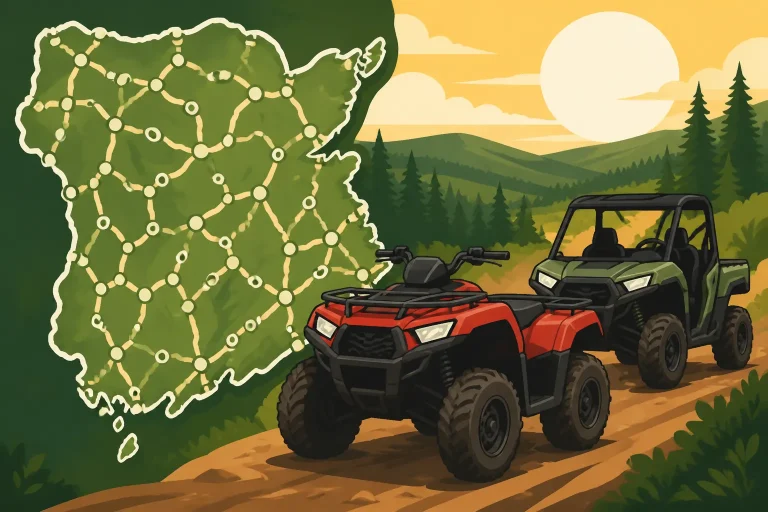
For a ride that stays in New Brunswick, use the New Brunswick permit and trail information that applies to your chosen route. If you want to include Quebec, confirm the Quebec pass first and then check whether the trail connections you have in mind are actually open and permitted. A line on a map does not establish that a trail is open, connected or legal for your machine.
It also helps to plan a fallback. If weather, a closure or a permit issue makes the Quebec portion impractical, know whether there is a reasonable New Brunswick-only alternative. This avoids pressure to ride an unauthorized connection simply to keep the original itinerary.
Before departure, share a simple trip plan with someone who is not riding. Include your route, expected return time, machine details and a contact method. Remote trail sections may have limited cellular coverage, so do not treat a phone as your only safety plan. Carry water, suitable clothing, basic tools and emergency supplies appropriate to the distance and conditions.
A practical cross-border checklist looks like this:
- Identify the province and trail organization for every part of the route.
- Confirm a valid permit for each trail system you plan to use.
- Check whether permits must be displayed, carried or both.
- Verify registration, insurance and rider-document requirements.
- Confirm the trail is open and suitable for your machine.
- Download maps and save permit confirmations for offline use.
- Tell someone your route and expected return time.
- Carry a backup plan in case a trail is closed or an access point changes.
If you are buying accessories for a trip, focus on problems you have actually encountered. A phone mount can make a downloaded map easier to consult, but it should not tempt the driver to handle a device while moving. Amazon is one possible source for mounts, sealed storage or charging accessories; check that the item is secure, weather-resistant enough for your use and compatible with the machine before ordering. A simple paper map and a safe place to store it can still be valuable backups.
The permit arrangement with Quebec may be gone, but the main lesson is manageable: treat provincial trail systems as separate unless a current official agreement clearly says otherwise. Verify the permit, carry the supporting documents, and check the route before riding. With that groundwork done, you can plan a Quebec visit without relying on outdated information.
How to verify the rule before you leave
Because cross-border arrangements can be updated, the final check should come from the organization responsible for the trail or permit, not from an old receipt, an outdated forum post or a friend’s memory. If a current official page is unclear, contact the relevant organization or club and explain your exact plan.
Be specific when you ask. Instead of asking, “Does my New Brunswick permit work in Quebec?” describe the route, dates, machine and trail network. Ask whether a Quebec pass is required, how to purchase it, what proof to carry, and whether there are any additional conditions. If your itinerary uses more than one local network, confirm each part rather than assuming one answer covers the whole trip.
For New Brunswick riders, New Brunswick Reciprocity With Nova Scotia shows why reciprocity is jurisdiction-specific: a relationship with one province does not establish a relationship with another. Likewise, New Brunswick and the Maine Agreement concerns a separate cross-border arrangement and should not be taken as evidence that Quebec trails accept a New Brunswick permit.
Keep the reply with your trip records, but remember that a written answer about permits does not override a closure, local restriction or separate legal requirement. Check conditions again shortly before departure, especially if the trip is planned well in advance. Confirm that the route remains open and that your permit is valid for the dates you intend to ride.
When information conflicts, pause and resolve it before entering the trail. A club may be able to explain local access, while the permit issuer can clarify the permit’s scope. Your insurer can answer questions about coverage; registration staff or the relevant government office can answer registration questions. Ask each organization about the part it controls rather than expecting one source to settle every issue.
The old reciprocity arrangement made some trips simpler, but relying on it now can create avoidable trouble. A few direct checks give you a much more reliable plan: know which network you are entering, buy the pass that network requires, carry the correct documents and follow the trail’s current access instructions.
Disclaimer
This article is for general informational purposes only and does not constitute professional advice. Laws, prices and regulations vary by location and change over time. Consult a qualified professional for guidance on your specific situation.