Leaving a Gate the Way You Found It
A gate on a New Brunswick woods road can look like a small obstacle, but opening it and riding away without checking can create trouble for the next person, nearby landowners, or livestock. This guide explains how to handle gates on ATV and UTV rides, what to do when the gate’s status is unclear, and how to leave the trail as you found it.
Why gates matter on New Brunswick riding routes
A gate can mark a boundary or a working road
A gate may be there to manage access, protect a property, keep animals in or out, or control traffic on a working woods road. It might also be part of a temporary closure or a route that crosses private land. The gate itself does not tell you every detail about who may use the road or under what conditions.
That is why it helps to think of a gate as a signal to slow down and pay attention, not simply something to move out of your way. Look for nearby signs, trail markers, posted notices, and any instructions from the club or landowner. If the route is unclear, don’t assume that a gate standing open gives you permission to continue.
New Brunswick trails can pass through a mix of managed corridors, private woodlots, and working forest areas. A route shown on a map may also be affected by a closure or a local condition that has changed since you planned your ride. For broader planning, Staying on a Marked New Brunswick Corridor and New Brunswick Trails That Cross Private Woodlots offer useful context on why staying on the intended route matters.
Leaving a gate as you found it protects access
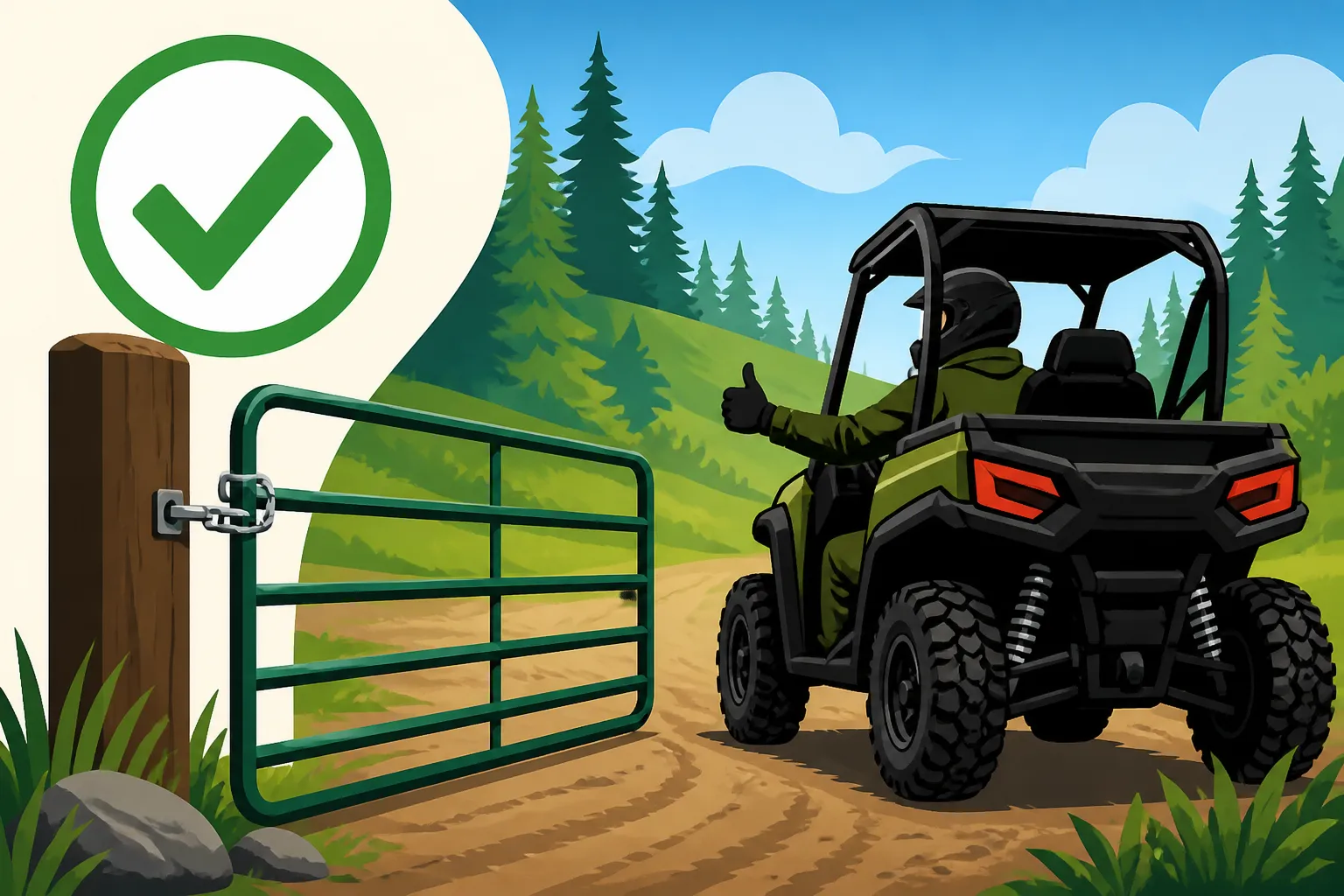
The simplest rule is to leave a gate in the same position you found it. If it was closed, close it securely after your group passes. If it was open, leave it open unless a clear sign or direct instruction says otherwise. That approach respects the person who manages the property and avoids making an assumption about what the gate is meant to do.
This matters most when the gate controls livestock or access to a work area. A gate left open might let animals wander onto a road, expose them to traffic, or allow them into an area where they shouldn’t be. A gate left closed could interfere with an authorized person who expects it to remain open for work or access. Matching the original position is a practical default when there are no other instructions.
Riders sometimes interpret a gate as a personal inconvenience: one person opens it, another rides through, and the group moves on. But a gate is part of the route’s shared-use etiquette. The small pause it takes to check and reset it can help maintain good relationships between riders, clubs, and landowners. New Brunswick Trail Etiquette Locals Expect covers other habits that help keep access respectful.
How to pass through a gate with an ATV or UTV
Stop, look, and read before opening it
Approach slowly enough to stop safely, especially if the road is narrow, muddy, or on a slope. Before anyone gets off a machine, look for signs on both sides of the gate and check for trail markers or instructions nearby. A gate may be paired with a notice about a closure, a private road, seasonal access, or an active work area.
If you can’t tell whether riders are allowed through, don’t treat the gate as an invitation to test it. Stop in a safe place without blocking the route, then check your map, contact the relevant club or land manager if you have a reliable way to do so, or turn back. Gates Across a Woods Road is a useful related read when you’re trying to understand why a barrier may be present.
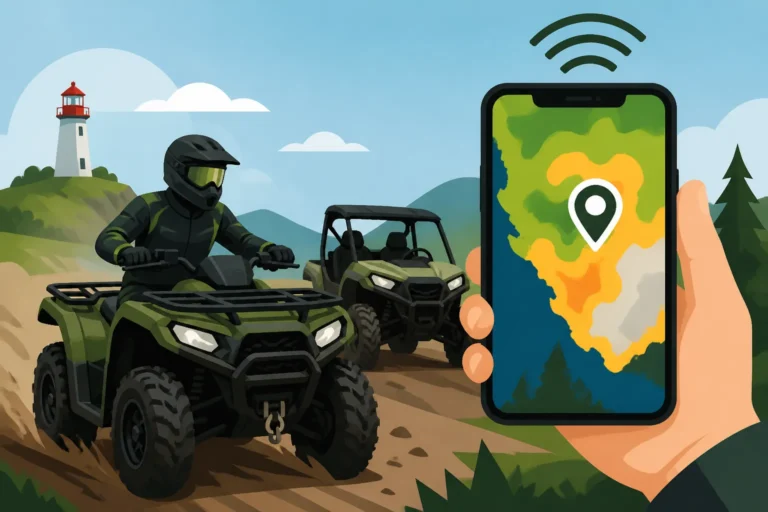
Map tools can help with trip planning, but they don’t replace signs on the ground or permission from the person responsible for the land. For example, onX Offroad can be one tool for reviewing a planned route and noticing where your ride may pass through different areas. Check the app’s map details and compare them with posted signs, official club information, and local guidance before setting out. An app should never be treated as proof that a closed or restricted route is open.
Keep the group together and pass one machine at a time
Before opening the gate, tell the group what you’re doing. Agree on who will handle it and how the rest of the riders will wait. This avoids the familiar muddle where one person is at the gate, another is already several lengths ahead, and someone at the back doesn’t know whether to stop or follow.
A simple sequence works well:
- Stop before the gate and check for signs or hazards.
- Decide who will open and secure it.
- Let one machine pass at a time, keeping enough room to avoid contact with the gate or the rider ahead.
- Have the last rider close or reset the gate if it was closed when you arrived.
- Check that the latch is secure and that no rider or equipment is caught near it.
With a UTV, the driver may not be able to reach or manage the gate safely from the seat. Park in a stable spot, set the brake, and have a passenger handle the gate only if it is safe to do so. Don’t leave a machine rolling or positioned where it blocks a junction, a narrow trail, or another user’s access.
Make room for other trail users
A gate can create a bottleneck, particularly when several machines arrive together or when other users are approaching from the opposite direction. Don’t crowd the entrance or line up in a way that blocks a woods road. Give approaching traffic room to stop, and communicate calmly about who will pass first.
If a horse, pedestrian, cyclist, work vehicle, or another group is nearby, take extra care. Shut off the engine if appropriate and wait until there is enough space to pass without startling anyone or putting them in danger. Never rush a gate because you’re worried about holding up the group. A few minutes of patience is better than damaging property or creating an avoidable conflict.
The same courtesy applies after the gate. Don’t stop just beyond it if doing so leaves the opening blocked for the next person. Move to a safe pull-off or wider section before regrouping. For additional trip-planning context, New Brunswick Trail Conditions Before You Go can help riders think through conditions that may affect a route before they reach a narrow access point.
What to do when a gate is open, locked, damaged, or unclear
If you find it open, don’t automatically close it
If you arrive and the gate is open, note its position and look for instructions. If there are no signs directing you to close it, a reasonable default is to leave it as you found it. The gate may be open for a reason, such as authorized work, farm access, or regular use by a land manager.
Don’t decide that a gate must be closed because it “looks safer,” or open because another rider did so. You may not know what is happening on the property. If you are part of a group and someone has already started moving it, pause and agree on what to do rather than letting the gate swing unattended.
If a sign clearly says to close the gate after passing, follow that instruction even if you found it open, unless another notice or an authorized person gives different directions. When the instructions conflict or are hard to interpret, avoid guessing. Check with the local club or land manager when possible, and choose another route if you cannot confirm access.
If it is locked or marked closed, turn back
Never cut, climb around, force, or otherwise bypass a locked gate. A lock is a clear sign that access is controlled, even if a map shows a route continuing beyond it. Don’t follow another machine around the barrier just because its riders appear confident. They may have permission that you don’t have, or they may simply be making a mistake.
A closed gate can also signal a temporary trail condition or a work operation. Closures may be related to damage, weather, active logging, or other local concerns. Check New Brunswick Trail Closures After Rain and Meeting a Logging Operation on Trail for related situations where turning around and respecting posted restrictions matters.
If a gate is damaged, hanging loose, or impossible to secure, don’t try to repair it unless you have permission and the skills to do so safely. Take note of the location and report the issue to the appropriate club or land manager. If you can do it safely, a photo of the gate and nearby sign can help them identify the problem. Don’t post a photo in a way that invites others to use a route that may be restricted.
When access is uncertain, verify rather than improvise
A faded sign, an unmarked gate, or conflicting map information can leave riders unsure about what comes next. That uncertainty is frustrating, especially when the group has already ridden a long distance. Still, uncertainty is a good reason to pause, not a reason to push through.
Use the information available in a sensible order: read signs at the location, check official trail or club notices, and contact the relevant organization if you can. A mapping app such as onX Offroad may help you review your route and see where you are, but treat it as one planning aid among several. Do not rely on an app alone to decide whether a gate or road is open to your group.
If you can’t confirm that you’re allowed to proceed, turn around or take a known open route. That may mean changing your plan, but it reduces the risk of trespass, confrontation, or a damaged relationship with a landowner. For guidance on permission where a woods road crosses private land, see Permission From a Woodlot Owner. When you’re planning routes in advance, New Brunswick ATV Trail Map Downloads can help you review available trail information before leaving home.
A practical gate checklist for every ride
Use a consistent routine
A repeatable routine makes it easier to do the right thing when you’re tired, riding in poor weather, or managing a group. Before opening a gate, stop and scan the area. Confirm that the route appears open, look for signs, and decide who will handle the gate. After everyone passes, check that it is in the correct position and securely latched if required.
| What you find | What to do |
|---|---|
| Gate is closed with no conflicting instructions | Open it carefully, pass one machine at a time, then close and secure it |
| Gate is open with no instruction to close | Leave it open and continue only if the route is clearly open to riders |
| Sign says to close the gate after passing | Follow the instruction and check the latch |
| Gate is locked or the route is posted closed | Do not bypass it; turn around or use a confirmed open route |
| Gate is damaged or will not latch | Avoid forcing it; report the location and problem |
| Access is unclear | Stop, verify through reliable local information, or turn back |
A group leader can make this routine smoother by naming a gate handler before the ride begins. The last rider can be responsible for checking that a closed gate is latched behind the group. That small agreement prevents the common problem of everyone assuming someone else took care of it.
For a solo ride, take the same care without rushing. Park securely, keep control of the machine, and make sure you can open and close the gate without placing yourself in a hazardous position. If the gate is too heavy, awkward, or unsafe to handle, don’t risk an injury or damage. Turn back and report the issue.
Build gate checks into your route planning
Before a ride, review the route and any known access points. Check for trail notices and closures, especially if weather, maintenance work, or seasonal conditions could have changed the route. A map can help you spot a planned crossing or junction, but local signs and current trail information should guide the decision at the gate.
onX Offroad may be useful for reviewing a route before heading out, especially when you want to understand where a planned track goes in relation to nearby areas. Use it alongside official trail information and local guidance rather than as a substitute for them. If the route depends on crossing private land, verify that access is permitted and that any posted conditions are being followed.
If your group reaches an unexpected gate, don’t let the pressure to finish the loop override good judgment. Stop, check, and make a clear decision together. Riders who consistently leave gates as they found them—and respect a barrier when access is uncertain—help protect the routes they enjoy. For more on staying within the intended corridor, see New Brunswick Trail Signage Explained and New Brunswick Trail Closures in Spring Thaw.
Disclaimer
This article is for general informational purposes only and does not constitute professional advice. Laws, prices and regulations vary by location and change over time. Consult a qualified professional for guidance on your specific situation.