New Brunswick Riding Around Hartland
Hartland makes an appealing base for an ATV ride in western New Brunswick, but a machine-friendly landscape is not the same as a route you’re allowed to ride. Trail access, seasonal closures, private land, and road rules can complicate a day out. This guide explains how to plan around Hartland, check your route, prepare for local conditions, and avoid common riding mistakes.
Planning an ATV ride around Hartland
Treat Hartland as a starting point, not a guaranteed trailhead
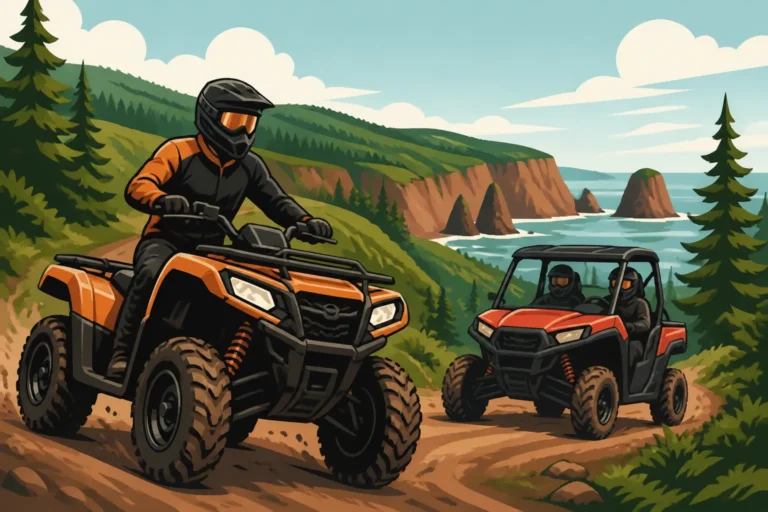
Hartland sits in the Saint John River valley, in a region of farms, wooded areas, rural roads, and communities such as Florenceville-Bristol and Woodstock. That mix can make the area feel naturally suited to exploring by ATV or side-by-side. Still, don’t assume a trail begins beside your accommodation, follows a road you can see on a map, or connects directly to the next community. Confirm the legal route before unloading your machine.
Start with the trail network’s current maps and local club information. Check whether the route is designated for the kind of machine you’re riding, whether it is open for your intended season, and where the approved access points are. A road that appears to run through the woods may be a private forestry road, a municipal road with restrictions, or a corridor that is not open to recreational riding. A line on a general navigation map doesn’t establish permission.
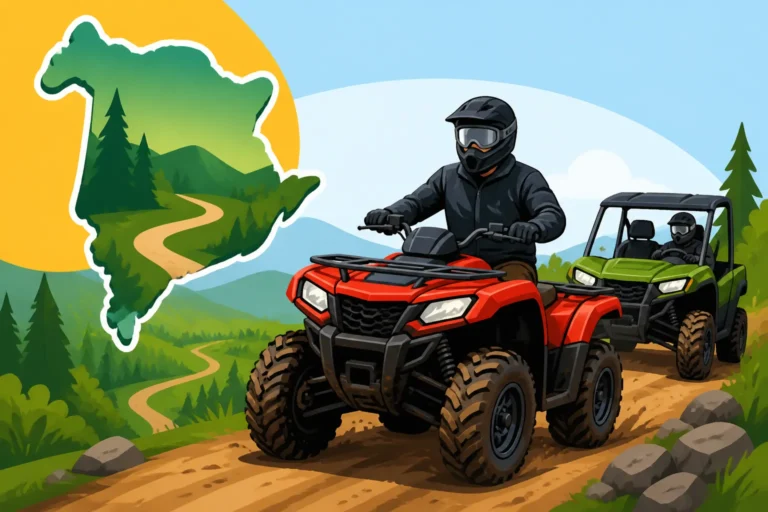
If you’re planning a longer outing, use Hartland as a practical base for food, fuel planning, lodging, or meeting up with your group, then confirm how you’ll reach an authorized trail. The regional riding network and local access conditions can change by segment. Use [New Brunswick's Eight Trail Regions] to understand how the broader network is organized, and check [New Brunswick Trail Conditions Before You Go] before setting out.
Build a route around the day you actually have
A route that looks short on a screen can take longer than expected once you account for rough surfaces, stops, navigation, weather, and slower-moving riders. Before choosing a destination, estimate how much daylight you have, how far your machine can comfortably travel on a tank, and whether everyone in the group is comfortable with the terrain. A relaxed out-and-back ride can be a better first outing than a loop that depends on several unfamiliar junctions.
Make a simple plan with a turnaround point. For example, decide in advance that your group will stop for lunch or turn back at a particular junction, even if you feel you have time to keep going. Agree on what happens if one machine develops a problem or a rider wants to return early. That small conversation can prevent the group from splitting up in an unfamiliar area.
For navigation, a dedicated trail map should be your primary route reference. A tool such as onX Offroad can help you review terrain and organize a planned route, but it does not replace checking local trail status, posted signs, or land-access permission. Download or save what you need before leaving service, and keep a second way to navigate if your phone battery dies. [New Brunswick ATV Trail Map Downloads] and [New Brunswick Trail Maps and the MapGear App] are useful subjects to review when deciding how to prepare.
| Planning question | What to check before leaving |
|---|---|
| Is the route open? | Confirm current trail status and any closures or reroutes |
| Is the route legal for your machine? | Check designated trail rules, signs, and permitted vehicle types |
| Where can you access it? | Identify an approved trailhead or connection rather than assuming roadside access |
| Can the group finish safely? | Consider fuel range, daylight, weather, rider experience, and turnaround options |
| What if there is no signal? | Save maps in advance and share a simple ride plan with someone who is not riding |
Understanding local access and trail conditions
Do not mistake a woods road for an open ATV trail
Around Hartland, you may encounter gravel roads, tracks through wooded areas, and routes that appear to connect one place to another. Their appearance alone doesn’t tell you whether recreational ATV use is allowed. A road can be private, subject to a landowner’s conditions, temporarily closed for forestry work, or outside the marked club trail network. Riding it without permission can create problems for landowners and jeopardize access for everyone.
Stay on signed and designated corridors, and don’t ride around a gate or a closure sign because the trail looks passable. A closed section may be protecting a soft surface, a damaged bridge, a work area, or a route used by other people. If your planned connection is closed, use an approved reroute rather than creating a new track through the woods. The guidance in [Staying on a Marked New Brunswick Corridor] and [New Brunswick Trails That Cross Private Woodlots] is especially relevant when a route passes through mixed-use land.
If you’re unsure about a road or trail, pause and check with the local club or land manager. A landowner’s permission to cross one section does not necessarily grant access to adjoining property, and permission for a particular time or purpose may come with conditions. Don’t rely on a neighbour’s casual description or an old track downloaded from a riding forum as proof that a route remains open.
Expect conditions to change with weather and season
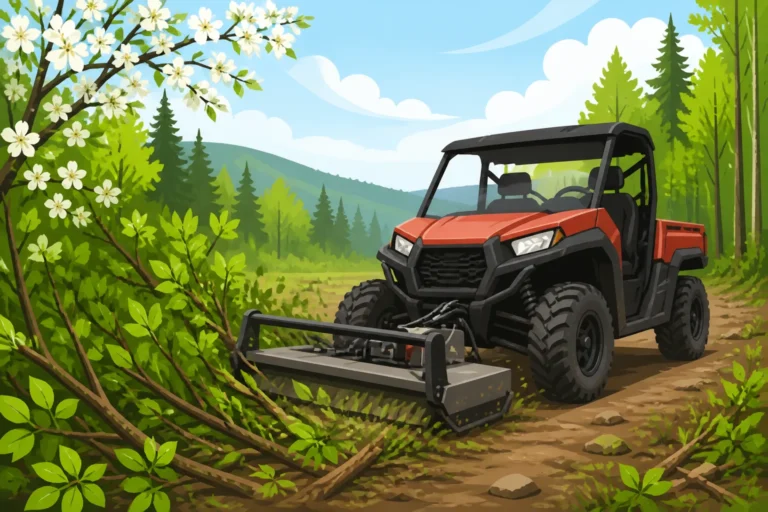
A dry, firm trail can become muddy or fragile after rain. Spring thaw is particularly important to plan for: saturated ground can rut easily, and a route that feels manageable under firm conditions may be vulnerable to damage. If a trail is closed or marked as unsuitable, respect that decision even when your machine can physically get through. Spinning tires and riding around a wet patch can widen damage and turn a small problem into a longer closure.
Weather affects more than the surface. Heavy rain can reduce visibility, raise water levels, and make a long route slower. Wind can bring branches down, and fog or low light can make it harder to see signs and other users. Check the forecast for the whole area you plan to ride, not just the conditions at your lodging in Hartland. For guidance on wet-weather planning, see [New Brunswick Trail Closures After Rain] and [New Brunswick Trail Closures in Spring Thaw].
Also check whether the route operates in the season you have in mind. Trail access and permitted uses can vary by corridor and time of year. Don’t assume a route available in summer remains open in winter, or that winter access means the surface is suitable for a wheeled ATV. [New Brunswick Groomed and Non-Groomed Trails] explains why trail types and operating seasons matter when you’re choosing where to ride.
Preparing your machine and group
Carry the essentials before leaving town
Before the ride, check your machine’s tires, brakes, throttle, steering, lights, and fuel. Look for loose parts or damage, and make sure the machine is appropriate for the route and conditions. A quick inspection at the trailhead is much easier than discovering a problem far from help. If you’re riding a side-by-side, check seat belts and make sure every occupant has a suitable helmet and protective gear.
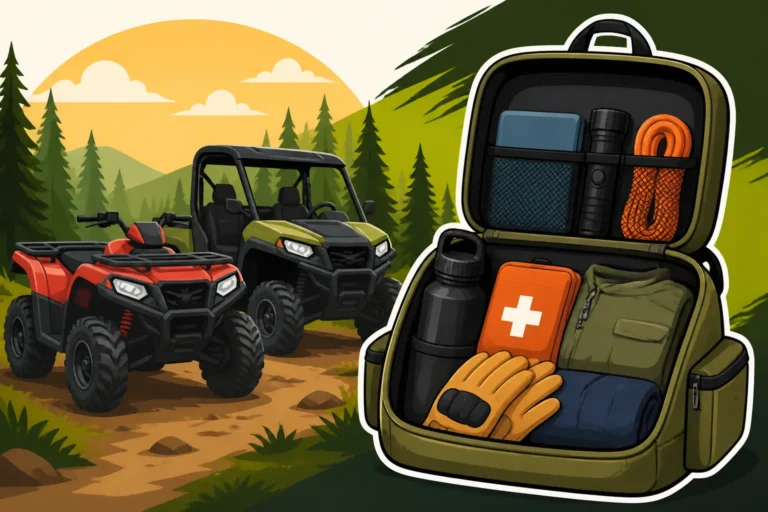
Pack water, basic first aid supplies, snacks, a flashlight, and the tools or recovery items appropriate to your machine and the route. A tow strap can be useful, but only if someone in the group knows how to use it safely. Bring weather-appropriate layers, even when the day starts warm. A cool, wet ride back can feel very different from the sunny conditions you left in town.
Carry the documents and equipment required for your ride, and keep them accessible rather than buried under luggage. Review [Four Things to Carry on a New Brunswick Trail] and [New Brunswick Equipment a Rider Must Carry] before heading out. It’s also sensible to have a charged phone, a backup battery, and a contact who knows your route and expected return time. For a longer ride, [Packing for a Full Day in the Woods] offers a useful checklist mindset.
Match the route to the least experienced rider
A group ride is only as manageable as its least comfortable participant. Ask everyone honestly about their experience with mud, ruts, rocky sections, narrow corridors, and riding in a group. If someone is new to trail riding, plan a shorter outing with an easy return option rather than making the first day a test of endurance. A slower pace can make a ride more enjoyable for everyone, not just the newest rider.
Before moving off, agree on a few simple group habits. Keep enough space to stop safely, wait at important junctions, and avoid leaving a rider behind without notice. If the group becomes separated, everyone should know whether to stop and wait, return to the last meeting point, or contact the ride leader. These details matter more when cellular reception is unreliable.
For families, check age, passenger, helmet, and machine requirements before the trip rather than trying to sort them out at a trail entrance. The rules can depend on the rider’s age, the machine, and where you intend to ride. [New Brunswick ATV Age Requirements] and [New Brunswick ATV Helmet Law] are good starting points for checking the rules that apply to your group. If young riders are joining, choose a route and pace that let them ride within their ability without pressure to keep up.
Rules, documents, and riding etiquette
Keep registration, insurance, and trail permission separate in your mind
It’s easy to assume that a registered machine is automatically allowed on every trail. Registration, insurance, and trail access are separate questions. A machine may need to meet registration and insurance requirements while also needing a valid trail permit or other permission for the specific corridor. Confirm each requirement for your situation before the ride, including if you’re visiting from outside New Brunswick.
Take time to understand which documents you need to carry and where to keep them. A certificate tucked away at home won’t help if an officer asks to see it on the trail. Store paperwork where it can be protected from rain and retrieved without unloading the machine. For a refresher, read [New Brunswick Documents You Must Carry], [New Brunswick Requires Insurance on Trails], and [New Brunswick Registration and the Trail Permit].
If you’re renting or borrowing a machine, ask the owner or rental provider what is already arranged and what remains your responsibility. Don’t assume the paperwork, insurance, or trail permit transfers automatically with the keys. Clarify the route, permitted use, and what to do if you have an incident before you leave. That conversation is much easier to have at pickup than after a roadside stop.
Share the trail with care
A trail ride around Hartland may involve meeting other recreational users, farm or forestry vehicles, and people who live or work near the route. Slow down where visibility is limited, approach bridges and tight corners cautiously, and follow posted signs. Give other users room, and leave gates as you found them. If you encounter active work or heavy equipment, stop at a safe distance and follow the operator’s instructions rather than trying to squeeze past.
Noise and dust can affect people who live close to a corridor. Ease off near homes, farms, and community areas, and avoid unnecessary revving or racing. Stay on the marked route instead of cutting across fields, lawns, or private driveways. A considerate ride helps maintain relationships with the people whose land and roads connect the trail network.
Road crossings require particular attention. Stop where required, check carefully in both directions, and follow the applicable signs and rules. Never assume a road is open to ATVs because another rider crossed it. Review [New Brunswick Rules for Crossing a Road] and [New Brunswick Bylaw Lookups Before You Ride] if your route may touch a municipal road or village area.
A practical Hartland ride-day plan
Before you load the machine
A good ride starts with a short planning check, not a last-minute guess at the trailhead. Confirm the current route and access point, review closures, check the weather, and make sure the group has the right permits, insurance, and paperwork. Look at the route as a whole: identify fuel options, likely stopping points, and a realistic turnaround time. If there’s a stretch you can’t confirm as open, leave it out of the plan until you can verify it.
Next, prepare the group. Share the route, expected return time, and a plan for separation or a mechanical issue. Make sure every rider knows who is leading, who is sweeping at the back, and where the group will regroup after a junction. Save maps for offline use, especially if the route heads away from settled areas. onX Offroad can be one part of that preparation, but cross-check its route information with official trail maps and local updates before relying on a track.
Finally, do a machine check and pack for the conditions you may encounter, not only the weather at departure. Fuel range, changing temperatures, wet ground, and limited phone reception can all affect a day out. If the group is unsure about a trail segment or the machine’s ability to handle it, choose a shorter, confirmed route. You can always plan a longer ride once you know the local conditions better.
While you’re riding
Follow the route as planned, but stay ready to change it if signs, closures, or conditions require a different decision. If you find a damaged bridge, a washout, active work, or a closed gate, don’t improvise a bypass through private land. Turn around or use a confirmed reroute. Note the location and report the issue through the appropriate club or trail contact when you can.
Check in with the group at sensible intervals, particularly after junctions or difficult sections. Stop somewhere safe if you need to consult a map or make a call; don’t block the trail or gather in a blind corner. Keep an eye on fuel, daylight, weather, and the comfort of the newest rider. Turning back before someone is exhausted or a machine is nearly out of fuel is good judgment, not a failed ride.
After the ride, inspect the machine for damage and let your contact know you’re back. If you noticed a hazard or confusing sign, pass along a clear description of where it is. Keep future access in mind: staying on the corridor, respecting closures, and riding courteously are practical ways to help preserve the routes people come to Hartland to explore.
Disclaimer
This article is for general informational purposes only and does not constitute professional advice. Laws, prices and regulations vary by location and change over time. Consult a qualified professional for guidance on your specific situation.