Who to Ask Before Riding New Brunswick Crown Land
One of the biggest questions that often pops into a New Brunswick ATV or UTV rider's mind, especially those keen on exploring the vast wilderness, is "Can I just ride anywhere on Crown Land?" The simple answer isn't always straightforward, and jumping on your machine without knowing the rules can lead to fines, confrontation, or even environmental damage. This guide will walk you through exactly who to ask and what you need to know before you venture out onto New Brunswick's public lands.
Understanding New Brunswick Crown Land and Your Riding Privileges
New Brunswick is blessed with an incredible amount of Crown Land, vast tracts of territory owned and managed by the provincial government on behalf of its citizens. It’s a huge draw for outdoor enthusiasts, including ATV and UTV riders looking for adventure, but it’s not a free-for-all. Understanding what Crown Land means for you as a rider is the first crucial step to responsible and legal riding.
What Exactly Is Crown Land in New Brunswick?
Think of Crown Land as public land, but with specific rules and regulations governing its use. It includes vast forests, wetlands, rivers, and coastal areas, making up a significant portion of our province. While it might look like open wilderness, much of it is actively managed for forestry, wildlife conservation, recreation, and other resource development. It's not the same as a privately owned woodlot, but it also isn't a completely unregulated space where you can ride without consideration. It’s a shared resource, and that means everyone has a responsibility to respect its designated uses and vulnerabilities. For many riders, the dream of endless trails through untouched nature is strong, but the reality is more nuanced; access often requires permission or adherence to specific guidelines.
The General Rule: Permission is Key
While some areas might appear open, the overarching principle for recreational use, especially with motorized vehicles, often defaults to "permission is key." This doesn't necessarily mean you need a written note from the Queen, but it does mean you need to understand who manages that specific parcel of Crown Land and what their rules are for ATV and UTV access. Many areas are under active timber licenses, leased for various purposes, or designated for specific conservation efforts. Even if it's Crown Land, someone is often responsible for its oversight, and riding without acknowledging that authority can lead to serious consequences. Imagine a farmer letting you ride their back forty, but then you show up with 20 of your closest friends and tear up a sensitive crop area – that’s essentially the type of situation permission aims to prevent.
The "Open Access" Myth and Reality
It's a common misconception that all Crown Land is open to all recreational activities without restriction. This "open access" myth can get riders into trouble. The reality is far more complex. While some Crown Land is indeed accessible for certain activities, specific restrictions can apply based on environmental sensitivity, active forestry operations, seasonal closures (like during spring thaw to prevent trail damage), or even existing leases. You might see a dirt road winding into the woods and assume it's fair game, but it could lead to an active logging site where heavy machinery operates, posing a significant safety hazard. Always assume there are rules until you know otherwise, and prioritize safety and environmental protection above all else. This proactive approach prevents unexpected encounters and ensures you're riding respectfully.
Identifying the Right Authorities for Permission
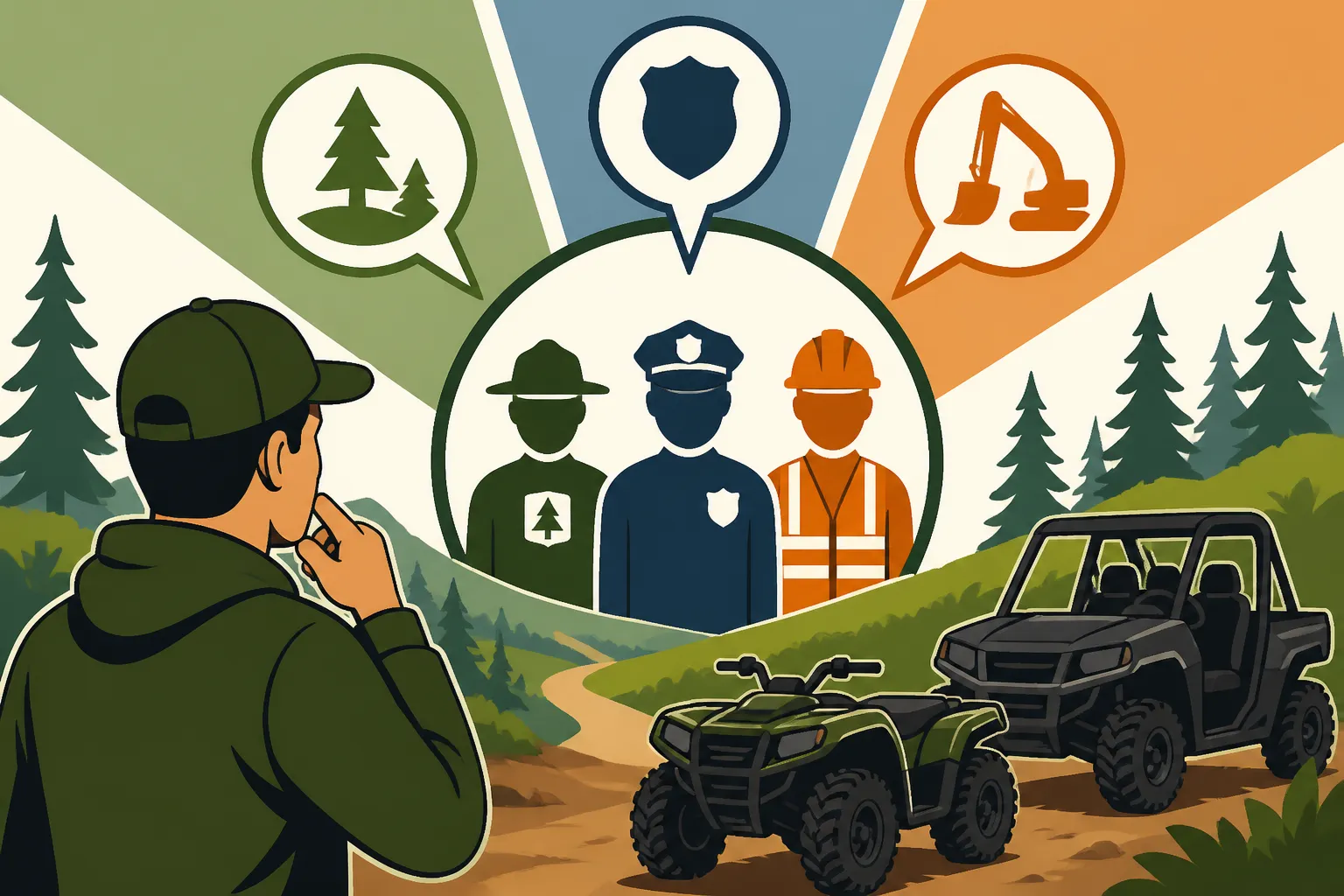
Navigating the various layers of authority can feel like a bureaucratic maze, but understanding who manages specific tracts of New Brunswick Crown Land is essential for getting the right information and, if necessary, permission. It’s rarely a single, one-stop shop, and often requires a bit of research.
Crown Land Managed by the Province
The vast majority of Crown Land in New Brunswick falls under the jurisdiction of the provincial government, primarily managed by the Department of Natural Resources and Energy Development (DNRED). This department oversees forestry, wildlife, protected areas, and recreational land use. They are the primary contact point for most questions regarding ATV and UTV access on provincially-managed Crown Land. You'll find that much of this land is integrated into the extensive trail networks managed by organizations like QuadNB, meaning that if you have a valid [New Brunswick Trail Permit Cost in 2026], you're generally permitted to ride the designated trails. However, riding off these designated trails, or on Crown Land not part of the QuadNB network, often requires direct inquiry. It's not uncommon for specific areas to have unique rules due to active timber harvesting, sensitive habitats, or other management objectives.
Federally Managed Crown Land (Less Common for ATVs)
While less common for general ATV and UTV riding, it's important to recognize that some land in New Brunswick is federally managed Crown Land. This includes national parks (like Fundy National Park or Kouchibouguac National Park), national wildlife areas, and Indigenous reserve lands. Generally speaking, motorized off-road vehicle use is highly restricted or completely prohibited in national parks and most federal conservation areas, unless specifically designated for such use (which is rare). Indigenous reserve lands are also distinct; access to these lands requires permission from the band council or relevant authority, just as you would for any private landowner. Attempting to ride on federally protected or Indigenous lands without explicit permission can lead to serious legal repercussions and is simply disrespectful.
Understanding Timber Licenses and Leaseholders
Here's where it gets a little more intricate. A significant portion of New Brunswick's Crown Land is under timber licenses, meaning private forestry companies have the right to harvest trees on those lands. These companies often maintain extensive networks of woods roads that may or may not be part of the official ATV trail system. While these roads might seem like prime riding territory, they are active industrial sites. Permission to ride on these roads often rests with the timber licensee, not just the province. They have legitimate safety concerns due to heavy machinery, logging operations, and road conditions that can change rapidly. Similarly, some Crown Land might be leased for other purposes, such as hunting camps, agricultural use, or other resource extraction. In these cases, the leaseholder also has a say in who accesses the land. It’s a good practice to look for signage or inquire locally. Even if the land is Crown Land, if a company like J.D. Irving or a smaller lumber operation holds a license, they are the ones you often need to check with.
Practical Steps for Seeking Permission to Ride
Okay, so you understand why you need permission and who might be involved. Now, let’s talk about the practical steps to actually get the information or permission you need. It might seem like a bit of legwork, but it’s far better than facing a hefty [New Brunswick No-Registration Fine of $172.50] or a trespass charge.
Starting with the Department of Natural Resources and Energy Development (DNRED)
For most inquiries about provincially managed Crown Land, your first point of contact should be the Department of Natural Resources and Energy Development (DNRED). They are the provincial authority on Crown Land use. You can often find contact information for regional offices on the provincial government website. When you contact them, be prepared to provide specific details about the area you are interested in. If you can provide GPS coordinates or specific map references, that's even better. Explain your intentions clearly: are you looking to ride existing trails, or explore off-trail areas for specific purposes? They can inform you about designated ATV trails, restrictions, or direct you to specific timber licensees if applicable. This is also where you might learn about [New Brunswick Crown Land Riding Rules] that apply generally across the province.
Connecting with Local ATV Clubs
Local ATV clubs are invaluable resources. Organizations like QuadNB, the provincial ATV federation, and its numerous member clubs across New Brunswick manage and maintain thousands of kilometres of designated trails, many of which cross Crown Land. When you purchase a trail permit, you're essentially getting permission to ride on this vast network. More importantly, club members often have an intimate knowledge of local trails, land ownership, and informal agreements with landowners or timber licensees. They know what areas are safe, what areas are off-limits, and who to talk to if you're looking for information on specific routes. Becoming a member or simply reaching out to a local club in the area you plan to ride can provide a wealth of information and connect you with the local riding community. This is also where you can find information on [New Brunswick ATV Trails: The QuadNB Network] and discover their vast network.
Respecting Posted Land and Gates
Even after doing your research, the physical landscape itself provides critical clues. Always, always, always respect "No Trespassing" signs, gates, or other clear indicators that an area is off-limits. These signs aren't just suggestions; they represent the wishes of landowners or leaseholders and are legally binding. A locked gate across a woods road, even if it appears to be on Crown Land, indicates that access is restricted, likely by a timber licensee or leaseholder. Do not attempt to bypass or damage gates; this is illegal and damages the relationship between riders and landowners. If you encounter a situation where you're unsure, turn back or seek clarification before proceeding. It's always better to be safe and respectful than to risk a fine, damage, or losing access for everyone. Remember, a good rider leaves no trace and respects boundaries.
Important Considerations for Riding on Crown Land
Once you've done your homework and secured appropriate permissions (or confirmed open access), there are still crucial considerations to keep in mind to ensure a safe, enjoyable, and responsible riding experience on New Brunswick's Crown Land.
Environmental Responsibility and Low-Impact Riding
Riding on Crown Land comes with a significant responsibility to protect the environment. This means practicing low-impact riding at all times. Stay on designated trails, avoid sensitive areas like wetlands, bogs, or stream beds, and never create new trails. Mudding is exhilarating, but it can cause severe erosion and damage fragile ecosystems. Be mindful of wildlife; reduce speed in areas known for animal crossings and never harass or disturb animals. Pack out everything you pack in, and if you see litter, consider taking it out with you. Using high-quality aftermarket parts from brands like SuperATV can also help; for example, their winch systems can help you recover your machine without causing excessive damage to the trail if you get stuck, and their robust skid plates can protect your machine and the ground beneath it from impacts. Responsible riding preserves the beauty of our province for everyone, including future generations of riders.
Carrying Necessary Documentation
Just because you're in the wilderness doesn't mean you're exempt from rules and regulations. When riding on Crown Land, you are still required to carry all necessary documentation. This typically includes your ATV or UTV registration certificate, proof of insurance (which is mandatory for riding on designated trails), and your trail permit if you're on a QuadNB managed trail. If you are under 16, you will also need to carry your ATV safety course certificate and your Class 9 driver's licence. Law enforcement or Crown Land officers can stop you and request to see these documents, and failure to produce them can result in fines. Make sure your documents are in a waterproof bag or container, easily accessible but secure. Always ensure you have [New Brunswick Documents You Must Carry] with you.
Understanding Restrictions and Prohibited Areas
Even with general permission, specific areas of Crown Land can have restrictions or be completely prohibited for ATV/UTV use. These might include:
- Protected Natural Areas (PNAs): These areas are set aside for conservation and typically have strict rules against motorized vehicle access.
- Active Logging Sites: As mentioned, these are industrial zones and extremely dangerous for recreational riding.
- Seasonal Closures: Trails or areas may be closed during spring thaw to prevent damage, or during certain wildlife seasons.
- Fire Restrictions: During dry periods, fire bans may include restrictions on off-road vehicle use due to the risk of spark-induced wildfires.
- Near Waterways: Restrictions often apply to how close you can ride to rivers, lakes, and streams to protect water quality and aquatic habitats.
It's your responsibility to be aware of these restrictions before you ride. Check the DNRED website, consult local ATV clubs, and pay attention to signage. For instance, sometimes a specialized SuperATV snorkel kit might make you think you can cross a deep brook, but if the area is restricted or a water crossing is environmentally sensitive, you should avoid it regardless of your machine's capabilities. Knowing these rules ensures you're a responsible user of our shared natural resources and keeps you out of trouble. Ignoring restrictions can lead to tickets and impact the reputation of all ATV and UTV riders in New Brunswick.
| Type of Land | Who to Ask | Key Considerations |
|---|---|---|
| Provincially-Managed Crown Land | Department of Natural Resources and Energy Development (DNRED) | Many areas are accessible via QuadNB trails with a permit. Check for active timber licenses or specific closures. |
| Crown Land under Timber License | The Timber Licensee (e.g., J.D. Irving, other forestry companies) | These are active industrial sites. Roads may be used by heavy machinery. Permission may be required directly from the company. |
| Federally-Managed Crown Land | Parks Canada, Environment and Climate Change Canada, Indigenous Band Councils | Generally restricted or prohibited for ATVs. Always seek explicit permission. |
| QuadNB Designated Trails (often on Crown Land) | Your Local ATV Club, QuadNB | Requires a valid trail permit. Follow all club rules and signage. |
| Posted Private Land (even if adjacent to Crown Land) | The Private Landowner | Always requires explicit permission from the owner. Respect "No Trespassing" signs. |
Disclaimer
This article is for general informational purposes only and does not constitute professional advice. Laws, prices and regulations vary by location and change over time. Consult a qualified professional for guidance on your specific situation.