Being Stopped by an Officer on a Club Trail
Riding the beautiful trails of New Brunswick on your ATV or side-by-side is all about freedom, fresh air, and adventure. However, every now and then, that feeling of carefree joy can be interrupted by the sight of flashing lights or an officer flagging you down. It's a moment that can make any rider's heart skip a beat, bringing a rush of questions: Did I do something wrong? What do I need to show them? This guide is here to demystify those trailside encounters, walking you through exactly what to expect, what documents you need to have ready, and how to handle being stopped by an officer on a New Brunswick club trail with confidence.
What to Expect When an Officer Stops You on a Club Trail
It's a pretty common scenario: you're enjoying a fantastic ride on a well-maintained club trail, maybe around the Miramichi or up near the Restigouche, when you see an official vehicle ahead or hear a whistle. Don't panic! Most of the time, these stops are routine checks to ensure everyone is riding safely and legally. Officers are out there for our safety and to enforce the rules that keep our trail system running smoothly.
The Initial Interaction: Staying Calm and Compliant
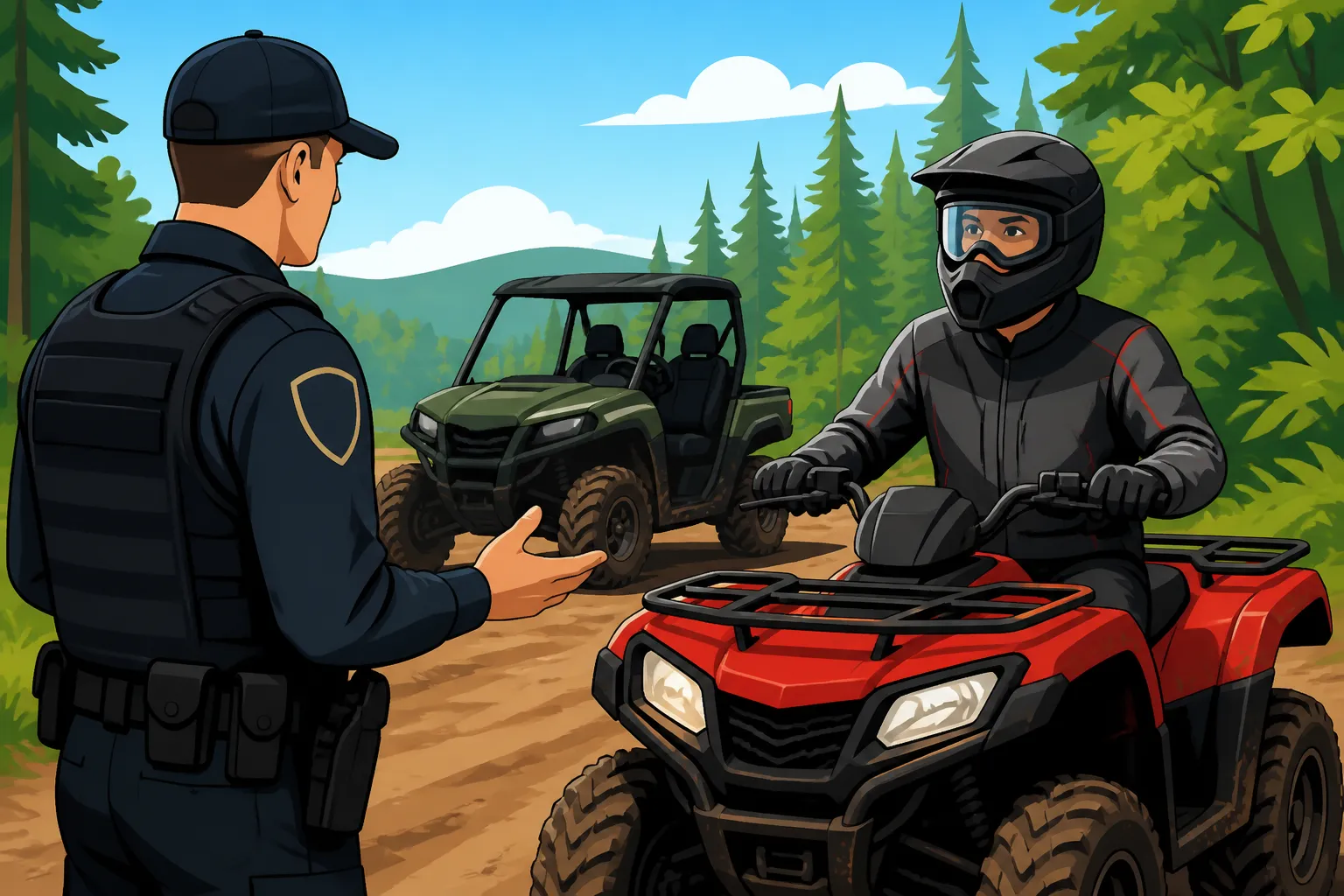
When an officer signals you to stop, the very first thing to do is acknowledge them and pull over safely. Find a stable, clear spot off to the side of the trail where you won't obstruct other riders or create a hazard. Turn off your machine and, if you're on a side-by-side, consider taking off your helmet but keep your hands visible, perhaps on the handlebars or steering wheel. This shows respect and cooperation, immediately setting a positive tone for the interaction. Resist the urge to rummage for papers or try to explain yourself before they even approach; just wait calmly for them to speak first.
Often, the officer will begin with a friendly greeting and state the reason for the stop, which could be anything from a general check to a specific concern. They might ask how you're doing, where you're headed, or simply inquire if you're having a good ride before getting down to business. Remember, their job is to ensure everyone's safety and uphold the New Brunswick Off-Road Vehicle Act, which covers everything from registration to safety gear.
Common Reasons for a Stop
While some stops are purely random, routine checks, officers might have specific reasons for pulling you over. Understanding these can help you be better prepared. One common reason is to ensure your machine is properly registered and insured. They might quickly scan your plate and decal as you pass, or they might be conducting a concentrated checkpoint. Another reason could be a visible infraction: perhaps your helmet isn't properly fastened, your lights aren't on when they should be, or you appear to be riding too fast. [New Brunswick Speed Limits on Designated Roads] is an example of a rule they might be enforcing.
Sometimes, an officer might have received a complaint about a specific machine or a group of riders. This could be related to excessive noise, reckless driving, or even riding in a prohibited area. They might also be looking for signs of impairment, which is a serious offence on the trails, just as it is on the road. Finally, they could be checking for proper age and licensing, especially if they see younger riders. [New Brunswick ATV Age Requirements] are strictly enforced to ensure everyone on the trail has the necessary experience and training.
Documents and Equipment You Must Have Ready
This is where preparation really pays off. Having your essential documents easily accessible and your machine legally equipped can make a world of difference in how quickly and smoothly your interaction with an officer goes. Imagine fumbling through a muddy saddlebag for twenty minutes – it’s not ideal for anyone involved!
Essential Paperwork to Present
In New Brunswick, when you're riding an ATV or UTV on a designated trail, there are four key documents that an officer will likely ask to see. You're required to carry these on your person or on your machine. For some riders, keeping them in a waterproof pouch in a chest pocket or a secure, easily accessible compartment on the machine is the best bet. Products from companies like SuperATV offer robust storage solutions that can keep your important papers safe and dry, no matter what the trail throws at you.
Here's the rundown of what you absolutely need:
- Your Off-Road Vehicle Registration Certificate: This proves your machine is legally registered with Service New Brunswick. It shows the machine's VIN, your name as the owner, and the registration expiry date. Every ORV in New Brunswick needs to be registered unless specific exemptions apply, such as riding exclusively on your own private land. [New Brunswick ORV Registration Explained] provides more detail on this.
- Proof of Insurance: Just like a road vehicle, an ORV requires valid liability insurance when operating on managed trails. This protects you and others in case of an accident. Your insurance card or certificate should clearly show your name, the machine's details, and the policy period. [New Brunswick Requires Insurance on Trails] is a crucial aspect of responsible riding.
- Your Valid Trail Permit: If you're riding on a designated club trail, you need a current trail permit from the QuadNB Federation. This sticker, usually displayed on your machine's left front fender, signifies you've contributed to the maintenance and development of the extensive trail network. An officer will check not just that you have one, but that it's current. [New Brunswick Trail Permit Cost in 2026] outlines the fees involved.
- Your Quad Safety Course Certificate: For many riders, especially those under certain age limits or new to the sport, having completed an approved ATV safety course is mandatory. This certificate proves you've received proper training on safe operation and trail etiquette. [New Brunswick Quad Safety Course Explained] covers who needs it and what it entails.
| Document Type | Purpose | Where to Carry |
|---|---|---|
| ORV Registration Certificate | Proves legal ownership and registration of the machine. | On your person (wallet) or securely on the machine (waterproof compartment). |
| Proof of Insurance | Demonstrates liability coverage for accidents on trails. | On your person (wallet) or securely on the machine (waterproof compartment). |
| Valid Trail Permit (Sticker) | Shows you've paid for access to and support of the club trail network. | Affixed to the left front fender of your machine. |
| Quad Safety Course Certificate | Confirms completion of mandatory safety training, if applicable. | On your person (wallet) or securely on the machine (waterproof compartment). |
Remember, the officer isn't trying to give you a hard time; they're simply ensuring you meet the requirements for safe and legal riding. Having these four items ready will make the process much smoother. [Carrying Four Documents at Once] can save you a lot of hassle.
Required Safety Equipment and Machine Condition
Beyond paperwork, an officer will also quickly assess your machine's condition and your personal safety gear. This isn't just about avoiding a fine; it's about protecting yourself and others on the trail.
First and foremost is your helmet. New Brunswick law requires every occupant of an ORV to wear an approved helmet. This means it must meet specific standards, such as CSA D230, FMVSS 218 (DOT), or Snell. An officer will check for the certification sticker inside. It's not enough to just wear a helmet; it must be the right kind and properly fastened.
Next, consider your machine's lighting. If you're riding at dusk, dawn, or in low visibility conditions, your headlights and taillights need to be working. Many riders upgrade their lighting for better visibility and safety, and quality aftermarket parts, like those from SuperATV, can ensure your machine is compliant and ready for any conditions. Officers also pay attention to machine modifications that might affect safety or noise levels. While personalizing your ride is fun, ensure any changes, such as exhaust systems, still comply with sound regulations. A machine in good general repair, with working brakes and no obvious safety hazards, also contributes to a positive impression.
Understanding Your Rights and Responsibilities
Being stopped by law enforcement can feel a bit intimidating, even when you know you haven't done anything wrong. It's important to understand what an officer can ask you, what you're required to provide, and how to maintain a respectful and constructive interaction.
What an Officer Can Ask and What You Must Provide
When an officer stops you on a New Brunswick club trail, they have the authority to ask for specific information and documents. Typically, they will ask for your identification, such as a driver's licence or other government-issued ID, to verify who you are. They will certainly ask for the four essential documents we just discussed: your ORV registration, proof of insurance, current trail permit, and if applicable, your safety course certificate. It is your legal responsibility to provide these documents promptly when requested. [What an Officer Can Ask to See on a Trail] makes it clear what they're looking for.
Beyond the documents, an officer might ask general questions about your activity, such as where you started, where you're going, or how long you've been riding. They might also inquire about the ownership of the machine if you're not the registered owner. While you are required to identify yourself and provide the necessary documents, you are generally not obligated to answer questions that could incriminate you. If you feel uncomfortable, you can politely state that you prefer not to answer without legal counsel. However, always remain respectful and avoid being confrontational, as this can escalate a routine stop into a more negative experience.
Avoiding Fines and Penalties
The best way to avoid fines and penalties is simple: be prepared and be compliant. The vast majority of citations issued on New Brunswick trails are for preventable infractions. This includes riding an unregistered machine [New Brunswick No-Registration Fine of $172.50], not having valid insurance [New Brunswick Uninsured ATV Fine of $604.50], riding without a trail permit [New Brunswick Trail Permit Fines], or failing to wear an approved helmet [New Brunswick's $172.50 Helmet Fine]. These set fines can quickly add up and put a significant damper on your riding season.
Other common issues include age violations, such as a rider under the minimum age operating a machine, or a minor crossing a highway without adult supervision. Riders who have completed a safety course but don't carry their certificate might also face issues. It's not enough to have done the course; you need proof on hand. Additionally, riding in prohibited areas, like within 7.5 metres of a public highway [New Brunswick's 7.5 Metre Rule From a Highway], or on private land without permission can lead to trespass charges. Investing in quality parts, like reliable lighting and signaling from SuperATV, can also help ensure your machine meets safety standards and avoids certain equipment-related tickets.
After the Stop: What Happens Next?
Once the officer has all the information and has completed their checks, the interaction will conclude. What happens next depends entirely on whether any infractions were found and the officer's discretion.
Receiving a Warning or a Ticket
If everything is in order and you've been cooperative, the officer will usually thank you for your time and send you on your way. Sometimes, even if a minor infraction is noted, an officer might choose to issue a verbal warning instead of a ticket, especially if you're generally compliant and it's a first offense. This is a common practice, as officers appreciate riders who are making an effort to follow the rules. They might offer advice on how to correct an issue, such as reminding you to keep your helmet strap snug or ensuring your permit sticker is clearly visible.
However, if a more serious violation is found, or if you've been uncooperative, the officer will issue a written ticket or a summary offence ticket. This document will clearly state the specific offence, the relevant section of the act, and the set fine associated with it. It will also provide instructions on how to pay the fine or how to dispute it in court. Receiving a ticket is never fun, but it's important to review it carefully and understand the charges.
Disputing a Ticket or Paying a Fine
If you receive a ticket, you generally have two main options. The easiest and most common approach is to pay the set fine. Instructions for payment, often including online or in-person options at Service New Brunswick, will be printed on the ticket itself. Paying the fine means you are admitting guilt to the offence.
Alternatively, if you believe you were wrongly ticketed, or if there are extenuating circumstances, you have the right to dispute the charge in court. The ticket will provide details on how to request a court date. This involves appearing before a judge or justice of the peace to present your side of the story. It's important to gather any evidence you might have, such as updated documents or witness statements, if you choose this route. [Disputing a Set Fine] explains more about this process. Regardless of your decision, addressing the ticket promptly is crucial to avoid further penalties or issues. Keeping all your necessary paperwork organized in a durable, waterproof pouch from a company like SuperATV can prevent a lot of headaches in these situations.
Disclaimer
This article is for general informational purposes only and does not constitute professional advice. Laws, prices and regulations vary by location and change over time. Consult a qualified professional for guidance on your specific situation.