New Brunswick Rules for Towing a Trailer
There's nothing quite like the versatility of an ATV or UTV when you're out in the beautiful New Brunswick wilderness, whether it's hauling a load of firewood back to camp, bringing in gear for a hunting trip, or setting up an ice-fishing shack on a frozen lake. But as soon as you think about hooking up a trailer, a whole new set of questions can pop into your head. Many riders feel uncertain about what's actually allowed, where you can tow, and what equipment you need to stay safe and legal. This comprehensive guide will walk you through the ins and outs of New Brunswick's rules for towing a trailer with your off-road vehicle, helping you understand the requirements and avoid any unnecessary hassles or fines.
The Foundations of Towing with an ATV or UTV in New Brunswick
Before you even think about hitching up that trailer, it's crucial to understand the basic framework that governs towing with an off-road vehicle (ORV) here in New Brunswick. Unlike a pick-up truck towing a utility trailer on a paved highway, ORV towing often has its own set of nuances, largely dictated by where you're riding and what kind of load you're carrying. It’s all about ensuring safety for yourself, your passengers, and others who might be sharing the trails or nearby roads.
Understanding What You Can Tow
When it comes to ATVs and UTVs, the types of trailers you can typically tow are designed for specific off-road or property-management tasks. We're generally talking about smaller utility trailers, log trailers, dump carts, or even specialized trailers for hauling equipment or game. These are usually single-axle units, often with tires designed for rough terrain rather than high-speed highway travel. The key here is function: can this trailer safely handle the terrain you'll be traversing, and is it appropriate for the size and power of your ORV?
What you cannot tow is equally important. Think about trailers designed for highway speeds, like travel trailers or large boat trailers. These are completely inappropriate for ATV or UTV towing for obvious safety reasons – the braking systems, suspension, and overall design of an ORV are not meant to handle such massive loads or the speeds at which they would typically be towed. Even within the realm of smaller utility trailers, always ensure the trailer's Gross Vehicle Weight Rating (GVWR) and tongue weight are well within your machine's specified towing capacity. Pushing these limits is not only dangerous but can also lead to premature wear and tear on your ORV, not to mention potential legal troubles.
Essential Equipment Requirements for Safe Towing
Towing isn't just about hooking up and going; it's about having the right gear to do it safely. First and foremost, a proper hitch is non-negotiable. Most ATVs and UTVs come with a factory-installed receiver hitch or a ball hitch, but if you're planning on towing regularly or heavier loads, you might consider an aftermarket upgrade. Many riders look to companies like SuperATV for heavy-duty hitches and other towing accessories designed to withstand the rigors of off-road use, ensuring a more robust connection between your machine and your trailer. Always ensure the ball mount and hitch ball match the trailer coupler size.
Beyond the hitch itself, lights and reflectors are critical, especially if you're riding near dusk, dawn, or in low-visibility conditions. While many small utility trailers don't come equipped with their own lighting systems, it's a very good idea to add them, even if just basic tail lights and brake lights, particularly if you'll be on any shared trails or crossing roads. Safety chains are also a must; they provide a crucial backup connection in case the main hitch fails. These should always be crossed under the tongue of the trailer to cradle it if it detaches. Finally, consider the tires on your trailer. They should be in good condition, properly inflated, and suitable for the terrain. For particularly heavy loads, especially with larger UTVs, some aftermarket braking systems can be installed on trailers, offering an extra layer of control. [New Brunswick Lighting Requirements at Night] offers more detail on visibility.
Understanding Weight Limits and Capacity
This is perhaps the most overlooked, yet critical, aspect of towing with an ORV. Every ATV and UTV has a specified towing capacity, usually listed in your owner's manual. This figure is not a suggestion; it’s a hard limit set by the manufacturer for safe operation. Exceeding this capacity can lead to a host of problems: loss of braking ability, reduced steering control, excessive strain on your engine and transmission, and even frame damage.
It's not just about the total weight of the trailer and its contents. Tongue weight – the downward force the trailer exerts on the hitch point – is also incredibly important. Too much tongue weight can lift the front wheels of your ORV, severely impacting steering and traction. Too little, and the trailer can sway wildly, becoming uncontrollable. A general rule of thumb is that tongue weight should be about 10-15% of the total trailer weight for conventional trailers. Always distribute your load evenly within the trailer, placing heavier items over the axle and securing everything to prevent shifting during transit. This balance is key to maintaining control, especially on uneven terrain or when navigating turns.
Where You Can Legally Tow a Trailer in New Brunswick
The legality of towing a trailer with your ATV or UTV in New Brunswick isn't a one-size-fits-all answer; it largely depends on your location. The rules change significantly whether you're on a designated trail, your own private land, or needing to interact with public roads. Understanding these distinctions is vital to staying compliant with the law and avoiding fines.
Designated Trails and Private Land
For most New Brunswick riders, towing a trailer is a common activity on designated club trails, Crown land, and private property. On your own private land, the rules are generally less restrictive, focusing more on personal safety and responsible operation. You have more leeway to haul whatever you need, provided it’s within your machine's capabilities and you’re doing so safely.
When it comes to the vast network of QuadNB trails, or other permitted Crown land access, towing is generally permitted. These trails are designed for ORV use, and many riders rely on their machines to haul hunting stands, firewood, or camping gear. However, even on these trails, you’re expected to operate safely. This means maintaining appropriate speeds, especially on turns or descents, and ensuring your load is secure and visible. You won't typically find specific regulations against towing on these trails, but general safe operating principles still apply. Always check with the local club or land management authority if you have concerns about specific trail sections or unusual loads. Keep in mind that [New Brunswick Trail Etiquette Locals Expect] usually includes being mindful of others, and an unwieldy trailer can sometimes impede flow on narrow trails.
Navigating Public Roads and Highways While Towing
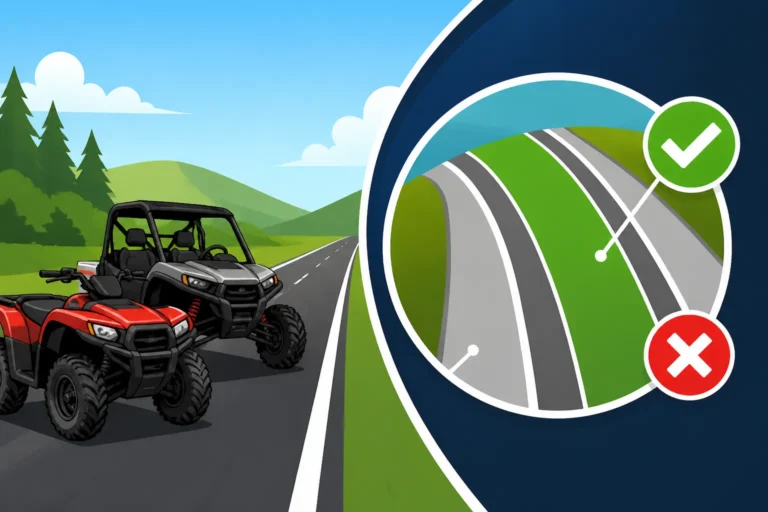
This is where things get considerably more complicated and where most riders encounter legal grey areas. Generally, ATVs and UTVs, and by extension, anything they are towing, are restricted from public highways in New Brunswick. There are specific exceptions, however, and these are crucial to understand when towing a trailer.
- Crossing a Road: You are usually permitted to cross a public road at a right angle to get from one section of a trail to another, or to access fuel or services. When doing so with a trailer, you must exercise extreme caution, yield to all highway traffic, and ensure your trailer doesn't pose an undue hazard. This is a quick maneuver, not an extended ride down the road.
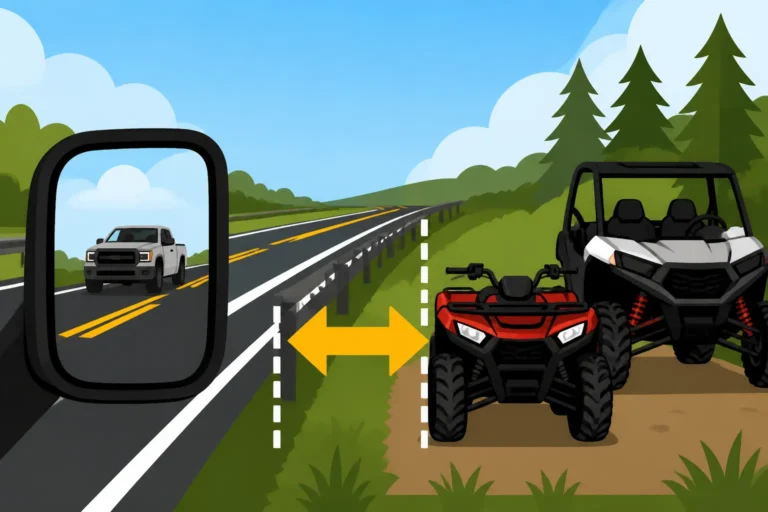
- 7.5 Metre Rule: New Brunswick has a rule stating you cannot operate an ORV within 7.5 metres (approximately 25 feet) of the travelled portion of a public highway, except for crossing. This rule is particularly important when towing, as a wider trailer might unintentionally encroach into this restricted zone.
- Highway Usage Permits and Municipal Bylaws: In some very specific instances, typically through a local municipal bylaw or a special [New Brunswick Highway Usage Permits], ORVs may be allowed to operate on certain sections of public roads for short distances. If you are granted such a permit or are riding on a designated shared-use road, all rules of the road apply, including signaling, speed limits, and ensuring your towed trailer is visible and properly secured. Any trailer towed on a road would need to meet standard road trailer requirements, which might include specific lighting and possibly even registration if it's meant for regular highway use, though most small ORV trailers are not. [New Brunswick ATV Road Rules Explained] delves deeper into these regulations.
- Speed Limits and Visibility: When you are legally allowed on a road, whether briefly crossing or on a permitted section, your speed should be significantly reduced, especially when towing. An ORV with a trailer attached is not designed for high speeds, and stopping distances will be greatly increased. Ensure your trailer is visible, even if it means adding flags or reflective tape.
| Location | Towing Status | Key Considerations | Visibility/Equipment | Speed |
|---|---|---|---|---|
| Private Land | Generally OK | Within machine capacity, safe operation. | Recommended | Safe for conditions |
| Designated Trails | Generally OK | Within machine capacity, secure load, considerate of others. | Recommended | Moderate, safe for trail conditions |
| Road Crossing | Permitted | Quick, right-angle crossing; yield to traffic. | Critical (lights/reflectors) | Extremely slow, cautious |
| Public Roads (Permitted Sections) | Rare, by bylaw/permit | All highway rules apply, specific permit needed. | Mandatory (lights, chains, etc.) | Posted limits, significantly reduced with trailer |
| 7.5 Meter Zone | Prohibited | Keep clear of travelled highway portion. | N/A | N/A |
Speed Limits and Safe Practices While Towing
Even when you're on a trail where towing is perfectly legal, it's vital to adjust your speed. Towing adds weight, changes the machine's centre of gravity, and significantly impacts its handling characteristics. What might be a comfortable speed when riding solo could become dangerous with a loaded trailer behind you. You need to account for:
- Increased Braking Distance: Your ATV or UTV will take much longer to stop with a trailer pushing it from behind. Anticipate stops much earlier and apply brakes smoothly.
- Reduced Cornering Stability: Going into a turn too fast with a trailer can cause it to sway, potentially jackknifing or even tipping your machine. Take corners wider and slower.
- Rough Terrain Impacts: Bumps and dips that are easily absorbed by your ORV alone can become jarring with a trailer, potentially dislodging your load or damaging the trailer itself. Consider upgrading suspension components from a brand like SuperATV if you frequently tow heavy loads over rough terrain, as their products can help improve stability and ride quality.
- Visibility: A trailer can obscure your rear view, so be extra vigilant, especially when backing up or maneuvering in tight spaces. [New Brunswick Speed Limits on Designated Roads] highlights general rules, but towing always necessitates a slower pace.
Ensuring Safety and Best Practices for Towing
Towing is a responsibility that extends beyond just knowing the rules; it's about adopting best practices to ensure every trip is as safe as possible. A moment of inattention or a rushed preparation can quickly turn a routine haul into a hazardous situation. Being prepared and vigilant is your best defense.
Pre-Ride Checks and Maintenance
Before you even start loading your trailer, a thorough pre-ride inspection is crucial. This isn't just a suggestion; it's a vital safety step.
- Hitch and Coupler: Check that the hitch ball is securely fastened to your ORV and that the trailer coupler is fully seated and locked onto the ball. Ensure the safety chains are properly attached and crossed under the tongue.
- Lights and Electrics: If your trailer has lights, test them all: tail lights, brake lights, and turn signals. Check the wiring for any frays or loose connections. Even if your trailer doesn't have lights, inspect your ORV's lights, as towing can sometimes put extra strain on electrical systems. [New Brunswick Equipment Checks by Officers] often include ensuring all lights are in working order.
- Tires: Inspect the tires on both your ORV and the trailer. Look for proper inflation, any signs of damage (cuts, bulges), and adequate tread depth. Underinflated tires can lead to instability and increased rolling resistance, especially with a load.
- Brakes: Test your ORV's brakes to ensure they are fully functional. If your trailer has its own braking system, test that as well.
- Load Securement: This is perhaps the most critical check. Is your load evenly distributed? Is it securely fastened with appropriate straps or tie-downs? Will it shift during acceleration, braking, or turns? Loose loads can be incredibly dangerous, not only to you but to anyone else on the trail.
Securing Your Load Properly
The way you load and secure your trailer makes a monumental difference in safety and handling. It's not enough to just throw things in; every item needs to be considered.
- Even Distribution: As mentioned, heavier items should generally be placed over or slightly forward of the trailer's axle. This ensures proper tongue weight and prevents the trailer from becoming unstable. Avoid putting all the weight at the very front or very back.
- Tie-Downs and Straps: Use robust straps, ropes, or chains that are appropriate for the weight and type of load you're carrying. Ensure they are tightened securely and checked periodically during your trip, as loads can settle and straps can loosen over rough terrain. Cargo nets can be effective for containing smaller, lighter items.
- Covering Your Load: If you're hauling loose materials like gravel, dirt, or even firewood, cover your load with a tarp. This prevents debris from flying out and potentially injuring other riders or littering the trail.
- Protruding Loads: If anything extends beyond the dimensions of your trailer, like long logs or pipes, ensure it is clearly marked with a red or orange flag, especially during daylight hours. This increases visibility for others.
Rider Responsibility and Awareness
Ultimately, the burden of safe towing rests squarely on the rider's shoulders. Your mindset and vigilance are paramount.
- Maintain Control: Always operate your ORV at a speed that allows you to maintain full control of both the machine and the trailer. This means slowing down significantly for turns, hills, and rough sections of trail.
- Increased Visibility: Even with proper lighting on your trailer, remember that you and your setup are a larger, slower target. Be extra cautious when crossing roads or in areas with other users. Consider wearing high-visibility clothing.
- Signaling: When on trails or in areas where hand signals are expected, ensure your signals are clear and visible, taking into account the trailer behind you. If your ORV has turn signals, use them where appropriate. [New Brunswick Hand Signal Requirements] are important to remember.
- Environmental Awareness: Be mindful of your surroundings. A wider trailer needs more space, so navigating narrow sections of trail or dense woods will require more attention and slower speeds. Watch out for low-hanging branches or tight turns.
Common Misconceptions and Fines Related to Towing
Despite the best intentions, many riders sometimes fall prey to common misconceptions about towing with their ATVs and UTVs. These misunderstandings can inadvertently lead to dangerous situations or, just as frustratingly, costly fines. It's better to be informed and prepared than to learn the hard way.
The "It's Just a Small Trailer" Mentality
This is perhaps the most prevalent and dangerous misconception. Many riders believe that because their utility trailer is small – maybe just a 4×6 foot single-axle unit – it doesn't warrant the same level of caution or adherence to rules as a larger towed vehicle. This couldn't be further from the truth. Even a small, empty trailer adds weight, length, and changes the dynamics of your ORV. When loaded with firewood, hunting gear, or gravel, that "small" trailer can quickly become a significant factor in your machine's performance and safety.
The "it's just a small trailer" thought process often leads to overlooking crucial pre-ride checks, improper load securement, or exceeding the machine's towing capacity. It can also cause riders to disregard the rules when briefly on or crossing public roads, thinking their small setup is "harmless." However, the law sees a trailer as a trailer, and safety concerns scale with any towed load. If your small trailer detaches, obstructs a road, or causes an accident, the consequences can be just as severe as with a larger unit.
Potential Fines for Non-Compliance
New Brunswick's Off-Road Vehicle Act and related regulations carry various penalties for non-compliance, and many of these can apply to towing infractions. While there isn't typically a specific "towing violation" fine, many existing rules can be triggered if you're not towing safely or legally.
- Operating an Unregistered ORV: While your trailer itself likely doesn't need to be registered for trail use, your ATV or UTV must be registered to operate on public trails or to cross roads. If you're caught towing with an unregistered machine, you'll face a fine. [New Brunswick Penalties for Riding Unregistered] details these costs.
- Failure to Carry Documents: You are required to carry your ORV registration certificate, proof of insurance, driver's license (if required for your age/machine), and your trail permit. If an officer stops you while towing and you're missing any of these, you could be ticketed. [New Brunswick Documents You Must Carry] provides a complete list.
- Operating Without Required Equipment: If your trailer or ORV is found to be deficient in safety equipment (e.g., no safety chains, inadequate lighting when required, or a broken hitch), an officer could issue a citation. This falls under general safety regulations.
- Dangerous Operation: Operating your ORV and trailer in a manner deemed dangerous due to excessive speed, an unstable load, or reckless driving can lead to significant fines and penalties. This is a broad category that covers a multitude of unsafe towing practices.
- Unauthorized Road Use: If you're caught towing a trailer on a public highway without a valid permit or outside of a legal crossing, you can face fines related to illegal highway operation. [New Brunswick Fines for Riding Near a Road] outlines some of these penalties.
Insurance Implications and Accidents
An often-overlooked aspect of towing is how it might affect your insurance coverage in the event of an accident. While [New Brunswick Requires Insurance on Trails] for your ORV, the specifics of an accident involving a towed trailer can sometimes be complex.
- Coverage for the Trailer: Your ORV's insurance policy typically covers liability for the operation of the ORV itself. However, damage to the trailer or its contents in an accident might not be automatically covered unless you have specific endorsement or a separate policy. Always check with your insurance provider to understand what is and isn't covered if you frequently tow a valuable trailer or expensive cargo.
- Liability When Towing: If an accident occurs while you are towing, and it's determined that your unsafe towing practices (e.g., overloaded trailer, unsecured load, excessive speed) contributed to the incident, your liability could increase. Your insurance company might have grounds to deny or limit coverage if you were operating outside of safe or legal parameters.
- Uninsured Fines: If your ORV itself is not insured, the penalties for any accident, especially one involving a trailer, will be compounded. [New Brunswick Uninsured ATV Fine of $604.50] shows the seriousness of riding without proper coverage.
It's always best to be overly cautious when towing a trailer. Take the time to properly inspect your setup, secure your load, and adjust your riding style. If you have any doubts about a specific towing scenario or the legality of your setup, it's always wise to consult with Service New Brunswick or a local ORV enforcement officer. Staying informed and practicing responsible towing ensures your adventures remain safe and enjoyable.
Disclaimer
This article is for general informational purposes only and does not constitute professional advice. Laws, prices and regulations vary by location and change over time. Consult a qualified professional for guidance on your specific situation.