New Brunswick Rules for a Visiting Nova Scotia Rider
Heading out on an ATV or UTV adventure across provincial lines can be incredibly exciting. New Brunswick boasts an incredible network of trails, from the rugged Fundy coastline to the vast northern woods, but if you're a rider from Nova Scotia, the thought of navigating different rules and regulations can definitely make you pause. No one wants to accidentally break a law or get a fine just because they weren't clear on the local requirements. This guide is here to untangle the specifics, so you can focus on enjoying the ride and the stunning New Brunswick scenery without a worry.
Understanding Trail Permit Reciprocity for Visiting Riders
One of the biggest questions that often comes up for riders crossing provincial borders is about trail permits. It makes perfect sense; you’ve already paid for your permit back home, so why pay again? The good news is that for Nova Scotia riders venturing into New Brunswick, there’s a good system in place that usually saves you from buying a second permit. It’s a testament to the hard work of the riding federations in both provinces to make cross-border riding as seamless as possible for enthusiasts.
The QuadNB and ATVANS Agreement
Thankfully, the QuadNB (New Brunswick All-Terrain Vehicle Federation) and ATVANS (All-Terrain Vehicle Association of Nova Scotia) have a standing agreement regarding trail permit reciprocity. This means that if you have a valid, current ATVANS trail permit from Nova Scotia, you are generally recognized as having legal access to the QuadNB managed trail system in New Brunswick. This is a huge relief for many riders, as it cuts down on extra costs and paperwork, allowing for more spontaneous trips. Think of it as a handshake agreement between two neighbours who love the same pastime. You’ve contributed to your home province’s trail maintenance and insurance fund, and that contribution is acknowledged when you visit.
However, it's always wise to perform a quick check of the current agreements before you load up your machine and head out. While these agreements are typically stable, things can change, and you wouldn't want to arrive at a trailhead only to find out there's been an update. The specific details of what your Nova Scotia permit covers – whether it's the equivalent of a groomed or non-groomed permit in New Brunswick – is also something to understand, though generally, a standard ATVANS permit covers all designated QuadNB trails. For the latest information, it’s always best to check the official QuadNB website or [New Brunswick Reciprocity With Nova Scotia] for the very latest updates. This collaboration helps foster a unified riding community and encourages tourism, bringing riders from both provinces to experience the diverse landscapes each has to offer.
What If There Was No Reciprocity?
Just for a moment, imagine if this reciprocity didn't exist. If QuadNB and ATVANS didn't have their agreement, every single time a Nova Scotia rider wanted to experience New Brunswick's trails, they would have to purchase a separate New Brunswick trail permit. This would not only be an added expense but also an extra step in planning that could deter many from making the trip. It would be like having to buy a new fishing license every time you crossed a county line, making a fun hobby feel burdensome.
Historically, provinces have had different reciprocity arrangements, some evolving over time. For example, New Brunswick previously had an agreement with Quebec that ended, meaning Quebec riders now need a New Brunswick permit to ride here. This past change serves as a good reminder of why it’s always prudent to confirm the current status, even for well-established agreements. The benefit of the current arrangement for Nova Scotia riders cannot be overstated. It ensures that the money you’ve already invested in your home province’s trail system allows you to explore an entirely new network without additional financial burden, fostering a vibrant and interconnected riding community across the Maritimes.
Essential New Brunswick Regulations for Out-of-Province Riders
While your Nova Scotia trail permit generally gets you access to New Brunswick's excellent trail system, that doesn't mean all the rules are exactly the same. It's crucial to understand that while you might be visiting, you are still subject to New Brunswick's Off-Road Vehicle Act and its associated regulations. Ignoring these local laws, even unintentionally, can lead to fines and a less-than-ideal riding experience. Think of it like driving your car in another province – you don't need to re-register it, but you still have to follow the local speed limits and traffic laws.
Registration, Insurance, and Documentation
When it comes to your machine's registration, if your ATV or UTV is properly registered and plated in Nova Scotia, you generally do not need to register it in New Brunswick for a temporary visit. Your valid Nova Scotia registration acts as your proof of ownership and compliance in your home province. However, the importance of insurance cannot be stressed enough. New Brunswick has mandatory trail insurance requirements for all off-road vehicles. This means that even if your Nova Scotia insurance policy is comprehensive, you must ensure it specifically provides coverage for off-road riding on designated trails in New Brunswick. It’s not enough to have basic vehicle insurance; it must be tailored for ORV use. Some riders have had close calls simply assuming their regular auto policy would cover them off-road. Always confirm with your insurance provider that you are covered for trail riding in New Brunswick before you cross the border. [New Brunswick Requires Insurance on Trails].
Beyond registration and insurance, carrying the correct documentation is non-negotiable. New Brunswick law dictates that you must carry specific documents on your machine at all times while riding on designated trails or public lands. This typically includes your valid driver's license (if required for your age), your machine's registration certificate, and proof of valid insurance. These documents should be easily accessible, but also protected from the elements – a sealed plastic bag in a secure compartment or saddlebag is a good idea. An officer may ask to see these at any time, and not having them can result in fines. [New Brunswick Documents You Must Carry] emphasizes the importance of always having these on hand. Ensuring these are in order will save you a lot of potential headaches and allow you to fully enjoy the trails.
Age, Safety, and Helmet Laws
New Brunswick's age requirements for operating an ATV or UTV are quite specific, and they apply to all riders, including visitors from Nova Scotia. Generally, you must be 16 years of age or older to operate an ATV or UTV on a trail, unless you meet certain exceptions. For youth aged 14 and 15, they can operate a machine if they hold a Class 9 (farm tractor) license and are accompanied by an adult who also holds a valid driver's license and a safety training certificate. There are also rules for younger riders (6-13 years old) to operate smaller machines on closed courses under strict supervision. It's critical that if you're traveling with younger riders, you thoroughly understand and comply with these age restrictions. [New Brunswick ATV Age Requirements] details these rules comprehensively.
Safety courses are another key component. While Nova Scotia has its own requirements, New Brunswick mandates that riders under 16 must complete an approved safety course. If your 14 or 15-year-old rider from Nova Scotia hasn't taken a course recognized in New Brunswick, or doesn't meet the equivalent training standards, they might not be permitted to ride. Always check the equivalency of out-of-province safety courses. [New Brunswick Quad Safety Course Explained] further elaborates on what's required.
And then there are helmets. This is one rule that’s pretty universal, but it's worth reiterating: New Brunswick has a strict helmet law. Every occupant of an ATV or UTV, regardless of age or where they’re from, must wear an approved helmet while the machine is in operation. The helmet must meet recognized safety standards such as CSA D230, FMVSS 218, or Snell. This isn't just a suggestion; it’s a law designed for your safety, and it's enforced rigorously. Don't risk a fine or, more importantly, a serious injury. Make sure your helmet fits properly and meets the required standards. [New Brunswick ATV Helmet Law] gives all the specifics on acceptable helmet types.
Road Crossing and Highway Usage
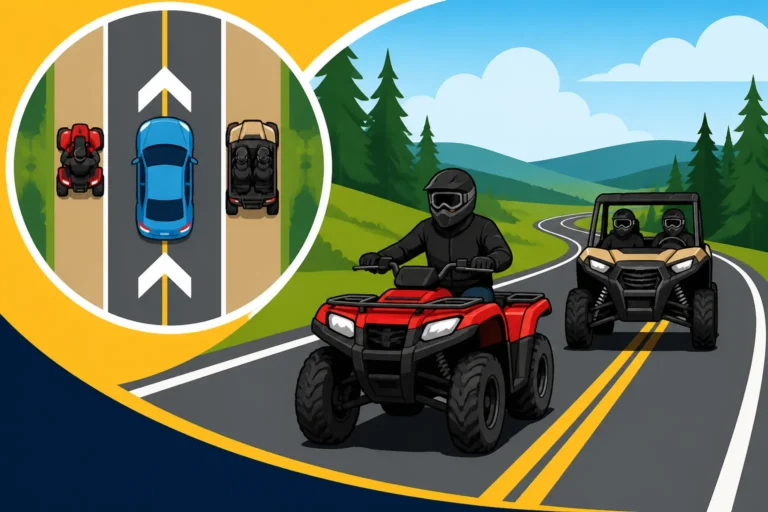
This is perhaps one of the most common areas of confusion and potential infractions for visiting riders. New Brunswick has very specific and generally strict rules about ATVs and UTVs operating on or near public roads and highways. Unlike some jurisdictions where you might be able to ride along the shoulder for short distances, New Brunswick's Off-Road Vehicle Act prohibits recreational ORV use on the travelled portion or shoulder of public highways, with very limited exceptions. The general rule is to maintain a distance of at least 7.5 metres from the travelled portion of a highway.
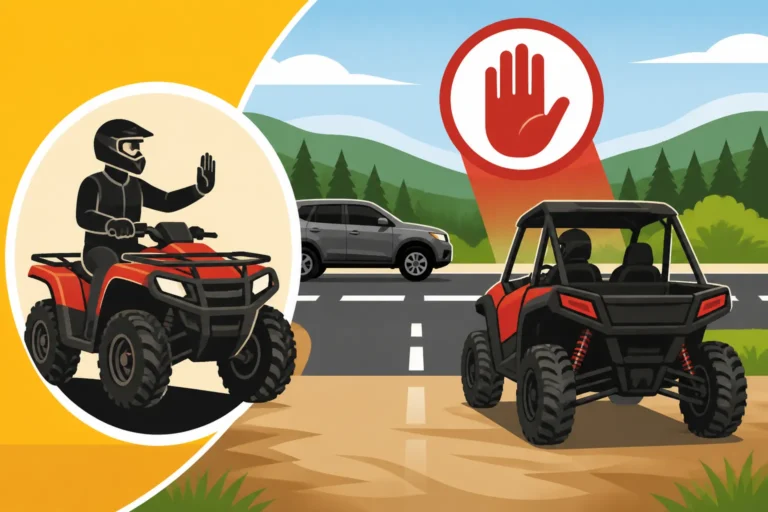
Designated road sections for ATVs are rare and are typically very clearly marked, often through local municipal bylaws or ministerial designations, or sometimes for specific events with a special permit. You cannot simply assume a road is open to ATVs. Crossing a highway is usually permitted only at a right angle, after coming to a complete stop, and only when safe to do so, yielding to all highway traffic. Riding through villages or towns on anything other than a specifically designated ORV route, or to access services like fuel, is generally not allowed without a specific bylaw or permit. [New Brunswick ATV Road Rules Explained] provides a deep dive into these regulations. It’s crucial for Nova Scotia riders to understand that these rules are often stricter than what they might be accustomed to in some areas back home. Plan your routes carefully, using official QuadNB maps, and never assume that a road is fair game for your machine. Failure to adhere to these rules can result in significant fines and an unwelcome interaction with local law enforcement.
Preparing for Your New Brunswick ATV Adventure
Stepping into a new riding environment, even one as friendly as New Brunswick, requires a bit more preparation than your usual local loop. The landscape can vary dramatically, from dense forests with muddy sections to rocky trails, old rail beds, and even coastal paths. Being prepared means your focus can remain on the beauty of the surroundings and the thrill of the ride, rather than worrying about your machine or your gear.
Machine Condition and Gear
Before you even load your ATV or UTV onto the trailer, give it a thorough inspection. Check your tires for wear and proper inflation, especially if you anticipate different terrain than you're used to. Many riders heading to New Brunswick's varied terrain opt for more aggressive tires that can handle mud, rocks, and loose gravel effectively. This might be a good time to consider upgrades from manufacturers known for durability and performance in challenging conditions, like SuperATV, which offers a range of heavy-duty components from tires to axles. Ensure your brakes are in excellent working order, your fluids are topped up, and all lights are functional – especially if there's any chance you'll be riding near dusk or in low-light conditions. [New Brunswick Lighting Requirements at Night] underscores the legal requirements for visibility. Having a functional winch, a small tool kit, and even a spare belt (especially for UTVs) can be a lifesaver far from civilization.
For personal gear, layering is key for New Brunswick’s often unpredictable weather. Even on a sunny day, temperatures can drop significantly, especially in forested areas or near the coast. Pack rain gear, even if the forecast looks clear; a sudden shower can turn a pleasant ride into a soggy misery. Sturdy, waterproof boots, gloves, and eye protection are absolute must-haves. Beyond the essentials, consider packing a first-aid kit, a small fire extinguisher, a tow strap, and a reliable communication device. While cell service is decent in many populated areas, there are still plenty of remote trails where you’ll find yourself in a dead zone. A satellite messenger or a two-way radio can offer peace of mind when venturing deep into the backcountry.
Trail Etiquette and Environmental Responsibility
Riding in New Brunswick is about more than just following the law; it's about being a respectful and responsible rider. The QuadNB trail system relies heavily on agreements with private landowners and Crown land access, so maintaining a good reputation for riders is paramount. Always stay on marked trails. Riding off-trail, especially through sensitive ecosystems or private property, can lead to trail closures and gives all riders a bad name. If you encounter a wet or muddy section, ride through it, not around it, as riding around widens the trail and causes more damage.
Respect private property: if a trail crosses private land, assume you have permission only for the designated trail. Do not venture off. If you see signs for "No Trespassing," respect them. Remember to pack out everything you pack in – leave no trace. This includes all garbage, even small items. Our trails are beautiful, and we want to keep them that way for everyone. When riding near residential areas, be mindful of noise levels, especially early in the morning or late in the evening. A little courtesy goes a long way in maintaining positive relationships with local communities. Whether you're riding in the vibrant [New Brunswick Miramichi Riding] region or exploring the Acadian Peninsula, being a good trail citizen ensures these incredible opportunities remain open for all.
Key Regulations Snapshot for Visiting Riders
Here's a quick comparison of some critical regulations for Nova Scotia riders visiting New Brunswick to help ensure you're squared away:
| Regulation Area | Nova Scotia (Typical) | New Brunswick (For Visitors) |
|---|---|---|
| Trail Permit | Valid ATVANS permit required for NS trails. | Valid ATVANS permit generally accepted on QuadNB trails (check current reciprocity). No separate NB permit needed if reciprocity is active. |
| Machine Registration | Valid NS registration required. | Valid NS registration accepted; no separate NB registration needed for temporary visits. |
| Insurance | Mandatory liability insurance; often includes trail. | Mandatory trail-specific insurance required. Verify your NS policy covers NB trail riding. [New Brunswick Requires Insurance on Trails] |
| Helmet Law | Mandatory for all riders/passengers, approved standard. | Mandatory for all riders/passengers, approved standard (CSA, FMVSS 218, Snell, ANSI). |
| Minimum Age to Operate | Generally 14+ with training/supervision (varies). | Generally 16+ on trails; 14-15 with Class 9 license, training, and adult escort. |
| Documents to Carry | Registration, Proof of Insurance, Driver's Licence. | Registration, Proof of Insurance, Driver's Licence. Must be carried on the machine. [New Brunswick Documents You Must Carry] |
| Road Riding/Crossing | Limited, specific rules; may vary by municipality. | Very strict; generally prohibited on highways/shoulders. Crossing at 90-degree angle only. [New Brunswick ATV Road Rules Explained] |
| Safety Course | Required for youth riders. | Required for youth riders (under 16), may require NB-recognized course or equivalency. [New Brunswick Quad Safety Course Explained] |
Disclaimer
This article is for general informational purposes only and does not constitute professional advice. Laws, prices and regulations vary by location and change over time. Consult a qualified professional for guidance on your specific situation.