New Brunswick Rules for Riding After Dark
Riding your ATV or UTV in New Brunswick after the sun dips below the horizon can be an incredible experience – the quiet hum of the engine, the cool evening air, and the feeling of having the trail to yourself. However, it also introduces a whole new set of challenges and, crucially, specific legal requirements that you absolutely must understand and follow. Neglecting these rules doesn't just put you at risk of a hefty fine; it jeopardizes your safety, the safety of your passengers, and anyone else who might be sharing the trails or roads with you. This guide will walk you through everything you need to know about navigating New Brunswick's trails and roads after dark, ensuring you're compliant, visible, and safe.
The Core Rule: Riding After Dark in New Brunswick
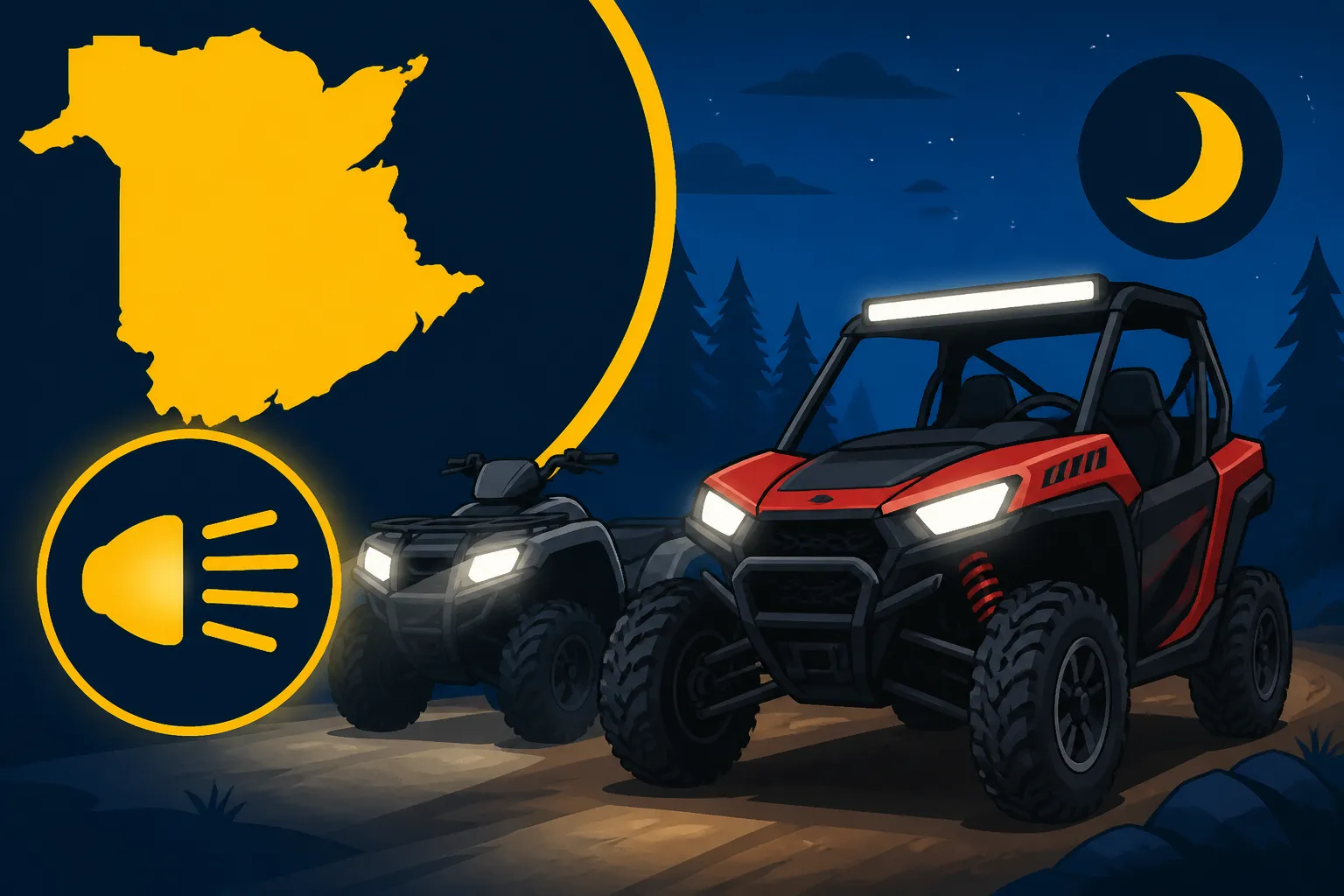
The province of New Brunswick takes night riding seriously, and for good reason. The limited visibility dramatically increases the risk of accidents. The core rule is simple: if you're riding an Off-Road Vehicle (ORV) after dark, or during periods of reduced visibility, your machine must be equipped with and display the proper lighting. This isn't just a suggestion; it's a mandatory requirement under the Off-Road Vehicle Act. It ensures that you can see where you're going, identify obstacles, and, perhaps even more critically, that other trail users or motorists can see you coming. Thinking that a quick dash in low light won't matter is a dangerous gamble that could have serious consequences.
When Does "After Dark" Begin and End for ORV Riders?
This isn't about guesswork or a feeling that it's "getting dim out." For legal purposes in New Brunswick, "after dark" generally aligns with the same definitions used for other motor vehicles on public roads. This means from 30 minutes after sunset to 30 minutes before sunrise. It also encompasses any other time when visibility is poor due to weather conditions like fog, heavy rain, or snow. Imagine a dense fog rolling in during the middle of the day – that counts as "reduced visibility" where your lights need to be on. It’s not just about the celestial clock; it's about practical visibility on the ground. Always err on the side of caution. If you question whether you need your lights on, the answer is probably yes. Being proactive about visibility is always the safest bet.
You might be out on a beautiful fall ride, and the sun starts to dip earlier than you expected. Suddenly, what seemed like plenty of daylight can quickly become a low-light situation. It's vital to know your planned route and have an idea of sunset times, especially if you're exploring [New Brunswick Riding in Fall]. Getting caught off-guard can lead to rushing or making poor choices. Always carry a watch or use your phone's sunset tracker to plan your return, or at least be prepared to switch on your lights well before the official "after dark" period begins.
The Importance of Proper Lighting on Your Machine
Proper lighting isn't just about having any light; it's about having the right lights that function correctly. Your machine's lighting system is your primary tool for safety when visibility drops. A functioning headlight illuminates the path ahead, allowing you to react to unexpected turns, potholes, fallen trees, or wildlife crossing your path. A bright taillight signals your presence to anyone approaching from behind, preventing rear-end collisions, especially if you're riding with a group.
Beyond merely seeing and being seen, proper lighting helps define your machine's size and direction of travel. A single dim light can be easily mistaken for a distant house light or another stationary object, leading to dangerous misjudgments by others. Conversely, a well-lit machine with distinct headlights and taillights clearly communicates its position and intent. This is critical when you might be encountering other riders, pedestrians, or even logging trucks on shared woods roads, especially around areas like [New Brunswick Riding Around Woodstock]. Investing in high-quality lights and keeping them in top condition is not an option; it's a necessity for responsible night riding. Many riders opt for aftermarket solutions like those from SuperATV to enhance their factory lighting for better performance and durability.
Reflective Gear for Riders and Machines
While active lighting (headlights, taillights) is paramount, passive visibility aids are also incredibly important, especially when riding after dark. Reflective materials don't produce light, but they bounce back light from other sources, like headlights from an approaching vehicle or another ORV. Think of it as an extra layer of protection when your active lights might not be enough, or if they were to fail for some reason.
Both you and your machine can benefit greatly from reflective gear. For riders, this means wearing reflective strips on your helmet, jacket, or even your boots. Many modern riding jackets come with integrated reflective piping, but you can also add reflective tape to your existing gear. For your machine, reflective decals or tape can be strategically placed on the front, rear, and sides of your ATV or UTV. These can be particularly effective on the outer edges of your machine, helping to define its width in low light. This simple addition can significantly increase your conspicuity, making you visible from a greater distance and from different angles, which is vital for safe night operations on any trail or designated road.
Mandatory Lighting and Equipment Requirements
New Brunswick's Off-Road Vehicle Act is quite specific about the lighting requirements for ORVs, particularly when operating after dark or in reduced visibility. These requirements are in place to standardize safety across all machines. Ignoring these specifications isn't just an oversight; it's a direct violation of the rules and significantly increases the danger for everyone on the trail. You'll need to know exactly what your machine needs to have and how it needs to perform. For instance, when you register your machine, understanding these requirements is part of the process, particularly when considering [Registering an ATV With Service New Brunswick].
Headlights: More Than Just "On"
Your ATV or UTV must be equipped with at least one headlight (though many modern machines have two) that is capable of illuminating objects at a reasonable distance ahead. It's not enough for the light to simply turn on; it must be effective. The beam should be clear, bright, and aimed correctly to provide sufficient forward visibility without blinding oncoming riders. A dim, flickering, or improperly aimed headlight is nearly as dangerous as no headlight at all, as it provides a false sense of security.
When checking your headlights, consider:
- Brightness: Is it strong enough to cut through darkness and illuminate trail hazards? Aftermarket LED light bars, often from brands like SuperATV, are popular upgrades precisely because they offer superior brightness and spread compared to factory halogen lamps.
- Beam Pattern: Does it provide a wide enough spread to see ditches and obstacles on the sides, as well as a long enough throw for speed?
- Aim: Is it pointed too high (blinding others) or too low (limiting your forward vision)? Adjusting headlight aim is usually a simple task and should be done regularly, especially if you frequently carry different loads or passengers.
Taillights and Brake Lights: Signalling Your Presence
Just as crucial as seeing ahead is being seen from behind. Every ORV must have at least one red taillight mounted at the rear, which is visible from a specified distance (often 60 metres or 200 feet, though specifics should always be checked against the latest regulations). This taillight must be continuously illuminated whenever the machine is in operation after dark or in low visibility. It tells others that you are there.
In addition to a taillight, a red brake light is also mandatory. This light must activate whenever the brakes are applied, signaling to riders behind you that you are slowing down or stopping. This is a critical safety feature, especially in group riding scenarios or on busy trails. Without a working brake light, the rider behind you has no advance warning of your deceleration, greatly increasing the risk of a rear-end collision. Make sure both your taillight and brake light are clean, unobstructed, and fully functional before every night ride.
Reflectors: Passive Safety Measures
Beyond active lighting, New Brunswick regulations also typically require passive reflectors on your ORV. These are non-powered devices designed to reflect light from other sources. They serve as a backup and supplementary visibility aid. While exact requirements can vary, generally, you'll need at least one red reflector at the rear and often amber reflectors on the sides, particularly towards the front. These reflectors should be clean, securely mounted, and free from damage.
Think about situations where your engine might stall, or your battery dies, leaving you without active lights. In such a scenario, well-placed reflectors become your last line of defense, reflecting light from another ORV’s headlights, offering a glimmer of visibility until help arrives. They also provide additional visibility from angles that your primary lights might not cover effectively. These small, often overlooked components are an inexpensive yet critical part of your machine's overall safety system for riding in low-light conditions.
| Component | Requirement (Minimum) | Purpose |
|---|---|---|
| Headlight(s) | At least one, capable of illuminating a set distance | To illuminate the path ahead for the rider and signal presence to oncoming traffic. |
| Taillight(s) | At least one red, visible from 60m (200ft) | To signal presence of the machine to traffic approaching from the rear. |
| Brake Light | At least one red, activates with brakes | To signal deceleration or stopping to traffic approaching from the rear. |
| Rear Reflector | At least one red, visible from 60m (200ft) | Passive visibility from the rear, especially if active lights fail. |
| Side Reflectors | Amber, visible from sides (often front and rear) | Passive side visibility, indicating the width of the machine. |
Visibility Beyond Lights: Rider and Machine Preparation
While having the correct lights is the foundation of safe night riding, it's only part of the equation. True safety after dark involves a holistic approach that includes what you wear, the overall condition of your machine, and how you adjust your riding style. It’s about creating a comprehensive visibility strategy, not just ticking off a checklist of legal requirements.
Wearing Reflective Clothing and Helmets
Your machine's lights do a great job of making the ORV visible, but what about you? As the operator, you are the most dynamic part of the equation, moving and shifting on the machine. Wearing reflective clothing significantly enhances your personal visibility, making it easier for others to distinguish you from your machine and to judge your position. This is especially true if you are temporarily dismounted from your machine, perhaps to clear a fallen branch or check a map.
Look for riding jackets, pants, gloves, and helmets that incorporate reflective materials. If your current gear lacks these features, high-visibility vests or reflective armbands are excellent additions. Even reflective tape applied to your helmet can make a big difference, catching the light from other vehicles. Remember, your helmet is often the highest point on your body, making reflective elements on it particularly effective for being seen over slight inclines or obstacles. It's a small investment that offers a significant safety return, complementing your machine's lighting, particularly when riding areas like [New Brunswick Miramichi Riding].
Machine Condition and Maintenance for Night Riding
The best lights in the world won't do much good if your machine isn't in proper working order. Before embarking on any night ride, a thorough pre-ride inspection focused on your electrical system and lighting is crucial. Start by cleaning your lenses – mud, dust, and water spots can significantly diminish light output. Check all wiring for any fraying or loose connections that could lead to intermittent light failure.
Ensure your battery is fully charged and capable of handling the load of your lights, especially if you're running additional accessories or upgraded lights. A weak battery can lead to dim lights or, worse, complete power loss mid-ride. Beyond lights, check your tires, brakes, and suspension. Hitting an unseen obstacle in the dark at speed can have severe consequences, so having a machine that handles predictably is paramount. Don't forget to review your [New Brunswick Equipment Checks by Officers] to ensure your machine meets all standards. Regular maintenance ensures that every part of your ORV is ready for the demands of reduced visibility.
Speed and Awareness in Low-Light Conditions
Even with the best lighting and reflective gear, night riding demands a significant adjustment to your riding style. The primary rule is simple: slow down. Your reaction time is inherently slower in the dark because your eyes have less information to process. Obstacles, sharp turns, wildlife, and changing trail conditions that might be obvious in daylight can suddenly appear with little warning.
Reduce your speed to ensure you can stop safely within the distance illuminated by your headlights. Increase your following distance if riding in a group, allowing more time to react to the rider ahead. Pay extra attention to trail markers, signage, and changes in terrain. Your peripheral vision is also diminished at night, so actively scan the trail and your surroundings. Listen for sounds that might indicate approaching vehicles or animals that you can't yet see. Riding after dark is an immersive experience, but it requires heightened senses and a much more conservative approach to speed and risk. This careful approach is essential, especially when riding on shared sections like [New Brunswick Snowmobile and Quad Sharing] trails.
Penalties for Non-Compliance
It's easy to dismiss lighting requirements as minor details, but New Brunswick law, through the Off-Road Vehicle Act, treats them as serious safety mandates. The provincial authorities are diligent about enforcing these rules, not just for the sake of compliance, but because they understand the direct link between proper equipment and accident prevention. Getting caught without the correct lighting, or with non-functional lights, can lead to immediate and tangible consequences that will quickly sour your night ride.
What Happens If Your Lights Aren't Up to Par?
If you are stopped by an enforcement officer and your ORV's lighting doesn't meet the stipulated requirements, you can expect a fine. The amount can vary depending on the specific infraction and whether it's a first offense or repeat issue, but these fines are designed to be a significant deterrent. Imagine being pulled over on a trail far from home, facing a fine, and potentially being instructed not to continue your ride until the issue is resolved. This could mean calling for a tow or delaying your plans considerably.
Beyond the immediate financial penalty, you could also face other repercussions. Officers have the discretion to issue warnings, but they also have the power to order you off the trail if your machine is deemed unsafe for operation after dark. This isn't just about a broken headlight; it could be an improperly aimed light, a taillight obscured by mud, or a brake light that isn't working. It's a clear signal that authorities are prioritizing safety over convenience. You'll also want to make sure you have all your [New Brunswick Documents You Must Carry] with you to avoid additional issues.
The Dangers of Riding Without Proper Lighting
The legal penalties are one thing, but the far more significant consequence of riding without proper lighting is the exponentially increased risk of an accident. When you can't see, you can't react. When others can't see you, they can't avoid you. This leads to a terrifying array of potential scenarios:
- Collisions with Obstacles: Striking fallen trees, large rocks, deep ruts, or other hazards that appear suddenly out of the darkness. This can result in rollovers, serious injuries, and significant damage to your machine.
- Collisions with Other Riders or Vehicles: On shared trails or designated road sections, an unlit or poorly lit ORV is virtually invisible. This greatly increases the risk of head-on collisions or rear-end impacts, especially on winding trails or at intersections.
- Wildlife Encounters: Animals, particularly deer and moose, are highly active at dusk and dawn. Without adequate lighting, you have almost no time to react if one suddenly steps onto the trail.
- Getting Lost or Stranded: Being unable to see trail markers or navigate properly in the dark increases your chances of getting lost. If your machine then breaks down, you're stranded in darkness, making rescue efforts far more challenging. This is a real concern, particularly in remote areas, even with the detailed maps found on apps like [New Brunswick Trail Maps and the MapGear App].
Ultimately, the rules around night riding lights are not arbitrary; they are life-saving. Adhering to them is not just about avoiding a ticket; it's about protecting yourself, your passengers, and ensuring that you can enjoy the trails safely for years to come.
Disclaimer
This article is for general informational purposes only and does not constitute professional advice. Laws, prices and regulations vary by location and change over time. Consult a qualified professional for guidance on your specific situation.