Yielding Every Time You Meet a Car
Navigating New Brunswick's backroads and designated shared routes on your ATV or UTV can be an exhilarating experience, offering unparalleled access to our beautiful landscapes. However, it also comes with a significant responsibility, especially when you encounter traditional road vehicles. Many riders express frustration and confusion about exactly when and how they're expected to yield to cars and trucks, fearing a misstep could lead to a fine or, worse, an accident. This comprehensive guide is here to unravel those complexities, providing clear, actionable advice on how to safely and legally interact with road traffic, ensuring your rides are enjoyable and worry-free.
The Basics of Yielding on New Brunswick Roads
When you're out riding your ATV or UTV, even on those designated sections of road or when making a permitted crossing, it’s crucial to remember that you are operating a machine that behaves very differently from a typical car or truck. The rules around yielding are not just suggestions; they are fundamental to your safety and the safety of everyone else on the road. Understanding the spirit of these rules, not just the letter, is key to being a responsible and considerate rider in New Brunswick.
Why Yielding is Paramount
Think about it for a moment: your ATV or UTV, while incredibly fun and capable off-road, is often smaller, less enclosed, and can be less visible than a passenger car, truck, or even a motorcycle. When you're sharing space with heavier, faster-moving vehicles, the stakes are incredibly high. A collision between an off-road vehicle and a car rarely ends well for the ORV operator. Legally, the provincial Off-Road Vehicle Act, along with the Motor Vehicle Act, places clear responsibilities on ORV operators when they intersect with conventional road traffic. It's not just about avoiding a ticket; it's about avoiding serious injury or worse for yourself and your passengers. It also reflects a respect for other road users and helps maintain the good standing of the ORV community.
Beyond the immediate safety concerns, consistent and proper yielding plays a huge role in public perception. When ORV riders are seen as respectful and safe, it helps foster a positive relationship with communities and reduces calls for tighter restrictions on access. Every time you ride responsibly and yield correctly, you're contributing to the continued privilege of using our trails and shared road sections. Failing to do so can quickly erode that goodwill, potentially leading to fewer opportunities for all of us to enjoy our machines.
What "Yield" Truly Means for ORVs
In the context of New Brunswick road rules, "yield" isn't just a polite suggestion to slow down or proceed with caution. It means to literally give way to other traffic. When you encounter a yield sign, or when the law requires you to yield, you must slow down or stop if necessary, and allow any vehicles, cyclists, or pedestrians that have the right of way to proceed safely before you move forward. This means you should not enter an intersection or cross a road if doing so would require another road user to brake, swerve, or otherwise alter their path to avoid you.
For ORV operators, this often translates to a heightened level of awareness. Because your machine might not accelerate or brake with the same authority as a car, or because its profile is smaller, you need to be even more deliberate in ensuring the path is clear. This could mean waiting a little longer for a gap in traffic that a car might zip through, or coming to a complete stop even if you think you might have time. It's about eliminating doubt and prioritizing absolute safety, putting the onus on you to ensure no conflict arises.
Where and When You Must Yield
The requirement to yield isn't a blanket rule that applies uniformly across every single inch of New Brunswick. Instead, it's triggered by specific circumstances, primarily when your off-road vehicle interacts with traditional roadways or traffic. Understanding these specific scenarios is crucial for staying legal and safe. Even if you're riding on a designated route, there are points where your right-of-way ends and a conventional vehicle's begins.
Crossing a Highway
This is perhaps one of the most critical scenarios where yielding is non-negotiable. New Brunswick law is very clear about [New Brunswick Rules for Crossing a Road]. When you approach a provincial highway (or any public road where ORVs are not generally permitted), and you need to cross it to access another trail section, you must treat this crossing with the utmost seriousness. The protocol is very similar to how you would treat a stop sign, but with an added layer of caution due to your vehicle type.
First and foremost, you must come to a complete stop at the edge of the paved or traveled portion of the highway. This isn't a rolling stop; it's a full, unequivocal halt. Then, you need to conduct a thorough visual check in both directions, looking for oncoming traffic. Don't just glance; actively scan the road, making sure there are no vehicles approaching from either direction that would pose a hazard. You must yield to all highway traffic, meaning you cannot proceed until the highway is completely clear, or until any approaching vehicles are far enough away that your crossing would in no way impede their progress. Once you determine it's safe, you cross directly and at a right angle to the highway, without lingering or deviating from your straight path. Always remember that on these major roads, you are the one interrupting the flow, and therefore, the responsibility to yield rests entirely with you.
Designated Road Sections and Shared Routes
In many communities across New Brunswick, certain municipal roads or specific stretches of highway have been designated for shared use with off-road vehicles. This is fantastic for connectivity and getting to and from trails or local businesses. However, it's easy to get complacent on these sections and forget that you're still sharing the road with traditional motor vehicles. On these [New Brunswick Shared Highway Sections] or village streets, you are still generally required to yield to motor vehicles that are already on the roadway or have the right of way at intersections.
Even though you have the legal right to be on these designated sections, the expectation is that you will operate your ORV defensively and with deference to other traffic. This means if you're approaching an intersection where you don't have the right of way, you yield. If you're on a shared section and a car needs to merge or is already in the flow of traffic, you yield. Think of your ORV as a guest on these roads; while welcome, you still need to be extra cautious and give conventional vehicles ample space and priority. Always be aware of local signage indicating specific rules or speed limits, as these can vary. [New Brunswick Speed Limits on Designated Roads] are often lower for ORVs on these shared routes than for cars.
Approaching Intersections and Driveways
Intersections are always potential conflict points, regardless of what you're driving. For ORV operators, these require extra vigilance. Whether you're on a dedicated trail that crosses a less-used road, or you're operating on a designated shared municipal street, the rules of the road apply. If there's a stop sign or a yield sign for your direction, you must obey it strictly. Even if there isn't a sign explicitly telling you to yield, the general rule is that traffic already in the intersection, or approaching from the right on an uncontrolled intersection, typically has the right of way. This means you'll frequently be called upon to yield to cross traffic.
Furthermore, consider exiting driveways onto public roads, even small, gravel ones. When you emerge from a private driveway onto any public thoroughfare, you must yield to all traffic already on that public road. This is a common situation for riders heading out from their camps or homes. It's not enough to simply peek and pull out; you need to ensure the road is clear and your entry will not force anyone to adjust their speed or direction. This also applies when moving from private land onto a public right-of-way, such as a farmer's field onto a side road. Always err on the side of caution and grant the right-of-way to established road users.
The Risks of Failing to Yield
Ignoring the rules of yielding when operating your ATV or UTV in New Brunswick isn't just a minor infraction; it carries serious weight, both legally and in terms of personal safety. Many riders might underestimate the consequences, seeing them as mere inconveniences. However, the ripple effects can be far-reaching, impacting your wallet, your physical well-being, and even the future of ORV access across the province.
Legal Consequences and Fines
New Brunswick takes the safe operation of off-road vehicles seriously, especially when they intersect with public roads. Failing to yield when required can lead to significant penalties. Police and enforcement officers on trails and roads are well aware of the rules outlined in the [New Brunswick ATV Road Rules Explained] and other related acts. If you're caught not yielding to a motor vehicle, you could face substantial fines. These aren't just a slap on the wrist; they are designed to deter dangerous behaviour and reinforce the importance of road safety.
For instance, if you fail to yield while crossing a highway or on a designated road section, you could be facing a fine that quickly adds up once court costs and victim surcharges are included. These [New Brunswick Fines for Riding Near a Highway] can be a real shock to the system. While ORV operations don't typically incur demerit points on a regular driver's license for such infractions, the financial hit alone can be considerable. Repeated offenses could also lead to more severe actions, potentially including the suspension of your ORV registration privileges. It's a clear message from the authorities: play by the rules, or pay the price.
Safety Implications and Accident Prevention
Beyond the legal ramifications, the most critical risk of failing to yield is the potential for a serious accident. Off-road vehicles, by their nature, offer less protection than a car. When an ATV or UTV collides with a full-sized vehicle, the ORV operator and any passengers are incredibly vulnerable. We're talking about direct exposure to impact, with minimal crumple zones or airbags to absorb energy. The consequences can range from broken bones and severe lacerations to life-altering injuries or fatalities. It’s a sobering thought, but one that must be considered every time you approach a road or intersection.
Proper yielding is one of the most effective accident prevention strategies for ORV riders. It acknowledges the inherent risk differential and empowers you to minimize danger. By coming to a complete stop, looking carefully, and waiting for a clear path, you're actively preventing potential collisions. It removes the element of surprise for other drivers and ensures you're not putting yourself in harm's way. Remember, even if the other driver makes a mistake, your primary responsibility is to avoid the collision if at all possible. This means always assuming the other driver might not see you, and yielding to remove any doubt.
Impact on ORV Access and Public Perception
Every time an ORV rider acts irresponsibly, whether through excessive noise, trespassing, or unsafe road behaviour like failing to yield, it chips away at the public's tolerance for off-road vehicles. While many communities embrace ORV tourism and recognize the economic benefits, incidents of unsafe riding can quickly turn public opinion against riders. This negative perception can lead to pressure on local governments to revoke existing trail access, close designated road sections, or tighten regulations even further.
Consider a scenario where an ATV fails to yield, causing a near-miss or even a minor fender bender with a car in a small village. News travels fast, and suddenly, the entire ORV community might be unfairly painted with the same brush. This makes it harder for clubs to negotiate new trail agreements, for municipalities to open new shared routes, and for riders to simply enjoy their sport without increased scrutiny. Proper yielding isn't just about personal safety and legal compliance; it's an act of collective responsibility that helps safeguard the future of ORV riding in New Brunswick for everyone.
Practical Strategies for Safe Yielding
Successfully yielding every time you meet a car isn't just about knowing the rules; it's about adopting a specific mindset and employing practical techniques that enhance your safety and the safety of others. It requires a proactive approach, an understanding of your machine's limitations, and a commitment to making yourself as visible and predictable as possible.
Defensive Riding Mindset
The single most effective strategy for safe yielding is to cultivate a defensive riding mindset. This means always anticipating potential hazards and assuming that other road users may not see you or may not correctly interpret your intentions. Never assume you have the right-of-way, even if you believe you do. When approaching any intersection, road crossing, or shared road section, reduce your speed significantly. Cover your brakes, and be prepared to stop quickly and safely.
A defensive rider understands that an ATV or UTV has a smaller profile and can be less noticeable than a car, especially in busy traffic or at dusk. This means compensating by being extra vigilant. Look twice, then look again. Make eye contact with drivers if possible to ensure they've seen you. If there's any doubt about whether a vehicle is going to stop or yield to you (even if they should), assume they won't, and take action to protect yourself. This mindset shifts the burden of prevention onto you, giving you greater control over your safety outcomes.
Visibility Enhancements
One of the biggest challenges for ORV riders sharing roads is visibility. Your machine is often smaller, and its lights might not be as prominent as those on a car. This is where investing in visibility enhancements can make a world of difference. Always ensure your headlights and taillights are functioning correctly and are clean. Consider adding auxiliary lighting, especially if you frequently ride in low-light conditions or dense forest areas that open onto roads.
Reflective tape, bright clothing, and high-visibility flags can also significantly increase your presence on the road. Many aftermarket companies, like SuperATV, offer a range of lighting upgrades, flags, and other accessories designed to boost your visibility. Attaching a bright orange safety flag to the rear of your machine, particularly if it's tall, can make you much more noticeable to drivers behind rises or around curves. Wearing a bright helmet and jacket also adds to your overall conspicuosity. Remember, the more easily you are seen by other drivers, the less chance there is of a failure to yield leading to an incident. [New Brunswick Equipment a Rider Must Carry] should always include proper lighting and reflective gear if you plan to be near or on roads.
Communicating Your Intentions
Effective communication is a cornerstone of safe driving, and it's equally important for ORV operators. While your ATV or UTV may not have turn signals (though some side-by-sides do, and some riders add aftermarket ones), you can still clearly communicate your intentions to other drivers. Hand signals are an absolute must when you plan to turn or stop. [New Brunswick Hand Signals Without Lights] are legally recognized and should be practiced until they become second nature.
Beyond formal hand signals, use clear and decisive movements. Don't drift or hesitate when approaching an intersection; make your intention to stop or cross clear. When you come to a stop, position your machine predictably and avoid sudden movements. If you can, make eye contact with drivers as they approach to confirm they've seen you. A slight nod or a wave can also help establish a brief, non-verbal connection, letting them know you are aware of their presence and your intention to yield. This human element can significantly reduce ambiguity and improve safety.
| Scenario | Action for ORV Operator | Key Principle |
|---|---|---|
| Crossing a Highway | Stop completely, look both ways multiple times, wait for absolute clear passage, cross directly at a right angle. | Absolute Yield: You have no right-of-way. |
| Entering Shared Road | Stop (if necessary), check for traffic, merge when safe without impacting flow, maintain appropriate speed. | Guest on Road: Integrate smoothly, defer to established traffic. |
| At an Intersection | Obey all signs (Stop/Yield). If uncontrolled, yield to traffic on your right or already in intersection. | Standard Road Rules: Apply conventional intersection etiquette. |
| Exiting a Driveway | Stop, look for all traffic (pedestrians, cyclists, vehicles), proceed only when completely clear. | Private to Public: All public road users have priority. |
| Meeting Oncoming Vehicle | On narrow shared roads, move to the right, slow down, be prepared to stop if space is insufficient. | Coexistence: Share the space respectfully, avoid conflict. |
| Merging onto Paved Road | Accelerate smoothly to match traffic flow if possible, or wait for a large gap if slow. | Predictability: Avoid sudden movements, signal clearly. |
Specific Scenarios and Nuances
While the general rule of "yielding every time you meet a car" serves as an excellent guiding principle, real-world riding presents a variety of situations that require a nuanced understanding of how to apply this rule effectively. It's not always a simple stop-and-go; sometimes it's about anticipation, positioning, and judgment.
Approaching an Oncoming Vehicle
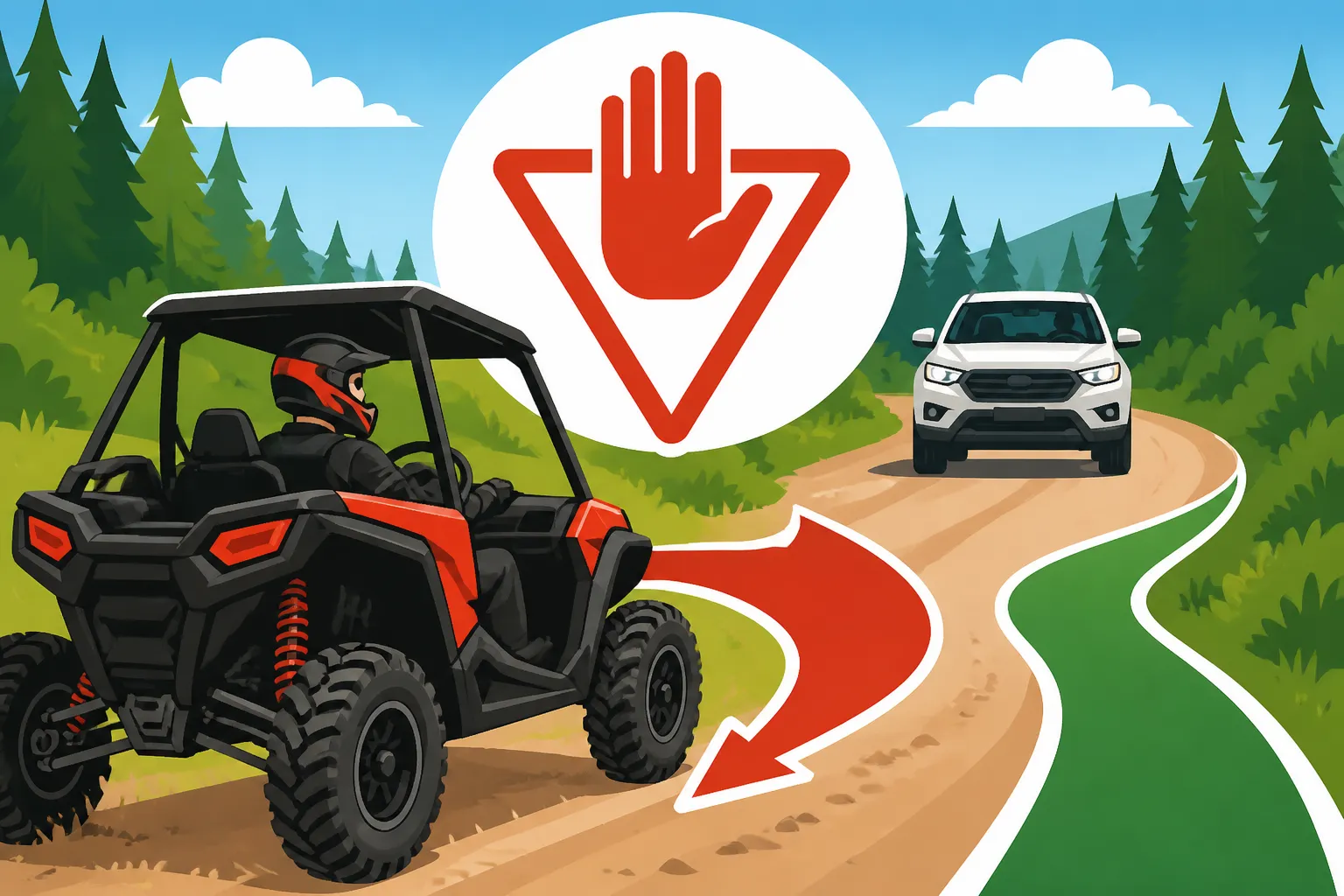
Imagine you're on a designated, shared dirt or gravel road in rural New Brunswick, perhaps on a stretch that's a bit narrow, and you see a car approaching from the opposite direction. This isn't a crossing, but a direct encounter on the same path. In this situation, the safest approach is to slow down, move as far to the right of your lane as safely possible, and be prepared to stop if the road becomes too narrow for both vehicles to pass comfortably. Even if the car has ample room, it’s good practice to reduce your speed to minimize dust, gravel spray, and any perceived intimidation.
The legal framework [New Brunswick Quads Yield to Motor Vehicles] generally implies that conventional road vehicles have precedence. Therefore, by slowing down and moving over, you are proactively yielding space and ensuring a safe pass for both parties. This polite and responsible behaviour goes a long way in fostering good relationships between ORV riders and local residents who share these roads. It also reduces the likelihood of a situation where a driver might feel unsafe or react unpredictably.
Merging into Traffic
Sometimes, your ride will take you from a private access road or a trail directly onto a designated public road where ORVs are permitted. This is a merging situation, and it requires careful execution. Just like merging onto a highway in a car, you need to assess the flow of traffic and find a safe gap. Accelerate smoothly to match the speed of the existing traffic as much as your machine allows, and signal your intent to merge (using a hand signal if you don't have turn indicators).
Never force your way into traffic. If the traffic is heavy or moving too fast for your ORV to safely integrate, you must wait for a clear and adequate opening. Remember, your machine might not have the acceleration capabilities of a car, so you'll need a larger gap than a typical vehicle would require. Patience is key here. Forcing a merge can lead to other drivers braking hard, swerving, or experiencing road rage, all of which compromise safety and reflect poorly on the ORV community. Always yield to existing traffic before completing your merge.
Navigating Busy Areas
Riding through a village or town on designated ORV routes offers a unique way to experience local communities, but it also means dealing with more complex traffic environments. In these areas, you'll encounter parked cars, pedestrians, cyclists, children, and more frequent intersections. The "yielding" principle broadens here to include not just cars, but anyone else using the public space. When riding through a village where [New Brunswick Municipal Bylaws That Open Roads] allow ORVs, reduce your speed to the posted limit (or lower, if conditions warrant), and be extra alert.
At every intersection, be prepared to yield. Pay close attention to crosswalks and sidewalks, yielding to all pedestrians. Watch for cars pulling out of driveways or parking spaces. Your ORV's noise level might also be a factor here; ride considerately and avoid unnecessary revving. The goal is to move through these areas smoothly, predictably, and without causing any disruption or alarm. This includes being extra cautious around schools, parks, or residential areas where children might be playing. Showing respect for the community will help ensure continued access to these vital connectors for ORV use.
Understanding the Broader Regulatory Framework
While we've focused on the practicalities of yielding, it's helpful to understand that these specific rules don't exist in a vacuum. They are part of a larger, carefully constructed regulatory framework designed to ensure the safe and responsible operation of off-road vehicles throughout New Brunswick. Grasping this broader context can help you better appreciate why certain rules, like yielding, are so rigorously enforced.
New Brunswick's Off-Road Vehicle Act
At the heart of all ORV regulations in the province is [What New Brunswick's Off-Road Vehicle Act Covers]. This comprehensive piece of legislation sets the fundamental groundwork for everything from registration and insurance requirements to operator age limits and, crucially, rules for road interaction. The Act makes it clear that while ORVs have certain privileges, especially on designated trails and shared routes, they are subject to specific limitations and responsibilities when they come into contact with the public road network.
This Act is continuously reviewed and updated to reflect changes in ORV technology, riding patterns, and public safety needs. The provisions within it regarding yielding and interaction with motor vehicles are paramount. They articulate the legal expectation that ORV operators will always prioritize safety and grant right-of-way to conventional traffic when required. Understanding that these yielding rules are enshrined in provincial law underscores their importance and the potential legal consequences of disregarding them.
Local Bylaws and Ministerial Designations
Beyond the provincial Act, specific areas of New Brunswick often have their own unique rules regarding ORV use, particularly concerning road access. [New Brunswick Municipal Bylaws That Open Roads] are a prime example. Local councils have the authority to pass bylaws that designate certain municipal roads or portions thereof for ORV use. This is how many communities enable riders to access local businesses, gas stations, or connect to different trail networks. However, these bylaws almost always come with conditions, and the requirement to yield to motor vehicles remains a constant, fundamental expectation.
Similarly, the province can issue [New Brunswick Ministerial Designations] that open specific stretches of highway or other roads for ORV use, often in more remote areas to facilitate trail connections. These are typically published and riders need to be aware of where they apply. While these designations grant access, they do not grant ORVs superior right-of-way. In all cases, whether it's a local bylaw or a ministerial designation, the principle of yielding to conventional traffic on shared road sections remains firmly in place. Riders must always respect these local rules and the overarching provincial requirements to ensure harmonious coexistence with other road users and preserve future riding opportunities.
Disclaimer
This article is for general informational purposes only and does not constitute professional advice. Laws, prices and regulations vary by location and change over time. Consult a qualified professional for guidance on your specific situation.