The 90cc Step Up at Age 12
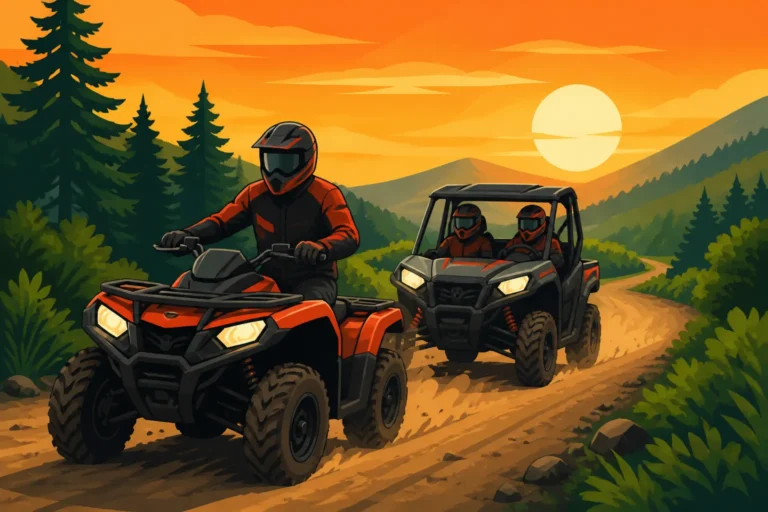
Navigating the world of off-road vehicles (ORVs) in New Brunswick, especially when you have a growing child eager to hit the trails, can feel like trying to decipher a secret code. Many parents find themselves scratching their heads, wondering exactly what kind of machine their 12-year-old can legally and safely operate, and what rules apply. This comprehensive guide will clear up the confusion around the 90cc step-up at age 12, detailing everything from machine eligibility to supervision, training, and responsibilities.
General Age Regulations in New Brunswick for ORV Riders
Before we dive into the specifics of what changes when a rider turns 12, it's important to understand the broader framework of New Brunswick's Off-Road Vehicle Act concerning young operators. This framework is designed with safety as its paramount concern, acknowledging that children and teenagers simply don't have the same judgment, strength, or experience as adult riders.
The "Under 16" Rule: A Broad Overview
In New Brunswick, the age of 16 is a significant threshold for ORV operators. Anyone under this age is considered a "youth operator" and is subject to a distinct set of rules and limitations that don't apply to adults. This often catches parents off guard, especially those whose children might be adept at other recreational activities or even operating farm equipment. They might ask, "Why can my child handle a tractor, but they're so restricted on an ATV?" The answer lies in the unique dynamics and risks associated with off-road vehicle operation on trails and varied terrain, where unexpected obstacles and changing conditions are the norm.
The underlying principle is that while a young person might possess the physical dexterity to control an ORV, their cognitive development – their ability to assess risk, react appropriately to unforeseen circumstances, and make split-second decisions – is still maturing. This means that for anyone under 16, riding an ATV or UTV is rarely an entirely independent activity. There are always layers of supervision and specific conditions that must be met to ensure their safety and the safety of those around them. Ignoring these rules isn't just a minor infraction; it can lead to serious consequences, both legal and physical.
What is a "Closed Course" for Young Riders?
When discussing youth operators, especially the younger age groups, the term "closed course" comes up frequently. While the rules for 12 and 13-year-olds open up some possibilities for trail riding, understanding what constitutes a closed course is still valuable, as it defines the most restrictive, yet safest, environment for the youngest riders. Essentially, a closed course refers to an area that is completely off-limits to public access and has controlled ingress and egress. Think of a privately owned field, a designated riding area on a large piece of private property, or a specific training facility.
The critical aspect of a closed course is that it removes the variables of public roads, other trail users, and uncontrolled environmental factors that are present on communal trail systems. On a closed course, parents have complete control over the environment. They can supervise directly, set up specific obstacles for practice, and ensure that their child is not encountering unexpected traffic or hazards. For kids aged 6 to 11, this is the only place they are allowed to operate an ATV, and even for 12 and 13-year-olds, practicing new skills on a closed course before venturing onto a public trail system is an incredibly smart, responsible move. It provides a safe sandbox for skill development without the pressures of shared trails or the complexities of navigation.
The 90cc Milestone: What Changes at Age 12
Turning 12 marks a notable shift in New Brunswick's ORV regulations for youth riders. It’s a moment many young riders eagerly anticipate, as it potentially opens the door to larger machines and new adventures. However, it's crucial for both riders and their parents to understand that this "step up" comes with its own set of responsibilities and continued limitations.
Stepping Up to a Larger Machine: Engine Displacement Explained
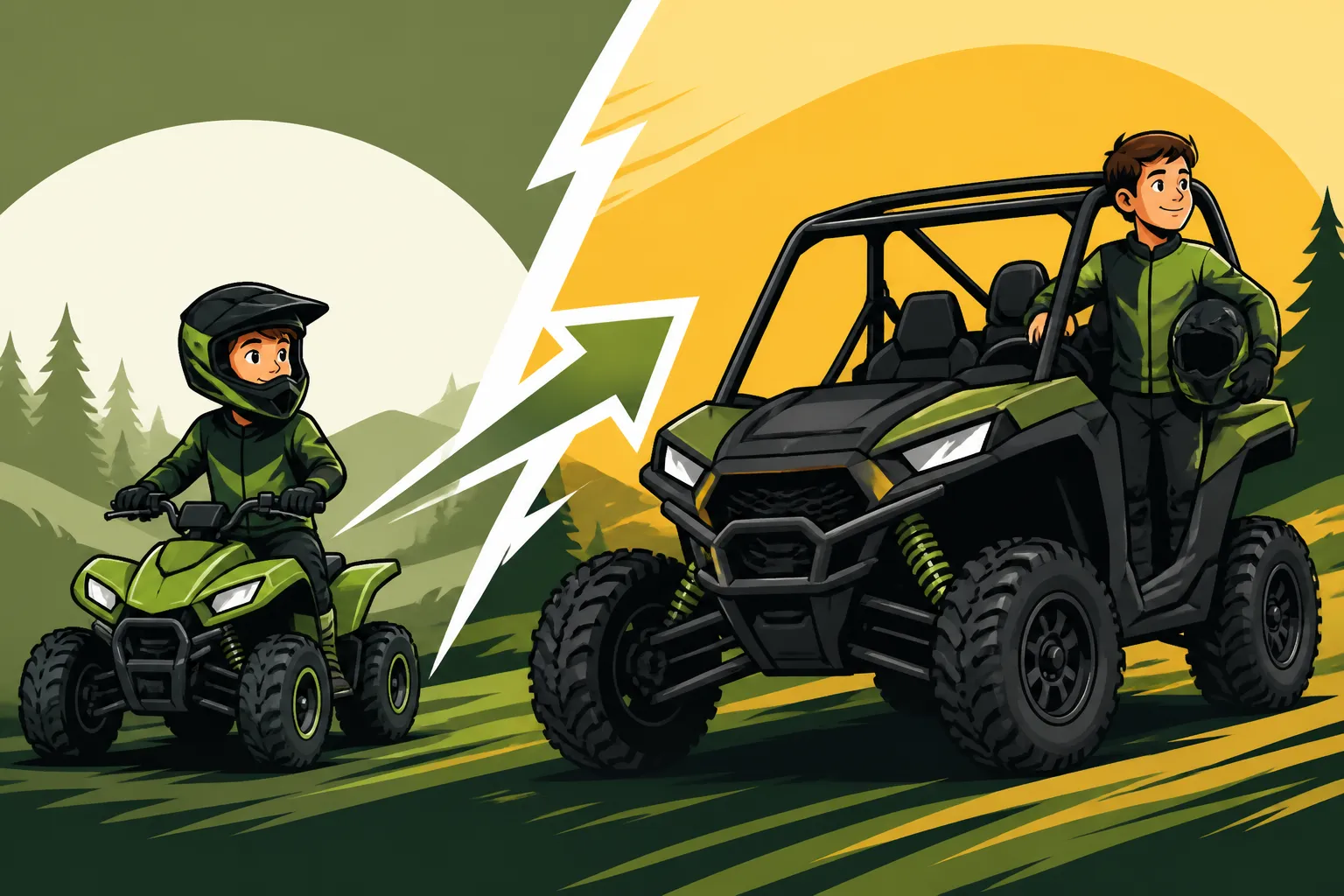
For children aged 6 to 11, the legal limit for an ATV's engine displacement is typically 70cc (cubic centimetres). This is a relatively small engine, designed to provide enough power for learning without being overwhelming. At age 12, this limit officially increases. A 12-year-old in New Brunswick is permitted to operate an ATV with an engine size of up to 90cc. For dirt bikes, the equivalent step-up is often from smaller youth models to those up to 300cc, though the 90cc rule is more commonly associated with ATVs. It's important to note that the broader rule for youth ATVs is that they must be under 340cc, so a 90cc machine fits comfortably within this larger bracket for ages 12-15. [New Brunswick Rules for a 12-Year-Old Rider]
This increase from 70cc to 90cc might sound like a small jump in numbers, but in terms of actual power, weight, and handling characteristics, it can feel like a significant upgrade. A 90cc ATV will generally be larger, heavier, and have more torque and top-end speed than its 70cc counterpart. This means it requires more physical strength to maneuver, more precise throttle control, and a greater understanding of braking and turning dynamics. Parents should never assume that because their child handled a 70cc machine perfectly, they will automatically be proficient on a 90cc one. A period of adjustment, practice, and skill development on the new machine is absolutely essential to ensure the child can safely manage its increased capabilities.
Supervision Requirements for 12 and 13-Year-Olds
Despite being allowed to operate a larger machine, 12 and 13-year-olds are not granted full independence on New Brunswick trails. The law is very clear on this: they must still be accompanied by an adult escort. This isn't just a suggestion; it's a mandatory legal requirement designed to ensure continuous supervision and immediate assistance should any issues arise. [New Brunswick Adults Escorting Young Riders] The escort must be at least 19 years old, hold a valid driver's license (or a Class 9 ORV license), and ideally have completed an approved ORV safety course themselves. They must also be operating their own ORV and remain in visual contact with the young rider at all times.
This means that a parent can't simply send their 12-year-old off with friends on the trails, even if those friends are also 12 or 13 and legally riding their own machines. An adult must be present, actively supervising the ride. The escort isn't just there to lead the way; they're there to monitor the young rider's performance, intervene if they're taking unnecessary risks, help with any mechanical issues, and provide guidance on trail etiquette and navigation. This level of supervision is a crucial component of the safety framework for this age group, acknowledging their developing skills while still recognizing their need for adult guidance in potentially challenging environments.
Training and Certification: The Next Steps
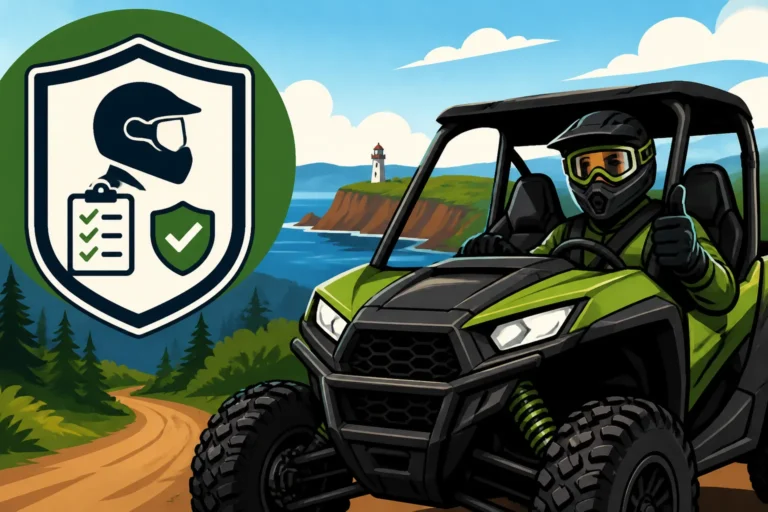
While a young rider may have years of experience on smaller machines, turning 12 is an excellent opportunity to reinforce the importance of formal safety training. In New Brunswick, completing an approved ORV safety course is highly recommended for all riders, and it becomes particularly significant for those transitioning to larger machines and potentially more challenging trails. For 12 and 13-year-olds, a safety course covers essential topics such as proper riding posture, throttle and brake control, turning techniques, obstacle avoidance, emergency stopping, and environmental awareness. [New Brunswick Safety Course for a 14-Year-Old] It teaches them to ride defensively, anticipate hazards, and understand the capabilities and limitations of their machine.
Beyond practical skills, these courses instill a sense of responsibility and reinforce the rules of the trail. They cover signage, trail etiquette, environmental protection, and the importance of carrying the right equipment. While a safety course might not be strictly mandated for all riding scenarios at age 12, possessing a valid certificate demonstrates a commitment to safe riding practices and can be a requirement for certain events or club memberships. Many clubs in New Brunswick encourage, and sometimes require, all members, regardless of age, to have completed a safety course. Investing in this training is not just about compliance; it's about equipping young riders with the knowledge and skills to make safe choices independently as they gain experience.
Restrictions and Responsibilities for Young Riders
Even with the ability to ride a 90cc machine and potentially venture onto certain trails, 12 and 13-year-olds face significant restrictions that their adult counterparts do not. These limitations are put in place for their safety and to integrate them gradually into the larger ORV community without exposing them to undue risk. Understanding these restrictions is paramount for parents.
Road Crossings: A Major Hurdle for Minors
One of the most frustrating, yet critical, restrictions for riders under 16 in New Brunswick concerns road crossings. Generally, a person under the age of 16 is not permitted to cross a public highway or road with their ATV. [New Brunswick Under-16 Riders Cannot Cross a Road] This rule can be a real headache for families planning trail rides, as many popular trail systems in New Brunswick, including those managed by QuadNB, frequently intersect or run adjacent to public roads. What might be a continuous trail for an adult rider suddenly becomes a dead end or requires an alternative solution for a 12-year-old.
Imagine you're on a fantastic trail ride near Miramichi, and you come to a point where the trail briefly crosses a paved municipal road to continue on the other side. An adult rider can typically stop, check for traffic, and cross safely. For a 12-year-old, this is a legal roadblock. Parents have a few options in such scenarios: they might have to trailer the young rider's machine across the road, find an entirely different route that avoids road crossings, or accept that the child's ride must end at that point. This restriction often limits the scope and length of rides suitable for young operators, highlighting the need for careful route planning before heading out.
Passenger Rules and Young Operators
Another important safety restriction applies to carrying passengers. A 12 or 13-year-old operating an ATV in New Brunswick is generally not permitted to carry a passenger. This rule is in place for several compelling safety reasons. Adding a passenger, even a small one, significantly alters the weight distribution and handling characteristics of an ATV. This makes the machine harder to control, especially in turns, over bumps, or during emergency braking. A young operator, still developing their strength, coordination, and judgment, is simply not equipped to safely manage these changes in dynamic stability while also focusing on their own riding.
While many utility ATVs and side-by-sides are designed to carry passengers safely when operated by an experienced adult, a youth-sized ATV is almost universally a single-rider machine. Even if the machine physically has a larger seat, the legal and safety implications of carrying a passenger with a young operator are clear. Parents should strictly enforce this rule, explaining the increased risks to their child. The temptation to give a younger sibling or friend a ride might be strong, but the potential for an accident, which could lead to serious injury, is simply too high.
Parental Responsibility: More Than Just Supervision
For any child operating an ORV in New Brunswick, the responsibility ultimately rests with the parent or legal guardian. It's not just about providing supervision while riding; it encompasses everything from ensuring the machine is appropriate and well-maintained to confirming all legal requirements are met. [New Brunswick Parent Responsibility for Passengers] This means parents are responsible for:
- Machine Suitability: Ensuring the ATV's engine size, weight, and physical dimensions are appropriate for their child's age, size, and skill level. Even if legally allowed, a 90cc might be too much for a smaller or less experienced 12-year-old.
- Safety Gear: Providing and ensuring the consistent use of approved helmets, eye protection, gloves, boots, and appropriate clothing.
- Legal Compliance: Making sure the machine is properly registered and insured, and that the child has any required safety certifications or trail permits.
- Rule Enforcement: Actively teaching and enforcing all ORV rules, including speed limits, road crossing restrictions, passenger prohibitions, and environmental etiquette.
- Liability: Understanding that parents can be held liable for any damages or injuries caused by their child operating an ORV in violation of the law or through negligence.
This parental responsibility is a continuous, active role, not just a passive one. It means being involved in the child's riding, regularly discussing safety, and setting a good example. The ORV experience can be incredibly rewarding for young people, fostering independence and a love for the outdoors, but it must always be balanced with a strong commitment to safety and adherence to regulations.
Choosing the Right Machine and Accessories
Selecting an ATV for a 12-year-old involves more than just picking a machine with a 90cc engine. It’s about finding the right balance between legal compliance, safety, and suitability for the individual child. The market offers a variety of youth models, and understanding how to equip them properly is key to a positive riding experience.
Matching Machine Size to Rider Age and Skill
While a 12-year-old is legally allowed to operate an ATV up to 90cc in New Brunswick, this doesn't automatically mean a 90cc machine is the best choice for every 12-year-old. There's a wide spectrum of physical development and riding experience within this age group. A child who is new to ATV riding, or who is smaller for their age, might be better served starting on a slightly smaller machine, perhaps even a well-maintained 70cc model, until they develop the necessary strength, balance, and confidence. [Judging Whether a Child Fits the Machine]
Conversely, a larger, more experienced 12-year-old might handle a 90cc machine with ease. The key is to assess the individual child. Can they comfortably reach and operate all the controls (throttle, brakes, steering)? Can they sit with their feet flat on the footrests and their knees bent, ready to absorb bumps? Can they easily shift their body weight to help steer and maintain balance? Is the machine's weight manageable if they need to push it or recover from a minor tip-over? A machine that is too large can be intimidating and difficult to control, increasing the risk of accidents. One that is too small might feel cramped and limit skill progression. Test rides (on private property, of course!) are invaluable for ensuring a proper fit and feel.
Essential Gear Beyond the Machine
Just as important as the ATV itself is the protective gear the rider wears. This isn't optional; it's absolutely critical for safety on any off-road machine, especially for developing youth. The most important piece of equipment is a helmet that meets recognized safety standards like DOT (Department of Transportation), Snell, CSA D230, or ANSI. [New Brunswick Helmet Standards Accepted] It must fit snugly, without being uncomfortably tight, and always be fastened securely. A loose helmet offers minimal protection.
Beyond the helmet, other essential gear includes:
- Eye Protection: Goggles or a full-face helmet visor to protect against dust, debris, branches, and insects.
- Gloves: To improve grip on the handlebars, reduce vibrations, and protect hands in case of a fall.
- Over-the-Ankle Boots: Sturdy boots provide ankle support and protection from the machine, hot engine parts, and trail hazards.
- Long Pants and Long-Sleeved Shirt/Jacket: Durable clothing protects against scrapes, abrasions, and sun exposure. Riding-specific gear often includes padding in key areas.
Investing in high-quality gear is paramount. It’s not an area to cut corners, as the cost of good protection is always less than the cost of an injury. Ensure the gear is well-maintained and replaced if damaged, as even minor cracks in a helmet can compromise its protective capabilities.
Modifying for Safety and Performance
Sometimes, even with the right machine, parents might want to enhance its safety or tailor its performance to their child's evolving skills and the local riding conditions. Youth ATVs often come with features like speed governors that can be adjusted as a rider gains experience. However, other modifications can also be beneficial. For instance, adding more robust skid plates can protect the underside of the ATV from rocks and trail debris, which is particularly useful for newer riders who might not always pick the smoothest lines.
If you're looking to upgrade specific components for durability or a better fit, aftermarket parts can be a great resource. Companies like SuperATV offer a wide range of accessories, from enhanced suspension components that can improve handling and stability, to more ergonomic handlebars or footpegs that can be adjusted for a growing child. Perhaps you’re noticing that the stock tires aren't quite gripping the muddy New Brunswick trails as well as you’d like, or you want brighter LED lights for better visibility during those dusk rides home. SuperATV can provide options for these kinds of practical upgrades. These aren't about making the machine faster or riskier, but rather about making it safer, more comfortable, and more capable on varied terrain, ensuring your child has the best possible experience while minimizing potential hazards.
Legal and Practical Considerations for Parents
Taking your 12-year-old on an ATV adventure involves more than just buying a machine and gear. There's a whole framework of legal requirements and practical considerations that parents need to understand and adhere to in New Brunswick. Overlooking any of these can lead to fines, safety risks, and unnecessary headaches.
Registering a Youth Machine in New Brunswick
Just like adult-sized ATVs, youth ATVs operated in New Brunswick must be properly registered with Service New Brunswick. This isn't an optional step; it's a legal requirement for any ORV that will be ridden off private, owner-only land. [New Brunswick ORV Registration Explained] The registration process typically involves presenting a bill of sale or proof of ownership, the machine's Vehicle Identification Number (VIN), and valid identification for the owner (which, for a youth machine, will be the parent or legal guardian).
When you successfully register the machine, you'll receive a registration certificate and an official New Brunswick ORV plate and sticker. The plate must be affixed to the rear of the ATV, and the sticker (which indicates the registration expiry date) must be prominently displayed on the left front fender. [How to Register an ATV in New Brunswick] It's crucial to keep a copy of the registration certificate with the machine at all times while riding, as enforcement officers can request to see it. Ensuring the machine is registered in your name means you are legally recognized as the owner and responsible party, which simplifies any interactions with authorities or insurance providers.
Insurance for a Young Rider's ATV
Another non-negotiable requirement for riding an ATV on public trails in New Brunswick is proof of insurance. The province mandates that all ORVs used on designated trails must carry a minimum amount of liability insurance. [New Brunswick Requires Insurance on Trails] This insurance covers damages or injuries that your child's ATV might cause to another person or their property. It's a critical safety net that protects you financially in the event of an accident.
Parents should contact their insurance provider to discuss coverage for their child's 90cc ATV. Often, these machines can be added to an existing recreational vehicle policy or require a separate dedicated policy. Be prepared to provide details about the machine (make, model, VIN) and the primary operator (your child). It's also vital to ensure that you have proof of this insurance readily available when riding. While you don't necessarily need to carry the original paper policy, a valid insurance card or a copy that clearly shows coverage is essential. [New Brunswick Proof of Insurance on the Machine] Failure to produce proof of insurance when requested by an enforcement officer can result in significant fines.
Trail Permits and Where Kids Can Ride Legally
For your 12-year-old to legally ride on the vast network of managed trails in New Brunswick, they will need a trail permit. New Brunswick's ORV trail system is largely managed by QuadNB, a federation of ATV clubs, and these permits contribute to the maintenance, grooming, and signage of the trails. [New Brunswick ATV Trails: The QuadNB Network] Fortunately, New Brunswick offers specific Youth Trail Permits for riders aged 6 to 15, usually at a reduced cost compared to adult permits. [New Brunswick Youth Trail Permits]
Purchasing a youth permit also typically includes a membership in QuadNB, which brings its own benefits, such as supporting the trail system and potentially offering discounts on other services. When buying the permit, you'll specify whether it's for a "groomed" or "non-groomed" trail system, which largely dictates the seasons it's valid. The physical sticker must be affixed to the left front fender of the ATV, right next to the registration sticker, so it's clearly visible to trail wardens and other enforcement personnel. Remember, even with a trail permit, the requirement for a 12-year-old to be accompanied by a qualified adult escort on the trails remains firmly in place. Always check the specific rules and any temporary closures for the trails you plan to ride before heading out, as conditions can change.
Age and Machine Regulations for New Brunswick ORV Riders
To help clarify the various rules for young riders, here’s a breakdown of key regulations by age group in New Brunswick. This table provides a quick reference for parents navigating the specific requirements for different ages and machine types.
| Age Group | Maximum ATV Engine Size Allowed | Maximum Dirt Bike Engine Size Allowed | Supervision Required on Trails? | Road Crossings Allowed? | Passengers Allowed as Operator? | Safety Course Recommended/Required? |
|---|---|---|---|---|---|---|
| 6 to 11 Years | 70cc | 70cc (or small youth models) | Yes, direct by adult 19+ | No | No | Highly Recommended |
| 12 to 13 Years | 90cc (under 340cc overall) | 300cc (or small youth models) | Yes, direct by adult 19+ | No | No | Highly Recommended |
| 14 to 15 Years | 340cc | Any (under 300cc for dirt bikes) | Yes, direct by adult 19+ | Restricted* | No | Required for Public Trails |
| 16+ Years | Any size | Any size | No | Restricted | Yes (if machine designed for it) | Highly Recommended |
*Note: For 14 and 15-year-olds, road crossings may be permitted with a Class 9 licence and under very specific, strict conditions, such as being accompanied by a qualified adult and crossing at designated points. This is still a highly restricted activity.
Disclaimer: This article is for general informational purposes only and does not constitute professional advice. Laws, prices and regulations vary by location and change over time. Consult a qualified professional for guidance on your specific situation.