New Brunswick Registration Before Your First Ride
It’s a feeling many of us know well: you’ve just acquired a shiny new (or new-to-you) ATV or UTV, and all you can think about is hitting the incredible trails New Brunswick has to offer. But hold your horses! Before you even think about firing up that engine and heading out, there’s a crucial step that far too many eager riders overlook or misunderstand: proper registration. This guide is here to walk you through exactly what you need to do, and the paperwork you absolutely must have in order, before your first ride in New Brunswick to avoid fines and ensure you’re riding legally and safely.
Understanding the "Before Your First Ride" Mandate
The thrill of a new machine can make you want to skip straight to the fun part, but in New Brunswick, there are clear rules about getting your off-road vehicle (ORV) on the books. This isn't just about bureaucracy; it's about safety, accountability, and maintaining access to our beloved trail system. Ignoring these steps can lead to immediate disappointment, and worse, hefty fines.
Why Registration Isn't Optional in New Brunswick
Think of ORV registration like getting a license plate for your car. It's how the province keeps track of who owns which machine, which is vital for law enforcement, emergency services, and even stolen vehicle recovery. Beyond that, the fees collected from registration contribute, in part, to the infrastructure and management of our vast trail network. Without proper registration, you're essentially an unknown entity on the trails, and that’s a big no-no.
The Off-Road Vehicle Act in New Brunswick is quite clear on this. Every ATV, UTV, dirt bike, or snowmobile operated off private land (with some specific exceptions for agricultural use or riding exclusively on your own property) must be registered. If you’re caught without it, the penalties can be steep. We’re talking about fines that can easily overshadow the cost of registration itself, turning a fun day out into a very expensive lesson. Not only do you face a fine for being unregistered, but an officer might even have your machine towed. For a deeper dive into the repercussions, you can look into [New Brunswick Penalties for Riding Unregistered]. It's simply not worth the risk.
The December 31st Expiration Rule
Here’s a detail that often catches new riders by surprise: every ORV registration in New Brunswick, regardless of when you first register it during the year, expires on December 31st. This isn't like car registration where you get a full 12 months from your purchase date. So, if you register your ATV in November, it will still expire on December 31st of that same year.
This annual renewal cycle is standardized for all ORVs across the province, making it easier for Service New Brunswick to manage. It means you’ll be renewing your registration every year in late fall or early winter. It's a critical piece of information to remember, especially if you're buying a machine mid-year; you won't get a pro-rated fee, and you'll still need to renew within a couple of months. Understanding [New Brunswick Registrations Expire December 31] is key to staying legal year after year.
The Essential Documents You'll Need
Getting your machine registered at Service New Brunswick is straightforward, but it requires you to show up prepared. Having all your ducks in a row with the right paperwork will save you time, frustration, and a potential extra trip back home.
Proof of Ownership: Bill of Sale or MSO
This is perhaps the most critical document you need. Service New Brunswick needs to see undeniable proof that you are the legal owner of the ATV or UTV you wish to register.
- Buying from a Dealer: If you bought your machine new from a dealership, they will typically provide you with a Manufacturer's Statement of Origin (MSO) or a New Vehicle Information Statement (NVIS), along with your sales invoice. These documents essentially act as the birth certificate for your machine and prove the first transfer of ownership from the manufacturer to the dealer, and then to you. The dealer usually handles a lot of the initial paperwork, but you’ll still need to take their provided documents to Service New Brunswick to finalize your registration and get your plate.
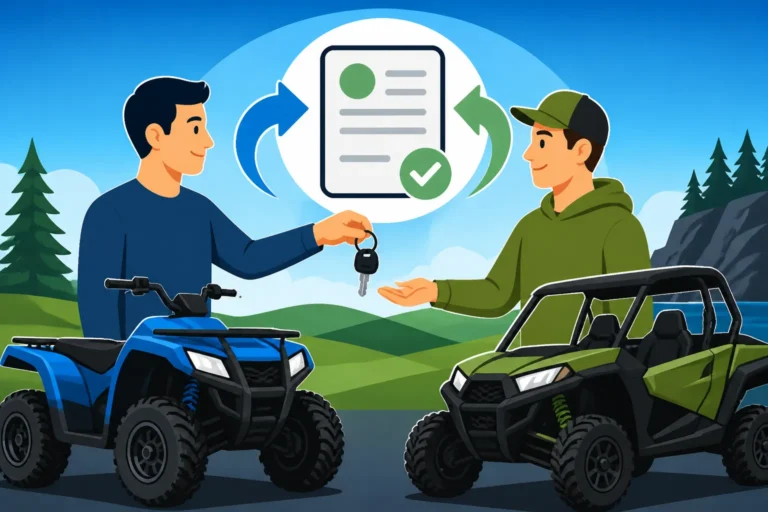
- Buying from a Private Seller: This is where many people run into issues if they're not careful. When purchasing a used machine from an individual, you absolutely need a clear, legible bill of sale. This document should include:
- The full names and addresses of both the buyer and the seller.
- The date of the sale.
- A detailed description of the machine, including its make, model, year, and crucially, its Vehicle Identification Number (VIN).
- The agreed-upon purchase price.
- The signatures of both the buyer and the seller.
A simple handwritten note might suffice if it has all the necessary information, but it's always best to use a formal bill of sale template to ensure nothing is missed and to protect yourself legally. Resources like LawDepot offer reliable, province-specific bill of sale templates that can make this process much smoother and more professional. Using a pre-made template ensures all the critical legal information is included, leaving less room for disputes or issues when you go to register. For specific guidance on this process, check out [New Brunswick Registration After a Private Sale].
Valid Identification and Proof of Address
Just like any official government service, you’ll need to prove who you are and where you live. When you visit a Service New Brunswick centre, make sure you have:
- Government-Issued Photo ID: This could be your driver's license, provincial ID card, or passport. The key is that it's current and clearly identifies you.
- Proof of Residential Address: Often, your driver's license will serve this purpose if the address is up-to-date. However, if your license has an old address, or if you don't have a New Brunswick driver's license yet (perhaps you're a new resident), you might need an additional document. This could include a utility bill (electricity, phone, internet), a bank statement, or a lease agreement, all dated within the last 90 days, showing your current New Brunswick address. Ensure the name on these documents matches your ID. For more on what's required, see [New Brunswick Registration and Proof of Address].
Proof of Insurance (for Trail Riding)
This is a frequently misunderstood requirement. While you don't always need insurance to register your ORV, you do need it if you plan to operate your machine on managed trails (like those maintained by QuadNB clubs), on Crown land, or any public property where it’s not explicitly exempt. Basically, if you're leaving your own private property, you'll need insurance.
When you go to Service New Brunswick, they will ask if your machine will be operated off private land. If the answer is yes, you will need to provide proof of valid third-party liability insurance. This usually comes in the form of an insurance card or a certificate of insurance from your provider. This proof generally shows:
- The policy number.
- The effective dates of coverage.
- The name of the insured (you).
- A description of the insured machine (including the VIN).
- The minimum liability coverage amount required by law.
It’s always a good idea to have this ready, even if you’re unsure about your immediate riding plans, as most riders will eventually venture onto trails. Don't assume your car insurance covers your ORV; typically, it requires a separate policy. Understanding [New Brunswick Requires Insurance on Trails] is essential for safe and legal riding.
Navigating the Registration Process
Once you have all your documents gathered, the actual process of registering your ORV is fairly straightforward. It's mainly about knowing where to go and what to expect when you get there.
Where to Go: Service New Brunswick Centres
The primary place to register your ATV or UTV in New Brunswick is at a Service New Brunswick (SNB) centre. These are government service centres located throughout the province, offering a wide range of services including vehicle registration. You can find a list of locations and their hours on the Service New Brunswick website. It's usually a good idea to check their hours before you go, and sometimes, especially in peak season or around renewal time, waiting can be a bit of a reality. Patience is a virtue here! To find your nearest location and what to expect, read [Registering an ATV With Service New Brunswick].
Filling Out the Application
When you arrive at Service New Brunswick, you'll be given an "Application for Vehicle Registration" form (or a similar ORV-specific form). This form requires you to provide details about yourself and your machine. Key sections you’ll need to fill out include:
- Your Personal Information: Name, address, date of birth, driver's license number (if applicable).
- Vehicle Information: Make, model, year, colour, engine size (cubic centimetres or cc), and the all-important VIN. Double-check the VIN against your bill of sale or MSO to ensure accuracy. Mistakes here can cause significant delays.
- Purchase Details: Date of purchase and purchase price. This is used to calculate the Harmonized Sales Tax (HST) if you bought it privately and HST wasn’t already paid (e.g., if you purchased from a dealer who collected it).
- Insurance Declaration: As mentioned, you'll declare whether the machine will be operated off private land and confirm you have the necessary insurance.
Take your time filling out the form. If you're unsure about any section, don't hesitate to ask the Service New Brunswick staff for clarification. They are there to help guide you through the process. A helpful resource for understanding the form itself is [Filling Out the Application for Vehicle Registration].
What to Expect: Fees and the Plate
Once your application is complete and reviewed by a Service New Brunswick agent, you'll pay the applicable registration fees and any provincial sales tax (HST) that is due. The registration fee varies depending on the type of ORV (ATV vs. dirt bike, for instance) and sometimes the engine size. Generally, ATVs have a different fee schedule than dirt bikes.
After payment, you will receive:
- An ORV Registration Plate: This is your physical license plate, typically made of aluminum, with a unique registration number.
- A Registration Sticker (Decal): This sticker displays the current year's validation and is affixed to your plate or directly to your machine.
- An ORV Registration Certificate: This is a paper document, often referred to as your "papers," which details your machine's information, your ownership, and the current registration validity. This is an extremely important document and should be kept safe.
It’s worth noting that the registration fees are reviewed periodically, so always check the current figures directly with Service New Brunswick or their official website. You can get a general idea of the costs involved by looking up [New Brunswick ORV Registration Cost].
| Document/Item | Purpose | Where to Get It / What to Do |
|---|---|---|
| Bill of Sale / MSO | Proof of legal ownership | Dealer (MSO/NVIS) or private seller (detailed bill of sale). Consider using a template from a service like LawDepot for private sales. |
| Valid Photo ID | Identity verification | Driver's license, provincial ID, passport. Must be current. |
| Proof of Address | Residency verification | Driver's license (if current), utility bill, bank statement, lease agreement (dated within 90 days). |
| Proof of Insurance | Required for trail/public land riding | Insurance card/certificate from your provider. Get this before you register if you plan to ride anywhere but your own private land. |
| Registration Application | Formal request for registration | Filled out at Service New Brunswick. Double-check VIN and all details. |
| Registration Fee | Annual cost for legal operation | Paid at Service New Brunswick. Amount varies by machine type. |
| ORV Plate | Physical identifier for your machine | Issued at Service New Brunswick. Affix securely to the rear of your ORV. |
| Registration Sticker | Annual validation decal | Issued at Service New Brunswick. Affix to your plate or specified location on the machine (e.g., left fender). |
| Registration Certificate | Official paper document of registration | Issued at Service New Brunswick. Keep a copy on your person or machine when riding. |
| Trail Permit | Required for designated trail network access (separate from registration) | Purchase from QuadNB or an authorized vendor. Often requires membership. Essential for using most public trails. While not part of registration, it's critical before your first trail ride. More info can be found by researching [New Brunswick Registration and the Trail Permit]. |
The Critical Next Steps After Registration
Getting your plate and certificate is a huge step, but the "before your first ride" checklist isn't quite finished. There are a couple more vital actions you need to take before you can legally and safely head out.
Affixing Your Plate and Sticker Correctly
Once you have your physical plate and sticker, you need to properly display them on your ORV. This isn't just for aesthetics; it's a legal requirement that helps law enforcement identify registered machines.
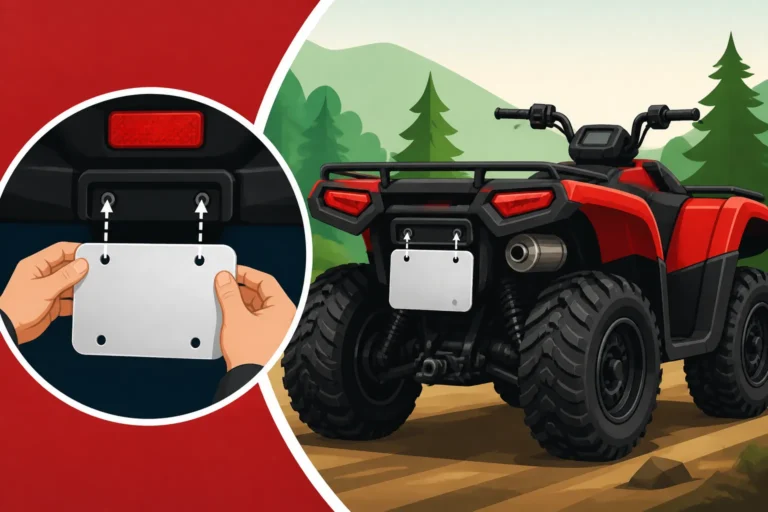
- Plate Placement: Your ORV plate must be securely attached to the rear of your machine, clearly visible. It should not be obscured by mud, equipment, or modifications. Most ATVs and UTVs have a designated spot, often on the grab bar or a bracket at the back. Make sure it's mounted in a way that prevents it from falling off, especially on rough trails.
- Sticker Placement: The annual registration sticker (decal) usually goes on the left side of the machine, specifically on the left front fender. This placement makes it easy for trail wardens or law enforcement to quickly verify that your registration is current without having to stop you unnecessarily. If your sticker is not affixed correctly, or if it's missing, it could lead to questions or even a fine. Always ensure it's clean and firmly adhered to prevent it from peeling off during rides. Detailed instructions on placement can be found by looking up [New Brunswick Permit Stickers on the Left Side].
Carrying Your Documents While Riding
This is another critical point that many new riders overlook. It's not enough to just have your machine registered; you must also carry specific documents with you every time you ride off your own private land. This is an explicit requirement under New Brunswick law.
The documents you must have on your person or stored securely on your machine (in a waterproof bag in a storage box, for instance) include:
- Your ORV Registration Certificate: The paper document proving your machine is registered.
- Proof of Insurance: Your current insurance card or certificate.
- Your Driver's License or ID: Proof of your identity and age.
- Your Trail Permit (if applicable): If you're on a managed trail, your permit is often checked.
An officer or trail warden has the right to ask for these documents. Failure to produce them on demand can result in fines. It's a small inconvenience to pack them, but it can save you a lot of grief. To fully understand what you need to carry, read [New Brunswick Documents You Must Carry].
Considering a Trail Permit
While registration makes your machine legal for general use off private property, it is not the same as a trail permit. Most of the extensive, well-maintained trail networks in New Brunswick are managed by organizations like QuadNB (the New Brunswick All-Terrain Vehicle Federation) and its member clubs. To ride on these designated trails, you will almost certainly need to purchase a separate trail permit.
A trail permit is essentially your access pass and contributes directly to the maintenance, grooming, signage, and infrastructure of the specific trail system. These permits are typically annual, but day or week permits may also be available for visitors. Without a valid trail permit for the system you're on, you could face fines from trail wardens or law enforcement, even if your machine is fully registered and insured. Many local clubs even offer incentives for purchasing a permit, sometimes including discounts or other member benefits. Always confirm the permit requirements for the specific trails you plan to ride. To learn more about this crucial distinction, investigate [New Brunswick Registration and the Trail Permit].
By following these steps and ensuring all your paperwork is in order, you’ll be set up for a fantastic and legal first ride on New Brunswick’s incredible ATV and UTV trails. Happy riding!
Disclaimer
This article is for general informational purposes only and does not constitute professional advice. Laws, prices and regulations vary by location and change over time. Consult a qualified professional for guidance on your specific situation.