Transferring a Registration Instead of Starting a New One
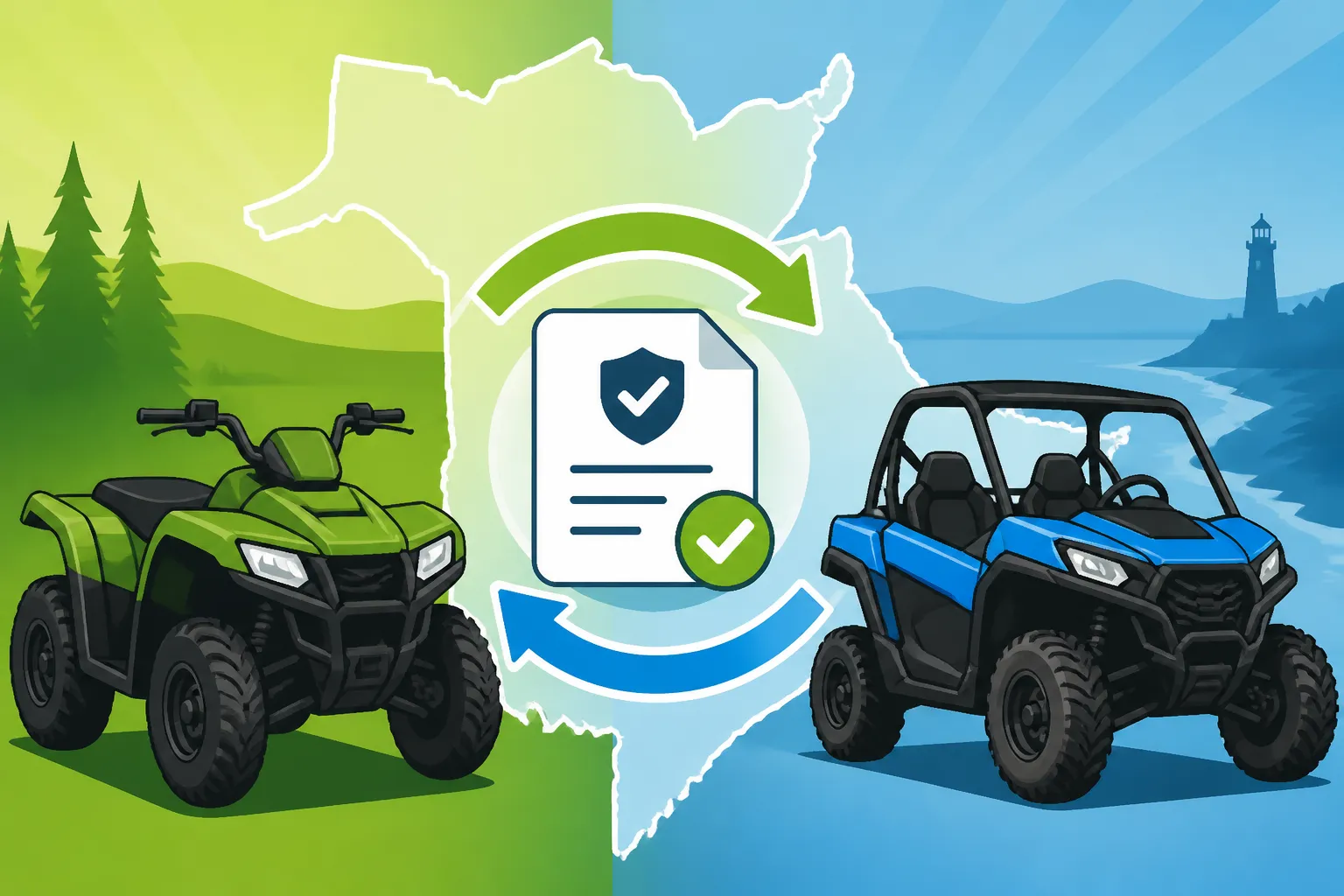
You’ve just found the perfect used ATV or side-by-side, maybe from a neighbour down the road or a private seller across the province, and now you’re staring at the paperwork, wondering if you have to jump through hoops to get it registered in your name. Many folks feel a pang of dread, expecting a complicated process for something that was already on the books. This guide is here to untangle that confusion, walking you through exactly how to transfer an existing ATV or UTV registration in New Brunswick, instead of starting a new one from scratch.
Understanding the Difference: Transfer vs. New Registration
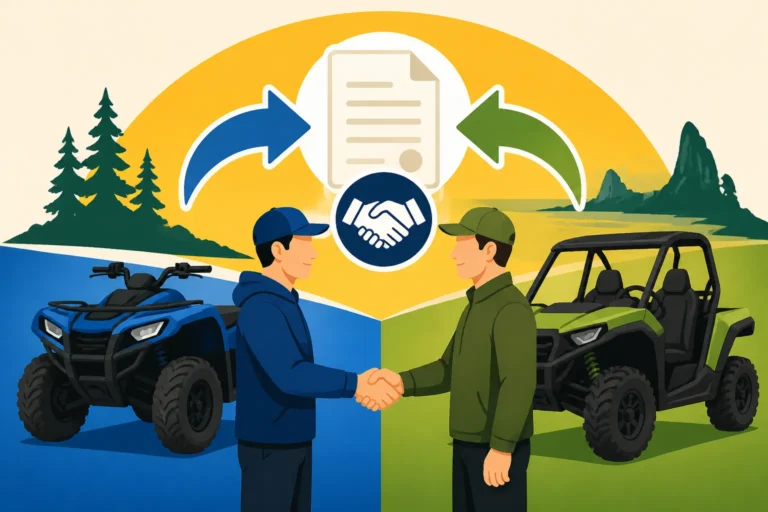
It's a common misconception when you buy a used ATV or side-by-side here in New Brunswick that you always have to start from scratch with a "new" registration. Many folks assume it's like a brand new machine from a dealer, but that's often not the case at all. The truth is, when you purchase a machine that was already registered in the province, you're usually looking at a registration transfer, not a completely new application. This subtle difference can save you time and confusion, and it’s important to understand the nuances before you head to Service New Brunswick.
Why a Transfer Makes Sense for Used Machines
When an ATV or UTV changes hands within New Brunswick, the vehicle itself already has a history with Service New Brunswick. It's already in their system, typically with an existing plate number assigned. Think of it like a house – you're not building a new one; you're just putting the existing one into a new owner's name. The paperwork reflects this continuity. A transfer confirms you're the new legal owner, allowing the existing registration to continue under your name, often retaining the same plate number. This simplifies things considerably compared to applying for a brand new plate and registration certificate from scratch, which usually only happens for a brand-new machine, one that's never been registered before, or one imported from outside the province.
For example, if you buy a well-loved quad from a friend in Miramichi, that machine likely has a New Brunswick plate and a registration history stretching back years. Service New Brunswick already knows this machine exists and has been operated legally in the province. Your job isn't to introduce a "new" machine to the system, but rather to update the ownership details on an existing record. This continuity in records is beneficial because it helps maintain a clear chain of ownership, which can be important for things like insurance claims or if you ever decide to sell the machine yourself down the line. It's about updating an existing file, not creating a fresh one.
The Benefits of a Smooth Transfer Process
Beyond just being the correct procedure, a smooth transfer ensures you’re legal on the trails much faster. It means less potential for hiccups at the counter, fewer questions about the machine's history, and a quicker turnaround to get that certificate and plate updated. It also ensures the previous owner's liability is properly severed, and your ownership is clearly established in the provincial records. This is crucial for insurance purposes, and even for future sales. An uninterrupted registration history helps maintain the value and legitimacy of your machine, avoiding any red flags down the line.
Imagine a scenario where you've just bought a used side-by-side and you're eager to get it out on the Fundy trails next weekend. If you misunderstand the process and try to apply for a "new" registration instead of a transfer, you might find yourself facing unnecessary delays as Service New Brunswick staff try to reconcile the machine's existing record with your "new" application. A smooth transfer, on the other hand, means you present the correct documentation, the change of ownership is quickly recorded, and you walk out with your updated certificate, ready to go. This not only saves you time but also gives you peace of mind, knowing that all the provincial requirements have been met. [New Brunswick Transfer of Ownership Explained] covers some of the deeper implications of this process.
The Essential Steps to Transfer Your ATV/UTV Registration in New Brunswick
Navigating government paperwork can feel like a maze, but transferring an ATV or UTV registration in New Brunswick is quite straightforward once you know the steps. The key is to gather all your documents before you even think about heading out the door. A little preparation goes a long way in avoiding frustration and extra trips. Believe me, I've seen enough folks turn up unprepared, and it's never a fun experience for anyone involved.
Gathering Your Paperwork: The Non-Negotiables
You’ll need a few critical pieces of information and documents to successfully transfer an ATV or UTV registration. First and foremost, you absolutely must have a completed Bill of Sale. This isn't just a casual receipt; it's the legal document that proves the change of ownership. It needs to include the buyer's name and address, the seller's name and address, the date of sale, the purchase price, and a full description of the machine, including the Vehicle Identification Number (VIN). Both parties should sign it. If you're struggling to create a formal bill of sale, or you're simply unsure what all needs to be included, remember that resources like LawDepot can offer templates that cover all the necessary legal points, ensuring you don't miss anything vital. A well-drafted bill of sale protects both the buyer and the seller.
Next, you'll need the current New Brunswick Registration Certificate, signed over by the seller. This is incredibly important. The seller needs to sign the back of the certificate in the designated area for transferring ownership. This signature is their official declaration that they are relinquishing ownership of the machine. Without it, Service New Brunswick cannot process the transfer. If the seller has lost the original certificate, they'll need to obtain a [New Brunswick Replacement Certificate at $20] before you can proceed with the transfer. It's the seller's responsibility to provide this, so make sure it's clear during the sale agreement.
Finally, you’ll need proof of insurance. New Brunswick mandates insurance for any ORV operating on managed trails. [New Brunswick Requires Insurance on Trails] You'll present your proof of valid ORV insurance, often called a "pink card" in the insurance world, when you register. This must be in the new owner's name, confirming coverage for the machine you're transferring. This means you need to contact your insurance provider before heading to Service New Brunswick to get the machine added to your policy and acquire the necessary proof of insurance. Without this, Service New Brunswick cannot complete the transfer, as it's a mandatory legal requirement for operation.
Visiting a Service New Brunswick Centre
Once your documents are meticulously in order, your next stop is a Service New Brunswick centre. While some services can be done online or by phone, an initial registration transfer often requires an in-person visit, especially for the new owner. This allows staff to verify all the original documents and ensure everything is correctly entered into the system. [New Brunswick Service Centres That Register ORVs] lists locations across the province where you can go.
When you arrive, you'll present your completed Bill of Sale, the signed-over Registration Certificate from the previous owner, and your proof of insurance. The staff will review these documents, process the transfer, update the ownership records, and issue you a new registration certificate in your name. This is also when you’ll pay any applicable fees and the Harmonized Sales Tax (HST) on the purchase price, if it was a private sale. Even if the machine already has a plate, there are still costs associated with the transfer and annual registration. For instance, [New Brunswick Tax on a Private ATV Sale] is a good read on understanding the tax implications. Be prepared to pay for the registration itself and the HST on the purchase price. They accept various payment methods, so ask ahead if you have a preference.
Avoiding Common Mistakes and Pitfalls
Even with the best intentions, transferring an ATV or UTV registration can hit snags. Knowing what to watch out for can save you a lot of grief and extra trips to Service New Brunswick. It’s all about attention to detail and proactive communication, especially when dealing with a private sale. Trust me, nobody enjoys a wasted trip to a government office!
Incomplete or Missing Documentation
This is, hands down, the biggest headache for most people. Imagine getting to the counter, waiting your turn, only to be told your Bill of Sale is missing the VIN, or the seller forgot to sign the back of the registration certificate. It’s infuriating, but it happens all the time. Double-check everything before you leave home. Ensure the VIN on the Bill of Sale matches the VIN on the machine and on the old registration certificate exactly. Any discrepancy, even a single digit, can cause a holdup. Confirm that all required signatures are present – both buyer and seller on the Bill of Sale, and the seller on the registration certificate. If you're buying from a private seller, make sure they understand their part in signing over the certificate; sometimes they just hand it over, forgetting the crucial signature. A quick call to Service New Brunswick beforehand can clarify any doubts about specific document requirements, especially if the situation feels unusual. Having a [New Brunswick Registration Paperwork Checklist] handy before you go can be a real lifesaver.
Dealing with Unregistered or Out-of-Province Machines
Sometimes, you might buy a used ATV or UTV that wasn’t registered in New Brunswick, or perhaps its registration lapsed years ago and the previous owner simply never bothered to renew it. In these scenarios, you’re often not dealing with a simple transfer anymore. An out-of-province machine will require an import process, potentially involving customs documentation if coming from outside Canada (like from Maine), and then an initial New Brunswick registration. For a machine that has been unregistered in New Brunswick for a long time, even if it was originally from here, you might need to treat it more like a "new" registration scenario, proving its history and original purchase.
Always, always ask the seller for the current New Brunswick registration certificate. If they don't have it, or if they present a registration from another jurisdiction (like Nova Scotia or Quebec), ask detailed questions and understand that your process might be more involved than a simple transfer. You might need additional documentation, such as a previous bill of sale or even a sworn affidavit if the history is murky. It’s always best to be clear about the machine's registration status before you finalize the purchase to avoid unexpected complexities.
Understanding Fees and Taxes
Don't be caught off guard by the costs involved. When transferring ownership, you'll generally be responsible for paying the Harmonized Sales Tax (HST) on the purchase price of the machine. This is true even in a private sale between individuals. Service New Brunswick collects this tax during the transfer, so don't assume you can skip it.
There will also be an annual registration fee. The amount varies depending on the type of ORV – ATVs, dirt bikes, and side-by-sides each have their own fee structure. This fee is usually paid at the time of transfer for the upcoming year, or to cover the remainder of the current registration year. For instance, [New Brunswick Charges $41 for an ATV] is an example of what you might expect for an ATV, but always confirm current rates. It's best to confirm the current fees directly with Service New Brunswick or check their official website before your visit, so you can budget accordingly and avoid any unwelcome surprises at the counter. Having the exact amount ready, or being prepared to pay by card, will smooth the process considerably.
What Happens After Your Registration is Transferred
Congratulations! You've successfully navigated the paperwork and officially transferred your ATV or UTV registration into your name. But the process doesn't quite end the moment you walk out of Service New Brunswick with your new certificate. There are a few important steps to take to ensure you're fully compliant and ready to hit the trails safely and legally, without any lingering worries.
Your New Registration Certificate and Plate
You’ll receive a new registration certificate in your name, detailing your ownership and the machine’s information. It's crucial to keep this certificate safe. While you don't need to carry the original with you on the trails (imagine losing that on a bumpy ride!), you must have proof of registration on your machine at all times when operating it. A laminated copy in a waterproof bag, perhaps tucked into your saddlebag, glovebox, or a secure compartment on your side-by-side, is a smart move. This applies not just to your registration, but also to your proof of insurance. [New Brunswick Documents You Must Carry] outlines all the essentials you need to have on hand.
If you're transferring a machine that already had a valid New Brunswick plate, you'll generally keep that same physical plate. No need for a new one! If for some reason a new plate is issued (which is less common with a transfer but can happen if the old one was damaged or missing), or if you had to start completely fresh with a new registration, remember to properly mount it. [New Brunswick Plate Placement on a Quad] provides guidance on where that plate should go to ensure it's visible and compliant with provincial regulations.
Updating Your Insurance Provider
Even though you presented proof of insurance at Service New Brunswick to complete the transfer, it’s a really good practice to follow up with your insurance provider. Give them a quick call or send an email to confirm that the transfer of ownership is fully reflected in their records, and that your policy is correctly updated for the specific VIN of your newly acquired machine. This ensures there are absolutely no ambiguities should you ever need to make a claim, heaven forbid. Your insurance company might want a copy of your new registration certificate to finalize their records, so be prepared to send it to them. This small, proactive step can prevent major headaches and potential disputes with your insurer down the road, ensuring you're fully covered.
Annual Renewal and Staying Compliant
Remember, New Brunswick ORV registrations expire on December 31st of each year. [New Brunswick Registrations Expire December 31] Even though you just transferred it, you'll still need to renew it annually to remain legal. This is not something to forget! Service New Brunswick typically sends out renewal notices as a helpful reminder, but it’s ultimately your responsibility as the owner to ensure your registration is current.
The good news is that subsequent renewals are much simpler than the initial transfer. You can often renew online from the comfort of your home or by phone, which saves you a trip to a service centre. [New Brunswick Renewal Online] and [New Brunswick Renewal by Phone] are convenient options that many riders take advantage of. Keeping your registration active, along with having a valid trail permit if you plan to ride on managed trails, is key to enjoying New Brunswick's incredible network of trails worry-free. Staying compliant means more time riding and less time stressing about paperwork.
Disclaimer
This article is for general informational purposes only and does not constitute professional advice. Laws, prices and regulations vary by location and change over time. Consult a qualified professional for guidance on your specific situation.