Riding From a Cottage Onto a Club Trail
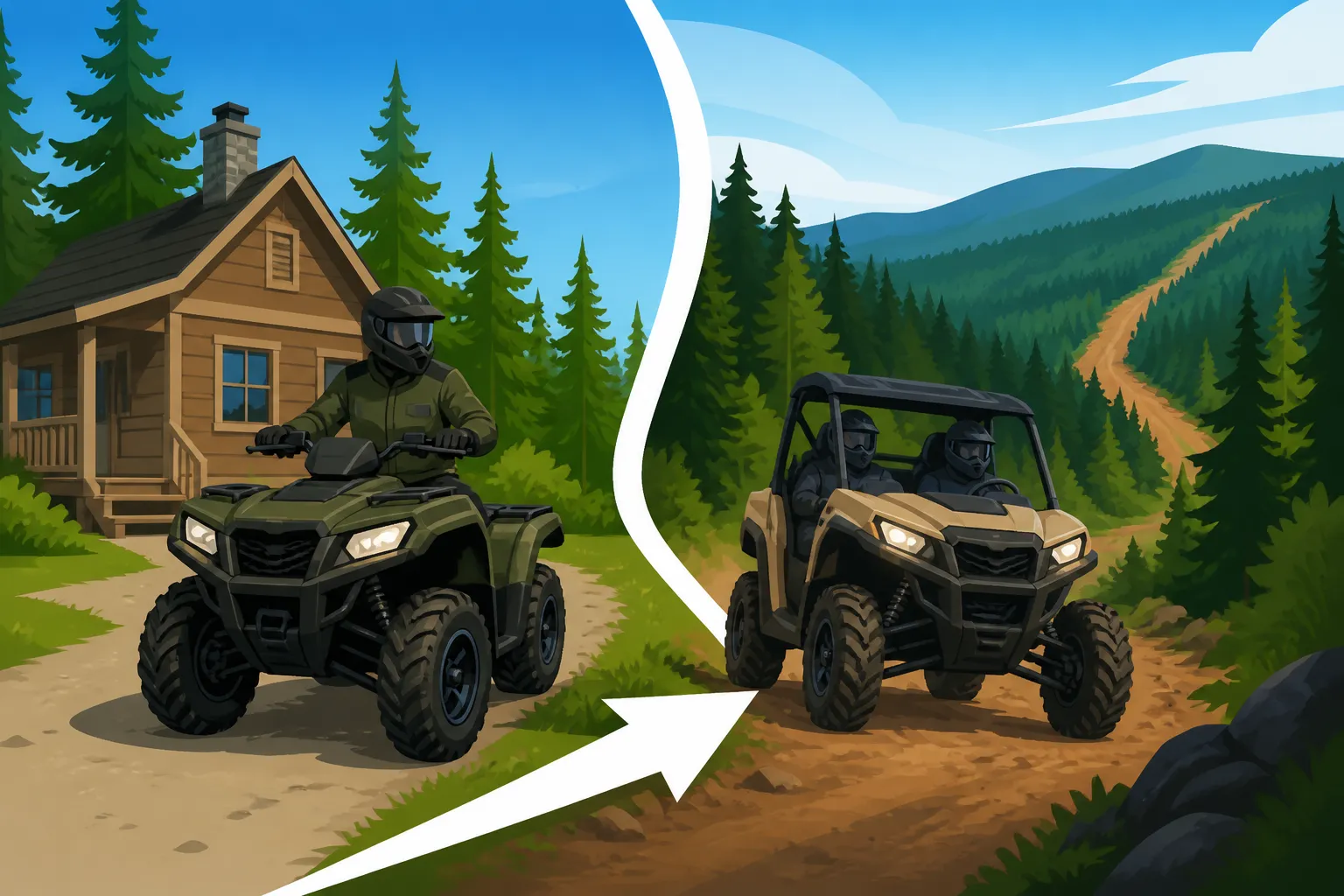
A cottage may sit only a short distance from a New Brunswick club trail, but that doesn’t automatically make the route between them legal. Private driveways, woodlots, road crossings, seasonal closures, and trail-permit requirements can turn a simple ride into a frustrating detour. This guide explains how to plan a cottage-to-trail ride, confirm access, prepare your machine, and avoid surprises once you leave the property.
Confirm the route before you leave the cottage
The first question isn’t how close the trail looks on a map. It’s whether you have permission and a legal route from your cottage to the marked club corridor. A trail may pass nearby without connecting to your land, and the shortest line between two points can cross private property, a road, or a closed section.
Map the whole trip, not just the trail
Look at the ride in three parts: your cottage property, the route from the property to the club trail, and the club trail itself. For each part, ask who controls the land and whether you’re allowed to ride there. A visible path, old woods road, or neighbour’s track isn’t proof that ATV access is permitted.
Check the local club’s trail information before setting out, and contact the club or landowner if the connection is unclear. This matters particularly around rural properties near Miramichi, Bathurst, or Woodstock, where a route may cross a mix of private woodlots, public roads, and managed trail corridors. The actual access arrangements can vary even between nearby properties.
A digital map can help you understand the surrounding terrain, but treat it as a planning aid rather than permission to ride. For example, onX Offroad can be useful for reviewing your position and route options; compare what you see there with official club information and ask before using an unmarked connection. Keep a backup plan in case the route you expected to use is closed or inaccessible.
Get permission for every private connection
If the route leaves your property and crosses a neighbour’s land, ask the owner directly before riding. Be specific about the path, the type of machine, who will be riding, and whether you expect to make one trip or use the connection regularly. A casual “it should be fine” from someone who doesn’t own the land may not be enough.
Some New Brunswick club routes cross private woodlots under arrangements with landowners. That permission applies to the designated corridor, not necessarily to nearby woods roads or cut lines. Read [New Brunswick Trails That Cross Private Woodlots] and [Staying on a Marked New Brunswick Corridor] before assuming that a nearby route is open to you.
Respect signs, gates, and barriers, and never move or bypass them to reach a trail. If access depends on a gate, ask the landowner or club how it should be handled. Leave it as you found it, and don’t invite other riders to use a connection unless you have permission to share it.
Sort out permits, registration, and insurance
A cottage ride can feel like a private outing, especially if you’re starting from your own yard. But once you join a club trail or travel on a route that has its own requirements, you need to know which rules apply. Don’t assume that being a cottage owner or staying with a friend changes what you need to ride legally.
Check the club-trail permit requirements
Before riding, confirm whether the route requires a trail permit, what kind of permit applies, and where it must be displayed. Requirements can depend on the trail and the type of ride, so verify details with the local club rather than relying on a sticker you used on another machine or in another season. A permit for one ATV may not automatically cover a second machine.
For a broader look at the distinction between owning a registered machine and having access to a permitted trail, see [New Brunswick Registration and the Trail Permit]. If you’re new to the province or new to off-road riding, [New Brunswick Registration Before Your First Ride] is a helpful companion read. Keep your registration and other required documents accessible so you aren’t scrambling if an officer asks to see them.
Cottage guests should check with the person who owns the machine, too. A borrowed ATV might have a registration sticker but still be missing a current trail permit, or the rider may not know where the paperwork is kept. Sort that out before unloading, not at the trail entrance.
Don’t treat insurance as an afterthought
Ask your insurer what coverage applies to the machine and the planned ride, especially if the route reaches a club trail, public road, or another property. Don’t assume that coverage for riding on your own land automatically applies everywhere else. If friends are bringing their own machines, each owner should confirm their own coverage.
Some riders keep proof of insurance with the machine so it’s easy to produce on a ride. The practical details are covered in [New Brunswick Insurance Proof at a Trailhead]. You can also read [Riding Your Own Land Without Trail Insurance] for context on why “we’re just riding from the cottage” doesn’t answer every insurance question. Confirm the rules that apply to your situation before heading out.
| Before you ride | What to confirm | Why it matters |
|---|---|---|
| Cottage property | Where the property boundary ends | Your permission may not extend onto a neighbour’s land |
| Connection route | Landowner approval and any access conditions | A nearby path is not automatically an authorized route |
| Club trail | Current access and permit requirements | Trail access may have its own conditions |
| Machine | Registration, insurance, and required documents | The rider may need to produce proof during the trip |
| Road crossing | Whether the route crosses a road and what rules apply | A crossing can involve requirements beyond trail access |
| Weather and conditions | Closures, washouts, and damaged sections | Conditions can change the safe or permitted route |
Plan a safe, practical ride from the property
Once access and paperwork are sorted, think through the ride as if you were starting at a trailhead. A cottage can be a convenient starting point, but it may offer less room to turn around, check equipment, or keep machines away from neighbours and other guests.
Pick a clear departure route and meeting point
Before anyone starts an engine, show the group where the property ends and which route they’re allowed to use. Agree on a meeting point beyond the cottage area if riders are arriving separately. That makes it easier to keep machines off lawns, gardens, septic areas, and other parts of the property that aren’t built for heavy traffic.
If you’re travelling as a group, decide who is leading and who is riding at the back. Make sure everyone knows the planned connection and what to do if the group gets separated. For navigation, onX Offroad can help riders keep track of their position, but don’t use an app’s displayed route as a substitute for confirmed access or local trail guidance.
Keep the first ride conservative. If the connection is unfamiliar, ride it slowly and note junctions, gates, soft ground, and any place where the route could be mistaken for a driveway or another trail. Avoid creating a new shortcut when the intended route is unclear; stop and check rather than cutting across land.
Check road crossings and local conditions
A cottage-to-trail route may involve a public road, even if the crossing is brief. Identify crossings before riding and review the relevant rules in [New Brunswick Rules for Crossing a Road]. Don’t assume that a route shown on an app, or a trail used by another vehicle, means your group can travel along the road itself.
Check conditions with the club before leaving, particularly after heavy rain or during spring thaw. A trail that was rideable on your last visit may now have standing water, a washout, or a temporary closure. [New Brunswick Trail Closures After Rain] explains why checking ahead matters. If a route is closed, respect the closure rather than riding around the barrier and widening the damage.
Keep the property owner’s neighbours in mind, too. Start and finish quietly, avoid unnecessary idling, and don’t let a group spread across a narrow access route. Small courtesies can make the difference between a cottage connection that remains welcome and one that creates conflict.
Make the connection work for guests and repeat visits
A route that works for the property owner may be confusing for a first-time guest. Set expectations before anyone unloads a machine: explain where to park, where riding is permitted, what documents to bring, and which trails are open to the group.
Give visitors a simple pre-ride checklist
Ask guests to confirm that their machine is ready and that they have the documents and permits required for their ride. Make it clear whether you’re providing a machine, whether guests may bring their own, and who is responsible for checking insurance and registration. If someone is borrowing a quad, don’t rely on a quick handover in the driveway to cover the important details.
Share the route in plain language as well as on a map. For instance: “Use the marked lane to the gate, turn right at the signed junction, and don’t take the woods road beyond the property boundary.” If the route isn’t that easy to describe, ride it with guests the first time. The local club’s map and guidance are especially useful; [New Brunswick Trail Maps and the MapGear App] is one place to start when organizing your route information.
You can use onX Offroad as a supplementary way to help guests orient themselves, but make sure everyone understands that the app does not grant land access or replace club updates. If cell service is unreliable where you’re staying, agree on a regrouping point and carry whatever navigation information you need before leaving the cottage.
Leave the route and property in good shape
At the end of the ride, check that gates are closed as instructed and that no one has left litter or damaged the access route. If a branch, rut, washout, or unclear sign has made the connection difficult, report it to the landowner or club rather than improvising a new path. A small issue noticed early can prevent riders from causing greater damage later.
A cottage-to-trail route is easiest to maintain when everyone understands the same boundaries. Keep a written note of the approved connection, who to contact about access, and any seasonal conditions. If the property changes hands or the landowner’s permission changes, update the group rather than assuming old arrangements still apply.
Finally, make the return trip part of the plan. Confirm where machines should be parked, avoid riding across areas that are not part of the approved route, and leave enough time to get back before darkness or changing weather creates a problem. A little preparation lets you enjoy the convenience of riding from the cottage without turning someone else’s land or a club trail into an unplanned shortcut.
Disclaimer
This article is for general informational purposes only and does not constitute professional advice. Laws, prices and regulations vary by location and change over time. Consult a qualified professional for guidance on your specific situation.