New Brunswick Riding With Kids on the Trail
Taking children on a New Brunswick ATV trail can be a wonderful family day out, but age rules, machine fit, passenger limits and changing trail conditions make planning feel like a lot. This guide explains how to check whether a child may ride, choose a suitable outing and prepare everyone for a safer, less stressful day in the woods.
Check whether your child can ride on the trail
Age and riding location matter
A child’s age affects where and how they may operate an off-road vehicle in New Brunswick. The rules distinguish between young riders on closed courses and older teens who may qualify to ride under specific requirements. A backyard, private field or quiet woods road is not automatically a “closed course,” and permission to use land does not automatically make it a legal riding location.
As a practical starting point, children aged 6 to 13 should not be taken onto an ordinary trail on their own youth machine. The rules for this group focus on closed-course riding, with restrictions that can include the rider’s age and the machine’s engine size. For a child approaching the next age bracket, don’t assume the rules change on their birthday in a way that gives them unrestricted trail access. Check the requirements for the exact age and activity first.
Teens aged 14 and 15 may have a path to operating an ORV in circumstances that are not open to younger children, but additional requirements can apply. These may include a Class 9 licence, safety training and adult supervision or escort conditions. Confirm which requirements apply to the teen and to the adult accompanying them before you leave home. The guides to [New Brunswick ATV Age Requirements], [New Brunswick Rules for a 14-Year-Old Rider] and [New Brunswick Rules for a 15-Year-Old Rider] can help you identify the questions to resolve.
| Rider or activity | What to check before planning a ride |
|---|---|
| Child aged 6 to 13 operating a youth machine | Whether the location qualifies as a closed course, age-specific machine limits, supervision and safety equipment |
| Teen aged 14 or 15 operating an ORV | Licence, safety-course, supervision or escort requirements, and which riding areas are permitted |
| Child riding as a passenger | Whether the machine is designed and equipped for a passenger, the child’s ability to sit safely, and helmet requirements |
| Family using a club trail | Each rider’s eligibility, vehicle registration and insurance, trail permit requirements, and current trail access |
This table is a planning aid, not a substitute for confirming the rules that apply to your situation. A teen who is eligible to operate a machine may still be restricted from certain roads or trail sections. Likewise, an adult’s legal ability to ride does not automatically make a child eligible to operate a separate vehicle.
A child passenger and a child operator are different situations
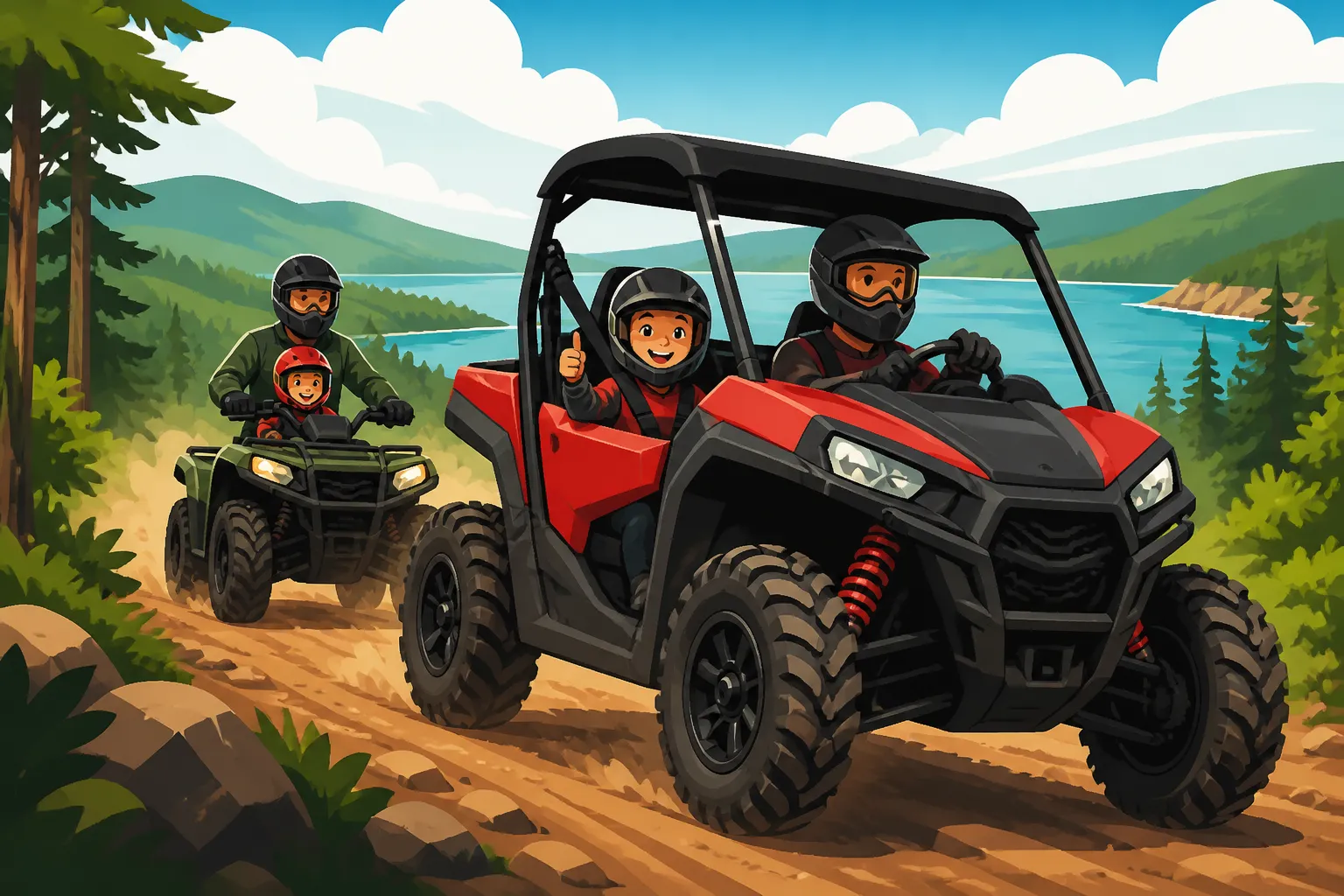
Parents sometimes use “taking the kids riding” to mean either bringing a child along as a passenger or having the child ride a youth ATV. Those are different situations, with different questions to answer. A child who is too young to operate on a club trail may still be able to accompany an adult as a passenger if the vehicle, seating and applicable rules allow it.
Before carrying a passenger, confirm that the manufacturer designed the machine to carry one and that it has a proper passenger seat and footrests. A child perched on a rack, squeezed between the driver and handlebars, or sitting on a machine built for one person is not safely accommodated. A helmet does not make an unsuitable passenger setup acceptable. See [New Brunswick Rules for a Child Passenger] and [New Brunswick ATV Helmet Law] when checking the requirements.
Do a simple fit check while the machine is parked. Can the child sit upright with their back supported, keep their feet on the footrests and hold on securely? Can the driver control the machine without the child’s hands or feet interfering? If the answer to any of these is no, choose another way to ride together. A short loop close to the truck is not a good reason to improvise a seat.
Choose a route that matches the youngest rider
Keep the first outing short and predictable
An adult may think a few hours on a familiar trail sounds easy. A child may experience it as a long stretch of engine noise, bumps, dust, heat and waiting for adults to make decisions. For a first trip, plan a modest outing with a clear turnaround point and an easy way to stop early. A short ride that ends happily is more useful than a long ride that leaves a child cold, overwhelmed or afraid to go again.
Choose a route with room for breaks and avoid making a remote section the day’s first test. A family setting out near Fredericton, Bathurst or Miramichi should check the specific trail segment, access rules and conditions rather than assuming all nearby routes are alike. A marked corridor can still include rough ground, narrow passages, exposed bridges or sections where turning around is awkward. Review [New Brunswick Trails for Kids] and [New Brunswick Trail Difficulty Ratings] as part of deciding whether a route suits your group.
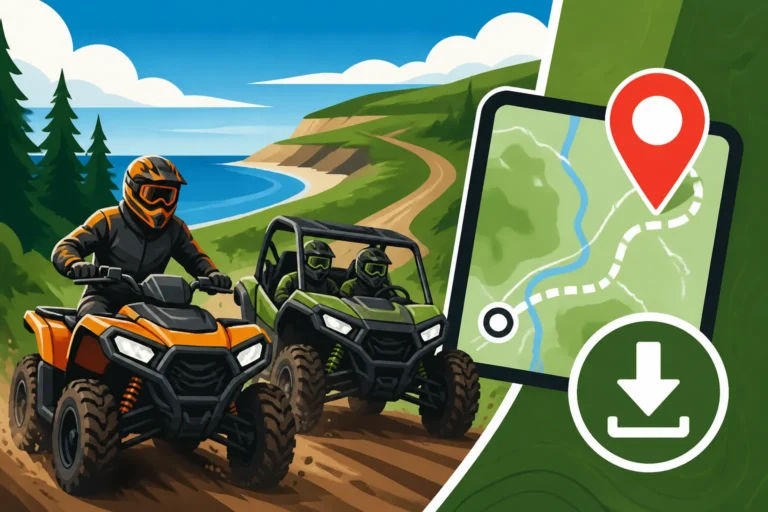
Route planning tools can help you understand distance, junctions and the shape of an outing, but don’t treat a digital map as permission to ride every line it displays. I use onX Offroad as one way to prepare a route and spot places where the group may need to pause or turn back. Before heading out, compare your plan with the official trail information and local access guidance, especially if the route is unfamiliar.
Check conditions, closures and access before departure
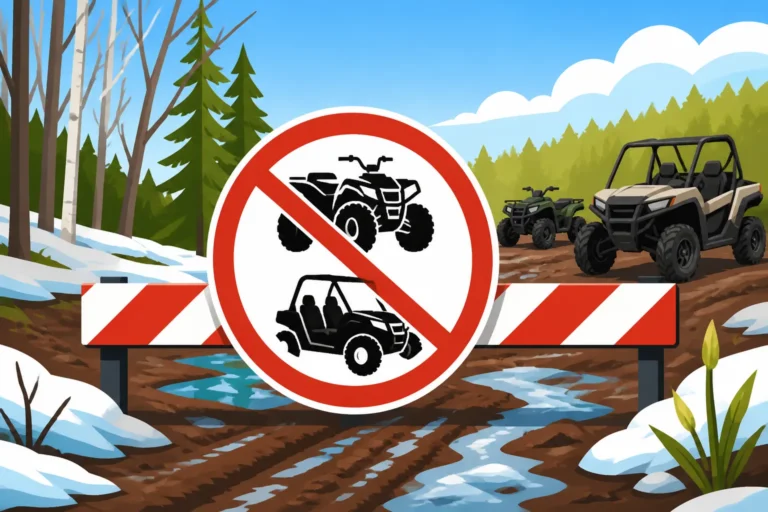
Trail conditions can change quickly after rain, during spring thaw or following damage to a bridge or culvert. A route that was manageable last month may now have deep mud, a washout or a temporary closure. These changes matter more with children because a detour can turn a simple outing into an exhausting one. Check for current notices and be willing to change the plan if conditions don’t suit your least experienced rider.
Be clear about what kind of route you are using. Club trails, private woodlots, Crown land and roads can have different access rules. A family’s permission to use one property does not give them permission to continue onto neighbouring land. Stay on the marked corridor, respect gates and signs, and don’t ride around a wet or damaged section to keep the schedule. For a broader look at seasonal planning, see [New Brunswick Riding in Spring] and [New Brunswick Trail Closures After Rain].
For navigation, prepare more than one way to understand where you are. You can review the route in onX Offroad before leaving, save relevant information for areas with poor reception and carry a backup plan such as a paper map or a familiar meeting point. Don’t expect a phone map to replace trail signs, local closure information or sound judgement. If the route becomes uncertain, stop somewhere safe and regroup rather than pressing on because the map seems to show a track ahead.
Prepare children, machines and paperwork
Make sure the machine fits the rider
A machine that looks small beside an adult quad can still be too powerful, heavy or difficult for a child to control. Fit includes more than engine size. The rider needs to reach the controls, use the brakes, steer without stretching and understand how to stop. For youth machines, check the age-specific limits and operating conditions rather than relying on a seller’s description or a child’s confidence.
A supervised practice session on an appropriate closed course can reveal problems before they become trail problems. Have the young rider demonstrate starting, stopping, turning and responding to a simple instruction. If they freeze, grab the throttle, struggle to brake or can’t keep a safe position, they need more practice or a different machine. A parent’s familiarity with the route is not a substitute for a child’s ability to control the vehicle.
Adults should also inspect their own machines. Check brakes, tires, lights, throttle response, fuel and any protective equipment before loading up. If a youth rider is authorized to operate on the planned route, make sure the machine’s setup and the rider’s experience are suitable for its surface and difficulty. The advice in [New Brunswick Equipment a Rider Must Carry] can help round out your pre-ride list.
Pack for a child’s comfort, not just the adult plan
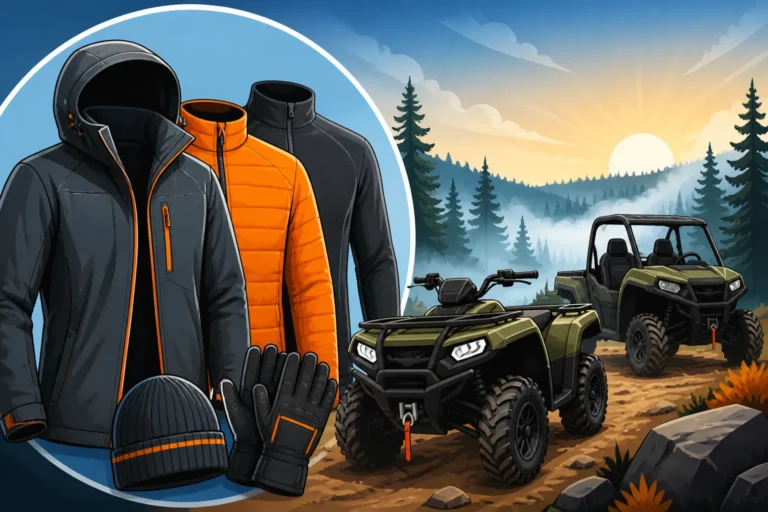
A child can become cold, thirsty or tired before they are able to explain what is wrong. Pack proper riding gear, water, snacks and clothing for changing weather. A helmet must fit securely and meet the applicable standard; a loose hand-me-down helmet is not a safe shortcut. Add gloves, eye protection, sturdy footwear and layers, and check that sleeves and pant legs won’t snag on controls or moving parts.
Before starting, agree on a simple way for a child to tell you they need to stop. Younger riders may not want to disappoint the group, especially if adults are enjoying themselves. Make it clear that asking for a break is expected, not a problem. Stop early for water, check for discomfort and give children time to adjust their gear without everyone rushing them.
Use a basic group plan: who rides at the front, who stays behind the child, where you will stop and what to do if someone loses sight of the group. Keep the pace set by the youngest or least experienced person. If the group separates at a junction, the agreed plan should be to stop and wait—not to let the child guess which way the others went.
Sort out permits, insurance and documents
Before riding a club trail, check the requirements for the machine and the riders in your group. Registration, insurance, trail permits and safety documents may each be relevant, and having one does not replace the others. Carry the paperwork required for your ride and make sure adults know where it is stored. [New Brunswick Registration Before Your First Ride] and [Four Things to Carry on a New Brunswick Trail] are useful references when building a checklist.
A family may have a registered adult machine and a youth machine but still need to confirm what applies to each vehicle. Don’t assume a permit sticker on the parent’s ATV covers a second machine or a child operating it. Confirm the permit requirements for the type of machine and trip, and check whether the rider needs to carry a certificate or other document.
Before leaving, do one last check of trail access, weather, fuel range and communication. onX Offroad can be part of your route-preparation routine, but it should sit alongside—not replace—official trail updates and the documents you need. If your group is heading into an area with weak cell service, tell someone at home where you plan to ride and when you expect to return.
Make the day safer and more enjoyable
Set expectations before the engines start
Children do better when they know what the ride will involve. Explain that the group will stop at junctions, slow down for other users and turn around if the trail becomes too difficult. Tell them not to ride ahead, leave the marked route or follow another group. These instructions are easier to remember when they are simple and repeated calmly rather than delivered in a rush at the trailhead.
Model considerate trail behaviour yourself. Slow down around other users, avoid unnecessary noise near homes and leave gates as you found them. A child learns what “responsible riding” looks like by watching the adults, not just by hearing a safety speech. [New Brunswick Trail Etiquette Locals Expect] offers useful reminders for sharing the route respectfully.
Agree on a stop signal before you ride. It can be a spoken request or a clear gesture, but everyone should know that the group will respond promptly. If the child looks frightened, is struggling to keep position or can no longer follow instructions, stop in a safe place. The right decision may be to take a break, return the way you came or end the ride.
Be ready to change the plan
Family rides rarely follow a perfect script. A child may feel comfortable in the driveway and anxious once the machine is moving. The trail may be rougher than expected, the weather may turn or the group may discover that a planned stopping place is unsuitable. Treat your route as a plan, not a promise. Turning back is a responsible choice, not a failed outing.
For a first trip, consider a location where you can return to the vehicle without navigating a complicated loop. Bring enough supplies to wait safely if you need to stop, but don’t let a packed bag encourage you to take a route that exceeds the group’s experience. If you use onX Offroad to review alternatives, check that any proposed alternate route is actually open and appropriate before taking it.
Finally, ask the child how the ride felt afterward. Find out whether the helmet was comfortable, whether the pace was manageable and which parts felt exciting or scary. Those details help you plan the next outing around the child’s real experience, rather than an adult’s guess. A successful family ride is not measured by distance covered; it is one where everyone returns safely and the child is comfortable riding together again.
Disclaimer
This article is for general informational purposes only and does not constitute professional advice. Laws, prices and regulations vary by location and change over time. Consult a qualified professional for guidance on your specific situation.