New Brunswick and Maine’s Combined Network
New Brunswick and Maine’s trail systems can turn a local ride into a much bigger trip, but crossing the border takes more than following a trail map. The key is understanding what the combined network agreement may allow, what it does not cover, and which permits, documents and checks to handle before you go.
What the combined network means
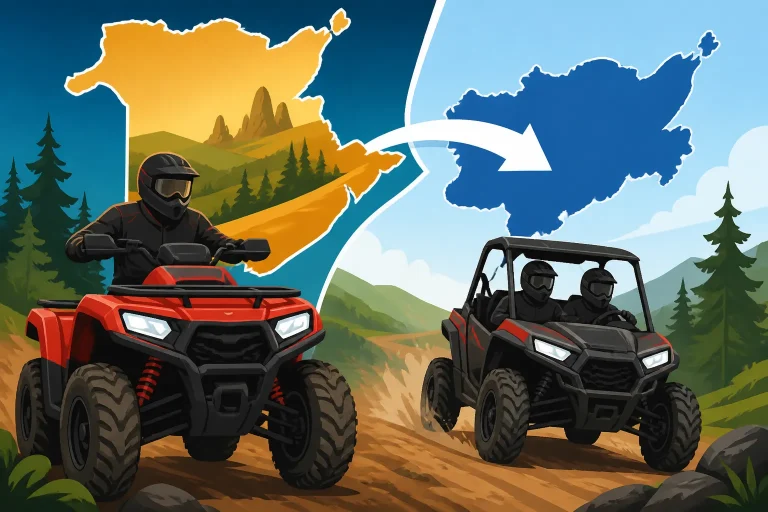
New Brunswick and Maine have an arrangement intended to connect riders with a much larger pool of trails across the border. The combined network is described as 19,200 kilometres. That figure is useful for understanding the scale of the opportunity, but it does not mean every trail is open to every rider, or that one permit automatically covers every ride.
Think of the arrangement as a way to make cross-border trail access possible under specified conditions—not as a replacement for checking the rules on each side. A trail may be closed, seasonal, restricted to certain machines, or subject to conditions that differ from the rules you follow at home.
The practical value is that a New Brunswick rider may be able to include eligible Maine trails in a trip, and a Maine rider may be able to access eligible New Brunswick trails, when the agreement is active and the rider meets its requirements. The details matter: which permit is accepted, which trails participate, what machine and rider documents are required, and whether any local restrictions apply.
The agreement is especially relevant to people planning a longer ride near the border or building a multi-day route between trail areas. It is less useful as a reason to set out without checking the current terms. A reciprocal arrangement can have conditions, and those conditions may not be identical on both sides.
For background on how the arrangement fits into trail access, see New Brunswick and the Maine Agreement. If you are planning the reverse trip into Maine, New Brunswick Riders Visiting Maine is a useful companion topic.
What reciprocity may cover—and what it does not
Reciprocity generally concerns permission to use participating trails under an agreement. It does not automatically make your machine legal for every purpose, satisfy every insurance requirement, or grant access to roads and private land. Treat each of these as a separate question.
| Check | What to confirm before riding |
|---|---|
| Trail permit | Whether your current permit is recognized for the trails you plan to use |
| Network coverage | Whether the particular route and trail segments participate |
| Trail status | Whether the trail is open, in season and suitable for your machine |
| Registration | Whether your ATV or UTV is properly registered for the trip |
| Insurance | Whether your coverage applies on the trails and across the border |
| Rider rules | Whether age, licence, training, helmet or passenger requirements apply |
| Border crossing | How to transport and declare the machine, and what documents to carry |
A permit is not the same thing as vehicle registration. Registration identifies the machine and its registered owner under the relevant jurisdiction’s rules. A trail permit is permission to use a trail system under its conditions. Insurance is another separate requirement, and a policy’s territorial limits and exclusions can matter when you travel across the border.
Likewise, trail access does not authorize riding on any public road you encounter. Road use is controlled by its own rules, which may depend on the road, local bylaws, signs and permits. A marked trail route can include connections or crossings that require extra care; do not assume that a trail permit makes road riding lawful.
The safest approach is to verify the agreement’s current conditions with the organizations responsible for the trail systems before setting out. Confirm whether the permit you hold is accepted for your planned route, whether you need anything additional, and whether an eligible machine or rider category has different requirements. For permit options on the New Brunswick side, see How to Buy a New Brunswick Trail Permit and [New Brunswick Groomed vs Non-Groomed Permits].
Confirm the agreement and route before you leave
Cross-border trail arrangements can be revised, paused or limited. Before planning around reciprocity, check that the agreement is currently in effect and that it applies to the trails you intend to ride. Do not rely only on an old sticker, a map saved on your phone, a social media post, or a rider’s account of a trip made under earlier conditions.
A useful check has two parts:
- Confirm the reciprocal terms. Find out which permits are recognized, whether there are restrictions on permit type or machine, and whether the agreement applies throughout the intended season.
- Confirm the route itself. Check for closures, seasonal limits, construction, washouts, detours and trail-specific rules. A route may appear connected on a map but still be unavailable on the day you plan to ride.
Make the route check close enough to your trip that it reflects current conditions, then check again before departure if weather or trail reports suggest a change. A legal, open trail can still become a poor choice after heavy rain, flooding, a storm or maintenance work.
Trail maps are planning tools, not a substitute for signs and local instructions. Download or save the information you need before entering areas with weak or no cellular service. Keep a backup route in mind, and be prepared to turn around if a trail is closed or the route no longer matches your plan. New Brunswick ATV Trail Map Downloads and New Brunswick Trail Conditions Before You Go can help with planning on the New Brunswick side.
A cross-border ride may also pass through areas maintained by different clubs or organizations. Be alert for changes in signage, trail surface and permitted use. Follow posted instructions even when they differ from what you are used to at home, and do not continue onto a connecting road or private property unless access is clearly permitted.
The phrase “combined network” describes the broader opportunity, not a promise that there is one uninterrupted trail from any starting point to any destination. Route connections, seasonal access and local conditions determine what is actually rideable.
Prepare your machine, documents and insurance
Before leaving, check the machine and paperwork as carefully as the route. An issue with registration, insurance or identification can disrupt a trip even if the trail permit is valid.
Registration and ownership documents
Carry the machine’s registration documents and make sure the information matches the machine. Check that the vehicle identification number or serial number is legible and that the machine is registered to the correct owner. If you are riding a borrowed or recently purchased ATV or UTV, confirm that you have the owner’s permission and the documents needed for that machine.
If the machine has more than one registered owner, a lien, or recent ownership changes, make sure those details are settled before travel. For a practical overview of what riders should keep with them, see New Brunswick Documents You Must Carry and Carrying Four Documents at Once.
Insurance
Do not assume that a policy covering local trail use automatically covers a trip into another jurisdiction. Contact your insurer and ask whether the specific machine and planned use are covered in Maine, including any trail riding, transportation and passenger use relevant to your trip. Ask whether you need proof in a particular format and whether there are exclusions that could affect the ride.
Keep proof of insurance accessible, not buried under gear. If your machine is part of a rental, borrowed, financed or business arrangement, confirm who is responsible for coverage and what the policy permits. For New Brunswick’s trail insurance rules, see New Brunswick Requires Insurance on Trails.
Machine condition and equipment
Give the machine a pre-ride check. Look at tires, brakes, lights, controls, fluid levels and any parts likely to loosen or fail on a long route. Carry basic repair supplies suited to your machine and the terrain. A cross-border trip can put you farther from home support, so a small issue may take more planning to resolve.
Check that the machine’s plate and permit sticker are readable and placed as required. Do not transfer a sticker between machines unless the rules expressly allow it. Also confirm whether the machine’s dimensions, passenger setup or equipment meet any requirements on the route you plan to ride.
Rider requirements
Rules for helmets, passengers, age, training and licences can differ between jurisdictions. Check what applies to every person in your group, not only the lead rider. A child or passenger who meets the rules at home may still need to meet a different standard on the other side of the border.
If you are leading a group, make sure each rider knows the route, meeting points and what to do if the group becomes separated. Agree on a turnaround time and a simple plan for mechanical trouble. Do not assume that everyone has the same permit or insurance status just because they are riding together.
Plan the international border crossing separately
A trail agreement does not itself grant permission to cross the international border. Plan the border crossing as a separate part of the trip and verify current entry, declaration and transport requirements with the appropriate border authorities before departure.
In most trip plans, the machine is transported to a suitable border crossing rather than ridden along a trail across the international boundary. Do not assume a nearby trail, road or informal route is an authorized place to cross. Use an official crossing and follow instructions from border officials.
Check what paperwork you should have for the machine and trailer, including registration and proof of ownership or permission to use the vehicle. If the machine belongs to someone else, ask what documentation border officials may require and obtain it before leaving. Carry identification for each traveller and make sure everyone understands where the group will meet after the crossing.
Be ready to explain the purpose and duration of the trip and to declare items as required. Border requirements can vary with the traveller’s circumstances, the machine and what is being transported. Verify the current rules with the Canada Border Services Agency and U.S. Customs and Border Protection rather than relying on another rider’s experience.
Allow extra time for the crossing, especially when travelling with multiple machines, a trailer or a group. Keep documents together and easy to reach. If a member of the group is delayed or asked to provide more information, the rest of the group should have a clear place to wait without blocking traffic or losing contact.
After crossing, check the route from the border area to the trail system. Do not assume the nearest road is open to ATVs or UTVs. A legal route may require a designated trail connection, permitted road segment or transport on a trailer. If there is any doubt, ask the relevant trail organization or local authority before riding.
A practical pre-trip checklist
Use this checklist when organizing a ride that relies on the New Brunswick–Maine connection:
- Check that the agreement is active. Confirm its current terms through the organizations responsible for the relevant trail systems. Checking Whether an Agreement Is Live is a useful reminder that this step should not be skipped.
- Confirm permit recognition. Ask whether your specific permit covers the planned trails and whether you need an additional permit or membership.
- Map a legal route. Identify trailheads, connections, permitted crossings, fuel and likely stopping points. Make sure every segment is open to your machine.
- Review current trail conditions. Look for closures, seasonal restrictions, weather-related damage and reroutes.
- Verify registration and ownership paperwork. Check the machine’s documents and bring written permission if you are not the owner.
- Ask your insurer about cross-border use. Confirm coverage for the machine, route and riders, and carry acceptable proof.
- Check rider and machine rules on both sides. Review requirements for helmets, passengers, age, training, licences and equipment.
- Plan the border crossing. Verify current requirements with border authorities and use an authorized crossing.
- Prepare for limited service. Save maps and contact information offline, share your plan with someone at home and carry supplies for delays.
- Recheck before departure. A permit and route that worked for a previous trip may not be enough for this one.
If any part of the plan is uncertain, resolve it before loading the machines. A short call to a trail organization, insurer or border authority is easier than finding out at a trailhead or crossing that a key requirement was overlooked.
Frequently Asked Questions
Does a New Brunswick trail permit automatically cover Maine?
Not necessarily. The agreement may recognize certain permits for eligible trails, but its current terms determine what is covered. Confirm the permit, route and any additional requirements before travelling.
Does the combined network mean every trail is open to ATVs and UTVs?
No. The combined network describes a broad trail connection, not blanket access. Individual trails can have different closures, seasons, machine restrictions and local rules.
Can I ride an ATV across the border on a trail?
Do not assume that you can. A trail agreement is not border-crossing authorization. Verify the proper crossing and current transport and declaration requirements with border authorities.
Is registration the same as a trail permit?
No. Registration and trail access are separate. You may need to satisfy registration, insurance and permit requirements independently, along with rider and trail rules in each jurisdiction.
Disclaimer
This article is for general informational purposes only and does not constitute professional advice. Laws, prices and regulations vary by location and change over time. Consult a qualified professional for guidance on your specific situation.