Reporting Damage to a Club
A washed-out culvert, fallen tree, damaged bridge, or fresh rut can turn a familiar New Brunswick ATV trail into a hazard surprisingly quickly. Reporting it to the club that maintains the corridor helps get the right people informed and can prevent another rider from reaching the same danger unprepared. This guide explains what to report, how to document it, and what to do while you wait.
What counts as trail damage worth reporting
Report hazards that could injure someone or strand a machine
Report damage when it changes how safely riders can travel through a section. That includes a collapsed bridge, a washout, a missing or broken trail sign, a fallen tree blocking the route, exposed wiring, a deep rut, a damaged gate, or a culvert that appears to be failing. A hazard does not have to be dramatic to matter: a broken edge on a narrow bridge can be enough to put a tire off line.
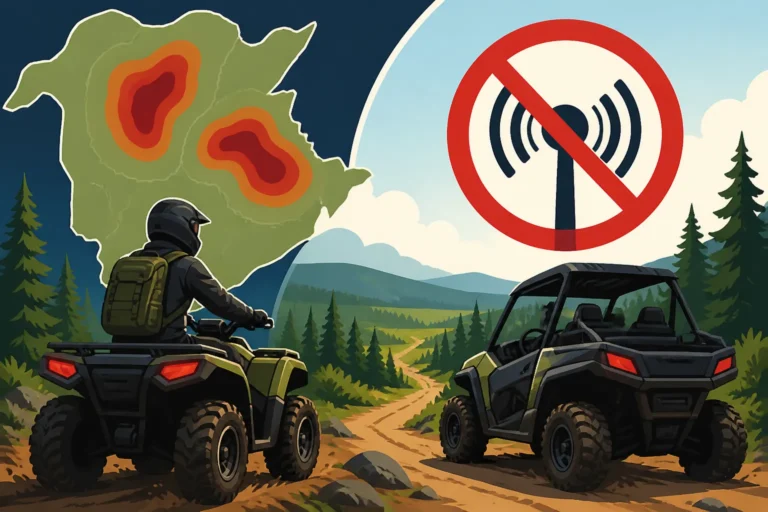
Pay particular attention to problems that may worsen after rain or spring thaw. Water can undercut a trail surface, weaken a bank, or make a small washout much harder to see. On a route near Miramichi, Bathurst, Woodstock, or another wooded area, a hazard may also be far from cell service or help. If you would slow down sharply, warn the group behind you, or choose not to cross, it is worth reporting.
Not every muddy patch is damage. Seasonal soft spots are part of riding, and clubs may close sections to protect a trail during thaw or heavy rain. But if the trail is actively eroding, a bridge or culvert looks unstable, or riders are being forced into a dangerous detour, send the club a clear report. For context on why a wet section should not be bypassed by widening the trail, see Why Riding Around a Wet Section Makes It Worse.
Distinguish trail damage from a temporary obstruction
A branch across the route may be a quick obstruction; a tree that has fallen across a steep, narrow approach can be a serious safety problem. A puddle may be ordinary trail conditions; a new channel cutting across the tread may indicate erosion. Report what you can see rather than trying to diagnose the cause. “The trail is washed out” is less useful than “water has cut a trench across the trail, and the downhill edge is undercut.”
Also report signs that a route may no longer be safe or passable even if you do not see the underlying damage. For example, if a group cannot get around an obstruction without entering a ditch or crossing private ground, describe that limitation. Do not assume the club already knows because other riders have passed the spot. A single specific report can help a volunteer locate the problem and decide whether a closure, inspection, or repair is needed.
If the section is already marked closed, respect the closure and report any barrier or sign that has been moved, damaged, or is hard to see. Trail closures are often intended to prevent more damage or keep riders away from a hazard. Check New Brunswick Trail Closures After Rain and New Brunswick Trail Closures in Spring Thaw for the kinds of conditions that can affect access.
How to make a useful report to a New Brunswick club
Identify the exact trail and location
A good report answers the first question a volunteer will have: where should we look? Note the trail name or nearby community, the direction you were travelling, and a recognizable landmark such as a bridge, junction, trailhead, or road crossing. If you know the club responsible for that trail, contact it directly. If you do not, start with the local club or federation information associated with the marked route and ask them to direct the report.
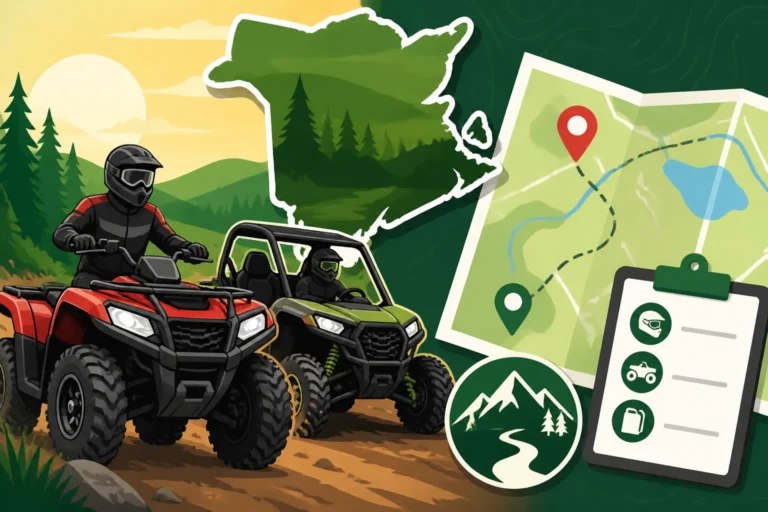
A map pin or GPS coordinates can save a volunteer a long search, especially on a wooded route where several trail branches look similar. Record your location while you are safely stopped. A mapping app such as onX Offroad may help you save a waypoint or note a location, but include plain-language landmarks too; an app pin is only useful if the recipient can interpret it and access the area.
If you are unsure which corridor you were on, do not guess. Send the closest community, the last junction you passed, your direction of travel, and any visible trail signs or route markings. A photo of a sign or junction may be more useful than an approximate trail name. For help understanding how clubs maintain and mark routes, see New Brunswick Club Trail Maintenance and New Brunswick Trail Signage Explained.
Describe the problem in practical terms
Keep the first message factual and easy to scan. State what is damaged, how much of the trail is affected, and whether a rider can pass safely. Mention conditions that may help the club assess urgency: water flowing across the trail, a bank that is crumbling, a bridge railing missing, or an obstruction that forces riders off the marked corridor.
A useful report might say: “On the marked trail east of the junction near the woods road, a tree blocks the full width. Riders cannot pass without leaving the trail. I was travelling toward the next bridge; the spot is about a short ride from the junction.” If you can safely add a location pin and a photo, include them, but do not make the message depend on an image alone.
Avoid vague descriptions such as “trail is bad” or “something is broken.” Also avoid presenting a guess as a fact. If you do not know whether a bridge is structurally unsafe, say that it appears damaged and describe what you observed. A club can decide whether to inspect it, request more information, or arrange a response. You can review Reporting Damage to a Club alongside New Brunswick Trail Conditions Before You Go when planning how to share useful details.
| Include in your report | Helpful detail | Why it matters |
|---|---|---|
| Trail location | Trail name, nearby community, junction, or GPS pin | Helps volunteers find the site |
| Direction of travel | The way you were riding and the last landmark passed | Narrows down the route |
| Type of damage | Fallen tree, washout, sign damage, bridge issue, or other hazard | Helps the club understand what to inspect |
| Severity | Whether riders can pass and whether they must leave the trail | Helps assess immediate risk |
| Evidence | A safely taken photo or map location | Makes the report easier to verify |
| Your contact details | A way to ask a follow-up question | Helps resolve uncertainty |
What to do while you are near the damaged section
Put safety ahead of collecting evidence
Stop at a safe distance before reaching the hazard, particularly if the trail narrows, visibility is poor, or other riders may be approaching. Let your group know what you have found and avoid crowding the damaged area. Do not ride onto a questionable bridge, test a soft edge, or walk beneath a leaning tree just to get a closer photograph.
Take pictures only from a stable, safe place. A wide view can show how the hazard sits on the trail; a closer image may show a broken sign, exposed culvert, or damaged surface. If taking a picture would put you in the path of traffic, close to moving water, or on unstable ground, skip it. A clear written description and location are more valuable than a risky photo.
Do not try to clear heavy debris, move a damaged structure, or repair a trail feature unless the club has asked you to help and the work is within your ability and authorization. A fallen tree may be under tension, and a damaged bridge or culvert can fail without warning. If a person is injured or there is an immediate emergency, contact emergency services rather than treating a club message as an emergency response.
Do not create a new route around the problem
It can be tempting to ride around a washout or tree, especially when the detour looks obvious. But cutting a new line can widen the trail, damage vegetation, push riders onto private property, or make erosion worse. Stay on the marked corridor where it is safe to do so. If there is no safe way through, turn back rather than making an improvised bypass.
The same caution applies to moving signs, opening a gate, or following tracks into an unmarked woods road. A visible tire track does not prove that the route is open or that riders have permission to use it. If a problem forces you to leave the trail to get past, treat that as a reason to stop and report it rather than as permission for others to use the same detour.
If the damaged section may affect other riders, tell your group and share the report through the appropriate club channel. Do not assume that posting a photo in a general riding group will reach the people responsible for maintenance. A report sent directly to the club is easier to route to the right volunteer. For additional guidance, see Staying on a Marked New Brunswick Corridor and Leaving a Gate the Way You Found It.
Following up and helping prevent repeat problems
Make the report easy to act on
Use a calm, concise tone and include the information a volunteer needs to locate the damage. If the club replies with a question, answer with the landmark, direction, or photo detail they request. If you use onX Offroad or another mapping tool, make sure the pin matches the location you describe in words; a pin in the wrong place can send someone searching along the wrong branch.
You do not need to know who is responsible for every part of a route before reporting a hazard. A club may maintain a marked section while a different landowner or authority controls nearby property or infrastructure. If the first organization you contact cannot handle the issue, ask whether it can direct the report to the appropriate contact. Avoid sharing private contact information for landowners or volunteers in public posts.
Keep expectations realistic. Club trail work often depends on volunteer availability, access, weather, equipment, and the nature of the repair. A simple obstruction may be addressed differently from a damaged bridge or washout that needs inspection. If the section remains concerning, check official club or trail updates before riding back to it rather than assuming that a report means the route has been repaired.
Share updates without adding confusion
If you revisit the area and the condition has changed, send a brief update to the same club contact if possible. Say whether the hazard is still present, has become worse, or appears to have been cleared. If the club has posted a closure, follow that instruction even if the obstacle looks passable from your side. A closure can reflect a risk that is not obvious from one approach.
When posting in a rider group, keep the location and status clear, and avoid presenting an unconfirmed repair as complete. You can say that you reported a washout and that the trail should be checked before riding, rather than telling people it is safe based on a quick look. When a club has made an update, direct riders to that information instead of repeating old details that may no longer be accurate.
Clear reports help clubs prioritize limited time and equipment. Whether you are riding near Fredericton, the Acadian Peninsula, or a remote stretch in the Restigouche, the useful pattern is the same: identify the location, describe what you observed, stay clear of unsafe damage, and leave repairs and closure decisions to the people responsible for the trail. For more on route changes and maintenance work, read New Brunswick Washouts and Reroutes and Club Trail Work Weekends in New Brunswick.
Disclaimer
This article is for general informational purposes only and does not constitute professional advice. Laws, prices and regulations vary by location and change over time. Consult a qualified professional for guidance on your specific situation.