Club Trail Work Weekends in New Brunswick
A washed-out culvert, a fallen tree, or a stretch of trail getting swallowed by brush can turn a favourite New Brunswick ride into a frustrating detour. Club trail work weekends bring riders together to maintain these routes before small problems become bigger ones. Here’s how to find a work day, prepare sensibly, and help without putting yourself or the trail at risk.
What happens during a New Brunswick club trail work weekend
The work depends on the trail and the season
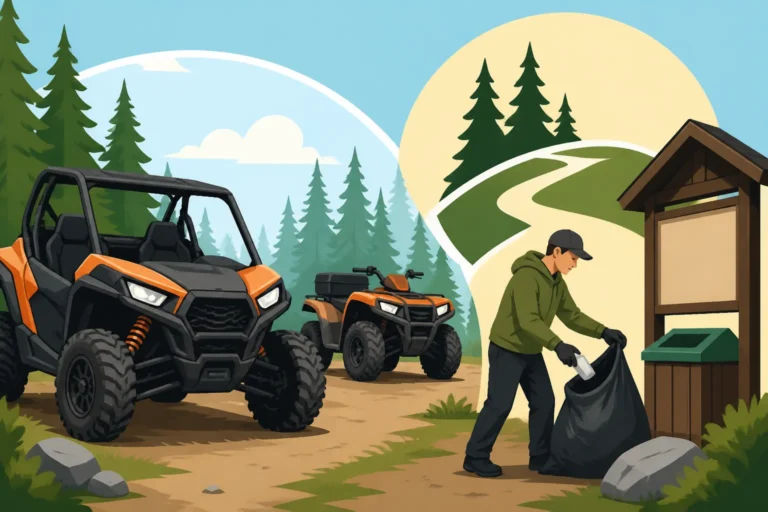
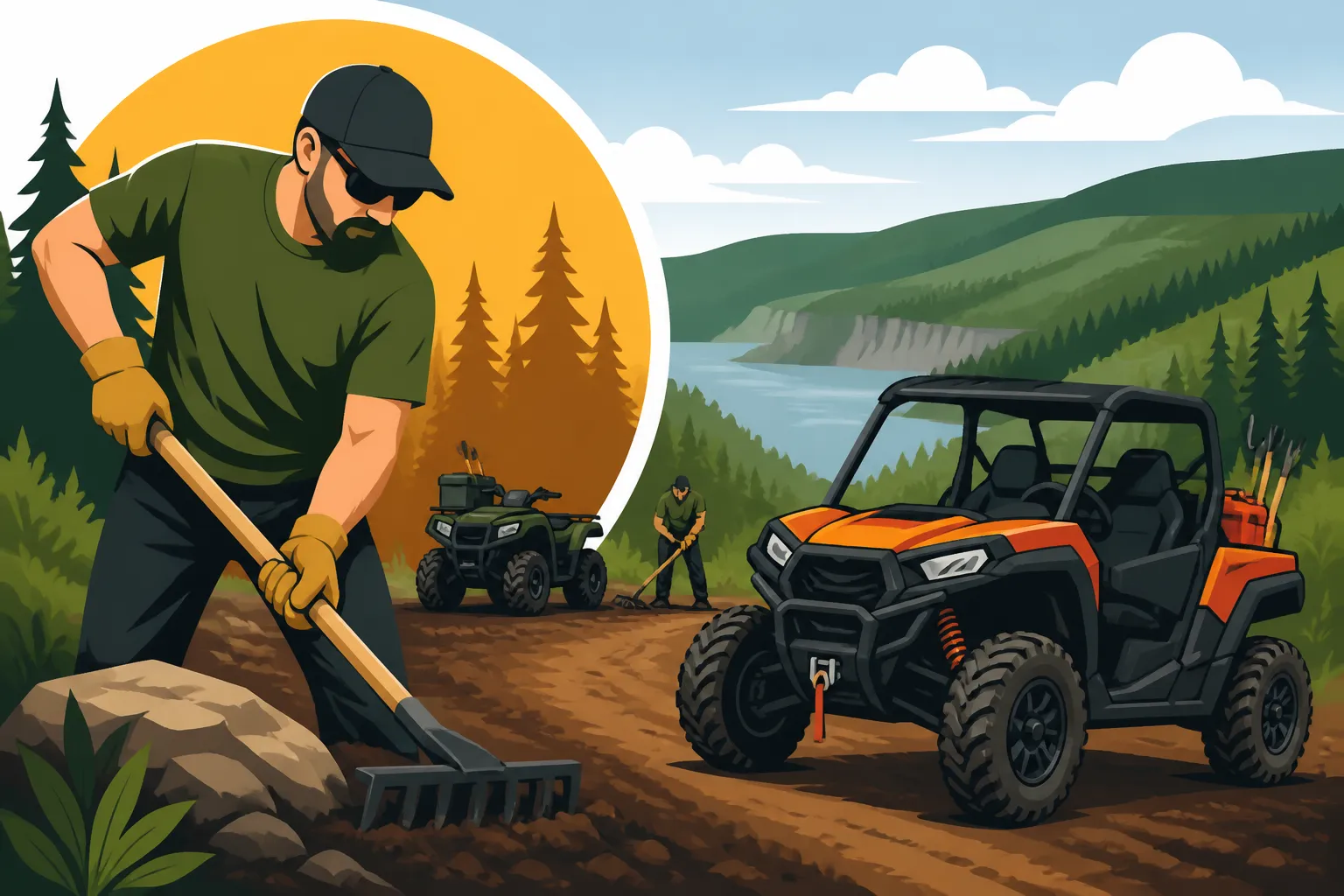
A trail work weekend isn’t always a big construction project. Some days are about clearing branches, brushing vegetation back from a corridor, checking signs, or picking up litter. Other jobs may involve inspecting a bridge or culvert, marking a reroute, or reporting damage that requires equipment or a qualified crew.
Conditions vary across New Brunswick. A trail near Fredericton may need a different kind of attention than a remote route in the Restigouche or around Miramichi. Spring thaw can expose washouts and soft spots; after storms, volunteers may find downed trees or debris. The club organizing the work day decides which tasks are suitable for volunteers and what equipment is needed.
It helps to understand that trail maintenance is ongoing, not a one-time cleanup. A corridor may need repeated brushing, sign checks, or repairs as weather and use take their toll. New Brunswick Club Trail Maintenance offers useful context on the work that keeps club routes usable, while New Brunswick Clubs and What They Maintain can help explain how local responsibilities are organized.
Volunteers may have different roles
Not everyone needs to arrive with a chainsaw or mechanical skills. A club may need people to carry supplies, help with cleanup, check trail markers, or work alongside an experienced volunteer. More specialized tasks, such as operating equipment or repairing structures, should be left to people the club has approved and trained for that job.
If you’re new, say so when you contact the organizer. That gives the club a chance to match you with a task that fits your experience and comfort level. You might be asked to join a small crew led by someone who knows the trail, rather than head out on your own to find work.
A work party is also a chance to learn how a corridor is maintained and why certain sections are closed or rerouted. For example, a wet patch that looks like a quick shortcut may be protected for a reason. Staying with the assigned crew and following its directions is more helpful than trying to “fix” a section independently.
How to find a work day and choose the right one
Contact a club before you show up
Start with a club that maintains trails near where you live or ride. The Finding a New Brunswick Club Near Your Town guide is a useful starting point. Check the club’s own communications or contact its organizer to ask whether a work day is planned, where volunteers should meet, and whether there’s a particular task they need help with.
Avoid assuming that a trailhead is the meeting point or that a public-looking route is open for volunteer work. Some corridors cross private woodlots or other land where access and maintenance arrangements matter. A club can tell you where you’re authorized to go and which sections are part of its work plan.
When you get in touch, ask practical questions rather than simply asking whether you can help. For instance:
- What time and location should volunteers meet?
- How long is the work day expected to last?
- What task will the crew be doing?
- Should you bring hand tools, or will the club provide equipment?
- Are there access, parking, or safety instructions?
- Who should you contact if weather or trail conditions change the plan?
These questions help avoid the awkward experience of arriving with the wrong gear—or at the wrong place—while the crew is already working elsewhere.
Check conditions and travel plans
A planned volunteer day can be affected by rain, flooding, wind damage, or a change in access. Check in with the organizer before you leave, especially if you’re driving a long distance to reach a trail area. Don’t assume that a route is open for riding just because a work party is scheduled there.
If you’re travelling to the work site by ATV or UTV, confirm whether riding in is permitted and whether the machine is needed at all. Some jobs are easier and safer to reach on foot or in a work vehicle. Keep your machine on the permitted route, and don’t use it to carry people or supplies in a way the club hasn’t approved.
For navigation, onX Offroad can be useful for organizing your own ride planning or keeping track of a route you’ve been given. It should not replace the club’s directions or be treated as proof that a trail is open to public riding. Local access rules, closures, and the club’s work plan take priority. For general route planning, New Brunswick ATV Trail Map Downloads can also help riders think about the wider trail network, but confirm current details with the local club.
What to bring and how to work safely
Dress for a full day outdoors
Trail work often means standing in damp ground, walking through brush, or working in changing weather. Wear sturdy footwear with good grip, gloves, clothing that can handle dirt and snags, and layers suited to the forecast. Insect protection and water are sensible additions, especially for remote areas or warm-weather work.
Pack food and water even if the club expects a shorter day. A task can take longer than planned, and a remote work site may be far from a store or vehicle. If you have medication or specific health needs, plan for those before leaving home and tell the organizer if they could affect the work you’re assigned.
Bring only tools the club has requested. A personal saw, powered equipment, or heavy tool may be unsuitable if the crew hasn’t planned for it. Ask before bringing anything that could create extra transport, storage, or safety concerns. A volunteer who arrives ready to follow the plan is often more useful than one who shows up with equipment nobody can safely use.
| Item | Why it helps | Check with the organizer |
|---|---|---|
| Sturdy footwear and work gloves | Protects against rough ground, brush, and debris | Whether special footwear is needed |
| Water and food | Helps you stay comfortable through a longer work period | Whether food or water is being arranged |
| Weather-appropriate layers | Conditions can shift during an outdoor day | Whether the site is exposed or especially wet |
| Personal first-aid supplies | Useful for minor personal needs | What first-aid arrangements the crew has |
| Requested hand tools | Supports the assigned task | Which tools are actually needed |
| Phone or navigation device | Helps with coordination and orientation | Whether reception is likely to be limited |
Follow safety directions and respect the corridor
Listen to the crew lead before work begins. Make sure you understand where the crew is operating, how people should communicate, and what to do if you need to step away. Keep a safe distance from machinery and from anyone using cutting or powered equipment. Don’t operate a tool unless the organizer has approved you for it and you know how to use it safely.
Pay attention to where debris is being moved and where tools are placed. A branch cleared from the riding surface can still create a hazard if it’s left in a ditch, on a sightline, or in a spot where it can roll back onto the trail. Follow the crew’s instructions about disposal and placement instead of deciding on your own where material should go.
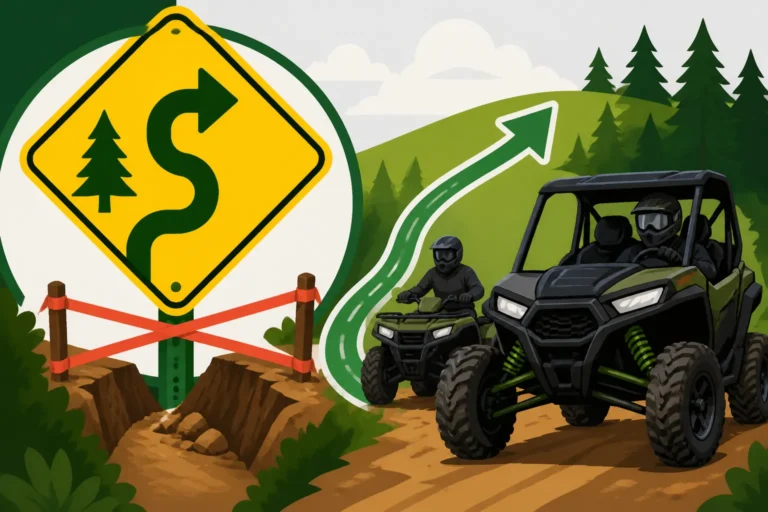
Stay within the work area and authorized corridor. Don’t widen a trail, cut new access, move a gate, or create a bypass around a wet section unless that work is part of the club’s direction. A well-intended detour can cause erosion or damage land. Staying on a Marked New Brunswick Corridor explains why remaining on the designated route matters to riders and landowners alike.
Making your volunteer effort useful after the work day
Report problems clearly
If you spot an issue outside the assigned work area, tell the crew lead rather than attempting an unapproved repair. A clear report can help the club decide whether the problem needs another volunteer day, a specialist, equipment, or a temporary closure.
Useful details include the nearest sign or trail marker, the direction you were travelling, what you observed, and whether the issue blocks passage or creates an immediate hazard. A photo can help, provided you can take it safely and without stepping into a dangerous area. Avoid posting a precise location publicly if the club has asked volunteers to keep operational details within its channels.
If you encounter damage on a separate ride, use the club’s preferred reporting method. Reporting Damage to a Club covers the basic idea: share useful information with the people responsible for the corridor, rather than trying to solve every problem yourself. When in doubt, ask the club what details it wants and where to send them.
Keep riding responsibly after the crew leaves
A work weekend doesn’t mean every nearby trail section is ready for normal riding. Some areas may remain soft, closed, or subject to a detour while work continues. Check New Brunswick Trail Conditions Before You Go before setting out, and follow posted signs and club updates.
When you ride, don’t test a repaired section by driving around a barrier or through a soft shoulder. Repeated traffic can undo careful work quickly, especially in wet conditions. If a section is closed, choose another marked route instead of making your own line. New Brunswick Trail Etiquette Locals Expect is a helpful reminder that considerate riding protects access as well as the trail surface.
If you used a phone app such as onX Offroad for navigation, remember that a saved line or map view doesn’t override a closure or a club’s directions. Trail status can change after a map or route was saved. Before riding, check the club’s latest information and be prepared to turn around if conditions or signage indicate you should.
Help without overcommitting
You don’t have to promise every weekend to be a useful volunteer. A few hours on a planned work day can help, and being honest about your availability makes it easier for the organizer to plan. If you can’t make it after signing up, let the club know promptly so the crew can adjust.
Some people enjoy hands-on work; others are better at helping with coordination, supplies, or communication. Ask what the club needs rather than assuming every volunteer role involves tools. The New Brunswick Club Volunteer Days guide can help set expectations for getting involved, while a club contact can tell you what kind of help is useful locally.
The best contribution is safe, authorized, and suited to the job. Show up prepared, work with the crew, and leave decisions about access, repairs, and closures to the people managing that corridor. That approach helps protect New Brunswick’s trails and makes it more likely the routes will be ready when you come back to ride.
Disclaimer
This article is for general informational purposes only and does not constitute professional advice. Laws, prices and regulations vary by location and change over time. Consult a qualified professional for guidance on your specific situation.