New Brunswick Lodging That Welcomes Quads
Finding lodging that welcomes quads in New Brunswick takes more than spotting a cabin near a trail on a map. You need to know whether riders can reach a legal trail from the property, where to park a truck and trailer, and how the host handles machines overnight. This guide explains what to ask, how to plan by region, and how to avoid booking a place that does not fit your ride.
What Quad-Friendly Lodging Should Actually Provide
A place to park the whole setup
When you travel with an ATV or UTV, parking is part of the accommodation—not a small detail to sort out after check-in. A truck, trailer, and machine can take up considerably more room than a car, and a tight driveway or shared parking area can make arrival stressful. Before booking, describe your setup clearly: how many machines you’re bringing, whether they’re on a trailer, and the approximate length of the full vehicle-and-trailer combination.
Ask whether the parking is level, firm, and available for the entire stay. A grassy patch may be fine in dry weather but difficult after heavy rain, while a steep or narrow driveway can be awkward when backing a trailer. If you’re arriving late, find out whether you can unload after dark and where the trailer can remain once the truck is parked.
It’s also worth asking how visible the parking area is from the accommodation and whether there is a secure place to store helmets, riding gear, and removable equipment. Don’t assume that “quad-friendly” means the property offers a locked garage or machine storage; confirm any security arrangements directly with the host.
Legal trail access, not just nearby trails
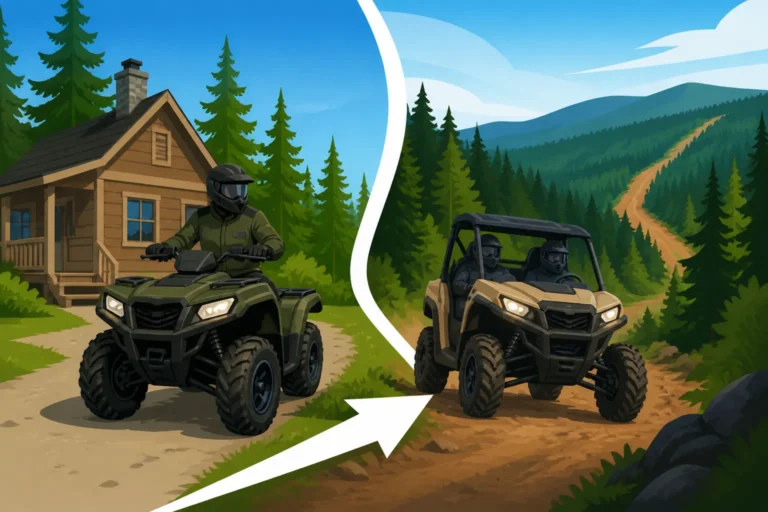
A property can look close to a trail on a map without giving you a legal route onto it. The connecting road might be private, closed to ORVs, outside a designated corridor, or subject to a local restriction. Ask the host exactly where guests can access a permitted riding route and whether reaching it involves trailering the machine to a trailhead.
That distinction matters if your plan is to ride directly from your lodging. A cabin near Miramichi, a campground outside Woodstock, or a motel near Bathurst may be convenient for a regional trip, but proximity alone does not establish that you can ride from its driveway. Confirm the actual route and any road sections before unloading.
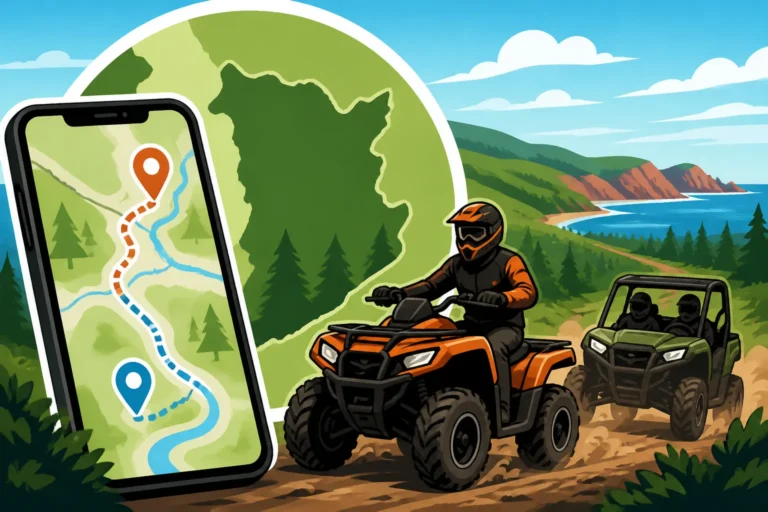
Use an official trail map or club information to check the route, and treat an accommodation host’s directions as a helpful starting point rather than a replacement for current trail rules. [New Brunswick Trail Maps and the MapGear App] can help you think through route planning, while [New Brunswick Trail Conditions Before You Go] is a useful reminder to check conditions before setting out.
Space and facilities for riders
A comfortable stay is easier when the property suits the way your group travels. If you’re bringing muddy boots, wet jackets, and helmets, ask whether there is a covered outdoor area or a sensible place to leave gear. For a multi-day ride, laundry access, a drying area, and a spot to rinse equipment may matter more than decorative extras.
Groups should also check sleeping arrangements rather than assuming a listing’s maximum occupancy will work for everyone. Confirm the number of beds, whether the kitchen is equipped for the group, and whether there is room to sit together after a day outside. If you’re traveling with children or riders who need quieter downtime, ask about separate rooms and the general layout.
| Accommodation type | Often useful for | Questions to ask before booking |
|---|---|---|
| Motel or inn | Short stays and simple overnight stops | Is trailer parking available, and can you park near your room? |
| Campground | Riders who bring their own camping setup | Are machines allowed on the site, and where can trailers be left? |
| Cabin or cottage | Groups wanting a kitchen and shared space | Is the driveway suitable for a truck and trailer? |
| Lodge or sporting camp | A trip built around a remote area or guided outing | Is there direct trail access, and what riding rules apply on the property? |
| Vacation rental | Families or groups wanting private accommodation | Is outdoor parking permitted, and are there limits on machine use or storage? |
The labels in the table are only a starting point. Policies vary from one property to another, even within the same type of accommodation, so confirm the details in writing before paying a deposit.
How to Choose a Base for a New Brunswick Riding Trip
Match the location to your route
Start with the riding area you want to explore, then look for lodging that makes the daily logistics manageable. New Brunswick has riding regions around places such as Woodstock and Hartland, Miramichi, Bathurst, Campbellton, and Edmundston. These names can help you narrow your search, but they do not guarantee that a particular property connects to a legal trail.
Consider how far you’re willing to drive to a trailhead each morning. A place with excellent trailer parking but no direct access may still be a good fit if you’re comfortable hauling your machines. On the other hand, if your group wants to ride from the door, trail access needs to be confirmed before you book—not inferred from a listing description.
Think about fuel and supplies as part of the route, too. A lodging choice that seems convenient on a map may leave you with a long drive for fuel, groceries, or a repair item. Browse [New Brunswick Trails With Fuel Stops] when planning a route, but verify that the stops you intend to use are open and accessible for your trip.
Choose the accommodation style that suits your group
For a short weekend, a motel may be practical if it has adequate parking and you plan to spend most of the day riding. It can reduce cooking and housekeeping, but you may have less room to dry gear or gather as a group. Ask whether the property allows trailers to remain parked overnight and whether guests have to move vehicles during the day.
A campground or cabin can work well for riders who want more outdoor space and flexible meal arrangements. Check whether the campground permits machines on internal roads, where the trailer can be parked, and whether quiet hours affect early departures or late returns. A private rental may offer more space, but read its rules closely: outdoor recreation-friendly does not automatically mean that ATVs or UTVs are allowed on the property.
If your trip includes a guide, tour, or rental machine, coordinate the accommodation and operator rather than assuming one arranges the other. Ask who is responsible for the machine’s permit, where it will be stored, and whether the lodging has space for the group’s vehicles. [New Brunswick Lodging That Welcomes Quads] is a natural topic to compare against your specific needs, while [New Brunswick Rental Machines and Permits] can help you identify permit questions when a rental is part of the plan.
Plan for trail season and changing conditions
The riding experience can vary with the season, trail type, and local conditions. Some routes may be seasonal, temporarily closed, or affected by rain and spring thaw. Even when a lodging property is open year-round, that does not mean nearby trails are open for every kind of riding at every time of year.
Before you settle on dates, check the intended trail network and ask the accommodation whether access changes seasonally. If the property advertises “trail access,” ask what that means during your travel dates and whether you’ll need to trailer to a different starting point. [New Brunswick Trail Closures After Rain] and [New Brunswick Trail Closures in Spring Thaw] are useful planning reads when weather could affect the route.
Mapping tools can help you compare possible lodging locations with your intended trail route. onX Offroad can be one planning aid alongside official club maps, but don’t treat any app as permission to ride a road or trail. Check the route against current local information and confirm any uncertain access with the relevant club or authority. If you use onX Offroad to sketch out a trip, keep a separate plan for fuel, trailhead parking, and alternate routes in case conditions change.
Questions to Ask Before You Book
Confirm parking and machine rules directly
Send the host a concise message with the details that affect the property: number of machines, vehicle and trailer size, arrival time, and whether you need to leave the trailer on-site. Ask if the parking area is suitable for the setup and whether you need permission to unload or wash a machine. Clear questions are more useful than simply asking, “Are quads welcome?”
Confirm whether machines may be started or moved around the property, especially early in the morning or late at night. Some places may welcome riders but ask guests to keep machines on trailers while on the property. Others may have noise expectations, designated parking areas, or rules about cleaning equipment. Get those details before arrival so nobody is negotiating in the dark beside a loaded trailer.
If you expect to arrive after check-in hours, ask how access works and whether there is room to turn around. A narrow lane can be a real problem when you’re towing. Photos of the parking area can help, but a direct description from the host is still valuable—particularly if there are steep grades, soft ground, gates, or tight turns.
Check permits, insurance, and documents
Sort out the machine paperwork before the trip rather than at the trailhead. Depending on your situation, riders may need to carry registration and insurance documents, and trail riding may require a separate trail permit. Confirm the rules for your machine and planned route, including what applies to visitors from outside New Brunswick.
For a refresher on what to carry, see [New Brunswick Documents You Must Carry]. Also check where the trail permit sticker belongs on the machine; [New Brunswick Permit Placement on a Machine] can help you avoid arriving with a sticker mounted in the wrong place. Keep required documents accessible and protected from rain, mud, and accidental loss.
When you plan a route with onX Offroad or another mapping tool, remember that mapping and compliance are separate tasks. A line shown on a map does not confirm registration, insurance, permit, or road-use requirements. Check the relevant rules before riding, and ask the host only about their property and local access—not as the sole source for province-wide legal requirements.
Ask about services and practical backup plans
A lodging host may know useful local details, such as where riders commonly park a trailer or which nearby services can help with a basic repair. Still, confirm opening hours and availability directly with businesses before depending on them. Ask whether there is a nearby grocery store, fuel stop, repair shop, or place to refill water, especially if you’re staying outside a town.
Plan for a change of conditions. If a route is closed or too wet, know whether your group can switch to another trail area or spend the day off the machines. Check whether your booking has rules about changing dates or cancelling, and understand the terms before you pay a deposit. A flexible backup plan is particularly helpful for a group that has traveled a long distance.
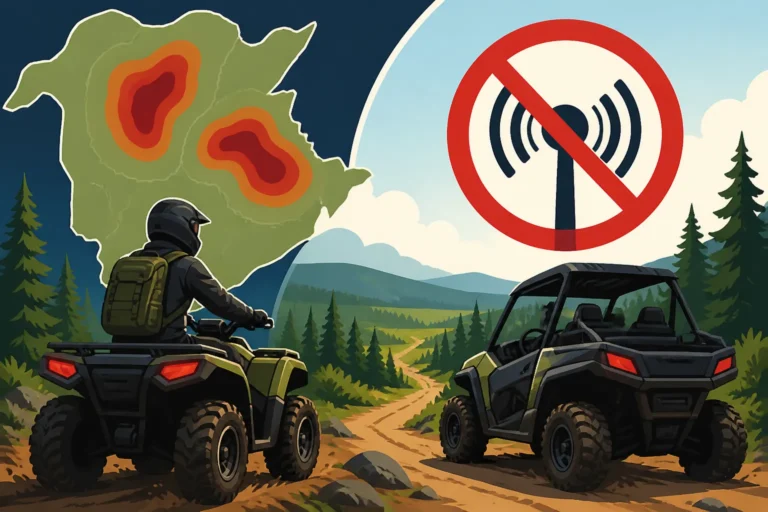
For navigation, onX Offroad may help you organize route ideas and identify areas to investigate, but confirm access through official trail information. Save important details before leaving for a remote ride, and don’t rely on cellular service being available throughout the route. [New Brunswick Cellular Reception Maps] can help you consider coverage as part of your planning.
A Simple Booking Checklist for Quad-Friendly Lodging
Before you reserve
Use a short checklist to compare properties on the details that matter most. It can be tempting to book the first place with attractive photos and a convenient location, especially when a group is trying to coordinate dates. Taking a few minutes to ask the same questions of each host makes the comparison fairer and can prevent expensive last-minute surprises.
- Describe your machines, truck, and trailer.
- Confirm parking space, surface, access, and overnight arrangements.
- Ask whether you can ride from the property or must trailer to a trailhead.
- Verify the legal route to the trail rather than relying on distance alone.
- Check seasonal access and likely trail conditions for your dates.
- Ask about gear storage, drying space, laundry, and cleaning rules.
- Confirm the group’s beds, kitchen access, and arrival arrangements.
- Review deposits, cancellation rules, and any property-specific restrictions.
Keep the answers in writing, especially for parking and machine access. If the host’s response is vague—“There are trails everywhere” or “People ride around here”—ask a follow-up question about the actual route and whether guests are permitted to use it. A clear answer now is far easier than discovering a restriction after unloading.
On arrival and during the stay
When you arrive, park only in the agreed area and follow the property’s instructions. Keep machines off private roads or lawns unless the host has explicitly allowed their use. Be considerate about noise, particularly when other guests or nearby homes are close by, and avoid revving engines or loading equipment during quiet hours.
Before each ride, check the route and conditions again. Ask locally about closures or changes, and confirm that your chosen trail remains appropriate for your machine and group. An app such as onX Offroad can support route planning, but use official trail information to verify access. If a route looks uncertain, choose a confirmed alternative rather than treating a map line as permission.
When you return, keep mud and gear within the areas the host has approved. Let the host know promptly if the parking surface has become soft, a gate or access point is blocked, or you notice a problem that could affect the next guest. Small courtesies help maintain good relationships between riders and accommodation providers—and make it easier for future visitors to find places that genuinely welcome quads.
Disclaimer
This article is for general informational purposes only and does not constitute professional advice. Laws, prices and regulations vary by location and change over time. Consult a qualified professional for guidance on your specific situation.