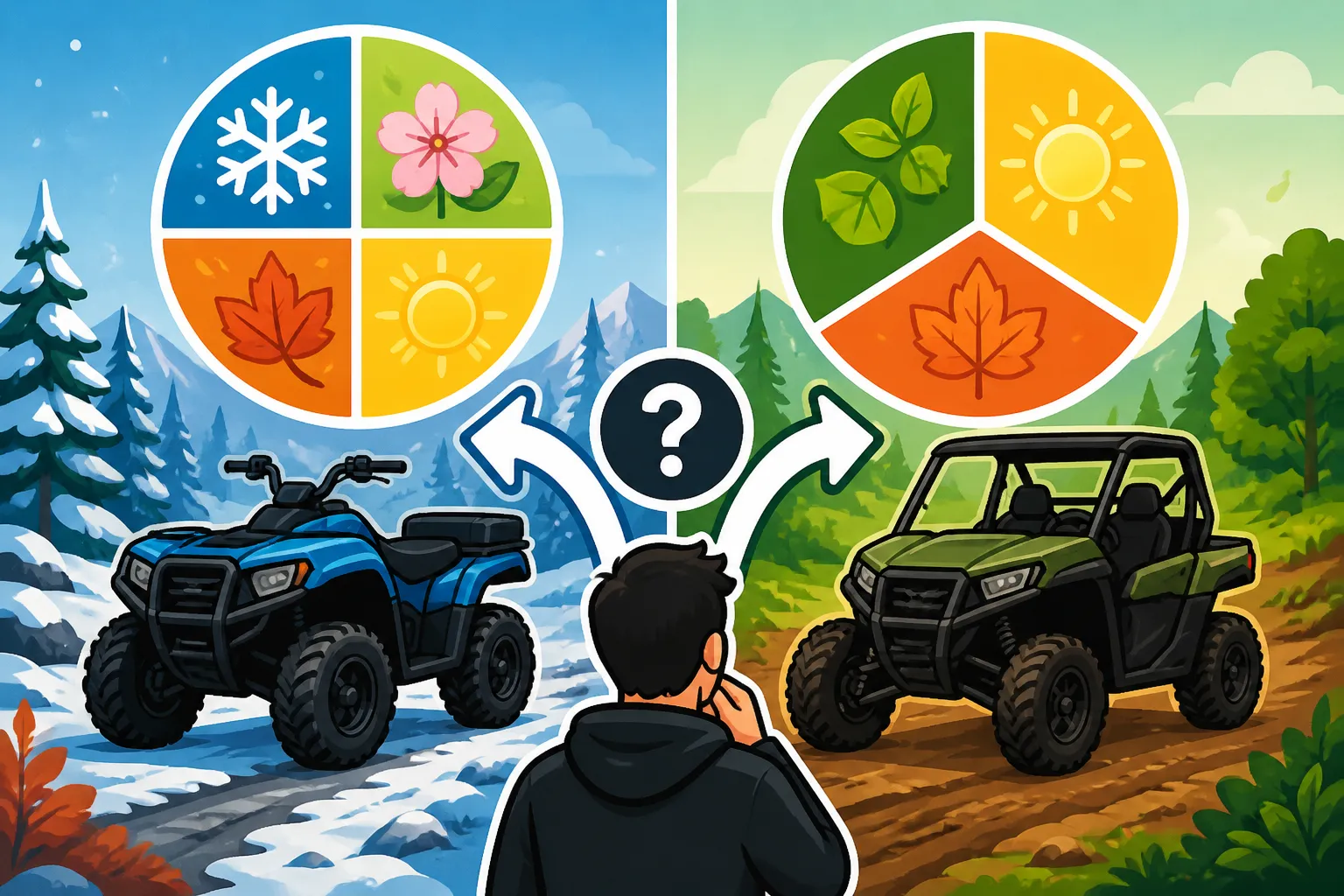
Choosing Between a Four-Season and Three-Season Sticker
Choosing a New Brunswick ATV or UTV trail sticker can feel confusing when one option covers four seasons and another covers three. The right choice depends less on the label and more on when and where you actually ride. This guide explains the seasonal difference, how trail conditions affect access, and what to check before buying or heading out.
What the Three-Season and Four-Season Stickers Mean
The difference is about seasonal trail access
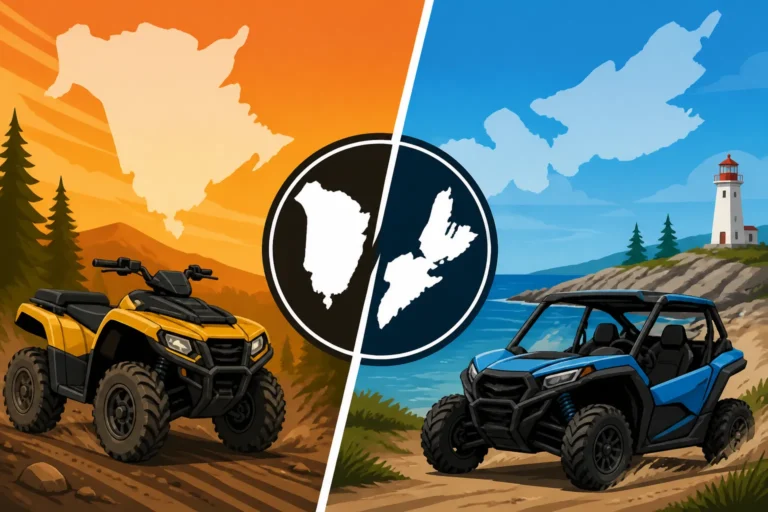
In practical terms, a three-season sticker is intended for riding during the seasons when the trails covered by that permit are open, while a four-season sticker includes an additional season of eligible trail access. That extra season matters most to riders hoping to use designated trails in winter. A longer season does not mean every trail is open every day, though: closures, weather, maintenance and local conditions can still affect where you can ride.
The names can also be misleading if you assume a four-season permit simply gives access to every trail throughout the year. Trail access depends on the permit type and the trail network’s rules. A sticker is not a promise that a particular route is open, groomed or suitable for your machine. Before purchasing, compare the permitted riding seasons and trail categories, not just the number of seasons in the name. [New Brunswick Groomed vs Non-Groomed Permits] explains the permit distinction in more detail.
For example, a rider who usually takes a quad out from a camp near Miramichi during spring, summer and fall may get little practical use from the added winter season. Someone who plans winter rides on designated trails may value that coverage, provided the specific route is open and the machine is permitted there. The important question is not simply “Which sticker lasts longer?” but “Which sticker matches the trails and months I’ll actually use?”
A sticker is not the same thing as registration
A trail permit and vehicle registration serve different purposes. Registration is part of the vehicle’s paperwork requirements; a trail permit relates to riding on participating trail networks. Having one does not automatically replace the other. Riders can be caught out by this distinction when they have a registered ATV but assume that registration alone covers them for club trails.
It helps to think through the requirements as two separate checks. First, make sure the machine’s registration and other required documents are in order. Then confirm that the trail permit is appropriate for the network and season you plan to ride. The sticker itself also needs to be placed and displayed as required, so it is worth checking [New Brunswick Permit Placement on a Machine] before you install it.
This distinction matters for both ATVs and UTVs. A side-by-side may be registered and ready to ride, but its operator still needs to confirm that the planned trail allows the machine and that the correct permit is in place. If you are sorting out the registration side too, [New Brunswick ORV Registration Explained] is a useful companion read.
How to Choose the Right Sticker for Your Riding Habits
Start with the months you genuinely ride
Be realistic about your riding calendar. It is easy to picture yourself riding in every season when you are buying a new machine, but actual habits often look different. Maybe most of your rides happen during summer weekends, with one fall trip to see the colour. Maybe the ATV stays parked all winter because the driveway is hard to clear, the family schedule is busy, or you do not enjoy cold-weather riding. Those details matter more than an idealized plan.
Write down the months you are likely to ride and the locations you expect to visit. A rider who mostly uses trails around Fredericton from late spring through fall may prioritize a permit that covers those outings. A rider who wants winter trail access should look more closely at the four-season option and confirm which designated trails support that riding. Either way, decide based on realistic use rather than feeling that you need to choose the broadest option just in case.
If you are only planning one outing, an annual permit may not be the only option to investigate. Short-term choices may suit visitors or occasional riders, depending on the rules and availability for the trip. [Choosing a Day Permit for a One-Off Ride] can help you think through that kind of situation.
Match your sticker to the trails you will use
A season label alone will not tell you whether your intended trail is open or included. Trail systems can include different types of routes, and a route’s condition or status can change. One leg of a ride might be open while another has a closure or restriction. Before committing to a permit, check the relevant trail information and make sure it corresponds to the type of access you expect.
This is especially important if you travel to ride. A weekend plan around Bathurst, Woodstock or the Acadian Peninsula can involve a long drive, a trailer, fuel planning and accommodation. Finding out at the trailhead that the route is closed, that your permit does not apply, or that conditions are unsuitable can turn a carefully planned trip into a frustrating day. Check the permit details and the local trail status before setting out.
Digital maps can help with planning, but treat them as one part of your check. For instance, onX Offroad can be useful for reviewing mapped routes and organizing a ride, but a route visible on a mapping app does not by itself confirm that the trail is open or that your sticker gives you access. Cross-check with current network information and the club responsible for the trail. [New Brunswick Trail Maps and the MapGear App] offers more context on mapping and route planning.
| Your riding pattern | What to consider | Practical next step |
|---|---|---|
| Mostly spring, summer and fall rides | Whether a three-season option covers your intended trails and dates | Check the permit terms and seasonal access for the routes you use |
| Regular winter riding | Whether the four-season option includes the trails you want to ride in winter | Confirm winter access and trail status with the relevant club |
| One occasional outing | Whether a short-term permit is available and suitable | Compare the day or week option with an annual permit |
| Riding in several parts of New Brunswick | Differences in trail type, closures and local conditions | Check each area before travelling, rather than assuming access is uniform |
| Unsure how often you will ride | Whether the added season is worth the extra cost to you | Estimate realistic trips and compare current permit details |
Think about value without treating access as guaranteed
The least expensive sticker is not automatically the best value, and the longest-season sticker is not automatically worth it for every rider. Compare the current permit terms and cost with the number of rides you expect to take, the season you use, and the trail access you need. If winter riding is unlikely, paying for an added season may not make sense for your household. If winter riding is a regular part of your plans, a narrower permit could leave you without the access you were counting on.
Also consider the cost of a failed trip. A permit decision can affect more than the sticker itself if you have already arranged transportation, lodging or a group ride. Checking the details in advance takes a few minutes; having to change plans at the trailhead is far more annoying. For current permit options and terms, check the appropriate permit seller or trail organization directly, since available choices and prices can change.
If you ride with a group, make sure everyone is making the same assumptions. One person may have a four-season sticker and another a three-season sticker, but that does not necessarily mean they can follow the same route at the same time. Compare each rider’s permit and machine requirements before the trip, particularly if you are bringing visitors who are unfamiliar with New Brunswick’s system.
Winter Access and Trail Conditions
The extra season does not remove winter restrictions
The additional season associated with a four-season sticker can be useful for winter riding, but it should not be treated as an all-clear. Trails may close because of weather, damage, maintenance, land access or other local considerations. Conditions can also differ sharply between areas. A route that seems rideable near one community may be icy, snow-covered or impassable farther along.
Winter travel brings practical risks that can be easy to underestimate. A short outing can take longer than expected when visibility is poor, a trail is rutted or a machine needs attention in the cold. Plan for the route, your fuel range and the possibility of delays. Check trail notices before departure and be prepared to turn around rather than pushing through a closure or a section that looks unsafe.
It is also worth remembering that trail networks may have different seasonal schedules. A four-season permit does not make every route a four-season trail. For a closer look at seasonal restrictions, see [New Brunswick Trail Closures in Winter] and [New Brunswick Trails Open Year-Round]. These distinctions help avoid assuming that a sticker’s season count matches the operating season of every route.
Confirm conditions close to your ride date
A map or a plan made weeks earlier can become outdated. Rain, thaw, snow, washouts and maintenance work can alter trail conditions quickly. Before loading your ATV or UTV, look for recent notices from the relevant trail organization or club. If your route crosses multiple club areas, check each one rather than relying on a single general update.
This is where a tool such as onX Offroad can assist with organizing a route, but it should not replace local trail-status checks. A mapped line is useful for understanding the general route and planning stops; it cannot necessarily tell you whether a specific segment has just closed or whether the surface is currently appropriate for your machine. Keep the official trail information, the map and your own judgment working together.
If you are heading to a remote area, make a backup plan. Save the route information for offline use where possible, tell someone where you expect to ride, and identify a reasonable turnaround point. Cell reception can be inconsistent outside town. A ride plan that includes fuel, weather and communication checks is more dependable than simply following the longest line on a screen. [New Brunswick Trail Conditions Before You Go] covers the checks that help prevent an avoidable surprise.
Planning a Ride Across Different Parts of New Brunswick
Local trail networks can change the decision
New Brunswick’s riding opportunities are spread across communities and regions, so a sticker that suits one rider’s routine may not suit another’s. Someone who rides near Woodstock on open-season weekends may have a different set of priorities from someone who regularly travels to the Miramichi area for winter riding. The same is true for riders heading toward Bathurst or the Restigouche: trail access, route conditions and the local network all deserve a check.
If you ride in more than one area, list the places you actually expect to visit rather than trying to plan for every trail in the province. Then check the local season, permitted trail type and current status for each planned area. A four-season permit could make sense if the added winter access lines up with the trails you intend to use. If your trips are all in the warmer months, that extra coverage may not change your riding plans.
For a multi-day trip, do not assume the route is a single uninterrupted corridor just because it appears connected on a map. Confirm the sections, closures and access rules that apply to the complete ride. onX Offroad may help you keep route notes organized, but local updates are still essential when plans depend on several trail segments or club areas.
Consider who is coming along and what they are riding
A solo rider can change plans quickly; a family or group may have more constraints. One person might be comfortable with a long winter ride, while another is new to trail riding or does not have the right clothing for cold conditions. A UTV group may also have different needs from a group of smaller ATVs, including machine suitability, passenger comfort and how easily everyone can manage a route.
Before buying permits for a group, have everyone confirm their own requirements. Check that each machine has the right sticker, that riders understand the route and that the planned trails are appropriate for the vehicles in the group. If a visitor is joining for only one ride, look into whether a short-term option is available rather than assuming they need the same permit as a regular local rider.
For a family day, a conservative route and a clear turnaround plan can make the outing more enjoyable than trying to cover the maximum distance. New riders may be better served by a familiar, manageable trail than an ambitious route through changing conditions. A permit provides access under its terms; it does not mean every trail is the right choice for every rider.
A Simple Checklist Before You Buy or Ride
Check permit, machine and trail requirements separately
Before purchasing a sticker, confirm the permit’s season coverage, the trails it applies to and the current terms. Then check the machine’s separate requirements, including registration and insurance where applicable. Keeping these questions separate helps prevent a common mistake: assuming one valid sticker resolves every paperwork or access issue.
Once you have the permit, follow the placement instructions and keep the required documents with the machine or rider as directed. Make sure the sticker is visible and secure, especially if the machine will be stored, washed or transported before its first outing. If it peels, fades or is damaged, find out how replacement works rather than trying to improvise a display.
On the day of the ride, verify trail status, check the weather and tell someone your general plan if you are travelling in a remote area. Bring what you need for the expected conditions and do not treat a planned route as fixed if a closure or hazard appears. Good preparation is not overkill; it is what lets you spend more of the day riding and less time sorting out problems.
Use this decision sequence
If you are still torn, work through these questions in order:
- When will you ride? List the seasons you realistically expect to use, not just the ones you might try someday.
- Where will you ride? Identify the specific regions or trail networks you expect to visit.
- What access do those trails allow? Confirm the permit category and seasonal rules that apply.
- Will you ride in winter? If yes, check whether the four-season option covers the trails you plan to use and whether they are open.
- Is this a regular or one-time outing? Compare annual choices with any suitable short-term permit options.
- What else is required? Verify registration, insurance, sticker placement and any documents needed for the ride.
- What is the current trail status? Recheck close to departure, particularly after weather changes or during seasonal transitions.
The choice becomes clearer once these questions are answered. For a rider who sticks to warmer months, the three-season sticker may fit the routine. For someone who expects to ride designated trails in winter, the four-season option may be the better match. In either case, access depends on the specific permit terms and the trail’s current status—not merely the sticker name.
For more planning help, [New Brunswick Trail Etiquette Locals Expect] is useful when sharing routes with other riders, while [New Brunswick Trails Open in Summer Only] can help illustrate why checking the operating season matters. The most reliable approach is to buy for your real riding habits, verify access for your planned route, and check conditions again before you leave.
Disclaimer
This article is for general informational purposes only and does not constitute professional advice. Laws, prices and regulations vary by location and change over time. Consult a qualified professional for guidance on your specific situation.