Three Hundred Forty Cubic Centimetres on Snow
Many New Brunswick ATV and UTV riders feel a little lost when the snow starts to fly. We all love hitting the trails, but winter brings a whole new set of questions, especially when you hear specific engine sizes like "340 cubic centimetres on snow" being tossed around. It’s enough to make you wonder if your beloved quad or side-by-side even has a place in the snowy landscape. This guide is here to clear up that confusion, explain what that particular engine size usually refers to, and help you understand how ATVs and UTVs fit into the winter riding scene in New Brunswick.
Unpacking "Three Hundred Forty Cubic Centimetres on Snow"
When you hear talk of "three hundred forty cubic centimetres on snow," it’s natural to wonder if it applies to your ATV or UTV. The truth is, this specific engine size, 340cc, traditionally refers to certain categories of snowmobiles, often those designated for younger riders or specific classifications within the snowmobile world. It’s a very particular measurement, and its primary context has historically been within snowmobile regulations, not generally for the four-wheeled or side-by-side machines we usually ride.
The Origin of the 340cc Distinction
The 340cc designation stems from an era where snowmobiles were categorized not just by their overall power, but sometimes by specific engine displacements for racing classes, youth machines, or even older, smaller utility models. These rules were designed to ensure safety, promote fair competition, or manage the types of machines allowed on certain groomed trails. It's rooted in the distinct nature of snowmobile sport and recreation, which has its own history and regulatory framework separate from the ATV/UTV world. So, if you're an ATV rider with a 500cc or 700cc quad, this specific number might not directly apply to your machine, even when there's snow on the ground.
Why This Matters for ATV/UTV Riders (or Doesn't)
For the vast majority of ATV and UTV riders, your machine’s engine size isn't going to be defined or restricted by a "340 cubic centimetres on snow" rule. Your quad or side-by-side is classified as an Off-Road Vehicle (ORV) under the New Brunswick Off-Road Vehicle Act, and its registration and operational rules are separate from those governing snowmobiles. While both types of machines use trails, their fundamental design, purpose, and the regulations that apply to them are distinct. The crucial point here is that an ATV, even one equipped with tracks for snow, is generally not reclassified as a snowmobile for regulatory purposes in New Brunswick. This distinction is key to understanding where and how you can ride your machine when the landscape turns white.
ATVs and UTVs in a Snowy Landscape: The Realities of Winter Riding
So, if the 340cc rule isn't directly for ATVs, what are the realities of taking your quad or side-by-side out when the snow flies in New Brunswick? Winter riding presents unique challenges and requires different considerations than summer or fall outings. It's not just about bundling up; it's about understanding how your machine performs and where you're legally allowed to take it.
The Challenges of Operating Wheeled Machines on Snow
Let's be honest, a standard wheeled ATV or UTV is not designed for deep snow. Tires, even aggressive mud tires, struggle to find traction and floatation on anything more than a few inches of powder. You end up digging in, getting stuck, and generally having a miserable, exhausting experience. Heavy snow can also strain your machine’s drivetrain, lead to overheating issues if vents get blocked, and simply isn't what these vehicles are built for. Many a rider has optimistically headed out after a fresh snowfall only to spend more time shoveling than riding. For true winter navigation beyond shallow, packed snow, most wheeled ATVs simply won't cut it. That's why many riders choose to put their machines in storage over the colder months, a common practice described in [New Brunswick Machines Stored Over Winter].
Embracing Track Systems for True Winter Capability
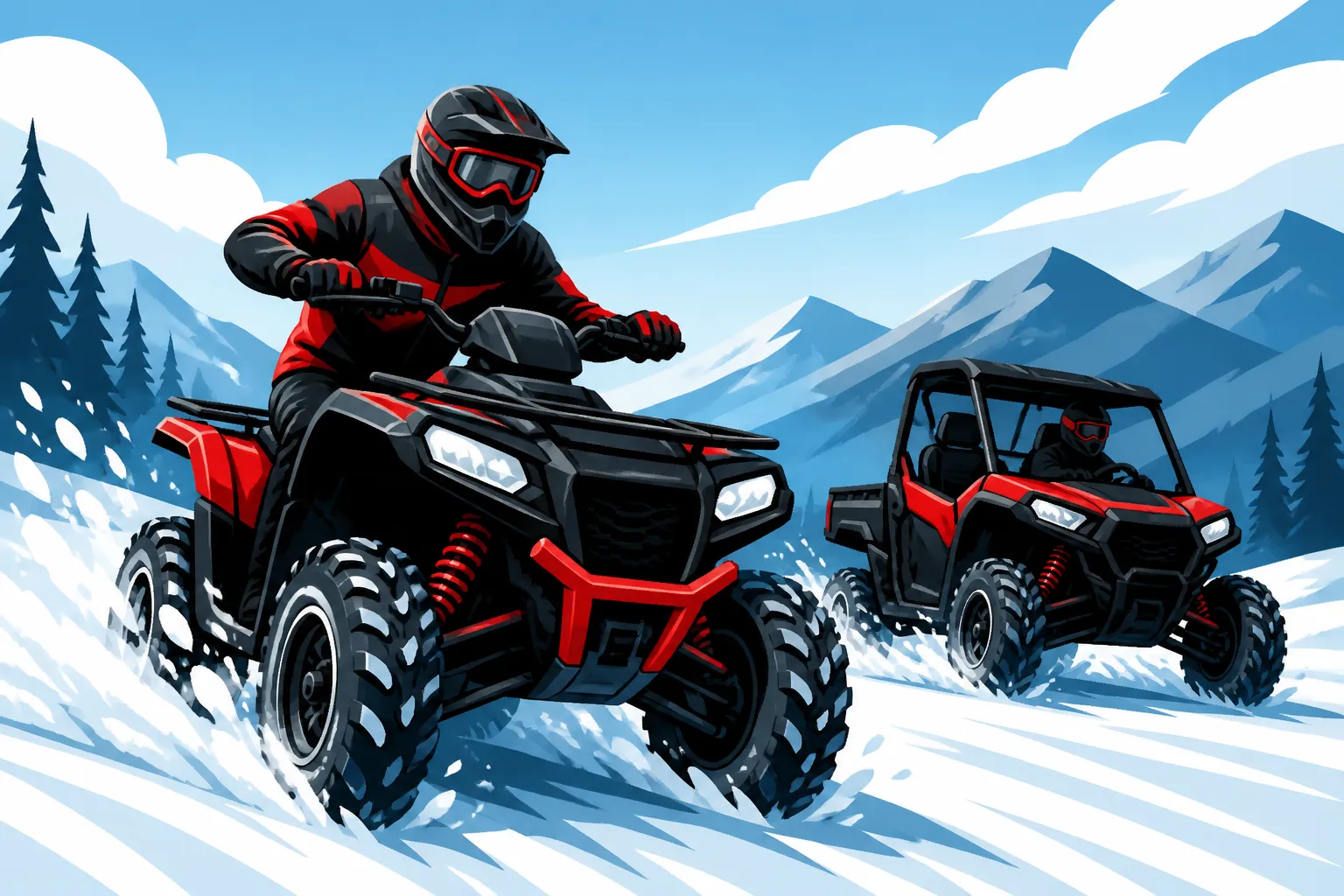
This is where track systems come into their own. If you truly want to extend your ATV or UTV riding season into the depths of winter, investing in a good set of tracks is almost essential. Brands like SuperATV offer robust track systems that replace your wheels, transforming your quad or side-by-side into a remarkably capable snow machine. These systems provide vastly improved floatation over deep snow, distribute weight more evenly, and offer superior traction compared to tires. Suddenly, trails that were impassable become accessible, and you can truly explore the winter wonderland. It’s a significant investment, but for many dedicated winter riders, it’s worth every penny to unlock a whole new dimension of off-roading.
Where ATVs and UTVs Can (and Cannot) Ride in Winter
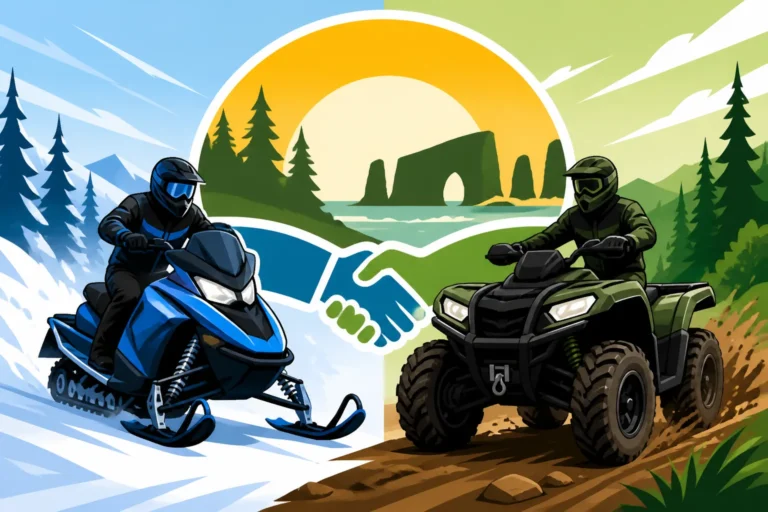
This is perhaps the most critical distinction. In New Brunswick, the official network of snowmobile trails, often referred to as the New Brunswick Federation of Snowmobile Clubs (NBFSC) trails, are primarily for snowmobiles. While there might be instances of [New Brunswick Snowmobile and Quad Sharing] on certain designated sections or multi-use corridors, generally, if a trail is specifically groomed and maintained by a snowmobile club, it’s off-limits to ATVs and UTVs, even with tracks.
Key considerations for winter ATV/UTV riding:
- Designated ATV Trails: Some ATV clubs maintain sections of their trails specifically for winter riding, which may or may not be groomed. Always check with the local ATV club (QuadNB) for specific trail status and rules. You'll often find trails listed as [New Brunswick Trails Open Year-Round] or [New Brunswick Trails Open in Summer Only].
- Crown Land and Private Land: You can generally ride your ATV/UTV on Crown Land (where permitted and accessible) or private land with the owner's permission, regardless of snow cover, provided you adhere to all other ORV regulations. However, accessing these areas might involve crossing snowmobile trails, which could be an issue.
- Road Crossings: [New Brunswick Rules for Crossing a Road] still apply in winter. Even if you're on tracks, you must follow the same procedures for safe road crossings, including coming to a complete stop and yielding to traffic.
- Trail Closures: Winter weather can lead to [New Brunswick Trail Closures in Winter] due to deep snow, ice, or extreme cold. Always check conditions before heading out, as riding closed trails can result in fines and damage the trail infrastructure.
The bottom line is that while your machine might be physically capable of traversing snow with tracks, the legal right to do so is often dictated by who maintains the trail and for what purpose. Never assume you can ride on a snowmobile trail simply because you have tracks.
Navigating Shared Trails and Winter Regulations
The relationship between ATV/UTV riders and snowmobile enthusiasts in New Brunswick is a complex one, especially when snow blankets the province. There's a common desire to enjoy the outdoors, but differing machine types and designated trail networks mean clear communication and understanding of rules are essential.
The New Brunswick Trail Network: Divergence in Winter
New Brunswick boasts an incredible network of trails, but come winter, these often diverge into primarily snowmobile-specific and ATV-specific corridors. The provincial snowmobile trail system, managed by the NBFSC, is typically groomed for snowmobiles. These trails are leased by snowmobile clubs, and their grooming efforts are funded by snowmobile trail permits. Allowing ATVs (even tracked ones) on these groomed trails can quickly damage the surface, making it rough for snowmobiles and negating the grooming efforts. This is a common point of contention, and it's why most groomed snowmobile trails explicitly prohibit ATVs and UTVs.
Conversely, QuadNB (the New Brunswick All-Terrain Vehicle Federation) manages its own extensive network of ATV trails. Some of these trails may be open for winter use, but they are generally not groomed to the same standard as snowmobile trails. Understanding the difference between [New Brunswick Groomed and Non-Groomed Trails] is crucial. Always consult the respective federation's maps or contact local clubs before venturing out. For instance, if you're riding from a cabin, ensure you know the rules for [New Brunswick Riding From a Cottage Onto a Club Trail] in winter.
Permits and Registration for Winter ATV/UTV Riding
Your ATV or UTV requires annual registration, regardless of the season. This is a fundamental requirement for operating any ORV in New Brunswick. The cost of this registration doesn't change whether you're riding in July or January. However, when it comes to trail permits, things get a bit more nuanced in winter.
- ATV Trail Permits: If you plan to ride on QuadNB trails during the winter, you will need a valid QuadNB trail permit. This permit helps fund the maintenance of ATV trails, including those that might be open year-round or seasonally for winter ATV use. The [New Brunswick Trail Permit Cost in 2026] applies regardless of season.
- Snowmobile Trail Permits: If you somehow find yourself on a section of trail designated for snowmobiles (which should be avoided unless explicitly marked for multi-use), you would technically need a snowmobile trail permit, if your machine was classified as a snowmobile, which an ATV/UTV generally isn't. The safest bet is to stick to designated ATV trails or un-designated Crown/private land where allowed, with your QuadNB permit.
It's paramount to ensure you have the correct permit for the specific trail system you intend to use. Ignorance of the rules won't prevent a fine if you're caught riding on an inappropriate trail.
Safety Considerations for ATVs/UTVs on Snow-Covered Terrain
Winter riding demands a heightened sense of caution and preparation. Beyond the typical [New Brunswick Equipment a Rider Must Carry] like a first-aid kit and tools, cold weather brings specific risks:
- Hypothermia and Frostbite: Dress in layers, wear waterproof and windproof outer gear, and protect exposed skin.
- Visibility: Snow can reduce visibility, and daylight hours are shorter. Ensure your lights are working, and consider reflective gear.
- Ice: Frozen puddles, streams, and lakes are deceptive. Never assume ice is safe. Even small patches of ice on a trail can cause a loss of control.
- Machine Performance: Cold weather can affect battery life, fuel efficiency, and tire pressure (if on wheels). Ensure your machine is well-maintained and winterized.
- Navigation: Snow can obscure trail markers and landmarks. A reliable GPS or mapping app is crucial.
- Emergency Preparedness: Cell service can be spotty in remote areas. Carry extra food, water, a fire starter, and know how to signal for help. Always let someone know your route and estimated return time.
Riding in winter is an exhilarating experience, but it requires respect for the elements and the rules. Don't let enthusiasm override common sense or safety protocols.
Practical Advice for New Brunswick Winter Riders
So, you’re ready to brave the New Brunswick winter on your ATV or UTV? Fantastic! With the right preparation and understanding, it can be an incredibly rewarding experience. Forget the 340cc snowmobile rule; focus on what truly applies to your off-road machine.
Preparing Your Machine for the Cold
Winterizing your ATV or UTV is more than just topping up fluids. It involves a comprehensive check to ensure reliable performance in freezing temperatures:
- Battery: Cold drains batteries quickly. Ensure yours is fully charged and in good condition. Consider a battery tender for storage or a portable jump starter for the trail.
- Fluids: Check coolant levels and ensure your antifreeze is rated for extreme cold. Consider switching to a thinner engine oil for easier cold starts if recommended by your manufacturer.
- Fuel System: Use fresh, high-quality fuel. A fuel stabilizer can prevent issues if your machine sits for periods. Check fuel lines for cracks or leaks.
- Tires/Tracks: If running tires, check pressure frequently as it drops in cold. If using tracks, inspect them thoroughly for wear, tension, and any damage before each ride. Make sure all track components are functioning smoothly.
- Brakes: Ensure brakes are in top condition. Cold and moisture can affect brake performance.
- Winch: A winch is a lifesaver in winter. Test it to ensure it’s working correctly and that the cable is in good shape. Consider adding a synthetic rope for easier handling in the cold.
- Lighting: Short winter days mean you’ll likely be riding in low light or darkness. Ensure all lights are functional, and consider adding auxiliary lights for better visibility. SuperATV, for instance, offers a range of lighting solutions that can significantly improve your night vision on the trail.
Checking Trail Conditions and Closures
This cannot be stressed enough: always check trail conditions and closures before you go. What might be a perfectly passable trail in October could be a slushy mess, an icy danger zone, or officially closed in January.
- QuadNB Website/App: The QuadNB website and their MapGear app are your best friends. They usually provide up-to-date information on trail status, closures, and any specific winter advisories.
- Local Club Contact: If you're planning to ride a specific trail, reach out to the local QuadNB club that maintains it. They'll have the most accurate, ground-level information. Many clubs post updates on social media.
- Weather Forecast: Pay close attention to current and recent weather patterns. A sudden thaw can turn trails into quagmires, while heavy snowfall can make them impassable.
- Shared Corridors: Be especially diligent when riding on any trails that might be shared with snowmobiles. Understand [New Brunswick Rules for Riding in Winter] regarding these shared spaces.
Understanding Specific Club Bylaws and Local Regulations
While the provincial ORV Act sets the baseline, individual clubs and municipalities can have their own specific bylaws or rules. This is particularly relevant in winter. For example, some clubs might have specific hours for winter ATV riding, or designate certain sections as "snowmobile only" even if they are ATV trails in summer.
A quick table summarizing key winter riding considerations:
| Aspect | Wheeled ATV/UTV (Standard) | Tracked ATV/UTV (Winterized) | Snowmobile (Context for 340cc) |
|---|---|---|---|
| Engine Size (340cc) | Not directly applicable to ORVs | Not directly applicable to ORVs | Primarily relevant for certain models/youth classes |
| Winter Traction | Very Poor (digs in, gets stuck easily) | Excellent (floats, superior grip) | Excellent (designed for snow) |
| Primary Trail Access | Limited to packed trails, Crown land | Designated ATV trails, Crown land | Dedicated, groomed snowmobile trails |
| Permit Required | QuadNB Trail Permit (if on ATV trails) | QuadNB Trail Permit (if on ATV trails) | NBFSC Snowmobile Trail Permit |
| Road Crossings | New Brunswick ORV Act rules apply | New Brunswick ORV Act rules apply | New Brunswick Snowmobile Act rules apply |
| Typical Use | Limited deep winter use | Extended winter riding, utility | Primary winter recreation machine |
By familiarizing yourself with these nuances, you can avoid common pitfalls and ensure a safe, legal, and enjoyable winter riding experience. Remember, respect for the land, other users, and the rules is key to keeping our trails open for everyone.
Disclaimer
This article is for general informational purposes only and does not constitute professional advice. Laws, prices and regulations vary by location and change over time. Consult a qualified professional for guidance on your specific situation.