Farm Fields and New Brunswick Riders
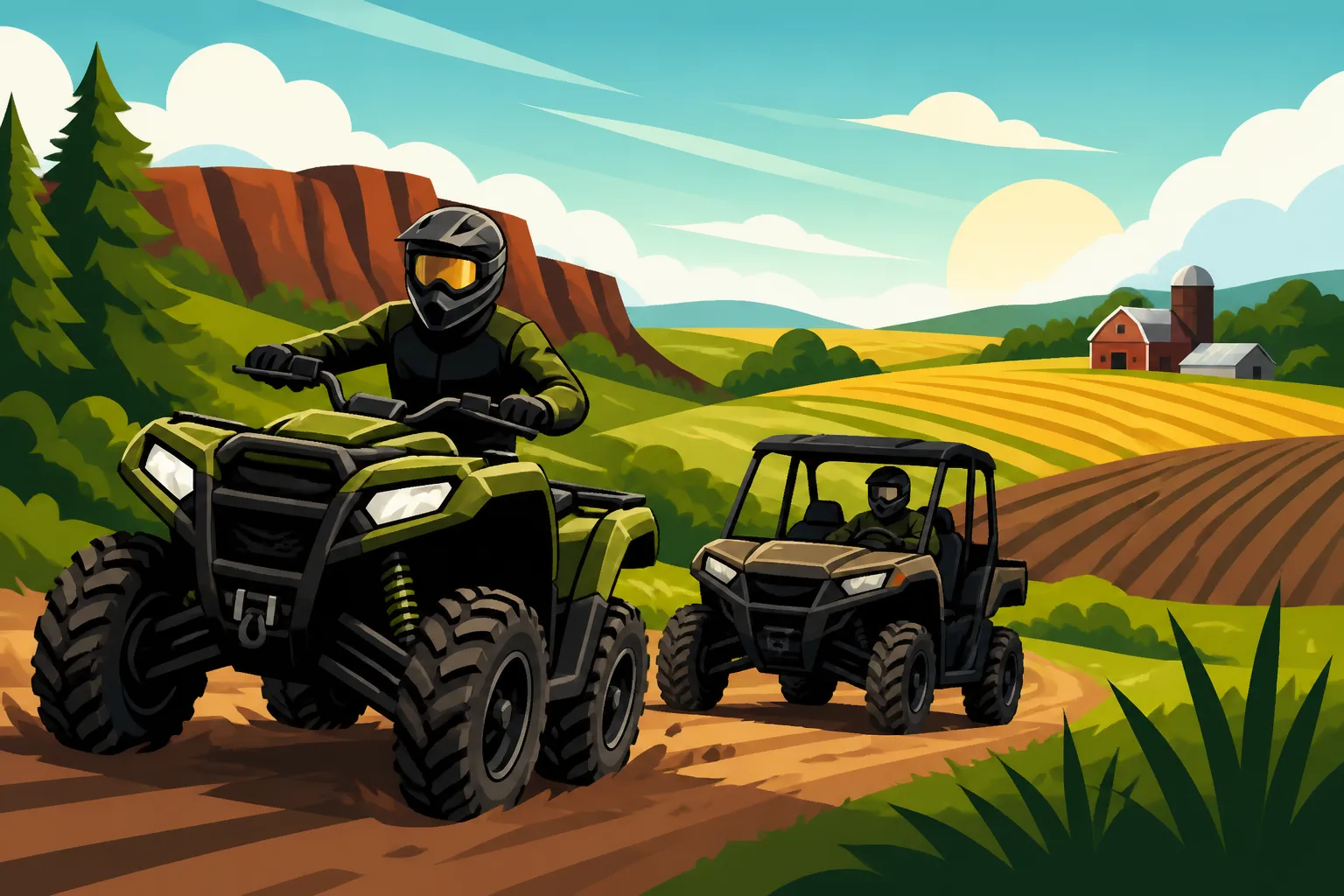
It's a common sight here in New Brunswick: vast, open farm fields stretching out, sometimes seemingly inviting to a quad or side-by-side rider. You might be cruising along a trail, see a tempting shortcut, or just an expansive area that looks perfect for a spin. But that innocent thought can quickly lead to big problems. This guide will walk you through the often-misunderstood rules of riding ATVs and UTVs on farm fields and other private land in New Brunswick, helping you avoid legal trouble and maintain good relationships with our hardworking landowners.
The Law on Private Land: It's Not Your Backyard
Let's be blunt: seeing an open field, even one without fences or "No Trespassing" signs, does not give you permission to ride on it. That land belongs to someone, and taking your ATV or UTV onto it without explicit permission is legally considered trespassing. It's a fundamental principle of property rights that sometimes gets overlooked by eager riders.
Understanding Trespass in New Brunswick
In New Brunswick, the law is quite clear: if you are on private property without the owner's consent, you are trespassing. It doesn't matter if you mean no harm, or if you think the land is abandoned, or if you promise to be careful. The intent isn't the issue; the lack of permission is. Farmers rely on their land for their livelihood, and damage to crops, soil, or infrastructure can have serious financial implications for them. Even compacting the soil in certain areas can impact future yields, something an average rider might never consider.
Think about it from their perspective: they've invested time, money, and effort into that land. Your vehicle, no matter how carefully you drive, can leave ruts, disturb livestock, or even simply create a nuisance. These are real concerns for a property owner. The provincial Off-Road Vehicle Act and the New Brunswick Trespass Act are the legal tools that landowners can use to protect their property. Don't assume that because there isn't a gate or a sign every ten feet, it's open season. That's a costly assumption to make. For a deeper dive into the specific legalities, you might want to review [New Brunswick Trespass Law for Riders].
The Importance of Explicit Permission
This cannot be stressed enough: always get permission. And when we say permission, we mean explicit permission. A vague wave from a distant farmhouse isn't enough. It's best to approach the landowner directly, introduce yourself, and clearly ask if it's okay to ride on their property. Verbal permission is a good start, but if you plan on frequent access, a written agreement, even a simple one, can save a lot of headaches later. This could outline specific areas you can ride, times of day, and any other conditions.
Landowners often worry about liability. If you're on their land and get injured, could they be held responsible? While the law generally protects landowners from liability to trespassers, the thought of a lawsuit is enough to make many hesitant to grant access. This is why having your own [New Brunswick Insurance Requirements for Riders] is not just good practice, but a talking point that can reassure a property owner. It shows you're a responsible rider. Remember, permission is a privilege, not a right, and it can be revoked at any time if the landowner feels their property is being disrespected or damaged.
Building Bridges with Landowners, Not Burning Them
As off-road enthusiasts, we want more places to ride, not fewer. The key to potentially gaining access to private land, like farm fields, is to build trust and demonstrate respect. This takes effort, but it's far more rewarding than constantly looking over your shoulder.
Approaching a Farm Owner Respectfully
Approaching a landowner can feel intimidating, but a friendly, respectful demeanor goes a long way. Choose a time when they're not in the middle of a critical farm operation, perhaps early evening or on a weekend. Introduce yourself, explain why you're interested in riding on their land (e.g., "I saw your field and it looks like a nice route to connect to the main trail," or "I'm looking for a safe place to practice riding"). Be prepared to listen to their concerns.
Consider offering something in return. Perhaps you could help them out around the farm with your machine – checking fences, hauling firewood, clearing brush, or even just keeping an eye out for anything unusual. Many farmers are busy, and a little help from a responsible rider can build a strong relationship. Showing you're willing to give back, rather than just take, instantly changes the dynamic. This kind of community-minded approach benefits not only you but also the wider riding community, helping to foster a positive image for all ATV and UTV users in the region.
What to Discuss When Seeking Permission
When you talk to a landowner, be ready to discuss specifics. Don't just ask, "Can I ride here?" Ask about:
- Specific Boundaries: Are there certain fields that are off-limits, or areas near livestock?
- Time of Day: Are there times when riding would be disruptive, like during milking or late at night?
- Specific Paths: Can you stick to the edges of fields or use existing access roads, avoiding sensitive areas like active crop rows?
- Gates and Fences: Emphasize that you will always close any gates you open and be mindful of fences.
- Crops and Livestock: Reassure them you'll stay clear of crops and be aware of any animals, reducing speed and noise.
- Your Gear: Mention that your machine is well-maintained and equipped to handle varied terrain without causing undue damage. Robust accessories, like heavy-duty tires from SuperATV, can actually be a selling point. These aren't just for extreme riding; they can provide better traction in muddy conditions, reducing the chance of rutting fields and showing a commitment to responsible use.
- Liability: Discuss your personal insurance coverage.
Being prepared with these details demonstrates responsibility and thoughtfulness, increasing the likelihood of getting a "yes."
The Risks of Unauthorized Riding and What to Expect
Ignoring the rules and riding on private land without permission can lead to a lot more than just an awkward conversation. The consequences can be severe, impacting your wallet, your machine, and your standing in the riding community.
Legal Consequences and Fines
Riding on private land without permission is a violation of New Brunswick law. If a landowner catches you and decides to press charges, or if law enforcement spots you, you could face significant fines. These aren't just slaps on the wrist; they can be substantial, often in the hundreds of dollars. In some cases, repeated offences or severe damage could lead to your machine being impounded. Imagine being out on a ride, enjoying the peace and quiet, only to be stopped by an RCMP officer or local peace officer and handed a hefty ticket, or worse, having your pride and joy loaded onto a flatbed. That dream ride instantly becomes a nightmare.
Beyond the initial fine, there can be legal fees, court costs, and a record that reflects poorly on you. It's simply not worth the risk. It's one thing to get a minor ticket for something like [New Brunswick Fines for Riding Near a Road] on a legal trail, but trespassing penalties can be far more serious and carry a stronger negative connotation. Remember, ignorance of the law is not an excuse.
Damage to Property and Reputation
Beyond the legal ramifications, consider the very real, tangible damage you can do. Driving an ATV or UTV across a field, especially one that is wet or has newly planted crops, can cause deep ruts and compaction, making it difficult for the farmer to plant or harvest. Livestock can be spooked, leading to stress, injury, or even lost production. Fences can be knocked down, creating escape routes for animals or allowing unwanted entry from wildlife. These aren't just minor inconveniences; they can represent thousands of dollars in losses and countless hours of extra work for a farmer.
But the damage isn't just physical. Every time a rider trespasses, it tarnishes the reputation of all ATV and UTV riders. Landowners become more distrustful, making it harder for responsible clubs and individuals to secure future access or maintain existing trail agreements. One bad apple really can spoil the bunch. By riding responsibly and only on approved land, you help foster a positive image for our sport. Using quality, robust components, like skid plates or heavy-duty A-arms from SuperATV, can also show you're taking care of your machine and less likely to break down and become stranded, which could also lead to property damage if you're trying to extract yourself.
Beyond Farm Fields: Where to Ride Legally in New Brunswick
The good news is that New Brunswick offers incredible opportunities for off-road riding without needing to trespass on private farm fields. There's a vast network of legal, maintained trails, and understanding where you can and cannot ride is part of being a responsible and knowledgeable rider.
Official Trail Networks and Crown Land
New Brunswick is incredibly fortunate to have the QuadNB network, a massive system of groomed and non-groomed trails stretching for thousands of kilometres across the province. These trails are maintained by dedicated local clubs, and your trail permit goes directly towards this maintenance. When you ride on a QuadNB trail, you're not only riding legally, but you're also supporting the infrastructure that makes our sport so enjoyable. It's a fantastic resource, and exploring the [New Brunswick ATV Trails: The QuadNB Network] is a must for any serious rider. These trails often connect communities, providing access to fuel, food, and lodging, making them ideal for multi-day excursions.
Beyond the club trails, there's also Crown Land. While much of it is accessible for recreational use, there are still rules to follow, and certain areas might have restrictions, especially during hunting season or near sensitive ecosystems. It's crucial to understand [New Brunswick Crown Land Riding Rules] before venturing out, as simply assuming it's "public" land can still lead to trouble if you're not aware of specific regulations. Always check maps and local ordinances. The clear rules and dedicated maintenance of these networks offer a stark contrast to the uncertainties and risks of venturing onto private property.
Getting the Right Gear for Any Terrain
Whether you're hitting the official club trails or have secured legitimate permission for a specific private property, preparing your machine properly is part of being a responsible rider. This means not just basic maintenance, but also having the right gear to handle the diverse New Brunswick terrain. From rocky sections in the Restigouche to muddy paths near the Miramichi, our province offers a bit of everything.
Investing in quality components, like a winch, sturdy protection, or even a good GPS system can make your rides safer and more enjoyable, while also demonstrating your commitment to responsible riding. A GPS, for instance, is invaluable for staying on designated trails and avoiding accidental trespass onto adjacent private property. Reliable accessories from brands like SuperATV can help ensure your machine is up to the task, minimizing breakdowns and allowing you to confidently navigate various conditions without causing unnecessary damage to trails or private land. Always ensure you carry [New Brunswick Documents You Must Carry] and are familiar with specific regulations like [New Brunswick Rules for Riding a Woods Road] to ensure you're always riding legally and safely.
Here’s a quick comparison to help visualize the differences between riding on private land and using official club trails:
| Feature | Riding on Private Land (Farm Fields) | Riding on Official Club Trails (QuadNB Network) |
|---|---|---|
| Legality | Requires explicit permission from landowner | Requires valid trail permit |
| Permission | Must be obtained directly; preferably in writing | Granted via trail permit; implicitly through membership |
| Liability | Landowner concerns significant; your liability is high | Shared responsibility; often covered by club insurance |
| Maintenance | None by landowner for riders; often unmaintained | Regularly maintained by volunteer clubs |
| Signage & Maps | Usually none for riding purposes | Well-marked trails, maps available |
| Amenities | None | Connects to communities, fuel, food, lodging |
| Fines/Penalties | Trespassing fines, potential property damage charges | Trail permit fines, other ORV Act violations |
| Community Impact | Negative if unauthorized; positive if respectful | Positive, supports local clubs and economy |
| Risk of Confrontation | High if unauthorized | Very low if legal |
| Terrain Variability | Can be unpredictable, may include sensitive areas | Managed, generally suitable for ORVs |
Disclaimer
This article is for general informational purposes only and does not constitute professional advice. Laws, prices and regulations vary by location and change over time. Consult a qualified professional for guidance on your specific situation.