New Brunswick Rules for Riding in Winter
The crisp air, the glistening snow, the quiet hush of the woods – winter ATV riding in New Brunswick can be an incredibly beautiful and exhilarating experience. However, many riders find themselves a bit lost when the snow starts to fly, unsure if the rules they follow all summer long still apply, or if there are entirely new regulations to contend with. This guide is here to unravel the specific rules and considerations for safely and legally enjoying your ATV or UTV in the New Brunswick winter wonderland, helping you navigate trails, prepare your machine, and stay safe in colder conditions.
Understanding Winter Trail Access and Seasonality
One of the biggest changes when winter arrives is how trail access shifts. What might have been a bustling ATV trail in July can become a strictly snowmobile-only corridor by December. Understanding this seasonal transition is absolutely crucial for any winter rider in New Brunswick.
When Trails Close to ATVs and Open to Snowmobiles
As the snow depth increases and temperatures consistently drop below freezing, many multi-use trails, particularly old rail beds and designated corridors, transition from ATV-friendly routes to snowmobile networks. This change isn't arbitrary; it's often due to leasing agreements between the Province of New Brunswick and snowmobile clubs. These clubs invest significant time, effort, and funds into grooming and maintaining these trails specifically for snowmobile use, and operating an ATV on them during the snowmobile season can cause significant damage to the groomed surface, potentially jeopardizing the snowmobile season for others.
It’s a common frustration to see a perfectly good trail blanketed in snow and think it's open season for your quad, only to find out you're treading where you shouldn't. The key is to remember that the trail surface itself changes, and with it, the intended use. Riding an ATV on a groomed snowmobile trail can lead to deep ruts that freeze solid, making it dangerous and difficult for snowmobiles. This is why you'll often see signs explicitly prohibiting ATVs during snowmobile season. The fines for riding where you're not allowed can be substantial, so it pays to be informed. Remember, many of the extensive rail trail networks, which offer hundreds of kilometres of riding in the summer, are primarily leased by snowmobile clubs for winter, becoming part of the [New Brunswick Snowmobile Leases on Rail Beds].
Identifying ATV-Friendly Winter Trails
While many popular corridors transition to snowmobile use, not all trails close to ATVs in winter. There are still opportunities for winter ATV riding, but it requires a bit more research and local knowledge. Some areas, particularly private woodlots where permission has been granted, or certain dedicated ATV club trails that are not part of the provincial snowmobile network, might remain open. The critical step is to consult the New Brunswick All-Terrain Vehicle Federation (QuadNB) trail maps, either via their online portal or their MapGear app, for the most current information on trail status.
QuadNB distinguishes between "groomed" and "non-groomed" trails, and while grooming is generally associated with snowmobiles, some ATV clubs might maintain certain sections for winter quad use, or simply leave them as "non-groomed" trails for those hardy enough to tackle them. It's also worth noting that some private landowners might allow winter access on their property, provided you have explicit permission. Always confirm the status of any trail you plan to ride. Don't assume that because a trail is open for quads in July, it's open in January. This is where understanding [New Brunswick Groomed and Non-Groomed Trails] becomes paramount; a non-groomed trail might be your best bet for winter ATV fun.
Essential Equipment and Machine Preparation for Winter Riding
Winter riding introduces a whole new set of challenges, and preparing your machine and yourself properly isn't just about comfort—it's about safety. Ignoring the specific demands of cold weather can quickly turn a fun outing into a dangerous situation.
Required Lighting and Visibility in Winter Conditions
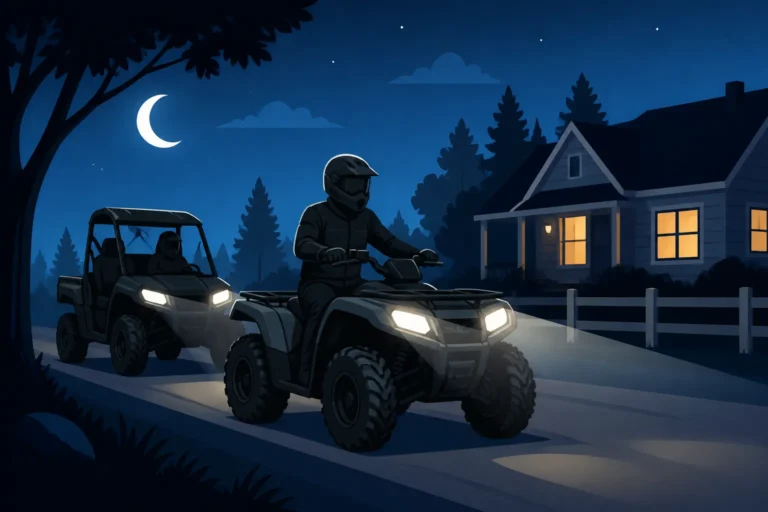
Winter days are notoriously shorter, and even midday rides can be overcast or experience sudden drops in visibility due to snow squalls or fog. This means your machine's lighting system needs to be in top-notch condition, perhaps even better than for summer riding. Your headlights, taillights, and brake lights must be fully operational and clear of snow or ice. You'll want to inspect all bulbs and electrical connections before heading out, as cold temperatures can exacerbate existing electrical weaknesses.
Beyond the basic requirements, consider enhancing your visibility. Reflective tape on your machine, helmet, and clothing can significantly increase your presence to other trail users, especially snowmobilers who might be traveling at higher speeds. Some riders even opt for auxiliary LED light bars, particularly when riding at dawn, dusk, or through heavily wooded areas that might be darker. Remember, it's not just about seeing; it's about being seen. The rules around [New Brunswick Lighting Requirements at Night] are year-round, but their importance is magnified in winter.
Preparing Your Machine for Cold Weather
Getting your ATV or UTV ready for winter goes beyond just checking the lights. The cold can be hard on mechanical components and fluids. Start with your battery: ensure it's fully charged and in good condition, as cold cranking amps are crucial for starting in freezing temperatures. Consider a battery tender if your machine sits for extended periods. Fuel quality is also key; use a good quality fuel stabilizer to prevent moisture buildup and consider anti-gel additives for diesel UTVs.
Tire pressure should be checked regularly, as cold weather can cause it to drop. For snowy conditions, some riders opt for slightly lower pressure to increase the tire's footprint and improve traction, but be careful not to go too low, which can damage tires or lead to beads breaking. For serious snow, specialized winter tires with aggressive tread patterns designed for snow and ice, or even full track conversion systems, are excellent investments. Companies like SuperATV offer a range of robust track systems that can transform your quad into a true snow beast, providing unparalleled traction and floatation over deep snow. Don't forget to inspect all fluids, especially your coolant, to ensure it has the proper antifreeze protection. Finally, a winch, perhaps from a reputable manufacturer like SuperATV, is practically a necessity in winter. Getting stuck in deep snow is not a matter of "if," but "when," and a reliable winch can be a lifesaver.
Dressing for Success: Rider Gear
Your personal gear is just as important as your machine's preparation. Staying warm and dry is paramount to both comfort and safety in winter. Think layers! A moisture-wicking base layer, insulating mid-layers (fleece, down), and a waterproof, windproof outer shell are essential. Your extremities are particularly vulnerable. Invest in high-quality, insulated, waterproof boots that come up high enough to keep snow out. Heated grips and thumb warmers on your machine are a luxury that quickly becomes a necessity, but good insulated gloves or mitts are still important backups.
Your helmet needs to be suitable for cold weather. Many riders opt for dual-pane visors to prevent fogging, or use anti-fog inserts. Balaclavas, neck gaiters, and even heated helmet liners can make a huge difference in keeping your head and face warm. Don't forget eye protection, even with a visor – goggles can provide an extra layer of warmth and protection from blowing snow. Being cold and uncomfortable is distracting and can lead to poor decision-making, increasing your risk of an accident. Prioritize staying warm and dry from head to toe.
Navigating Road Crossings and Shared Spaces in Winter
Even in winter, you’ll likely encounter situations where you need to cross a public road or share a section of trail with other types of recreational vehicles. The rules don’t go away, and winter conditions add layers of complexity.
Special Considerations for Road Crossings on Snow and Ice
The fundamental rules for crossing public roads in New Brunswick remain the same regardless of the season: you must stop, yield to all traffic, and cross at a right angle to the highway, ensuring it’s safe to do so. However, winter weather throws in some significant curveballs. Snow and ice drastically reduce your machine's traction and extend stopping distances for both your ORV and any approaching road vehicles. This means you need to exercise even greater caution and allow for much more time and space when making a crossing.
Visibility can also be severely limited for both you and drivers on the road. Blowing snow, snowbanks obstructing views, or a dirty windshield on an oncoming car can all contribute to a dangerous situation. Before crossing, make extra sure you have a clear line of sight, and consider having a spotter if you’re riding in a group. Remember, the road surface itself might be icy, making your approach and departure from the crossing point tricky. Your machine needs to be under absolute control. It's not just about what [New Brunswick Rules for Crossing a Road] state; it's about applying them with an acute awareness of the prevailing winter conditions.
Interacting with Snowmobiles and Other Winter Users
On trails that permit both ATVs and snowmobiles (which are less common in winter but do exist in certain areas, particularly some private land trails), courteous and safe interaction is paramount. Snowmobiles generally travel at higher speeds than ATVs and have different handling characteristics on snow. Always be mindful of their approach, especially around blind corners or crests. If you encounter a snowmobile, slow down, move to the right side of the trail, and yield the right-of-way.
In areas where snowmobiles might be operating on leased trails that ATVs are generally excluded from, an accidental encounter can happen. If you find yourself in such a situation, be prepared to explain your presence (if you have legitimate permission) or, if you've made a mistake, to turn around and exit the area as safely and quickly as possible. Clear communication, respectful trail etiquette, and a thorough understanding of where [New Brunswick Snowmobile and Quad Sharing] is permitted (or not) will ensure a smoother and safer experience for everyone enjoying the winter landscape.
Safety and Legalities Specific to New Brunswick Winter Riding
Beyond trail access and machine prep, there are overarching safety and legal considerations that take on heightened importance during the winter months. Understanding these can prevent serious accidents or costly fines.
Ice Safety and Water Crossings
This cannot be stressed enough: riding on frozen bodies of water, such as lakes, rivers, or even large puddles, is inherently dangerous and strongly discouraged unless you are absolutely certain of the ice thickness and stability, and local regulations permit it. In New Brunswick, "no ice is safe ice" should be your mantra. Ice conditions can change rapidly, varying dramatically even within a few feet due to currents, springs, or snow cover acting as insulation. What looks solid can be dangerously thin.
The consequences of breaking through ice are severe, leading to immediate hypothermia and potentially loss of life. If you are unsure, stay off the ice. Always assume open water beneath a layer of snow until proven otherwise by official, reliable sources or professional ice safety experts. Never rely on the tracks of others, as conditions may have changed since they passed. For detailed information, consult the [New Brunswick Rules for Riding on Ice] and err on the side of extreme caution. It’s never worth the risk.
Understanding Permits and Regulations in Winter
The legal requirements for operating an ATV or UTV in New Brunswick don't disappear when the snow falls. Your machine must still be properly registered with Service New Brunswick, and you must carry proof of registration. The [New Brunswick Annual Registration Rule] means your registration expires on December 31st each year, so if you're planning winter rides into the new year, ensure your registration is renewed. Furthermore, insurance remains a mandatory requirement if you plan to ride on any managed trail or crown land. The [New Brunswick Requires Insurance on Trails] law applies year-round.
When it comes to trail permits, this is where winter can get a bit nuanced. As discussed earlier, many trails that require a QuadNB permit in summer are leased by snowmobile clubs for winter use. In such cases, your QuadNB permit generally does not grant you access for ATV riding during the snowmobile season. You need to verify if the specific trail you intend to ride is open for ATVs in winter, and if so, what permit is required. Always carry your documentation – registration, insurance, and any applicable trail permits – as officers can conduct checks at any time.
Winter Riding Safety Checklist
| Category | Summer Riding Considerations | Winter Riding Considerations |
|---|---|---|
| Trail Access | Generally open (check QuadNB map) | Many trails closed to ATVs, leased for snowmobiles. Verify status. |
| Visibility | Daytime riding, clear conditions | Shorter days, blowing snow, fog. Enhanced lighting, reflective gear essential. |
| Traction | Varies by terrain (mud, rock, dirt) | Snow and ice. Consider specialized tires, tracks (e.g., from SuperATV), chains. |
| Machine Prep | Standard maintenance, fluid checks | Battery care, fuel additives, proper antifreeze, winch check, plow readiness. |
| Rider Gear | Helmets, appropriate clothing | Layered, waterproof, insulated clothing, heated gear, anti-fog helmet, balaclava. |
| Water Hazards | Puddles, stream crossings | Frozen lakes/rivers are HIGHLY DANGEROUS. Assume thin ice. AVOID. |
| Other Users | Other ATVs, hikers, bikes | Snowmobiles. Be aware of speed differences, yield right-of-way. |
| Emergency | Basic first aid, communication | Severe cold exposure risk. Extra clothing, heat packs, satellite messenger if remote. |
Riding an ATV in the winter months in New Brunswick offers a uniquely stunning way to experience the province's natural beauty. The serene landscapes dusted with fresh snow, the crisp air, and the quiet trails can make for unforgettable adventures. However, this magical experience comes with the significant responsibility of thorough preparation, acute awareness of changing conditions, and strict adherence to the rules. By understanding which trails are open, properly outfitting your machine and yourself for the cold, exercising extreme caution around roads and frozen water, and ensuring all your paperwork is in order, you can safely and legally embrace the thrills of winter quad riding. Stay warm, stay safe, and enjoy the ride!
Disclaimer
This article is for general informational purposes only and does not constitute professional advice. Laws, prices and regulations vary by location and change over time. Consult a qualified professional for guidance on your specific situation.