New Brunswick Rules for Riding a Beach
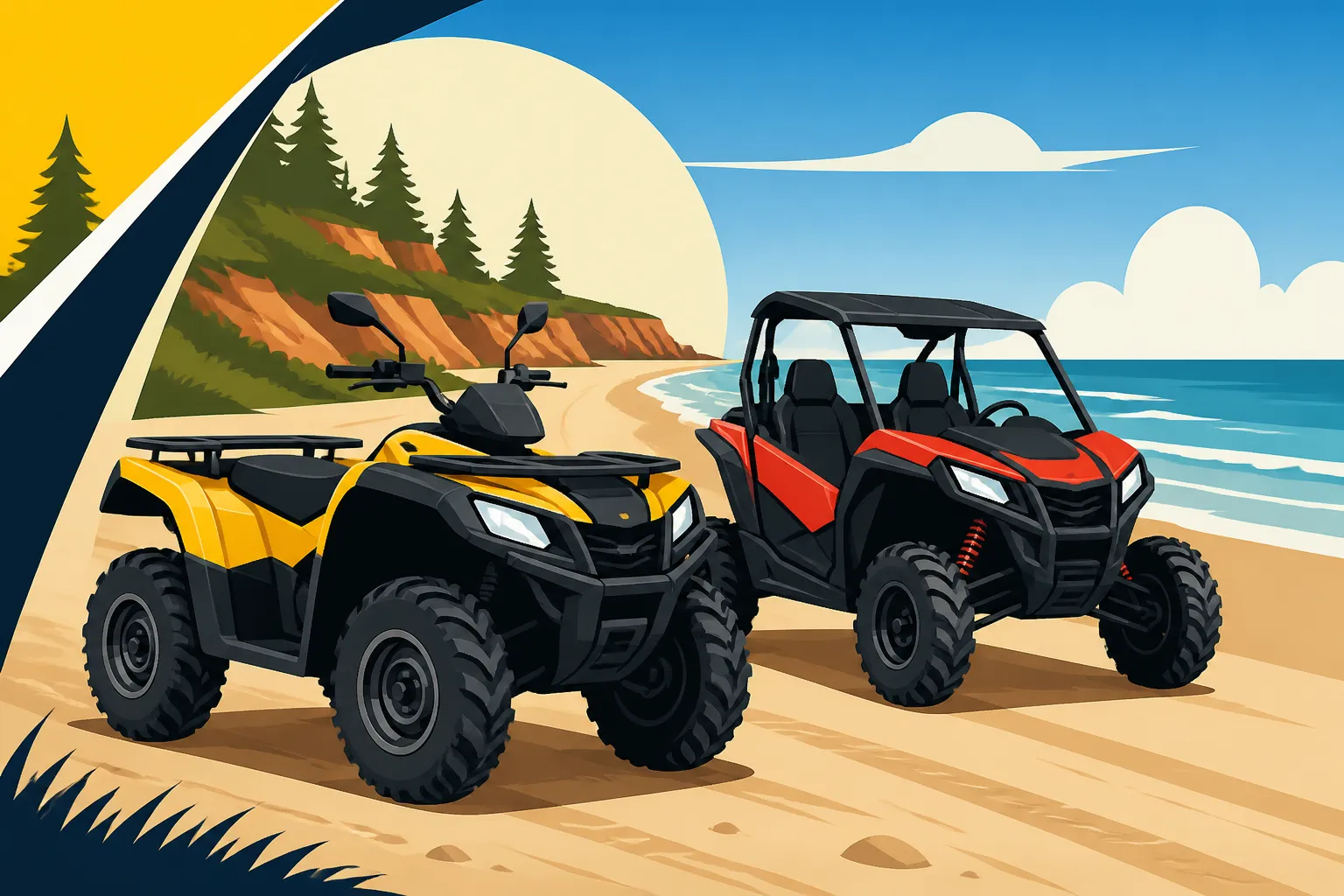
The thought of riding your ATV or side-by-side along a pristine New Brunswick beach, feeling the salt air on your face and the sand flying under your tires, is undeniably appealing. It conjures up images of freedom and adventure that are deeply ingrained in the off-roading spirit. However, the reality of legal beach riding in our beautiful province is far more complex, and often, much more restricted than many riders realize, leading to confusion, frustration, and sometimes, hefty fines. This guide will cut through the misinformation, explain the regulations that govern beach access for off-road vehicles (ORVs), and help you understand where you can and cannot legally ride, keeping both you and our precious coastal environments safe.
The Allure and the Reality of Beach Riding in New Brunswick
There’s something truly magnetic about the idea of taking your quad or side-by-side out onto a wide, open beach. The vast expanse, the unique challenge of soft sand, the rhythmic sound of waves crashing – it all paints a picture of ultimate freedom. Many of us have seen images or videos from other places where beach riding is a popular pastime, and it's easy to assume that such an activity would be allowed here in New Brunswick.
Why the Beach Calls to ATV Riders
For many riders, the beach represents an escape from the usual forest trails and gravel roads. It’s a change of scenery, a different kind of terrain that requires a unique set of riding skills. The feel of an open throttle on a sandy stretch, the spray of water, and the panoramic ocean views are powerful draws. It feels like the ultimate adventure, a place where you can truly "get away from it all." Riders often dream of packing a cooler, heading to the coast, and enjoying a day of sun, sand, and machine therapy. There's a perceived sense of wildness and untamed beauty that perfectly aligns with the spirit of off-roading.
However, this romanticized vision often clashes with the environmental realities and the laws designed to protect these sensitive areas. The very aspects that make beaches so appealing to riders – their openness and natural beauty – are also what make them incredibly vulnerable to damage from vehicles. The desire to explore these unique landscapes is understandable, but it needs to be tempered with an understanding of ecological fragility and legal boundaries.
The Fundamental Legal Framework for Off-Road Vehicles
In New Brunswick, the operation of off-road vehicles, including ATVs and side-by-sides, is primarily governed by the Off-Road Vehicle Act. This legislation lays out the general rules for where and how ORVs can be operated, focusing on public safety, environmental protection, and responsible use of Crown land and designated trails. Essentially, the Act creates a framework that assumes that unless an area is specifically designated for ORV use (like a QuadNB trail), or it's private land with the owner's permission, you likely cannot ride there.
This framework is crucial because it means that areas like beaches, which are often considered public spaces or sensitive environmental zones, automatically fall under scrutiny. The Act, combined with other provincial and municipal regulations, forms a protective shield around vulnerable areas. It's not just about what is not explicitly forbidden; it's about what is explicitly permitted. And when it comes to beaches, explicit permission for ORV use is exceedingly rare, often non-existent in public access areas. You can find more details on general regulations in [What New Brunswick's Off-Road Vehicle Act Covers].
Navigating the Regulations: Where Can You Actually Ride?
When you look at the map of New Brunswick, our coastline is truly magnificent, stretching for thousands of kilometers. From the rugged cliffs of the Bay of Fundy to the sandy shores of the Northumberland Strait, there are countless beautiful beaches. But unfortunately, the vast majority of these picturesque locations are off-limits for ATV or UTV riding. This can be a tough pill to swallow for many riders who just want to enjoy the outdoors.
The General Prohibition: Public Beaches Are Off-Limits
Let's be very clear right from the start: most public beaches in New Brunswick are not open to ATV or UTV traffic. This isn't just a suggestion; it's a legal prohibition enforced by various levels of government and environmental agencies. The reasons behind this are multifaceted, but they primarily revolve around environmental protection, public safety, and noise control.
Our beaches are vital ecosystems, home to sensitive dune systems, nesting birds (like the endangered Piping Plover), marine life, and unique plant species. The heavy weight and aggressive tires of an ORV can quickly destroy fragile vegetation, erode dunes, compact sand, disturb wildlife habitats, and even crush eggs or young birds. Imagine a long stretch of sandy beach where delicate sea oats hold the dunes in place; a few passes by a heavy quad can undo years of natural stabilization, leading to significant erosion. The provincial Department of Natural Resources and Energy Development and the Department of Environment and Local Government both have roles in safeguarding these areas, often invoking acts like the Crown Lands Act or the Clean Environment Act to prevent such damage.
Beyond environmental concerns, there's the issue of public safety. Beaches are popular recreational areas for families, swimmers, sunbathers, and walkers. Introducing fast-moving vehicles into these shared spaces creates a dangerous situation. The potential for collisions, injuries, and even fatalities is simply too high. Furthermore, the noise generated by ORVs can disrupt the peaceful enjoyment of the beach for other visitors, leading to complaints and conflicts. Many municipalities also have specific bylaws prohibiting motorized vehicles on beaches within their jurisdiction. It's truly a complex web of reasons, but the result is a blanket ban on ORV access to most public beaches.
Exploring Private Land Exceptions and Permissions
While public beaches are generally a no-go, there might be a sliver of an exception if you own private land that includes a beachfront, or if you obtain explicit permission from such a landowner. This isn't a loophole to be exploited, but rather a rare circumstance where riding might be permissible, provided all other provincial ORV rules are followed.
If you are fortunate enough to own private property with a beach or coastline, you generally have the right to use your property as you see fit, within the bounds of municipal bylaws and provincial environmental regulations. This means that on your own private beach, you could potentially ride your ATV. However, even then, you must be incredibly mindful of the environmental impact, avoiding sensitive areas like dunes, wetlands, or known nesting sites. You also need to ensure your machine is properly registered and insured. Remember, [New Brunswick Requires Insurance on Trails] and this extends to private property if you ever leave it. Also, [New Brunswick ORV Registration Explained] clarifies the need for registration for virtually all ORVs. If you allow others to ride on your private beach, they too must adhere to all registration, insurance, and safety regulations.
The most critical aspect here is "explicit permission." Simply assuming access or seeing faint tracks isn't enough. You would need written consent from the landowner, clearly stating the areas where you are permitted to ride. Even with permission, you must respect the property boundaries and the landowner's wishes, and still be aware of any overriding environmental protections that might apply even to private coastal land. This is incredibly rare and should not be seen as a common avenue for beach riding. For example, a generous friend with a sprawling oceanfront property near Shediac might invite you to ride on a specific section of their private beach, far from public access. In such a specific and controlled scenario, and with their written permission, it could be allowed.
Environmental Impact and Responsible Riding
The persistent prohibition of ORVs on beaches isn't arbitrary; it's rooted in the profound understanding of these unique ecosystems. Beaches are dynamic, ever-changing environments, but they are also incredibly fragile. The sand itself, held in place by a delicate network of plant roots, provides habitat for countless invertebrates, which in turn are food sources for birds and marine life. Dunes act as natural barriers, protecting inland areas from storm surges and erosion.
When ATVs or UTVs traverse these areas, they cause direct and immediate damage. Tires churn up sand, destroying vegetation and destabilizing dunes, making them more susceptible to wind and water erosion. The weight of the machines compacts the sand, making it harder for plants to grow and for animals to burrow. Noise and exhaust fumes disturb nesting birds and other wildlife, potentially driving them away from critical breeding and feeding grounds. For instance, the Piping Plover, a small shorebird, nests directly on open sandy beaches, and its camouflaged eggs and chicks are almost impossible to spot, making them extremely vulnerable to being run over.
Responsible riding means understanding and respecting these environmental sensitivities. It means choosing to ride in designated areas where the impact is managed and minimized, rather than contributing to the degradation of our natural heritage. This commitment to conservation is a cornerstone of the off-roading community, ensuring that these beautiful landscapes are preserved for future generations to enjoy in their natural state.
Penalties, Enforcement, and Getting Caught
It might seem like a small risk to just "quickly" zip down to the beach, especially if it looks deserted. However, enforcement in New Brunswick is taken seriously, and the consequences for illegal beach riding can be significant, far outweighing any momentary thrill. It's not just about a slap on the wrist; you could be facing substantial fines and other penalties.
What Happens If You Ride Illegally on a Beach
If you're caught riding your ATV or UTV on a prohibited New Brunswick beach, you're not just looking at a minor inconvenience. You could face a combination of fines for various infractions. These typically include operating an ORV in a prohibited area, trespassing, and potentially even charges related to environmental damage, depending on the severity of the impact. Fines for such offences can quickly add up and are often hundreds of dollars. For instance, even for something like riding an unregistered machine, you're looking at a [New Brunswick No-Registration Fine of $172.50], and that's just one potential charge.
Beyond fines, there's the possibility of your machine being seized. Law enforcement officers, including the RCMP, Department of Natural Resources and Energy Development (DNRD) officers, and even some municipal bylaw enforcement officers, have the authority to impound vehicles used in illegal activity. Imagine the headache and cost of retrieving your ATV from an impound lot, often involving towing fees, storage fees, and administrative charges, on top of any legal fines. This can quickly turn a fun day into a very expensive and frustrating ordeal.
Consider a hypothetical scenario: You're riding your SuperATV-equipped machine, perhaps with their specialized tires, on what you think is a secluded beach near Cap-Pelé. An officer on patrol, perhaps alerted by a local resident, observes you. They pull you over. They'll ask for your registration, proof of insurance, and driver's license. If you're on a prohibited beach, you'll immediately receive a ticket for operating an ORV in a prohibited area. If your machine isn't registered, that's another fine. If you don't have proof of insurance, that's yet another. Before you know it, you could be facing hundreds, if not thousands, of dollars in fines, and your pride and joy might be towed away. It's a risk simply not worth taking.
The Importance of Knowing Your Local Bylaws
While provincial legislation sets the baseline for ORV operation, municipal bylaws play a significant role in further defining where you can and cannot ride within specific towns, villages, and cities. These local ordinances can add additional restrictions, particularly concerning public spaces, environmental zones, and noise control within their jurisdiction. It's not uncommon for a municipality to have a specific bylaw explicitly prohibiting motorized vehicles on all local beaches, parks, or even certain streets.
Therefore, before you even consider approaching a coastal area, it is absolutely essential to check the specific bylaws of the local municipality. What might be allowed in one rural area (though highly unlikely for beaches) could be strictly forbidden just a few kilometers down the road in a different town. Relying solely on provincial laws without checking local rules is a common mistake that can lead to tickets and confrontations.
To find this information, your best bet is to visit the official website of the specific municipality or call their town office directly. Many towns have their bylaws available online for public review. You can get more pointers on this in [New Brunswick Bylaw Lookups Before You Ride]. Taking a few minutes to do this research beforehand can save you a lot of grief and money.
Here's a quick reference for common prohibited areas for ORVs, often including beaches:
| Type of Area | Typical ORV Status | Enforcement Agencies | Rationale |
|---|---|---|---|
| Public Beaches | Generally Prohibited | RCMP, DNRD, Municipal Bylaw Officers | Environmental protection, public safety, noise |
| Dune Systems | Strictly Prohibited | DNRD, Environmental Agencies | Erosion control, habitat preservation |
| Provincial Parks | Generally Prohibited | Park Wardens, DNRD | Recreation focus, environmental sensitivity |
| Designated Protected Areas | Strictly Prohibited | DNRD, Environmental Agencies | Habitat preservation, ecological integrity |
| Private Land (without permission) | Prohibited (Trespassing) | RCMP, Landowner, Municipal Bylaw Officers | Property rights |
| Public Roads/Highways | Generally Prohibited (exceptions apply) | RCMP, Municipal Police | Traffic safety, specific ORV Act rules |
| Urban/Residential Areas | Often Prohibited (noise/safety) | RCMP, Municipal Bylaw Officers | Noise complaints, public safety |
Safer and Legal Alternatives to Beach Riding
While the dream of beach riding might be largely off-limits, that doesn't mean New Brunswick lacks incredible opportunities for ATV and UTV enthusiasts. Our province boasts an extensive and well-maintained trail network that offers countless hours of legal and responsible riding adventures, often leading to equally stunning views and unique experiences.
Embracing New Brunswick's Extensive Trail Network
If you're seeking diverse terrain, breathtaking scenery, and a vibrant community, look no further than New Brunswick's phenomenal trail network, managed primarily by the QuadNB Federation. With thousands of kilometers of managed trails stretching across the province, this network is a rider's paradise, offering everything from winding forest paths and challenging rocky sections to smooth rail beds and scenic vistas. Instead of eyeing that forbidden stretch of sand, imagine exploring the vast [New Brunswick ATV Trails: The QuadNB Network], which connect communities and open up incredible opportunities.
Joining a local QuadNB member club is not only encouraged but practically essential. Club membership is often included with your trail permit, and these clubs are the backbone of the trail system, maintaining trails, organizing group rides, and advocating for rider rights. You can explore trails in regions like [New Brunswick Miramichi Riding] with its vast woodlands, or head north for more rugged adventures. By riding on these designated trails, you're not only staying legal but also contributing to the sustainability of the sport. Plus, many of these trails offer convenient access to fuel, food, and lodging, making multi-day trips a real possibility. Don't forget that you'll need a valid [New Brunswick Trail Permits for 2026 and 2027] to access these groomed and non-groomed networks.
Sand-Specific Riding Areas (If Any Exist) and Gear
New Brunswick doesn't have large, dedicated public sand dune riding parks akin to some areas in the Western United States, for all the environmental reasons we've already discussed. However, if you are riding on private land with permission that happens to have sandy patches or specific gravel pits where ORV use is permitted, or if you encounter sandy sections on designated trails, having the right gear can make a difference.
For tackling loose terrain, whether it's soft dirt or sand on a permitted trail, tire choice is crucial. Aggressive all-terrain tires with deeper lugs will provide better traction than standard factory tires. Some riders even opt for paddle tires on dedicated sand machines, though these are typically for very specific, permitted dune environments and not suitable for general trail riding. If you're looking to upgrade your machine for various challenging terrains, browsing the offerings from companies like SuperATV for their selection of tires, lift kits, or specialized suspension components could be beneficial for improving performance on diverse legal trails. Just remember, these upgrades are for where you are legally allowed to ride.
Beyond tires, consider dust. Sandy areas can kick up a lot of it. A good full-face helmet with a sealed visor or proper goggles with a dust mask are indispensable. If you're planning on a long ride that might include sandy sections on approved trails, ensure your air filter is clean and possibly carry a spare. Proper gear ensures your comfort and safety, and also helps protect your machine in more abrasive conditions.
Planning Your Legal Riding Adventures
The key to a truly rewarding and stress-free ATV experience in New Brunswick is meticulous planning, always within legal boundaries. Start by utilizing the official resources available. The QuadNB website is your absolute best friend for trail maps, club information, and permit details. You can download [New Brunswick ATV Trail Map Downloads] directly to your GPS device or smartphone, allowing you to confidently navigate the extensive network.
Connect with local clubs. They are a wealth of knowledge about specific trail conditions, upcoming events, and hidden gems within their regions. For instance, contacting a club in the Grand Falls area could give you insights into great loops around the Saint John River Valley. They can also advise on any temporary closures due to weather or maintenance. [New Brunswick Clubs and What They Maintain] are always happy to welcome new riders and share their expertise.
Embrace the diversity of New Brunswick's legal trails. While the beach might be out of bounds, our forests, rivers, and rolling hills offer an endless supply of adventure. From the rugged beauty of the Fundy Trail region to the vast expanses of the northern wilderness, there's always a new trail to explore, a new vista to discover. Enjoy the ride, stay safe, and respect our beautiful province by riding responsibly and legally.
Disclaimer
This article is for general informational purposes only and does not constitute professional advice. Laws, prices and regulations vary by location and change over time. Consult a qualified professional for guidance on your specific situation.