Cancelling ATV Coverage in the Off Season
As the snow starts to fly and the temperatures drop here in New Brunswick, many of us ATV and UTV owners find ourselves staring at our machines, wondering if we really need to keep paying full insurance premiums when they're just going to sit idle for months. It's a common dilemma, and one that can feel like a drain on the wallet. This guide is here to walk you through the ins and outs of managing your ATV insurance during the off-season, helping you understand your options without leaving you vulnerable.
The Winter Dilemma: Why Riders Consider Cancelling
Winter in New Brunswick brings a special kind of beauty, but for ATV riders, it often means parking the quad for a few months. When your machine is tucked away, not seeing any trail time, it’s only natural to start questioning those monthly insurance payments. You're not alone in thinking about trimming those expenses.
The Cost Savings Allure
Let's be honest: owning an ATV or UTV in New Brunswick isn't just about the purchase price. There's the registration, the maintenance, the fuel, the gear, and of course, the insurance. For many of us, our passion for off-roading extends to other seasons, meaning we might also have a snowmobile or even a boat eating into the household budget. When your quad is going to be sitting in the garage or shed from, say, November until April, paying for full liability and collision coverage can feel like throwing money away. You look at that premium statement and think, "That's money I could be spending on upgrades next spring, or even just keeping the lights on!" It's a real financial pressure, especially when you calculate what those few months of premiums add up to over the entire off-season.
Misconceptions About Off-Season Requirements
A common idea floating around among riders is that if your ATV isn't actively being ridden on the trails, or if you've let your registration lapse temporarily, then you don't really need insurance. This stems from a misunderstanding of what insurance actually covers and what legal obligations exist even when a machine isn't in use. While it's true that [New Brunswick Requires Insurance on Trails] for active riding, the need for insurance doesn't vanish entirely just because your ATV is parked. The risks associated with ownership – like theft, fire, or even damage while in storage – are year-round concerns. Assuming that "out of sight, out of mind" applies to your insurance policy can lead to some very unpleasant and expensive surprises down the road.
Understanding Your Insurance Options for Off-Season Storage
When you're contemplating adjusting your ATV insurance for the winter, it's crucial to understand that you usually have more nuanced options than just a blanket "cancel" button. Most insurance companies are quite familiar with seasonal vehicles and offer solutions tailored to your needs.
Suspending vs. Cancelling Your Policy
This is perhaps the most important distinction you need to grasp.
- Full Cancellation: This means completely ending your insurance contract. All coverage ceases. If you choose this route, when spring rolls around, you'll be applying for a brand new policy. This can sometimes involve more paperwork, new underwriting, and potentially even a slight increase in premiums if your driving record or other factors have changed. It effectively creates a "gap" in your insurance history for that particular machine.
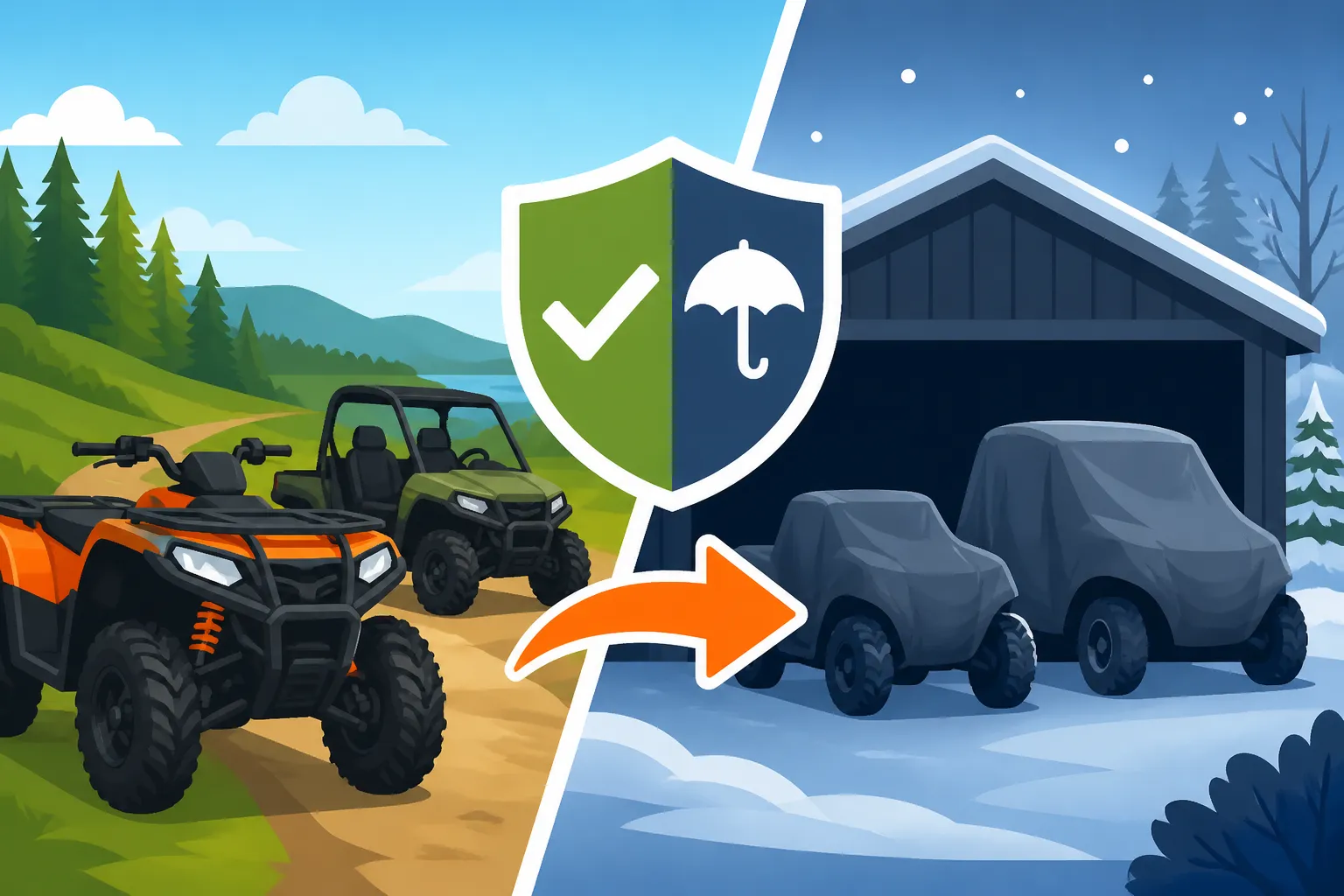
- Suspending Your Policy (often called "Lay-Up" or "Storage Coverage"): This is often the more practical and recommended option for seasonal vehicles like ATVs. With suspension, you're not cancelling the policy entirely. Instead, you're reducing the active riding coverages (like collision and liability for trail use) while maintaining coverage for risks associated with storage. This typically includes perils like fire, theft, and vandalism. The benefits are clear: you maintain a continuous insurance history, and when you're ready to ride again, reactivating the full policy is usually a simple phone call, rather than starting from scratch. It's designed to save you money during the non-riding months while still protecting your asset.
Storage-Only Coverage: What It Entails
If you opt for suspension or a lay-up period, your policy transitions to "storage-only" coverage. What exactly does this mean for you, the New Brunswick ATV owner? It means that while your machine isn't covered for accidents that occur while riding (because, well, you shouldn't be riding it!), it is still protected from a range of other common and costly threats. Imagine waking up one morning to find your shed has been broken into and your quad stolen. Or worse, a winter storm causes a power outage, leading to a house fire that spreads to your detached garage where your ATV is stored. Without storage coverage, these events would leave you entirely responsible for replacing your machine, which can easily run into the thousands of dollars.
Storage-only coverage typically safeguards against:
- Theft: If your ATV is stolen from your garage, shed, or other storage location.
- Fire: Protection against damage or total loss due to fire, whether it originates from your storage area or elsewhere.
- Vandalism: If someone intentionally damages your stored machine.
- Certain types of accidental damage: This can sometimes include things like a tree falling on your shed, or a pipe bursting in your garage, causing water damage.
While the [New Brunswick Insurance Cost for an ATV] might seem like an unavoidable expense year-round, exploring storage-only options can significantly reduce your premiums during the off-season while still providing critical peace of mind. It’s about protecting your investment even when it’s not actively tearing up the trails.
The Risks of Going Uninsured (Even in Storage)
The temptation to save a few dollars by completely ditching your ATV insurance in the off-season is understandable. However, it's crucial to weigh those savings against the very real and potentially devastating risks of being entirely uninsured, even when your machine is just sitting there. Many riders underestimate the sheer variety of problems that can still befall a parked ATV.
Theft, Fire, and Vandalism: The Unseen Dangers
Just because your ATV isn't out on the [New Brunswick ATV Trails: The QuadNB Network] doesn't mean it's immune from harm. The off-season can be a prime time for opportunistic thieves who know that many machines are stored away. Imagine this scenario: it's the dead of winter, a heavy snowfall covers everything, and your rural property seems quiet and isolated. A thief sees this as an opportunity, breaks into your shed, and your quad is gone. Without any insurance, the cost of replacing that machine falls entirely on you.
Fires are another year-round threat. A faulty wire in your garage, a stray ember from a wood stove, or even a fire that starts in a neighbouring structure could engulf your storage area. We've all heard stories of people losing everything in a house fire, and if your ATV isn't covered, it's just another devastating loss you'll have to absorb yourself. And then there's vandalism; whether it's malicious mischief or an accidental breakage by a curious individual, the repairs can be expensive. These "unseen dangers" are why even a basic storage-only policy is a smart move.
Accidental Damage and Liability Concerns
Beyond intentional acts like theft or vandalism, accidental damage can still occur while your ATV is stored. A heavy gust of wind could send a shed door crashing into it, or a clumsy moment with another vehicle in your driveway could result in an impact to your stored machine. While less common, these types of incidents highlight the value of comprehensive coverage even when the machine isn't operational.
Perhaps even more critical, though less directly related to your stored ATV, are potential liability concerns. While your personal homeowner's insurance might offer some very limited liability coverage for incidents on your property, an uninsured ATV could present complexities. For instance, if someone were to somehow be injured because of your stored ATV on your property (say, they trip over it, or an unsecured part falls on them – however unlikely), your uninsured status could complicate any claims against you. While the primary focus of [New Brunswick Insurance Requirements for Riders] is trail use, understanding the broader implications of liability is always wise. The penalties for riding uninsured are steep ([New Brunswick Uninsured ATV Fine of $604.50]), and while these typically apply to active riding, the general principle of being financially exposed without coverage is worth serious consideration.
Practical Steps for Adjusting Your ATV Insurance
Alright, so you've weighed the risks and benefits, and you've decided that adjusting your ATV insurance for the off-season is the right move for you. The good news is, it's usually a straightforward process, but there are a few key steps to ensure everything goes smoothly and you're properly protected.
Contacting Your Insurance Provider
This is the absolute first and most important step. Don't make assumptions or try to guess what your policy allows; pick up the phone and talk to your insurance agent or a representative from your provider. They are the experts on your specific policy and the options available to you.
When you call, be prepared with these questions:
- "I'd like to discuss options for my ATV insurance during the off-season. Can I suspend my policy, or do you offer 'storage-only' coverage?"
- "What specific coverages will remain active if I suspend my policy (e.g., fire, theft, vandalism)?"
- "What are the exact cost savings I can expect by going with a suspended or storage-only policy?"
- "What is the process for reactivating my full riding coverage when the spring riding season begins?"
- "Are there any administrative fees associated with suspending or reactivating my policy?"
This conversation will clarify your options, the exact terms, and the financial implications. It's always best to have this discussion well before the off-season officially kicks in, so you're not scrambling at the last minute.
Documenting Your Decisions
Once you've spoken with your insurer and made a decision, it's vital to get everything in writing. A verbal agreement is a good start, but a written confirmation protects you in case of any future misunderstandings or claims. Ask your agent to send you:
- Confirmation of Policy Change: This should clearly state that your policy has been suspended or adjusted for storage, effective from a specific date.
- Details of Remaining Coverage: A summary of what is still covered (e.g., fire, theft, vandalism) during the storage period.
- Revised Policy Declarations Page: This new document will show your updated premiums and coverage limits for the storage period.
Keep these documents organized. It's a good practice to store them with your other important ATV paperwork, like your [New Brunswick Registration Paperwork Checklist] and bill of sale. If you ever need to make a claim during the off-season, having these documents readily accessible will streamline the process. While direct communication with your insurer is primary, for those who like extra formality, resources like LawDepot can provide templates for letters or formal requests, which might be useful if you're writing a formal request for policy changes, though usually not necessary for a simple suspension.
Preparing Your ATV for Storage
While not directly an insurance step, properly preparing your ATV for its winter nap is crucial for its longevity and can indirectly support your insurance choices. A well-maintained and properly stored machine is less likely to experience issues that might lead to an insurance claim.
Follow these general storage tips:
- Cleanliness is Key: Give your ATV a thorough wash to remove all mud, dirt, and corrosive elements from the riding season.
- Fuel Stabilizer: Add fuel stabilizer to a full tank of gas and run the engine for a few minutes to circulate it. This prevents fuel degradation and keeps the fuel system clean.
- Battery Care: Remove the battery and store it in a warm, dry place, connected to a trickle charger or battery tender. This prevents sulfation and keeps it ready for spring.
- Tire Pressure: Inflate tires to the recommended pressure to prevent flat spots.
- Cover It Up: Use a breathable ATV cover to protect it from dust, moisture, and potential scratches.
- Secure Storage: Ensure your storage area is as secure as possible – locked doors, perhaps even an alarm system – to deter theft.
Reviewing guides like [New Brunswick Machines Stored Over Winter] can provide more in-depth advice on winterization, ensuring your machine emerges from its hibernation in top condition.
When the Riding Season Returns: Reactivation and Renewal
Spring in New Brunswick brings a renewed sense of energy, and for ATV riders, it means getting ready to hit the trails again. Just as you prepared your insurance for winter storage, you need a plan for bringing it back to full, active coverage before your first ride.
Planning for Reactivation
Don't wait until the sun is shining and the trails are calling your name to think about reactivating your insurance. Give your insurance company a reasonable lead time—a week or two is usually sufficient—to process your request. This ensures that when you finally load up your quad or side-by-side, you're fully covered for liability and any other coverages you had before the suspension. Think of it like getting your [New Brunswick ATV Registration Renewal] sorted; you don't want to be caught without the proper paperwork or coverage when you're eager to ride. A quick call to your agent, confirming the desired reactivation date, is usually all it takes.
Potential Implications for Future Premiums
For most insurance companies, suspending coverage on a seasonal vehicle for a few months out of the year is a standard practice and typically won't negatively impact your future premiums or policy standing. They understand that not all vehicles are used year-round. However, if you were to frequently cancel and restart policies, or have multiple short periods of coverage, some insurers might view this as a higher administrative burden or even a slight risk factor, potentially influencing future rates. It's always best to be transparent with your insurer about your intentions. Consistency in how you manage your policy, even if it means regular seasonal suspensions, is usually preferred over erratic, full cancellations.
The Importance of Continuous Coverage for Trail Use
Let's reiterate this crucial point: as soon as your ATV or UTV's wheels touch a public trail, woods road, or any designated riding area in New Brunswick, it absolutely must have valid insurance coverage. [New Brunswick Requires Insurance on Trails] is not a suggestion; it's the law. An officer on patrol, whether from the RCMP or a Conservation Officer, can and will ask to see your proof of insurance, along with your registration and trail permit.
The consequences of being caught without insurance are severe. We're talking about substantial fines, which can easily exceed the cost of a year's worth of insurance premiums. Beyond the legal penalties, consider the financial fallout if you're involved in an accident without liability coverage. You could be personally responsible for property damage and medical expenses for any injuries to others, which can be financially ruinous. Don't let a moment of eagerness to hit the trails overshadow the importance of ensuring your full insurance coverage is reinstated. Always check your paperwork before you head out for that first exhilarating ride of the season.
Understanding Off-Season Insurance Options
| Feature | Full Cancellation | Suspension / Storage Coverage |
|---|---|---|
| Cost Savings | Maximum savings (no premiums) | Significant savings (reduced premiums) |
| Coverage for Theft/Fire/Vandalism | None | Yes, typically included |
| Ease of Reactivation | Requires new policy application, more paperwork | Simple phone call to reinstate full coverage |
| Risk of Uninsured Loss | High for all perils (theft, fire, damage) | Low for storage perils; high if ridden unintentionally |
| Trail Use Allowed | No | No (active riding coverage removed) |
| Insurance History Impact | Creates a gap in coverage | Maintains continuous coverage history |
Disclaimer
This article is for general informational purposes only and does not constitute professional advice. Laws, prices and regulations vary by location and change over time. Consult a qualified professional for guidance on your specific situation.