New Brunswick Insurance Requirements for Riders
It's incredibly frustrating trying to figure out all the rules and regulations that come with owning and riding an ATV or UTV here in New Brunswick. You just want to hit the trails, enjoy our beautiful province, and unwind, but the fear of doing something wrong or, even worse, getting into an accident and not being covered, can really hang over your head. This guide is here to untangle the often confusing web of New Brunswick's insurance requirements for ATV and UTV riders, making it clearer when you need coverage, what kind, and why it's so important.
The Absolute Mandate: Insurance for Trail Riding and Public Lands
Let's cut right to the chase: if you plan on riding your ATV or UTV on any designated trail, any public land that isn't your own private property, or even briefly crossing a public highway in New Brunswick, you absolutely, unequivocally need to have insurance. This isn't just a suggestion; it's a legal requirement designed to protect everyone. The moment your wheels leave your personal property and touch a public access point, whether it's a groomed club trail or a shared woods road, the rules kick in.
Why Trail Insurance Is Non-Negotiable
Think about the sheer number of people who use our fantastic trail network. The QuadNB trails alone span thousands of kilometres, and they're shared by countless riders. When you're out there, you're not in a vacuum. Accidents, unfortunately, happen. A misjudged turn, an unexpected obstacle, or even a moment of inattention can lead to a collision with another machine, a pedestrian, or even cause damage to private property adjacent to the trail. Without insurance, you'd be personally on the hook for all the damages, medical bills, and legal fees, which can quickly spiral into hundreds of thousands of dollars. The law, as outlined in the [What New Brunswick's Off-Road Vehicle Act Covers], is there to mitigate these risks for everyone involved.
Moreover, the clubs that maintain these trails, like those associated with QuadNB, work tirelessly to provide a safe and enjoyable riding experience. Their ability to do so is partly dependent on riders adhering to safety standards, which includes being properly insured. The rule that [New Brunswick Requires Insurance on Trails] ensures a baseline of protection for the entire riding community, fostering a more secure environment for everyone who ventures out. It's about collective responsibility as much as personal protection.
What Kind of Coverage You Need
At a minimum, New Brunswick law requires that you carry third-party liability insurance for your ATV or UTV when operating on public trails or land. This liability coverage is crucial because it protects you financially if you cause an accident that results in injury to another person or damage to their property. For example, if you accidentally hit another rider on the trail, causing them injury and damaging their machine, your liability insurance would step in to cover those costs up to your policy limit.
While the legal minimum is essential, many seasoned riders will tell you that it's often wise to consider more than just basic liability. Options like collision coverage can protect your own machine if it's damaged in an accident, comprehensive coverage can handle things like theft or vandalism, and accident benefits can help with your own medical expenses if you're injured, regardless of fault. The basic liability is a starting point, but exploring further options for [New Brunswick Insurance for a Side-by-Side] or any other ORV can provide a much deeper sense of security. Always speak with an insurance broker to understand the various levels of protection available and what best suits your riding style and financial situation.
Navigating the Exemptions: When You Might Not Need Insurance
While the general rule leans heavily towards requiring insurance, there are specific, narrow circumstances where you might be exempt. It’s crucial to understand these distinctions thoroughly, as misinterpreting them can lead to significant penalties.
Private Land Riding
The primary exemption to New Brunswick's ORV insurance requirement applies when you are operating your ATV, UTV, or even a dirt bike, exclusively on private property that you own, or on private property for which you have the express consent of the owner. This is often referred to as the [New Brunswick Owner-Only Private Land Exemption]. The key word here is "exclusively." If your machine never touches a public road, a designated trail, or any other land that isn't strictly private property (and that you have permission to be on), then you are not legally obligated to carry ORV insurance.
Consider a farmer who uses their quad solely to get around their vast fields, never driving it on a public road or even a snowmobile trail that crosses their land. Or a private landowner who has trails cut strictly within their own boundaries, and their family only rides within those defined limits. In these specific scenarios, the legal requirement for insurance doesn't apply. However, even in these cases, it's a really good idea to have personal liability coverage. Accidents can still happen on private land, and without insurance, any resulting medical or property damage costs would come directly out of your pocket. If you’re riding on someone else’s private land, even with permission, consider having a written agreement. Resources like LawDepot offer templates for such legal documents, which can help formalize permission and clarify responsibilities, adding an extra layer of protection for both parties. [Riding Your Own Land Without Trail Insurance] certainly offers freedom, but it doesn't eliminate risk.
Dirt Bikes and the Registration Nuance
This is a common point of confusion for many riders in New Brunswick. While there is a specific nuance regarding dirt bike registration if they are exclusively used on private land (which the [New Brunswick Insurance Exemption for Dirt Bikes] delves into), this exemption does not extend to insurance requirements if that dirt bike then ventures onto a public trail or crosses a highway. The rule is quite clear: if an ORV, regardless of whether it's an ATV, UTV, or dirt bike, is operated on any designated trail, public land, or crosses a highway, it must be insured.
So, if you have a dirt bike that you ride only in your own gravel pit, you wouldn't need to register it, and you wouldn't be legally mandated to insure it. However, if you decide to take that same dirt bike to a club trail system for a weekend ride, you would need to have both proper registration and insurance. The misconception often arises because of the registration flexibility, but the insurance requirement for public access remains consistent across all types of ORVs. It's vital not to get these two distinct requirements mixed up, as the consequences of riding an uninsured dirt bike on a public trail are just as severe as for an uninsured ATV.
Practicalities and Consequences: What to Do and What to Avoid
Understanding the rules is one thing, but putting them into practice and being aware of the repercussions for not following them is another. This section will guide you through the practical aspects of meeting your insurance obligations and highlight the very real risks of falling short.
Proving You're Insured
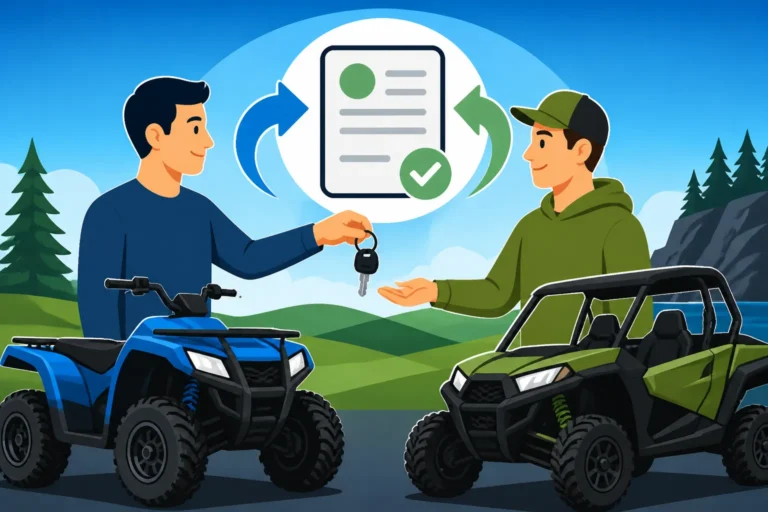
The New Brunswick Off-Road Vehicle Act requires you to carry proof of insurance with you whenever you are operating your ORV. This means having the physical or digital document readily available to present to an officer if you are stopped on a trail or public land. Think of it like carrying your car insurance card. [New Brunswick Documents You Must Carry] is not just a suggestion; it's a legal obligation. This proof typically comes in the form of an insurance card or a copy of your policy.
Many riders choose to laminate a copy of their insurance card and keep it in a waterproof bag in a saddlebag or storage compartment on their machine. Others prefer to have a clear, legible digital copy on their smartphone, though relying solely on a phone means ensuring it's charged and accessible even in remote areas where reception might be spotty. Whatever method you choose, make sure it's easy to access and clearly shows your policy details, coverage dates, and the specific machine it applies to. After all, when an officer asks for your [New Brunswick Proof of Insurance on the Machine], fumbling around or not having it at all can lead to unnecessary complications, even if you are, in fact, insured.
Penalties for Non-Compliance
This is where things get serious. Riding an uninsured ATV or UTV on a public trail or road in New Brunswick carries substantial penalties that you definitely want to avoid. The fines are designed to be a significant deterrent, reflecting the seriousness of the risk posed by uninsured operation. For instance, operating an uninsured ATV can result in a [New Brunswick Uninsured ATV Fine of $604.50]. That's not a typo – over six hundred dollars just for not having the proper paperwork. And that's just the fine.
The financial implications can extend far beyond a ticket. If you cause an accident while uninsured, you could be personally sued for the damages and medical costs of anyone involved. Imagine causing an accident that results in a serious injury to another rider. Their medical bills could be in the tens or even hundreds of thousands of dollars, not to mention potential lost wages and pain and suffering. Without insurance, you would be financially responsible for all of it. This could lead to wage garnishment, seizure of assets, and a financial burden that could last for years, truly impacting your quality of life. The topic of [New Brunswick Penalties for Riding Uninsured] is one that no rider wants to experience firsthand.
Finding the Right Coverage
Navigating the insurance market can feel overwhelming, but it's a vital step in responsible ORV ownership. Start by contacting your current auto or home insurance provider. Often, they can offer you a discount for bundling policies, and they might already have ORV insurance options available. They know your history, which can streamline the process. Don't be afraid to shop around, though. There are many insurance companies that specialize in recreational vehicles, and they might offer different rates or coverage options that better suit your specific needs.
When you're getting quotes, be sure to provide accurate details about your machine (make, model, year, VIN), your riding habits (how often you ride, where), and your driving record. All these factors influence your premium. Also, clearly communicate that you need ORV insurance for use on public trails, as this dictates the type of policy required. While I can't give you specific figures for [New Brunswick Insurance Cost for an ATV], be prepared to compare at least three quotes to ensure you're getting competitive rates. Remember, the cheapest option isn't always the best; make sure the policy provides adequate coverage for your peace of mind. For any associated legal documents beyond insurance policies themselves, like waivers or rental agreements if you lend out your machine, LawDepot can be a useful resource for finding customizable templates.
Beyond the Basics: Important Considerations for Every Rider
Once you've secured your insurance, your journey into responsible riding isn't over. There are deeper layers of understanding and protection that every New Brunswick ATV and UTV rider should consider to truly safeguard themselves and enjoy their passion without unnecessary worry.
Understanding Your Policy
Getting an insurance policy is a good first step, but truly understanding what it covers (and, just as importantly, what it doesn't cover) is paramount. Don't just file it away; take the time to read through your policy documents. Pay close attention to the deductibles – this is the amount you'd have to pay out-of-pocket before your insurance kicks in for a claim. Higher deductibles usually mean lower premiums, but they also mean more immediate cost to you if something happens.
Also, be aware of any exclusions. Some policies might have specific exclusions for certain types of riding (like racing) or modifications to your machine. Knowing these details beforehand can save you a lot of grief if you ever need to make a claim. Understand how a claim might affect your future premiums; even if you're covered, filing a claim can sometimes lead to increased rates down the line, a concept explored in [New Brunswick Insurance After a Claim]. Don't hesitate to call your insurance broker if anything in your policy isn't crystal clear. They are there to help you interpret the legalese.
Protecting Yourself and Others
Ultimately, carrying the right insurance isn't just about avoiding fines or complying with the law; it's about genuine protection. It's about having the peace of mind that comes from knowing you've done your part to mitigate financial risk for yourself, your family, and others on the trail. Our trails are a shared resource, and responsible riding includes being prepared for the unexpected.
Beyond insurance, practicing safe riding habits, wearing appropriate safety gear (like a helmet that meets provincial standards), and taking a proper safety course are all integral parts of protecting yourself. Insurance is a safety net, but good judgment and preparedness are your first line of defense. By combining sound riding practices with comprehensive insurance, you contribute to a safer, more enjoyable riding community for everyone who shares the beautiful trails of New Brunswick. For a holistic view on what you need to know as a rider, thinking about New Brunswick Insurance Requirements for Riders is a great starting point for safety.
Here's a quick overview of New Brunswick ATV/UTV insurance requirements:
| Scenario | Is ORV Insurance Required? | Key Considerations |
|---|---|---|
| Riding on Designated Trails | Yes, always | Minimum third-party liability is legally mandated. |
| Riding on Public Land (non-trail) | Yes, always | Includes Crown Land, shared woods roads not on private property. |
| Riding Exclusively on Your Own Private Property | No, not legally required | Highly recommended for personal liability protection. |
| Riding Exclusively on Another's Private Property (with permission) | No, not legally required | Obtain written permission; still recommended for liability. |
| Crossing a Public Highway (even briefly) | Yes, always | All required documents must be carried. |
| Dirt Bike on a Designated Trail | Yes, always | The private land registration exemption does not apply to insurance on trails. |
Disclaimer
This article is for general informational purposes only and does not constitute professional advice. Laws, prices and regulations vary by location and change over time. Consult a qualified professional for guidance on your specific situation.