How to Register an ATV in New Brunswick
Figuring out how to properly register your ATV or side-by-side in New Brunswick can feel like a maze, especially when you just want to get out and ride without worrying about rules and regulations. Many riders get frustrated trying to understand the paperwork and where to go. This comprehensive guide is here to walk you through the entire process, making registration straightforward so you can enjoy the fantastic trails our province has to offer, completely stress-free.
Understanding Why and What You Need Before You Start
Before you even think about hitting the trails or heading to a Service New Brunswick centre, it’s crucial to understand why registration isn’t just a formality, but a legal requirement, and exactly what documents you’ll need to have in hand. Skipping this initial homework can lead to delays, multiple trips, and even costly fines.
The Law and Your Peace of Mind
Here in New Brunswick, registering your Off-Road Vehicle (ORV) isn't optional; it's mandatory under the Off-Road Vehicle Act. This law applies to ATVs, side-by-sides, dirt bikes, snowmobiles, and even dune buggies. Many people mistakenly believe that if they only ride on their own land, or just on local woods roads, they don't need to register. That's a common misconception that can quickly lead to trouble. Even if you only venture onto designated trails or private property with permission, your machine must be registered and display a valid license plate and sticker. You can learn more about the general requirements in [New Brunswick ORV Registration Explained].
Imagine you’re out for a leisurely ride with friends, enjoying a beautiful sunny afternoon, and suddenly you encounter a peace officer. They might pull you over for a routine check, and if your ATV isn't properly registered, you could be facing a hefty fine. It's not just about avoiding tickets; it's about peace of mind. Knowing your machine is legal means you can ride confidently, without that nagging worry in the back of your mind. It also contributes to the safety and organization of our trail system, ensuring everyone is playing by the same rules.
Beyond just avoiding legal headaches, registration is your gateway to the extensive network of managed trails across New Brunswick. Our province boasts an incredible network of trails, thanks to the dedicated work of numerous ATV clubs. To access these trails, your machine needs to be registered, and you'll typically need a valid trail permit, which is often tied to your registration status. Without both, you could be denied access or, again, face fines. This isn't just a bureaucratic hurdle; it's how the trail system is funded and maintained for all of us to enjoy.
Key Documents for Registration Success
Before you even step foot into a Service New Brunswick office, gathering all your required documents is absolutely paramount. There’s nothing more frustrating than waiting in line, only to find you're missing a critical piece of paper and have to start all over again. Being prepared saves you time and a lot of potential headaches. A good starting point is to look at a [New Brunswick Registration Paperwork Checklist].
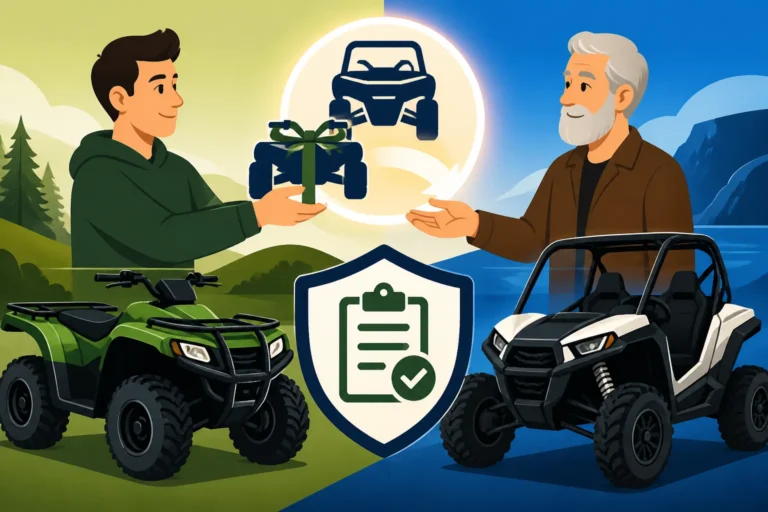
The most critical document you'll need is proof of ownership for your ATV. If you're buying a new machine from a dealership, they will usually provide you with a Manufacturer’s Statement of Origin (MSO) or a New Vehicle Information Statement (NVIS). This document proves that you are the first owner of the machine. For a used ATV, especially one bought from a private seller, you absolutely need a clear, legible bill of sale. This bill of sale should include the full names and addresses of both the buyer and the seller, the date of sale, the purchase price, and most importantly, the Vehicle Identification Number (VIN) of the ATV. Both the buyer and seller should sign it, and it's always a good idea to have it witnessed, if possible. For private transactions, using a comprehensive template from a reputable service like LawDepot can ensure all necessary details are covered, preventing any future disputes or issues with registration. Without proper proof of ownership, Service New Brunswick cannot register the machine in your name, leaving you in a tricky situation, especially if you find yourself needing [New Brunswick Registration Without a Bill of Sale].
In addition to proof of ownership, you’ll need your own personal identification. This typically means a valid New Brunswick driver's license. If you're a new resident or don't have a New Brunswick driver's license, other forms of government-issued photo ID might be accepted, but it's always best to call ahead and confirm. You’ll also need to provide proof of your New Brunswick residency, which your driver's license usually covers. If your license doesn't reflect your current address, or if you're using another form of ID, be prepared to show something like a utility bill or lease agreement that clearly displays your name and local address. This helps confirm that you are indeed a resident of the province and eligible for registration here.
Finally, you will need to fill out an Application for Vehicle Registration form. This form collects all the necessary details about you and your ATV. While you can often get these forms at a Service New Brunswick centre, it’s a good practice to download and fill it out beforehand from the official government website. This way, you can take your time to ensure all information is accurate and legible, which speeds up the process considerably once you're at the counter. Double-check all the details, especially the VIN, to ensure it matches your ownership documents exactly.
Your Step-by-Step Journey to a Registered ATV
Once you’ve gathered all your essential documents, the actual registration process becomes much smoother. Knowing exactly where to go, what to expect, and what steps are involved will help you breeze through it and get your machine legal in no time.
Navigating Service New Brunswick
In New Brunswick, the official registration of your ATV is handled by Service New Brunswick. These are the government service centres located throughout the province, and they are your one-stop shop for a variety of government services, including ORV registration. You can find a list of [New Brunswick Service Centres That Register ORVs] on the government's website. It's usually best to choose the centre most convenient for you, but be aware that wait times can vary depending on the time of day and year.
When you arrive at a Service New Brunswick centre, you’ll typically take a number and wait for your turn. Have all your documents organized and ready to present to the customer service representative. This includes your completed Application for Vehicle Registration form, your proof of ownership (bill of sale or MSO), and your personal identification. The representative will review your documents, enter the information into their system, and guide you through any additional steps. Don't hesitate to ask questions if anything is unclear; they are there to help clarify the process.
Registering from a Private Sale or Dealer
The process can differ slightly depending on whether you bought your ATV new from a dealer or used from a private seller. If you purchased a new machine from a licensed dealership, they often handle a significant portion of the registration paperwork for you. They’ll typically submit the MSO or NVIS, collect the applicable Harmonized Sales Tax (HST), and even apply for your plate and registration on your behalf. This is a huge convenience, as it means less legwork for you. You should clarify exactly what the dealer will take care of during the purchase process to avoid any surprises. You can find more details on [New Brunswick Dealer Paperwork at Delivery] and [New Brunswick HST on an ATV Purchase].
If you've bought a used ATV directly from a private seller, the responsibility for registration falls entirely on you. This is where your meticulously prepared bill of sale becomes critical. Service New Brunswick will require this document to prove the transfer of ownership from the previous owner to you. It's vital that the VIN on the bill of sale matches the VIN on the machine exactly. If there are any discrepancies, it can cause significant delays. For peace of mind in a private sale, consider drafting the bill of sale using a comprehensive online template, perhaps from a service like LawDepot, to ensure all legal bases are covered and it includes all the information Service New Brunswick needs for a smooth transfer, as outlined in [New Brunswick Registration After a Private Sale]. Before purchasing, it’s always a good idea to perform a record search on the VIN to check for any liens or stolen status, which you can learn about in [What a Record Search Shows Before You Buy Used].
What to Expect: Plate, Decal, and Certificate
Once your application is approved and you've paid the necessary fees, you'll walk out with everything you need to legally ride your ATV. The total [New Brunswick ORV Registration Cost] involves a registration fee, which for an ATV, is typically reflected in what [New Brunswick Charges $41 for an ATV], and a [New Brunswick Plate Fee of $25]. Remember, these are general figures, and it's always best to confirm current rates when you visit Service New Brunswick.
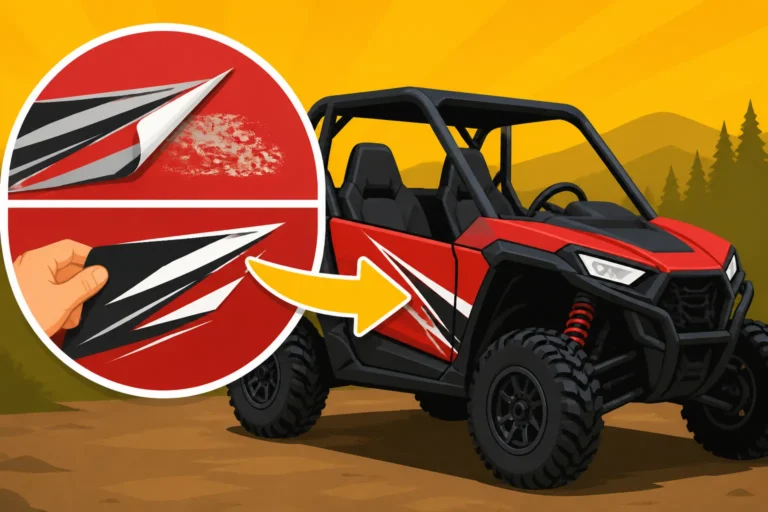
You will receive a physical license plate for your ATV. This plate needs to be affixed to the rear of your machine in a clearly visible location. Instructions on [New Brunswick Plate Placement on a Quad] will usually be provided. You’ll also get a registration decal or sticker, which typically shows the year your registration is valid. This decal usually needs to be placed on the left-hand side of your ATV, often on the front fender, as specified by [New Brunswick Permit Stickers on the Left Side]. It's your visual proof that your registration is current.
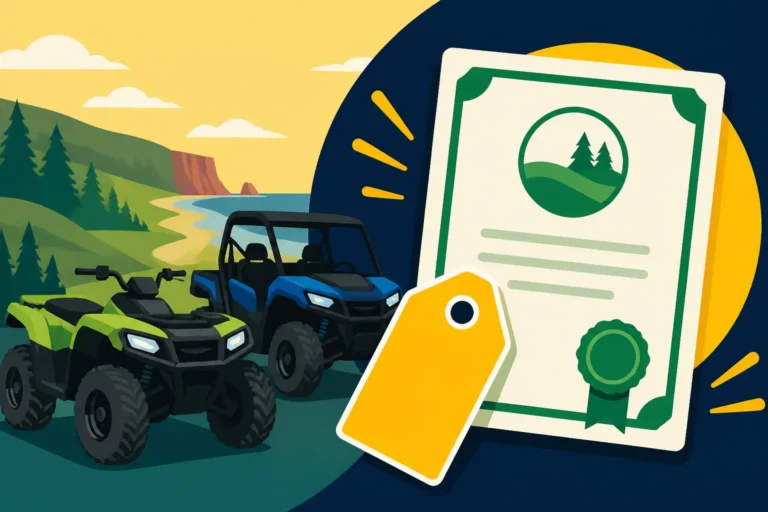
Perhaps the most important item you’ll receive is your Official Certificate of Registration. This is a paper document that lists your name as the registered owner, the ATV’s VIN, and other pertinent details. This document, along with proof of insurance (which is mandatory for trail riding in New Brunswick), must be carried with you whenever you operate your ATV off your own property. It’s an essential piece of paperwork that an officer might ask to see during a trailside check, as detailed in [New Brunswick Documents You Must Carry]. Losing this document can cause issues, so keep it safe!
Keeping Your ATV Legal: Renewals, Replacements, and Beyond
Getting your ATV registered is a fantastic first step, but it’s not a one-and-done deal. To ensure you can continue to enjoy the trails and roads legally, you need to understand the ongoing maintenance of your registration, including renewals and what to do if things get lost or damaged.
The Annual Renewal Cycle
One crucial detail every ATV owner in New Brunswick needs to remember is that all ORV registrations expire on December 31st of each year, regardless of when you initially registered your machine. This is a consistent rule that helps streamline the provincial system, but it also means you need to be proactive about renewal. You can learn more about this standard expiry date in [Why Every ORV Plate Expires on December 31]. It's easy to forget this deadline in the midst of the holiday season or during the colder months when many quads are stored away, but missing it can lead to your registration lapsing.
Thankfully, renewing your ATV registration in New Brunswick is generally much simpler than the initial registration process. Service New Brunswick offers several convenient options to make it easy for you. You can choose to renew in person at any Service New Brunswick centre, where you’ll simply provide your current registration certificate and payment. Many riders appreciate this option as it allows them to ask any questions they might have directly. For those who prefer the convenience of home, renewal can often be completed by phone or even online. For detailed instructions on how to complete the process from your couch, check out [New Brunswick Renewal Online].
It's always a good idea to renew your registration well before the December 31st deadline. Waiting until the last minute can sometimes lead to delays, especially if you encounter any issues or if service centres are particularly busy. By renewing proactively, you ensure there's no lapse in your legal ability to operate your ATV, which means you're ready to hit the trails as soon as the weather allows in the new year.
Dealing with Lost or Damaged Items
Life happens, and sometimes things get lost, stolen, or damaged. Whether it's your license plate, the annual decal, or even your registration certificate itself, knowing how to get replacements quickly is important to avoid riding an illegally documented machine.
If your license plate becomes bent, faded, or completely lost, you'll need to apply for a replacement. This is a fairly straightforward process through Service New Brunswick. You'll likely need to fill out a short form, pay a replacement fee, and they will issue you a new plate. Similarly, if the annual registration sticker peels off, fades beyond recognition, or is lost, you can request a replacement decal. There is typically a nominal fee for a replacement sticker, which you can investigate further in [New Brunswick Sticker Replacement at $11.50]. It’s important to address these issues promptly because an unreadable or missing plate or decal can still lead to questions from law enforcement. Detailed information on how to get these items replaced can be found in [New Brunswick Replacement Plates and Decals].
Losing your Certificate of Registration can be particularly worrisome, as it's one of the key documents you are required to carry with you when riding. Fortunately, getting a replacement is also possible through Service New Brunswick. You'll need to visit a centre, prove your identity, and pay a fee for a certified copy. It's often referred to as a "replacement certificate" and there is usually a fixed fee for this service, such as the [New Brunswick Replacement Certificate at $20]. While it's an inconvenience, the process is designed to be as simple as possible to ensure you can quickly get back to having all your legal paperwork in order. Just remember to always keep a copy (perhaps a digital one on your phone, though a physical copy is preferred by authorities) separate from the one you carry on your machine, just in case.
Here’s a quick overview of the key elements you’ll encounter during the registration process:
| Item | Description | Common Fees (Check for current rates) | Where to Get/Do |
|---|---|---|---|
| Proof of Ownership | Bill of Sale (private sale) or Manufacturer's Statement of Origin (new machine) | N/A (purchase price subject to tax) | From seller/dealer; consider LawDepot for private templates |
| Personal ID | Valid New Brunswick Driver's License or other government-issued photo ID | N/A | Your personal documents |
| Application Form | Official Application for Vehicle Registration | N/A | Service New Brunswick or online download |
| Registration Fee | Annual fee to register your ATV | Around $41 (as per [New Brunswick Charges $41 for an ATV]) | Service New Brunswick counter |
| License Plate Fee | Fee for the physical ORV license plate | Around $25 (as per [New Brunswick Plate Fee of $25]) | Service New Brunswick counter |
| Annual Decal | Sticker indicating current registration year | Included with registration | Issued at Service New Brunswick |
| Certificate | Official paper document of registration | Included with registration | Issued at Service New Brunswick |
| Renewal | Annual process to update registration | Same as registration fee | Service New Brunswick, phone, or [New Brunswick Renewal Online] |
| Plate Replacement | For lost, stolen, or damaged license plates | Typically a flat fee | Service New Brunswick counter |
| Decal Replacement | For lost or damaged annual stickers | Around $11.50 (as per [New Brunswick Sticker Replacement at $11.50]) | Service New Brunswick counter |
| Certificate Replacement | For lost or damaged registration certificates | Around $20 (as per [New Brunswick Replacement Certificate at $20]) | Service New Brunswick counter |
Disclaimer
This article is for general informational purposes only and does not constitute professional advice. Laws, prices and regulations vary by location and change over time. Consult a qualified professional for guidance on your specific situation.