New Brunswick Registration After a Private Sale
Buying an ATV or UTV from a private seller here in New Brunswick can feel like a fantastic deal – you've found the perfect machine, negotiated a great price, and you're already dreaming of those beautiful Fundy trails. But then reality sets in: you have to navigate the often confusing world of registration to make it all legal. This guide is here to walk you through every step of registering your privately-purchased off-road vehicle, ensuring you hit the trails confidently and without a hitch.
The Unique Hurdles of a Private ORV Sale in New Brunswick
Let's be honest, buying anything privately can sometimes feel like stepping into the wild west of transactions. When it comes to something as substantial as an ATV or UTV, the stakes are a bit higher than a used toaster. You're not just exchanging cash for keys; you're entering into a legal transfer of ownership that requires specific steps to ensure you're the rightful, and registered, owner. The biggest hurdle often lies in the prior owner's understanding (or lack thereof) of what needs to happen on their end, and then, what you as the buyer must do.
Understanding the Seller's Crucial Role
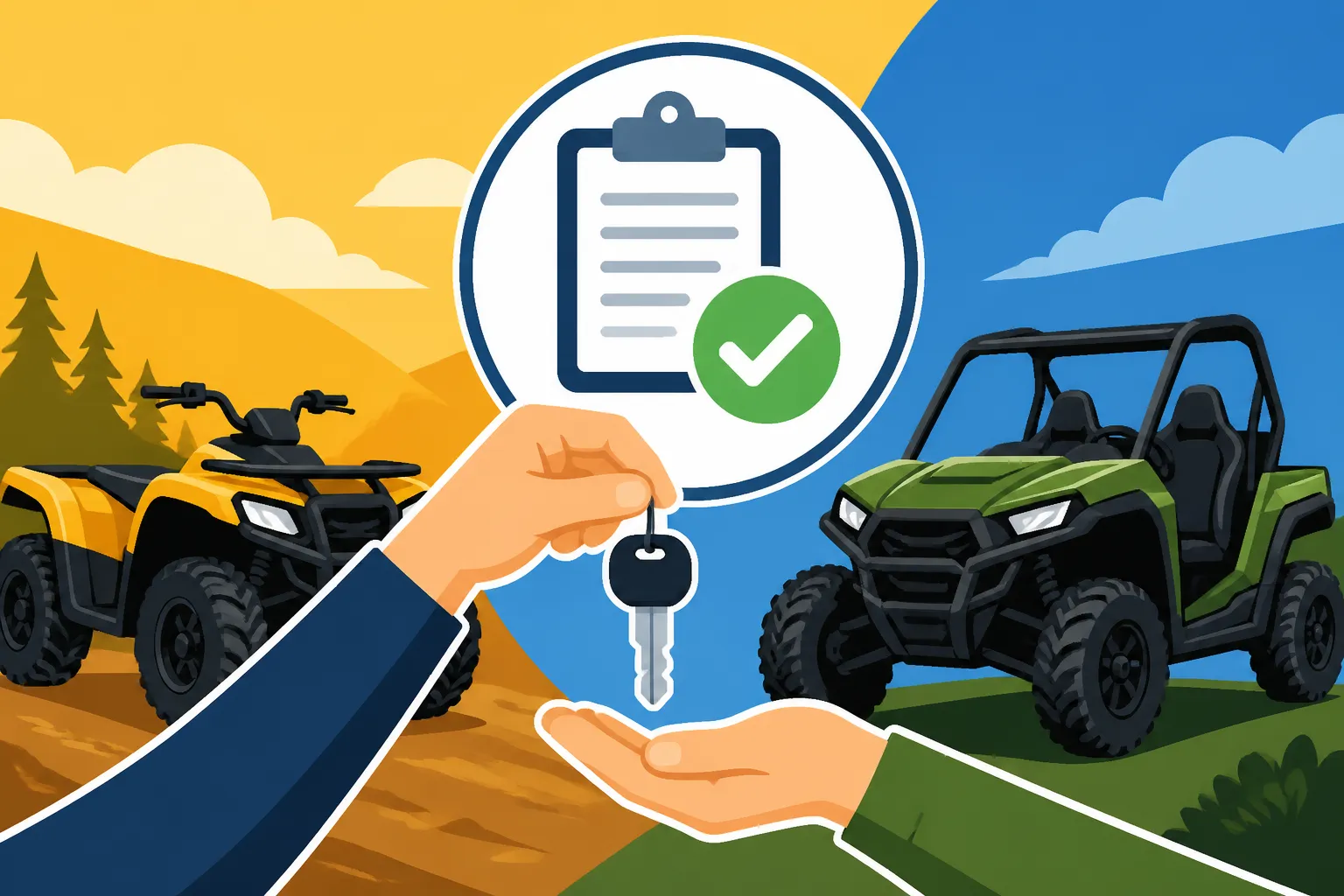
Before you even shake hands and exchange money, it's vital to understand what the seller should be providing you with. In an ideal world, the seller would have everything perfectly in order, but that's not always the reality out on rural woodlots or in someone's backyard. Their primary responsibility is to give you clear proof of ownership and a means to transfer that to your name. This usually means a signed bill of sale and, ideally, the original registration certificate. Without these, your journey to registration becomes significantly more complicated, often putting the onus on you to scramble for alternatives.
Your Responsibilities as the Buyer
As the buyer, you're ultimately the one who needs to ensure the machine gets properly registered in your name. This isn't just a formality; it's about legal ownership, liability, and being able to ride on our fantastic trail system. Your responsibilities start with due diligence before the purchase. This includes verifying the VIN (Vehicle Identification Number) on the machine matches any paperwork, making sure the seller actually owns the machine free and clear, and understanding exactly what documents you need to collect at the point of sale. Failing to get the right paperwork upfront can lead to headaches, delays, and even potential financial losses down the road.
The Essential Paperwork for Transferring Ownership
When you head to Service New Brunswick to register your newly acquired ATV or UTV, they're going to want to see some very specific documents. Think of it like a puzzle; if you're missing a piece, they can't complete the picture of your ownership. Having these ready will make the process infinitely smoother and quicker.
The Bill of Sale: Your Proof of Purchase and Tax Foundation
This is arguably the most critical document when buying from a private seller. A bill of sale isn't just a receipt; it's a legal document that proves the transfer of ownership from the seller to you, details the machine being sold (VIN, make, model, year), and most importantly for New Brunswick, states the purchase price. Why is the price so important? Because this is what Service New Brunswick will use to calculate the Harmonized Sales Tax (HST) you owe on the purchase. Even if the machine is a gift, a bill of sale stating "gift" or a nominal value is still required.
It's common for private sellers to not have a fancy pre-printed form. A handwritten bill of sale is perfectly acceptable, as long as it includes all the necessary information: both parties' full names and addresses, the date of sale, the selling price, the vehicle's make, model, year, and VIN, and both buyer and seller signatures. If you're concerned about accuracy or completeness, or if the seller doesn't have one prepared, using a template from a reputable source like LawDepot can be incredibly helpful to ensure all bases are covered. This protects both you and the seller. [New Brunswick HST on an ATV Purchase] is an important read on this topic.
The Previous Registration Certificate: Proving a Clear Chain of Title
While the bill of sale confirms your purchase, the previous registration certificate confirms the seller's legal ownership and provides a clear chain of title for the machine. This document, issued by Service New Brunswick to the previous owner, lists the VIN, the owner's name, and shows that the machine was legally on the books. When you bring this in, along with your bill of sale, it allows Service New Brunswick to easily see that the person who sold you the machine was indeed the rightful owner. It simplifies the transfer, as it acts as a verifiable record of the machine's history. Without it, Service New Brunswick might need to take extra steps to confirm the machine isn't stolen or subject to other legal encumbrances.
Your Identification and Proof of New Brunswick Address
Just like registering a car, you'll need to prove who you are and that you reside in New Brunswick. Bring a valid piece of government-issued photo identification, such as your driver's licence. This confirms your identity. You'll also need proof of your New Brunswick address, especially if your ID doesn't clearly state it or if you've recently moved. A utility bill, a lease agreement, or other official mail showing your name and current address will usually suffice. These details are crucial for Service New Brunswick to accurately record you as the new owner and ensure all future communications reach you. [New Brunswick Registration and Proof of Address] goes into more detail.
Navigating the Transfer Process at Service New Brunswick
With your essential documents in hand, the next step is to physically go to a Service New Brunswick centre. While some transactions can be done online or by phone, a first-time registration after a private sale, especially one involving a tax calculation and proof of ownership transfer, generally requires an in-person visit.
Visiting a Service Centre
This is where all your preparation pays off. Find your nearest Service New Brunswick location – there are centres conveniently located across the province, from Fredericton to Bathurst, Moncton to St. Stephen. It’s a good idea to check their hours of operation before you go, and sometimes, you can even book an appointment online to minimize wait times. When you arrive, you'll take a number and wait to be called to a counter. Have all your documents neatly organized: your bill of sale, the previous owner's registration certificate, your ID, and proof of address. Being prepared streamlines the process not just for you, but for the staff too. [New Brunswick Service Centres That Register ORVs] lists locations.
The Application for Vehicle Registration Form
At the counter, you'll be guided through completing an "Application for Vehicle Registration" form. This form collects all your personal details, information about the off-road vehicle (make, model, year, VIN), and details about the sale. The Service New Brunswick agent will review your bill of sale to determine the HST payable and the registration fee. They'll also verify the VIN against the previous registration certificate and your bill of sale. Take your time filling out the form, ensuring all information is accurate to avoid any discrepancies that could cause delays. The agent is there to help, so don't hesitate to ask questions if something isn't clear. It's much easier to correct an error on the spot than to discover it later.
Paying the Fees and Receiving Your New Registration
Once all the paperwork is confirmed and the application is complete, you'll proceed to pay the necessary fees. This will include the Harmonized Sales Tax (HST) on the purchase price you declared on your bill of sale, and the annual registration fee for your specific type of ORV. For example, registering an ATV generally has a different fee than a dirt bike. Remember, Service New Brunswick staff cannot provide specific figures for taxes or fees on the spot, so come prepared for the calculated costs.
After payment, you will receive your new registration certificate and the physical plate and sticker for your machine. This is the moment it becomes officially yours in the eyes of the province! Make sure to review your new registration certificate before you leave, confirming that all your personal information and the vehicle details are correct. You'll want to keep this document safe, as it's one of the [New Brunswick Documents You Must Carry] whenever you ride.
What Happens If Key Documents Are Missing?
Life isn't always neat, and sometimes, when buying privately, a seller might not have all their ducks in a row. This can throw a wrench into your registration plans, but it's not necessarily a dead end. There are avenues to explore, though they may require a bit more effort on your part.
No Bill of Sale? Using a Statutory Declaration
This is a fairly common scenario, especially with older machines or informal sales between friends or family. If the seller doesn't have or can't produce a bill of sale, you will likely need to provide a Statutory Declaration. This is a sworn statement, witnessed by a Commissioner of Oaths, confirming the details of the sale (who sold it, who bought it, when, for how much, and the machine's VIN). It essentially replaces the formal bill of sale. You'll need to sign this declaration in front of the Commissioner of Oaths, who will then sign and seal it. Service New Brunswick requires this to process the transfer and calculate HST. Services like LawDepot can often provide templates and guidance for creating a legally sound statutory declaration, which can be invaluable in these situations.
Missing Previous Registration Certificate
If the previous owner has lost or cannot find their registration certificate, this can also complicate matters. Service New Brunswick prefers to see the original certificate to ensure a clean transfer. Without it, they may still be able to proceed, but they'll need to take extra steps to verify ownership. This could involve running a VIN search to confirm the seller was indeed the last registered owner and that there are no liens or flags against the vehicle. In some cases, the seller might be able to obtain a [New Brunswick Replacement Certificate at $20] from Service New Brunswick beforehand, which would make your job much easier. If not, be prepared for a slightly longer process at the counter as the agent performs these checks.
What About an Out-of-Province Purchase?
Buying an ATV or UTV from a private seller in a neighbouring province like Nova Scotia or Quebec adds another layer of complexity, but it's certainly doable. The core principles remain the same: you need proof of purchase (bill of sale) and proof of the seller's ownership (their provincial registration or title document). When you bring an out-of-province machine to Service New Brunswick, they will assess the HST based on the purchase price, just as they would for an in-province sale. You'll also need to ensure the machine meets New Brunswick's safety standards. It's always a good idea to perform a title search in the originating province if possible, to confirm there are no outstanding liens or issues before you commit to the purchase. [Importing a Machine From Maine] can give you an idea of additional considerations for cross-border purchases.
Costs and Other Important Considerations
Beyond the initial purchase price, there are a few other financial and logistical elements you need to factor in when buying a private ATV or UTV and preparing it for the trails.
Understanding the Registration Fees and HST
As mentioned, you'll pay the Harmonized Sales Tax (HST) on the declared purchase price. This is standard for almost any vehicle purchase in New Brunswick, whether new or used, private or dealer. On top of the tax, there's the annual registration fee. These fees vary depending on the type of off-road vehicle. For instance, you'll find that [New Brunswick Charges $41 for an ATV] annually, while a dirt bike typically costs less, often around [New Brunswick Charges $16 for a Dirt Bike]. These fees contribute to the administration of the ORV program in the province. Remember that these rates are subject to change, so it's always wise to check the Service New Brunswick website for the most current figures.
Getting Your Machine Insured
This is not an optional extra; it's a legal requirement. In New Brunswick, if you plan to ride your ATV or UTV on any managed trail system, you absolutely must have liability insurance. [New Brunswick Requires Insurance on Trails]. This isn't just about protecting others; it's also about protecting yourself financially in case of an accident. Many insurance providers offer specific ORV policies. You'll want to get this squared away shortly after you've registered the machine in your name, and before your first ride on any trail. Make sure to carry proof of insurance with you whenever you're out riding. [New Brunswick Insurance Cost for an ATV] provides more information on what to expect.
The Annual Registration Rule
It's important to be aware that all New Brunswick ORV registrations operate on an annual cycle, expiring on December 31st each year, regardless of when you initially registered your machine. This means if you buy and register your ATV in July, that registration is still only valid until December 31st of the same year. You will then need to renew it for the following year. This is a common point of confusion for new owners, so mark your calendar! [Why Every ORV Plate Expires on December 31] explains this in detail.
Here's a quick summary of the key documents you'll need for a private sale registration:
| Document Type | Purpose | Notes |
|---|---|---|
| Bill of Sale | Proof of purchase; basis for HST calculation | Must include buyer/seller names, date, price, VIN, signatures. Handwritten is acceptable. |
| Previous Registration Certificate | Proof of seller's ownership and clear chain of title | Original is best. If missing, seller might get replacement, or SNB will conduct VIN search. |
| Photo Identification | Confirms your identity | Valid government-issued ID (e.g., driver's licence). |
| Proof of New Brunswick Address | Confirms your residency (if not on ID) | Utility bill, lease agreement, etc. |
| Statutory Declaration | Required if no Bill of Sale can be produced | Sworn statement witnessed by a Commissioner of Oaths. LawDepot can assist with templates. |
Getting Ready for Your First Ride
Once you've navigated the Service New Brunswick process and have your new plate and registration certificate in hand, you're almost ready to hit the trails! But there are a few final, crucial steps to take to ensure you're riding legally and safely.
Plate Placement and Registration Sticker
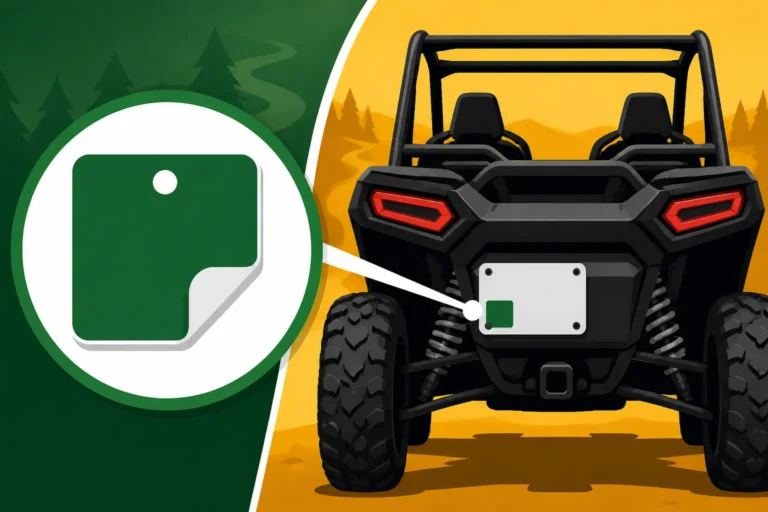
Your New Brunswick registration includes a physical plate and a sticker. The plate typically has two letters and three numbers, much like a small car plate. The registration sticker, which indicates the validity year, is generally affixed to the left front fender of your ATV or UTV, visible and clearly showing the current year. This is important for trail enforcement officers to quickly verify your registration status. Make sure your plate is securely attached to the rear of your machine, also clearly visible. Proper placement avoids unnecessary stops or fines. [New Brunswick Permit Stickers on the Left Side] provides guidance on this.
Carrying Your Documents
This cannot be stressed enough: always carry your essential documents with you when riding your ORV. This includes your valid registration certificate, proof of insurance, and if required, your QuadNB trail permit. Officers on the trail can and do ask to see these documents. While you don't necessarily need to carry your driver's licence if you're not operating on a public road, having it is good practice for identification. Store these documents in a waterproof bag or container, perhaps in a glove box or saddlebag, to protect them from the elements and ensure they are readily accessible. [Carrying Four Documents at Once] details what you need.
Considering a Quad Safety Course
While not always a legal requirement for experienced adult riders, completing a quad safety course is an excellent investment, especially if this is your first ATV or UTV, or if you're new to the New Brunswick trail system. These courses teach safe operating practices, trail etiquette, and essential skills that can prevent accidents and injuries. Plus, some insurance providers offer discounts if you've completed a recognized safety course. For younger riders, a safety course is often a mandatory component for obtaining their Class 9 licence or being eligible to ride. [New Brunswick Quad Safety Course Explained] covers this in more detail. Taking the time to properly register your machine and prepare for safe riding ensures that your private sale turns into countless enjoyable hours on New Brunswick's beautiful trails.
Disclaimer
This article is for general informational purposes only and does not constitute professional advice. Laws, prices and regulations vary by location and change over time. Consult a qualified professional for guidance on your specific situation.