New Brunswick Permit Fines of $340.50
A $340.50 ticket can turn a short ride into an expensive mistake, especially if you thought registration or insurance was all you needed. The key is to understand what New Brunswick’s trail permit covers, when a permit is required, and how reciprocity works for visitors. Here’s how to check your setup and what to do if an officer says your permit is missing or invalid.
What the $340.50 permit fine is about
The $340.50 amount is associated with riding without the required New Brunswick trail permit. It is not the same thing as a registration fine or an uninsured-machine fine. Those are separate requirements with separate consequences, and having one does not replace another.
A registration connects an off-road vehicle to its registered owner. Insurance provides required coverage for riding situations where it applies. A trail permit gives the rider access to the authorized trail network under the permit’s terms. A machine can be registered and insured but still lack the permit needed for a club trail.
That distinction matters when checking your documents and stickers. Riders sometimes assume that a current plate or proof of insurance is enough to use a managed trail. It is not a safe assumption. Before setting out, confirm that the machine has the correct trail permit for the trail and season, and that the permit is displayed as instructed.
| Item | What it generally does | Does it replace a trail permit? |
|---|---|---|
| Vehicle registration | Identifies the vehicle and its registered owner | No |
| Insurance | Provides required insurance coverage for applicable riding | No |
| Trail permit | Provides trail access under the applicable permit terms | Not applicable |
| Club membership | May be included with a permit, depending on the permit program | No separate substitute for the permit |
The fine is a reason to check before riding, not to assume that every situation involving a missing sticker automatically produces the same outcome. The precise offence and amount on a ticket depend on what an officer alleges and the rules in force. Confirm current requirements and penalties with an official source before relying on an old ticket, web post, or someone else’s recollection.
The amount itself also does not tell you whether a particular permit is right for your route. A permit for one trail category or season may not provide access to another. If you need to compare the permit categories, see [New Brunswick Groomed vs Non-Groomed Permits]. For the broader distinction between registration and trail access, New Brunswick ORV Registration Explained is useful background.
The permit applies to trail use, not simply vehicle ownership
Owning an ATV or UTV does not, by itself, mean you need a trail permit for every place you ride. The question is where you intend to ride and whether that place is part of a trail system that requires a permit. A club trail is not the same as your own property, a private woodlot where you have permission, or an informal woods road.
At the same time, a road or trail that looks public or familiar is not automatically open to unpermitted ORV use. Access can depend on who manages the corridor, whether the route is designated for ORVs, and the current trail rules. Check the route before departure rather than treating a map line or previous ride as proof of access.
The distinction between private land and a managed trail can be confusing. Do You Need a Trail Permit on Your Own Land? covers the private-property question, while Riding Crown Land Without a Club Trail addresses a different kind of access. Neither should be used to assume that a club trail is permit-free.
A permit must match the ride
Permits can differ by trail type, duration, and rider situation. A permit suitable for a groomed trail may not be the appropriate choice for a non-groomed route, and a short-term permit may be more relevant for a visitor or occasional rider than a full-season option. Check the permit’s scope, dates, and machine-related conditions when purchasing it.
Do not rely on a friend’s permit sticker simply because it is visible on a different machine. Permits and stickers have conditions, and transferring a sticker or using a permit bought for another vehicle may not be allowed. If you are bringing another machine, verify whether it needs its own permit. [New Brunswick Permit for a Second Machine] explains why this is worth checking before you load up.
Check your permit before you leave
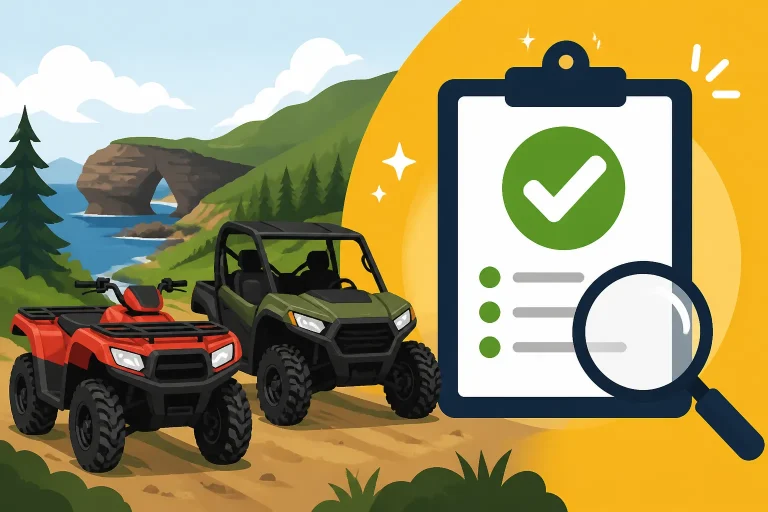
The easiest way to avoid a permit dispute is to make a short pre-ride check. Do it when you plan the route, then check the machine again at the trailhead. This catches errors that are easy to miss in a garage, such as a permit intended for a different season or a sticker that was never mounted.
- Identify the route. Confirm whether it is an authorized ATV or UTV trail and whether it is currently open. A route shown on an old map may have changed, closed, or been rerouted.
- Check the permit category. Match the permit to the trail type and riding period. If you are unsure whether a route is groomed or non-groomed, check the current permit guidance rather than guessing from its condition on the day.
- Confirm the permit is valid for the machine and rider. Read the terms at purchase and check that you are not relying on a sticker, receipt, or account that belongs to someone else.
- Mount the sticker as directed. Follow the official placement instructions and make sure the sticker is legible and secure. Do not place it where mud, bodywork, a cargo bag, or a cover will hide it.
- Keep purchase evidence accessible. Save the confirmation or receipt, but do not assume a receipt alone substitutes for a required machine sticker. If the sticker is missing or damaged, ask the permit seller or club what to do before riding.
- Check the rules again for a group ride. Each machine may need its own permit. A group leader’s permit does not automatically cover every ATV or UTV in the group.
A receipt is helpful when there is a purchase or display problem, but it is not a reason to ignore the posted permit instructions. If the sticker has peeled, is unreadable, or was damaged while travelling, stop and resolve the issue before entering the trail. Details on handling a lost or damaged permit are in [New Brunswick Permit Replacement If Lost] and Where the Trail Permit Sticker Mounts on a Quad.
Keep registration and insurance documents separate in your thinking. Officers may check more than one requirement, so prepare for the whole ride rather than focusing only on the permit fine. The overview in Four Things to Carry on a New Brunswick Trail can help you make a practical document checklist.
For paper documents, use a secure, water-resistant place that is easy to reach without leaving them exposed to rain, mud, or loss. A small waterproof document pouch, including one available through retailers such as Amazon, can help keep the receipt and other papers together. It does not replace the physical permit sticker or any official proof that must be displayed.
Verify current details at the point of purchase
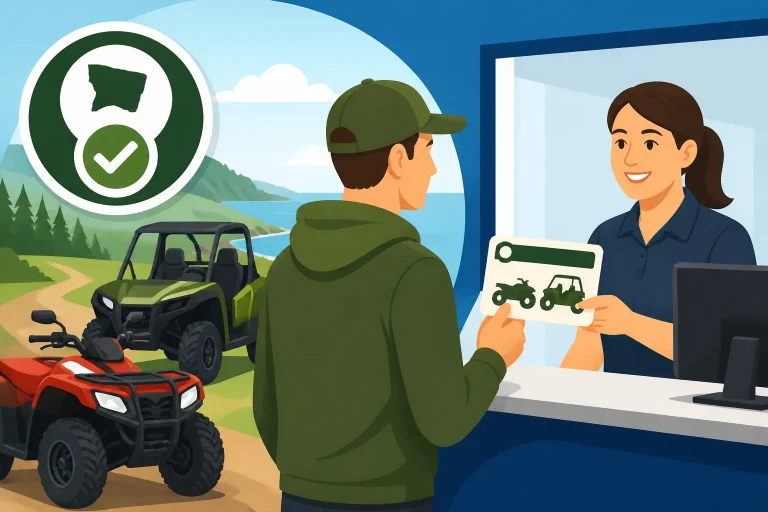
Permit rules and fees can change, and a search result or older social media post may not reflect current instructions. Check with the permit seller, the relevant club, or the official trail organization when you buy. If you are purchasing through a club or dealer, ask specifically:
- Which permit category covers the route you plan to ride?
- What dates does the permit cover?
- Does each machine in the group need its own permit?
- Where must the sticker be placed?
- What should you do if the sticker is delayed, damaged, or missing?
- Does your out-of-province permit qualify under a current reciprocity arrangement?
If you plan to ride more than one type of trail, describe the route rather than asking only for the cheapest or most familiar permit. The right answer depends on where the machine will go. For buying options and the steps involved, see How to Buy a New Brunswick Trail Permit.
Reciprocity for riders from outside New Brunswick
Reciprocity is not a general promise that a permit from any nearby province or state will work in New Brunswick. It depends on agreements between trail organizations and can differ by jurisdiction. Before crossing the border with an ATV or UTV, check the current arrangement for the place where your permit was issued and the trails you intend to ride.
New Brunswick has arrangements involving some neighbouring jurisdictions, and there are separate rules for visitors from Nova Scotia, Prince Edward Island, Ontario, and Maine. Do not assume that a rule applying to one province or state also applies to another. In particular, an arrangement can change or end, so older advice may be unreliable.
For a visiting rider, the practical question is not simply, “Do I have a permit at home?” Ask whether that specific permit is currently recognized for the New Brunswick route, whether the required sticker or proof must be displayed, and whether any local conditions still apply. A recognized out-of-province permit does not automatically waive registration, insurance, safety, or route-access rules.
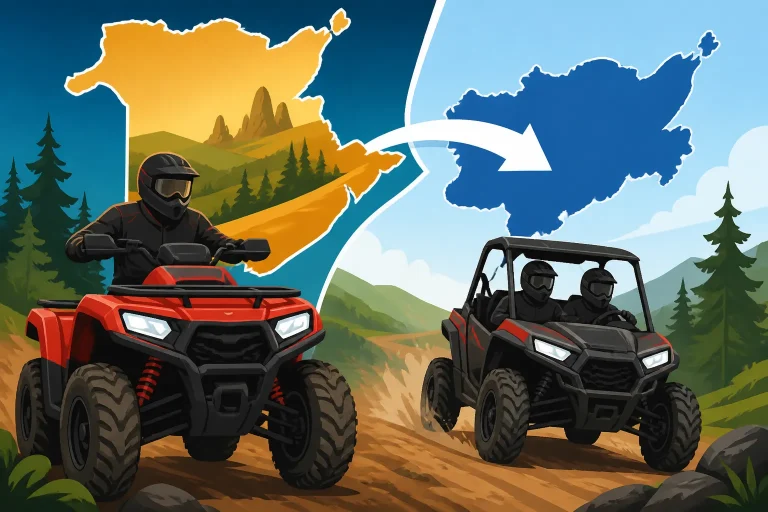
Quebec riders should take special care to check before travelling. New Brunswick’s previous reciprocity arrangement with Quebec ended, so a Quebec permit should not be treated as valid in New Brunswick based on old information. Start with New Brunswick Riders Visiting Quebec if you are a New Brunswick rider heading the other way, and check current New Brunswick requirements if you are arriving from Quebec.
| Rider’s situation | What to check before riding in New Brunswick |
|---|---|
| New Brunswick resident | Correct permit category, dates, machine, and sticker placement |
| Nova Scotia visitor | Whether the current reciprocity arrangement covers the specific permit and route |
| Prince Edward Island visitor | Whether the current arrangement recognizes the permit being carried |
| Ontario visitor | Whether the out-of-province sticker is currently honoured and what proof is required |
| Maine visitor | Whether the current agreement covers the permit and intended trail network |
| Quebec visitor | Do not rely on the former reciprocity deal; confirm the current New Brunswick permit requirement |
The safest approach is to verify reciprocity directly before the trip, especially if you purchased an annual permit months earlier. If a permit is not recognized, arrange the New Brunswick permit before entering a controlled trail network. A border crossing does not make an otherwise invalid permit acceptable, and an officer may not be able to resolve a complicated reciprocity question at the trail entrance.
Reciprocity also does not mean every trail in New Brunswick is open to every machine. It concerns permit recognition, not universal access. A trail can be closed, restricted by season, or unsuitable for a particular vehicle regardless of where the rider bought a permit. Check route conditions and local restrictions as well as permit status.
If an officer says your permit is missing or invalid
Stay calm, stop safely, and follow the officer’s directions. A trail stop is not the right time to argue from memory or rely on a screenshot that does not show what permit was purchased. Ask which requirement the officer believes is not met and read the ticket or notice carefully before you leave.
A few different problems can look similar during a roadside check:
- The machine has no permit sticker.
- A sticker is present but cannot be read or is not displayed as required.
- The permit is for a different trail category or date.
- The rider is relying on a permit issued for another machine.
- The rider has an out-of-province permit that is not recognized under the current arrangement.
- The permit was purchased but there is a delay, damage, or other problem with the physical sticker.
The distinction may matter when you decide what information to provide or whether to challenge a ticket. If you bought the correct permit, preserve proof of purchase and any messages from the seller or club. Photograph the sticker and its placement if the issue is about visibility or damage. Record the date, location, trail, and the specific concern raised, while avoiding interference with the officer’s work.
Do not assume that showing a receipt at the roadside will automatically cancel a ticket. The receipt may help explain what happened, but the applicable rule may require a permit to be displayed or otherwise carried in a particular way. Likewise, do not assume that a physical sticker alone proves that the permit was valid for that machine, trail, or date.
If you receive a ticket, read the instructions on it and note any response deadline. Deadlines and available options can depend on the ticket and the current process, so use the information provided by the issuing authority. If you believe the ticket is wrong, keep copies of the permit confirmation, photographs, relevant messages, and any route information. Follow the formal dispute process rather than ignoring the notice or relying on an informal conversation.
The $340.50 figure should not be treated as a guarantee of the total cost in every case. The amount printed on a ticket and any related court costs or additional consequences depend on the specific process and current rules. Check the ticket and official instructions for the amount owed, payment methods, and any way to contest it. What a Set Fine Means on an ATV Ticket explains why the stated fine and the full ticket process are not always the same question.
Do not pay a ticket just because someone online says that is the only option, and do not miss a stated deadline while trying to find a perfect answer. If you need advice about a specific citation, speak with a qualified legal professional. For general background on the distinction between permit and other riding penalties, see New Brunswick Penalties for No Trail Permit.
Avoiding the fine on a group ride or a trip
A little planning helps most riders avoid preventable permit problems. This is particularly important for groups, visitors, and riders who switch machines during the season.
For a group ride, have every rider confirm their own machine’s permit before the meeting point. A lead rider can share the route and remind the group about permits, but should not assume that everyone bought the same category or that one purchase covers multiple vehicles. Ask guests to check the sticker and permit terms themselves.
For a borrowed machine, verify that the machine has the required permit and that the permit conditions allow the intended use. A vehicle owner’s assurance is useful, but it is not a substitute for checking the sticker, date, and trail category. If anything is unclear, contact the permit seller or club before starting the ride. A borrowed ATV can also raise separate questions about insurance and registration; a trail permit does not settle those.
For a rental machine, ask the rental operator who supplies the trail permit and how it is displayed. Do not assume that a rental price includes every trail-access requirement. Get a clear answer before you sign or ride, and check that the sticker is on the actual machine you will use. If the operator says the permit is included, confirm what to do if the sticker is absent or unreadable.
For an out-of-province trip, check the route and reciprocity before loading the trailer. Save the confirmation somewhere you can reach even if cellular service is poor. If you cannot confirm that your home permit is recognized, ask whether you need a New Brunswick permit instead. It is better to sort this out at home than to arrive at a trailhead with an uncertain sticker.
Finally, avoid treating old information as current. Permit categories, purchase channels, trail conditions, and reciprocity agreements can change. Check the official information close to the ride, particularly after a long gap between seasons or when riding in a new region.
A practical checklist before turning onto a managed trail:
- The route is open and permits ATV or UTV use.
- The permit category matches the trail and riding period.
- The permit applies to the machine being ridden.
- The sticker is present, readable, and placed as directed.
- The group has checked every machine, not just the lead vehicle.
- Any out-of-province permit has been confirmed as recognized.
- Registration and insurance requirements have been checked separately.
- Purchase records and required documents are stored securely.
These checks cannot guarantee that every riding decision is lawful, but they address the common confusion behind a missing or unsuitable permit. Treat the trail permit as its own requirement, verify it for each machine, and confirm uncertain details with the appropriate source before you ride.
Frequently Asked Questions
Is the $340.50 fine for an unregistered ATV?
No. The $340.50 amount refers to a trail-permit violation, not vehicle registration. Registration, insurance, and trail permits are separate requirements. Check the specific ticket and current official information to identify the alleged offence.
Does a registered ATV need a trail permit?
Registration does not replace a trail permit. Whether a permit is required depends on where you ride and the access rules for that route. Check the current rules for the trail rather than relying on the machine’s plate.
Can I use a permit from another province?
Sometimes, depending on the current reciprocity arrangement and where the permit was issued. Do not assume that every neighbouring jurisdiction is treated the same way. Confirm recognition and proof requirements before travelling.
Is a receipt enough if my sticker is missing?
Not necessarily. A receipt can help show that you purchased a permit, but the permit’s terms may require a sticker to be displayed. Contact the seller or club for instructions before riding.
Does the fine apply on private land?
A permit requirement for an authorized club trail does not automatically mean a trail permit is required everywhere. Private land, public routes, and managed club trails can have different access rules. Confirm who controls the land and what rules apply before riding.
Disclaimer
This article is for general informational purposes only and does not constitute professional advice. Laws, prices and regulations vary by location and change over time. Consult a qualified professional for guidance on your specific situation.