Why Quads Cost More to Register Than Dirt Bikes
It’s a common scenario in New Brunswick: you’re chatting with a fellow off-road rider, and the topic of annual registration fees comes up. You might find yourself scratching your head, wondering why your four-wheeled ATV or side-by-side costs more to register with Service New Brunswick than your buddy's dirt bike. This isn't just a random fee structure; there are very specific reasons rooted in how off-road vehicles are classified, their typical usage, and the public policies that govern them in our province. This guide will clarify those distinctions and help you understand the rationale behind the differing costs, so you can ride with confidence and knowledge.
Understanding New Brunswick's Off-Road Vehicle Classifications
Before we can unpick the cost difference, it's crucial to understand how New Brunswick defines the various types of off-road vehicles. The provincial government doesn't just see a "machine"; it sees distinct categories, each with its own set of rules and, yes, fee structures. These classifications are fundamental to how everything else, including registration costs, is determined.
The Legal Distinction Between Quads and Dirt Bikes
In New Brunswick, the legal framework differentiates quite clearly between what many of us commonly call "quads" (ATVs, or All-Terrain Vehicles, which also encompass side-by-sides) and "dirt bikes" (off-road motorcycles). An ATV, by definition, is typically a motorized off-road vehicle designed to travel on four or more low-pressure tires, with a seat designed to be straddled by the operator, and handlebars for steering. Side-by-sides, while often seating multiple people and using a steering wheel, are usually grouped under the broader ATV umbrella for registration purposes. On the other hand, an off-road motorcycle, or dirt bike, is a two-wheeled motorized vehicle designed for off-road use, where the operator sits astride the machine and steers with handlebars, much like a regular motorcycle but adapted for rugged terrain.
These aren't just semantic differences; they carry significant legal weight. The distinction influences everything from age restrictions for operators to helmet laws and, crucially, the associated fees for getting them on the books. This provincial categorization reflects a considered approach to regulating different types of vehicles, based on their design, potential uses, and perceived impact. For instance, the general perception of an ATV or side-by-side might be that it's often used for heavier utility work or carrying more passengers, compared to a dirt bike primarily designed for single-rider recreation or sport. This foundational legal separation is the first step in understanding why their registration pathways diverge. For a broader overview, you might find [New Brunswick ORV Registration Explained] helpful.
The Impact of Vehicle Design and Usage
Beyond the strict legal definitions, the physical design and common usage patterns of quads and dirt bikes play a significant role in their classification and, subsequently, their registration costs. A quad or side-by-side, with its multiple wheels, wider stance, and often greater weight, tends to have a larger footprint on trails. They can carry more gear, potentially pull small trailers, and are frequently used for diverse tasks ranging from recreational trail riding with passengers to working on a woodlot or farm. This versatility and capability mean they often interact with the land and other trail users in different ways than a lighter, two-wheeled dirt bike.
Dirt bikes, by their very nature, are more agile and typically lighter. They are often associated with sport riding, motocross, or navigating tighter, more technical trails. While they can certainly be used for utility in some contexts, their primary design lends itself to a different style of off-road activity. Provincial policymakers and trail organizations consider these inherent design and usage differences. A heavier, wider machine, especially one carrying multiple people, might be seen as having a greater potential impact on trail wear and tear, or requiring different safety considerations, than a nimble dirt bike. These considerations, while not always explicitly stated on your registration form, are often baked into the fee structure and the broader regulatory framework, ultimately contributing to [New Brunswick Charges $41 for an ATV] being a different figure than [New Brunswick Charges $16 for a Dirt Bike].
Factors Influencing Registration Fees in New Brunswick
The specific dollar amount you pay to register your ORV isn't pulled out of thin air. It's the result of several factors, including how the province generates revenue for ORV-related services, how it assesses risk, and the administrative costs involved in managing the entire system. Understanding these factors sheds light on why your quad might cost more to register than a dirt bike.
Provincial Revenue and Trail Infrastructure Funding
A significant portion of the fees collected from ORV registrations in New Brunswick is earmarked for the maintenance and development of our extensive trail network. This network, managed by organizations like QuadNB, relies heavily on these funds to ensure trails are safe, well-marked, and sustainable. When you pay your registration fee, you're directly contributing to the signs, culverts, bridges, and general upkeep that makes riding enjoyable for everyone. The province, through its various departments, also has administrative costs associated with processing registrations, issuing plates and decals, and managing compliance.
From a provincial perspective, it's not unreasonable to assume that a larger, heavier machine like a quad or side-by-side might contribute more to trail wear and tear, or perhaps utilize the trail system for a wider range of activities (including towing, which adds stress). Therefore, a slightly higher contribution from these vehicle types towards the [New Brunswick's Trail Infrastructure Fund] could be seen as a way to fairly distribute the cost of maintaining the infrastructure that supports them. This isn't about penalizing specific riders, but rather about ensuring the long-term viability of the trails we all love to use. The more machines, the more usage, the more maintenance required, and these fees help to cover that.
Perceived Risk, Insurance Considerations, and Enforcement Costs
Another layer to the fee structure is the perception of risk associated with different ORV types, which in turn influences insurance requirements and enforcement efforts. Quads and side-by-sides, particularly those with passenger capacity, are sometimes viewed differently in terms of potential accident severity or public safety concerns compared to single-rider dirt bikes. This isn't to say one is inherently more dangerous, but rather that the statistical profiles and common usage scenarios can differ. This translates into various regulations, such as [New Brunswick Requires Insurance on Trails], where the type of machine can influence insurance policy costs and availability.
The administrative overhead for the province also includes the cost of enforcement. Conservation officers and local law enforcement actively patrol trails to ensure riders are registered, insured, and following the rules. Managing a diverse fleet of off-road vehicles, each with its own specific regulations (like age limits for different engine sizes, or rules for carrying passengers), requires resources. If certain vehicle types are perceived as requiring more oversight or have different accident profiles, the administrative costs associated with ensuring compliance and safety could be factored into their registration fees. These aren't just about handing out tickets; they're about education, prevention, and maintaining order on thousands of kilometres of shared trails.
The Administrative and Public Policy Rationale
The fees we pay for ORV registration in New Brunswick aren't arbitrary. They are deeply rooted in legislative history, public policy decisions, and the ongoing dialogue between the provincial government, rider associations, and the general public. Understanding this background helps demystify why these costs are what they are.
Legislative History and Public Consultation
The current regulatory landscape for off-road vehicles in New Brunswick is the product of years, even decades, of legislative evolution. Laws governing ATVs, dirt bikes, and other ORVs have been introduced, amended, and refined based on changing technology, increased ridership, and societal expectations. Early legislation might have focused primarily on traditional ATVs, and as dirt bikes gained popularity, they were brought under the umbrella of ORV legislation, but often with their own specific categories and rules. These legislative acts, like [What New Brunswick's Off-Road Vehicle Act Covers], don't just appear overnight; they are typically preceded by studies, public consultations, and discussions with stakeholders, including rider federations and environmental groups.
During these processes, the distinctions between vehicle types become critically important. Decision-makers weigh factors such as the economic contribution of each ORV segment, their environmental impact, safety records, and how best to manage their integration into shared public spaces. The fees associated with registration become a tool within this policy framework, designed to achieve specific goals like funding trail infrastructure or deterring illegal operation. The initial categorizations, often based on historical usage and design, tend to persist and influence subsequent adjustments to fee schedules.
Economic Impact and Rider Demographics
The economic impact and rider demographics also play an often-unseen role in how registration fees are set. New Brunswick has a thriving ORV community, contributing significantly to local economies through machine sales, parts, service, fuel, lodging, and tourism. The provincial government recognizes this contribution and aims to create a regulatory environment that supports it while ensuring safety and environmental responsibility.
Quads and side-by-sides typically represent a larger segment of the registered off-road vehicle population in New Brunswick. They are often family-oriented machines, used by a broad demographic for both recreation and utility. Dirt bike riders, while a passionate and significant group, might represent a different niche within the overall ORV community. The sheer volume of registrations for one type of machine versus another can influence how fees are structured. A category with a larger economic footprint and broader rider base might be subject to a fee structure that aims for wider public benefit, or perhaps reflects higher administrative demands. For example, the paperwork required for these registrations can be quite detailed; using templates from services like LawDepot for bills of sale or ownership transfers ensures you have the necessary documentation, whether you're dealing with a private seller or a dealership. These forms streamline the process for both the rider and the provincial administration.
| Vehicle Type | Typical Characteristics | Key Regulatory Differentiators | Potential Impact on Fees |
|---|---|---|---|
| Quad/Side-by-Side | 4+ wheels, wider stance, often multi-passenger, heavier | Broader utility, often perceived higher trail impact | Potentially higher contribution to trail fund, insurance costs |
| Dirt Bike | 2 wheels, narrower, lighter, single-rider focused | Sport-oriented, lower perceived trail impact per machine | Potentially lower contribution to trail fund, insurance costs |
Practical Implications for New Brunswick Riders
While the reasons behind the differing costs are complex, what matters most to riders are the practical implications. Knowing why your quad might cost more to register doesn't change the fee itself, but it can help you budget, understand the value of your registration, and ensure you remain compliant with provincial regulations.
What the Different Costs Mean for Your Wallet
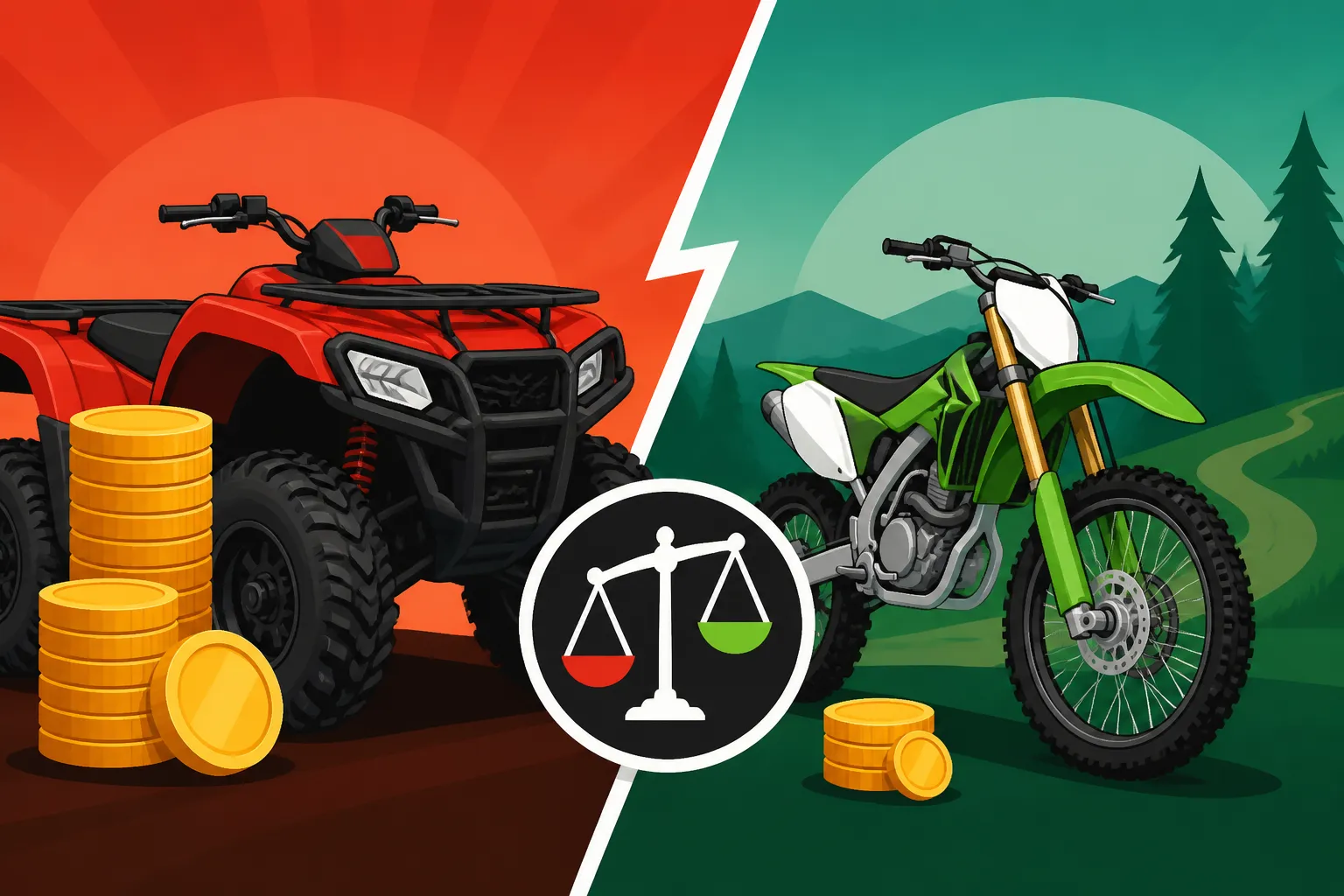
For your wallet, the bottom line is that registering a quad or side-by-side in New Brunswick will generally involve a higher annual fee than registering a dirt bike. While we can't provide current figures, historically, you might have seen an ATV registration fee quoted around one figure, while a dirt bike was considerably less. This difference, while sometimes a point of discussion among riders, is an annual expense that is critical for legal enjoyment of our trails and open spaces. It's a fundamental part of responsible ORV ownership in the province.
It's always important to check the current rates with Service New Brunswick or through the official provincial government website before you plan your budget. These fees contribute directly to the maintenance of the trails and the overall management of the ORV system, so think of it as an investment in the riding experience. When you're buying or selling a machine, especially in a private sale, make sure all your ducks are in a row with proper documentation. A clear bill of sale, perhaps generated using a reliable template from a service like LawDepot, can smooth the registration transfer process and avoid headaches down the road. For more on this, check out [New Brunswick Transfer of Ownership Explained]. Having the correct paperwork is not just a formality; it's a safeguard for both buyer and seller.
Ensuring You're Legally Registered and Insured
Regardless of whether you own a quad, side-by-side, or dirt bike, ensuring your machine is properly registered and insured is non-negotiable for riding on designated trails and Crown land in New Brunswick. The provincial authorities are serious about compliance, and the penalties for riding an unregistered or uninsured machine can be substantial. For example, you can face significant fines for operating an ORV without current registration. The fines for riding without adequate insurance coverage can be even steeper.
This isn't just about avoiding a ticket; it's about being a responsible member of the riding community. Your registration fee directly supports the trail system, and your insurance protects you and others in case of an accident. Familiarize yourself with the process, whether you're looking at [Registering an ATV With Service New Brunswick] or tackling [Dirt Bikes and New Brunswick Paperwork]. Make sure you have all the necessary documents, which can include a bill of sale, proof of ownership, and identification. A comprehensive [New Brunswick Registration Paperwork Checklist] can be invaluable here. For private sales, having a robust bill of sale created through a platform like LawDepot not only fulfills legal requirements but also provides peace of mind, documenting the transaction thoroughly for both parties involved. This preparation ensures that when you hit the trail, you're doing so legally and safely, contributing positively to the overall ORV community in New Brunswick.
Disclaimer
This article is for general informational purposes only and does not constitute professional advice. Laws, prices and regulations vary by location and change over time. Consult a qualified professional for guidance on your specific situation.